

No. 136 on our checklistBlack-headed Gull (Chroicocephalus ridibundus)
Brown hood in summer, white head in winter: the Black-headed Gull in the Danube Delta and Dobrogea, its colonies, behaviour and old name Larus ridibundus.
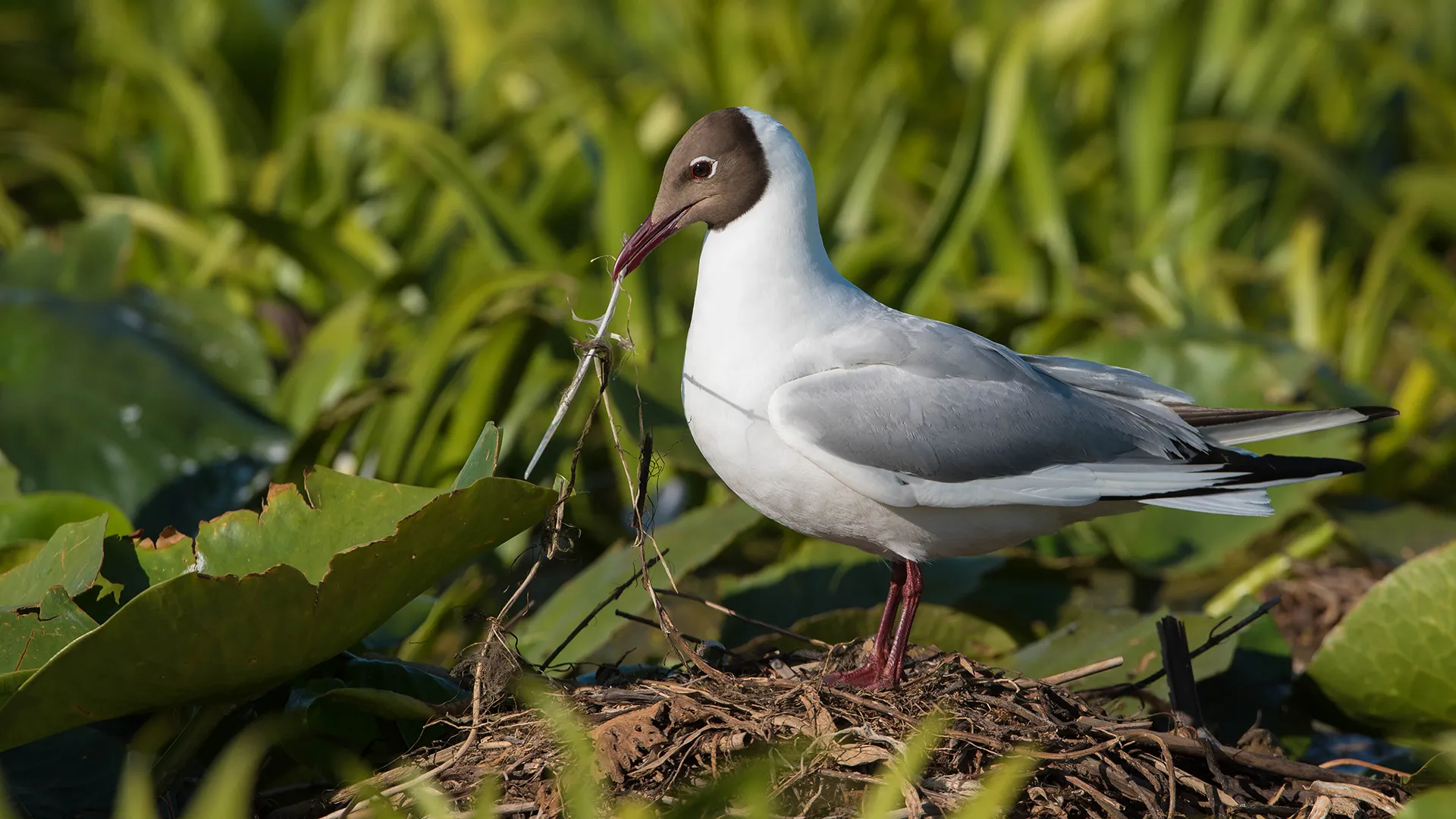
The Black-headed Gull (Chroicocephalus ridibundus, formerly Larus ridibundus) is the small, lively gull of the lakes, fishponds, harbors and fields of the Danube Delta and Dobrogea. In spring and winter it wears a chocolate-brown hood, which it loses in summer.
It is present all year. In the breeding season it nests in noisy colonies in the marshes, and from autumn its numbers increase with migrants from the north and east.
Quick facts
Quick facts
- Scientific name Chroicocephalus ridibundus (Linnaeus, 1766)
- Old scientific name Larus ridibundus
- Common name Black-headed Gull
- Family Laridae (gulls, terns and skimmers)
- Order Charadriiformes (waders, gulls and auks)
- Length 35–38 cm
- Wingspan 100–110 cm
- Weight 200–400 g
- Diet very varied: insects, earthworms, small fish, crustaceans, seeds and waste; often follows ploughs and fishing boats
- Habitat lakes, marshes, fishponds, rivers, lagoons and coasts; feeds also on fields, in towns and at rubbish dumps
- Breeding one brood a year; usually 2–3 eggs, incubated by both parents for 23–26 days; the chicks fly at 34–36 days
- Conservation status Least Concern (global and European IUCN Red Lists); Least Concern on the Romanian Red List (2022)
When to see it in the Danube Delta and Dobrogea
- JanWintering flocks, white heads
- FebWintering flocks, first hoods
- MarBirds in breeding plumage
- AprColonies occupied
- MayIncubation
- JunChicks in the colonies
- JulYoung fledge, dispersal
- AugPost-breeding flocks
- SepAutumn migrants arrive
- OctAutumn passage
- NovWintering flocks
- DecWintering flocks
- Status here
- Present all year: breeds in colonies from April to July; migrants and wintering birds from the north and east from autumn to spring.
- IUCN Red List
- Least Concern
- Our checklist
- No. 136 of 385 · see the full checklist
How to recognize it
The Black-headed Gull is a small, slim gull with a pale gray back and white underparts. Despite its name, the hood is chocolate-brown, not black, and it covers only the face and the front of the head. The bill and legs are dark red, and there is a thin white ring around the eye.
In flight the best field mark is the white leading edge of the outer wing, with black tips to the primaries. In winter the hood disappears, leaving a white head with a dark spot behind the eye. Juveniles and first-year birds have brown markings on the wings, a dark band at the tip of the tail and an orange-yellow bill and legs.
The similar Mediterranean Gull, also seen along the Black Sea coast, has an all-white wing tip and a true black hood in summer. The Slender-billed Gull has no hood at all and a longer bill and neck.
Life in the Danube Delta and Dobrogea
In the Danube Delta the Black-headed Gull nests in colonies in marshes and on lakes, on floating mats of reed and vegetation, small islands and dikes, and on fishponds. In Romania the Romanian Red List (2022), based on the national report under Article 12 of the EU Birds Directive, gives about 4,000–10,000 breeding pairs, with an increasing trend, and an estimated 100,000–300,000 birds on passage.
Few gulls are as versatile. Black-headed Gulls catch insects in flight, pick food from the water surface, walk on fields and pastures in search of earthworms and follow tractors and fishing boats. In winter they gather in large flocks on lakes, harbors and in towns, together with other gulls.
Breeding
Colonies can hold a few pairs or many thousands. The nest is a pile of plant material on the ground or on floating vegetation. Both parents incubate and feed the chicks, and the whole colony rises noisily to attack predators that come too close.
Other birds take advantage of this protection. Black-necked Grebes often nest inside or next to gull colonies, and a recent study from southern Poland showed that the presence of gull and tern colonies is important for the breeding of Black-necked Grebes.
Interesting facts
- A Nobel Prize gull. The Black-headed Gull was one of the main study species of Niko Tinbergen, who shared the Nobel Prize in 1973. His team showed that parents remove the broken eggshells from the nest after hatching, because the white inside of the shells attracts predators such as crows to the chicks.
- Turning the face away. When two gulls meet in the colony, they may turn their heads away from each other to hide the dark hood and the bill. Tinbergen described this “facing away” posture as a signal that calms the other bird.
- The laughing gull. The species name ridibundus means “laughing” in Latin, a reference to its harsh, cackling calls.
- A food thief with experience. Black-headed Gulls often steal earthworms from Lapwings and Golden Plovers on fields. In one study, attacks on Lapwings succeeded about three times in four, and adult gulls were more successful than first-winter birds, which timed their attacks less well.
- A new genus. The species was long placed in the large genus Larus. Genetic studies showed that Larus in the old sense was not a natural group, and the Black-headed Gull was moved to Chroicocephalus, together with other small hooded gulls. Many books and websites still use the old name.
Status and conservation
The Black-headed Gull is listed as Least Concern on the global and European IUCN Red Lists and on the Romanian Red List (2022), although it has declined in some parts of western Europe. Its colonies are vulnerable to flooding, predators, disturbance and changes in water levels on fishponds and marshes.
See it on our tours
On our multi-day birdwatching tours in the Danube Delta and Dobrogea, we see Black-headed Gulls almost every day. In spring we watch their noisy colonies and the grebes nesting among them, and in autumn and winter we look through their flocks for rarer gulls.
See it with us
Our birding guides are biologists and ornithologists who are on the water every day of the year. Small groups, open boats, the best hours of the day.
Keep reading
Keep reading
More from the blog
2 min read
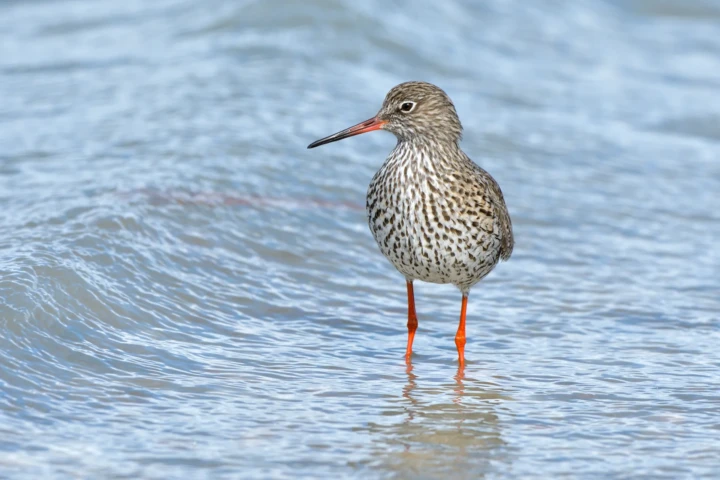
Common Redshank (Tringa totanus)
Orange-red legs and a broad white wing edge identify Common Redshank, a rare breeder in the Danube Delta and Dobrogea.
4 min read
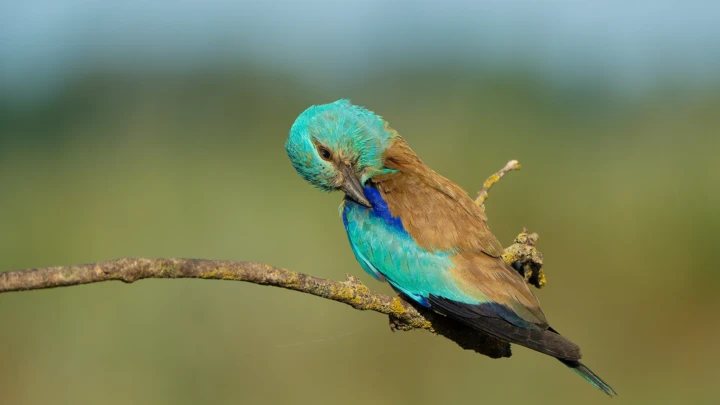
European Roller (Coracias garrulus)
Turquoise wings and a cinnamon back on a dry branch over the steppe: the bird our photographers come to Dobrogea for in June.

6 min read
Yellow-legged Gull (Larus michahellis)
Bright yellow legs, a pale fierce eye and a big red spot on the bill: the Yellow-legged Gull of the Black Sea coast, how...