

No. 71 on our checklistBlack-winged Stilt (Himantopus himantopus)
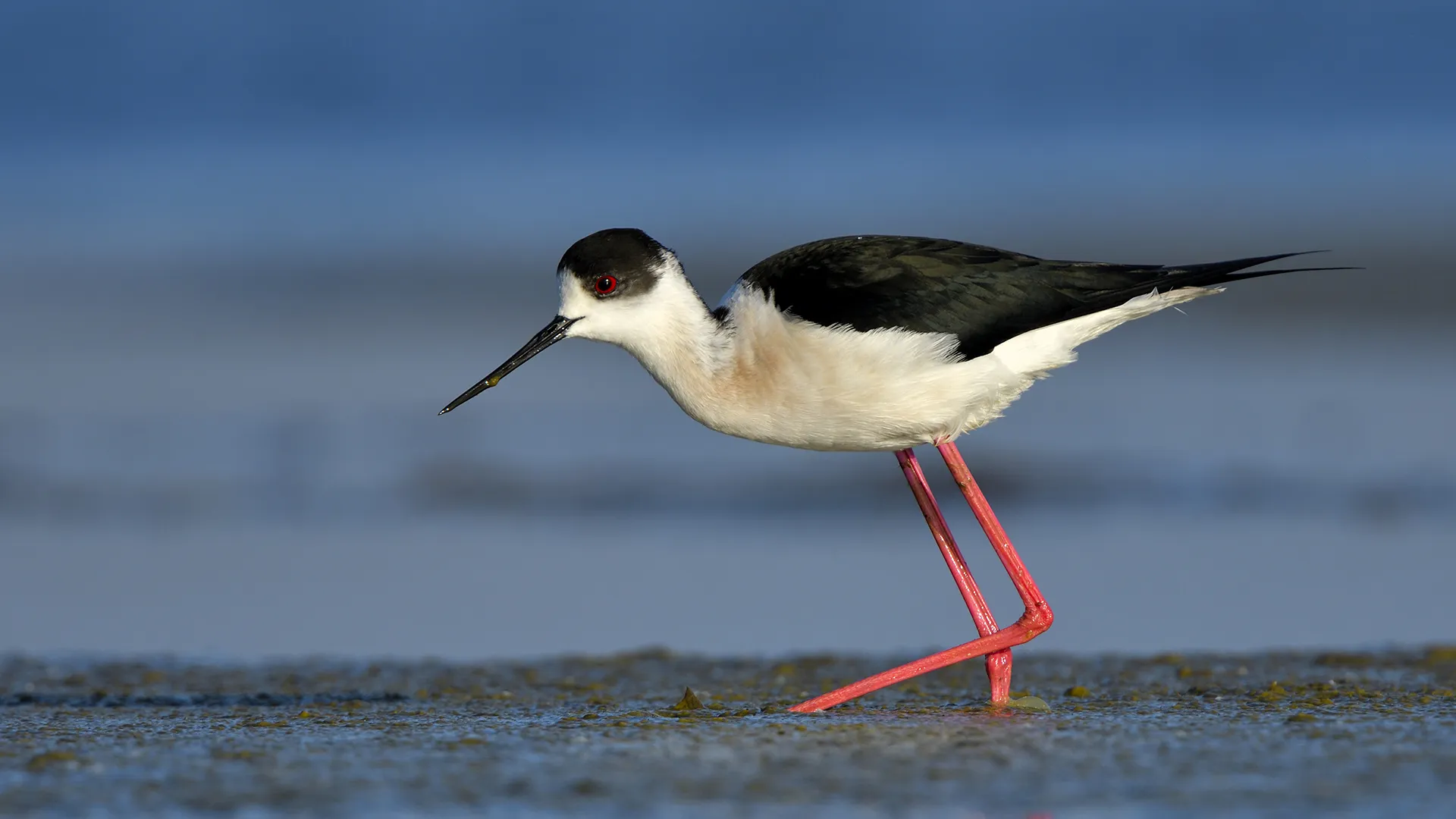
Long pink legs and a fine black bill make the Black-winged Stilt easy to recognize as it wades across shallow wetlands of the Danube Delta.
The Black-winged Stilt (Himantopus himantopus) is a slender black-and-white wader with exceptionally long pink legs. In the Danube Delta and Dobrogea, it is listed as a summer breeder and recorded from March to October.
Linnaeus originally described it as Charadrius himantopus in 1758.
Quick facts
Quick facts
- Scientific name Himantopus himantopus (Linnaeus, 1758)
- Common name Black-winged Stilt
- Family Recurvirostridae
- Order Charadriiformes
- Weight about 180 g
- Diet aquatic and other small invertebrates, including insects
- Habitat shallow freshwater and brackish wetlands, lagoons and saltpans
- Breeding often nests in small colonies; nests may be placed on low islets or among grasses and sedges
- Conservation status Least Concern globally; Least Concern as a breeding bird in Romania (2022)
When to see it in the Danube Delta and Dobrogea
- JanNo checklist code
- FebNo checklist code
- MarScarce
- AprPresent
- MayPresent
- JunPresent
- JulPresent
- AugPresent
- SepPresent
- OctScarce
- NovNo checklist code
- DecNo checklist code
- Status here
- Summer breeder; recorded March–October, less often in March and October.
- IUCN Red List
- Least Concern
- Our checklist
- No. 71 of 385 · see the full checklist
How to recognize it
Look for black wings against a white body, a thin straight black bill and pink legs that make the bird look unusually tall. The combination is more useful than the exact pattern on the head. When feeding, a stilt often walks steadily through shallow water, picking small prey from the surface.
Shallow water for feeding, low ground for nesting
Black-winged Stilts forage in shallow wetlands. The Bulgarian breeding atlas records nesting especially at saltpans, coastal lagoons and other shallow waters. Pairs often nest in small groups and can defend nests together against aerial predators. Keep your distance if several birds become agitated.
Interesting facts
- The legs are as useful as they are conspicuous. They allow the stilt to wade as it feeds in shallow water.
- The bill is slim and straight. It is quite different from the upturned bill of a Pied Avocet.
- Small colonies are common. Nesting pairs sometimes join in defending the colony.
- Not all populations migrate the same way. Across the range, some are resident while others travel long distances.
Status and conservation
The Black-winged Stilt is Least Concern globally and as a breeding bird on Romania’s 2022 Red List. The national assessment reports 1,400–14,000 breeding pairs and an unknown short-term trend. The passage population was not evaluated.
See it on our tours
On our multi-day Danube Delta discovery tours, scan the shallows when the itinerary includes suitable wetlands. Long pink legs make these waders easy to pick out even from a respectful distance.
See it with us
Our birding guides are biologists and ornithologists who are on the water every day of the year. Small groups, open boats, the best hours of the day.
Keep reading
Keep reading
More from the blog
4 min read
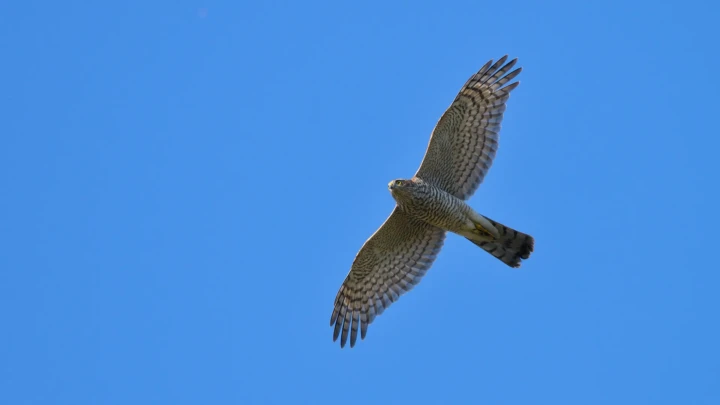
Eurasian Sparrowhawk (Accipiter nisus)
A fast hunter of small birds that turns up in villages, reedbeds and woods: the Eurasian Sparrowhawk is common in the Danube Delta and...
3 min read
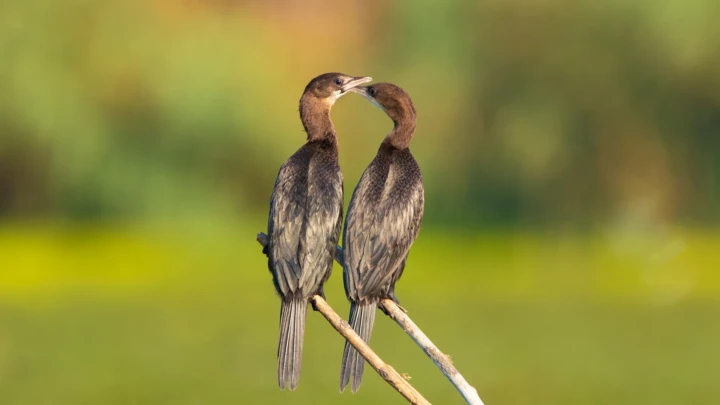
Pygmy Cormorant (Microcarbo pygmaeus)
The Pygmy Cormorant, one of the signature birds of the Danube Delta: how to tell it from the Great Cormorant, what it eats, nesting...
5 min read
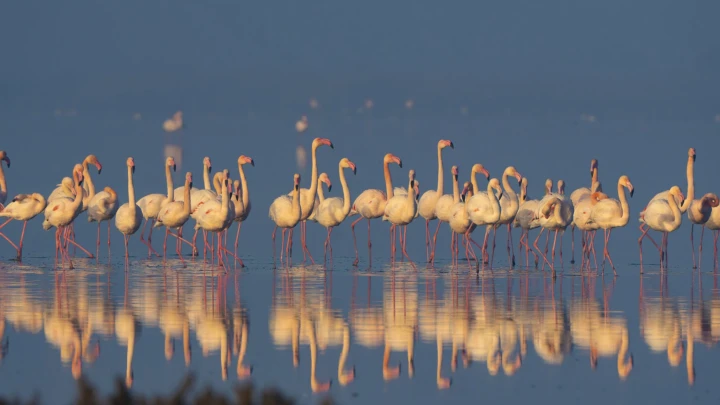
Greater Flamingo (Phoenicopterus roseus)
Once only a rare visitor, the flamingo now appears more and more often in the salty lagoons of the Danube Delta and Dobrogea.