

Lipovan Blue: the Story of the Blue Houses of the Danube Delta
Why the Lipovan houses of the Danube Delta are blue: lime, laundry blue and bluestone, the colour of the Mother of God, and the Blue Sky of the steppe.
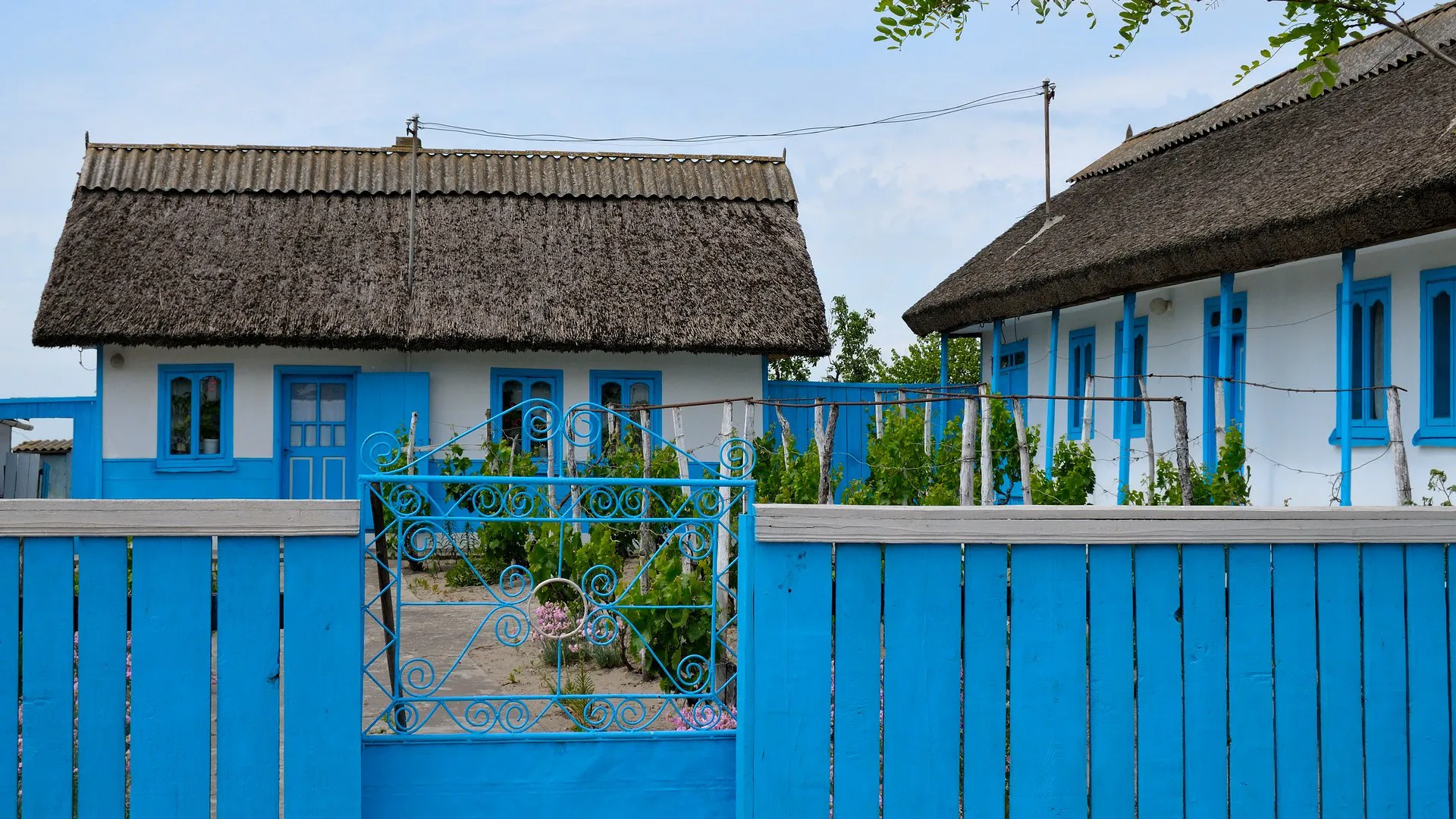
Walk through Mila 23, Jurilovca or Sarichioi and one colour follows you everywhere: a bright, clear blue on doors, window frames, fences and whole walls. Here it has a name of its own, Lipovan Blue. It is the colour of the Lipovan Russians, the Old Believers who settled in Dobrogea and the Danube Delta, and behind it there is more than taste: old village chemistry, faith, and perhaps a memory much older than both.
Quick facts
- What The traditional blue of the Lipovan houses
- Made with Lime wash tinted with laundry blue or with bluestone (copper sulfate)
- Where to see it Mila 23, Letea, Jurilovca, Sarichioi and other Lipovan villages
- Renewed Traditionally every spring, before Easter


A colour without a code
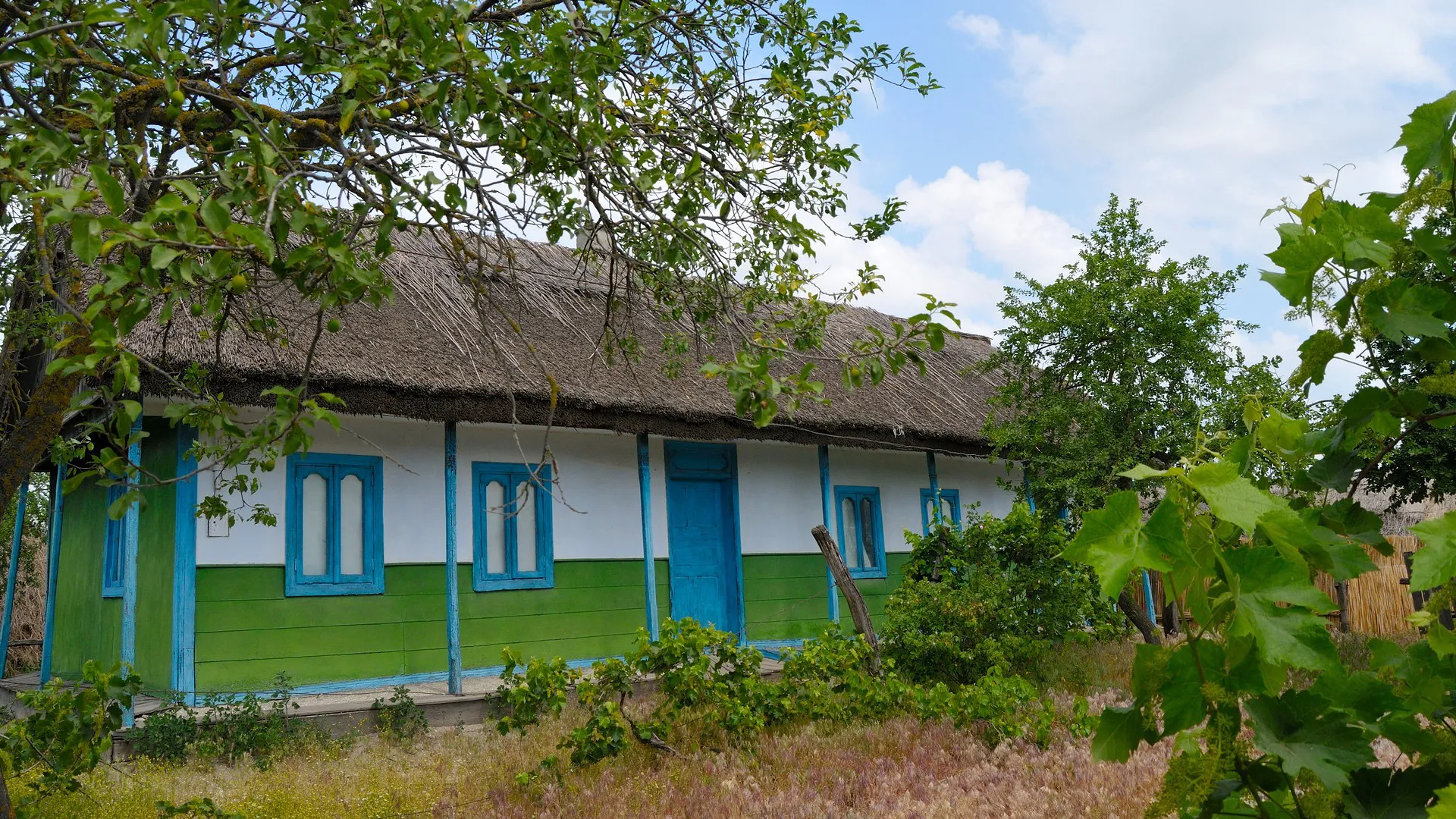
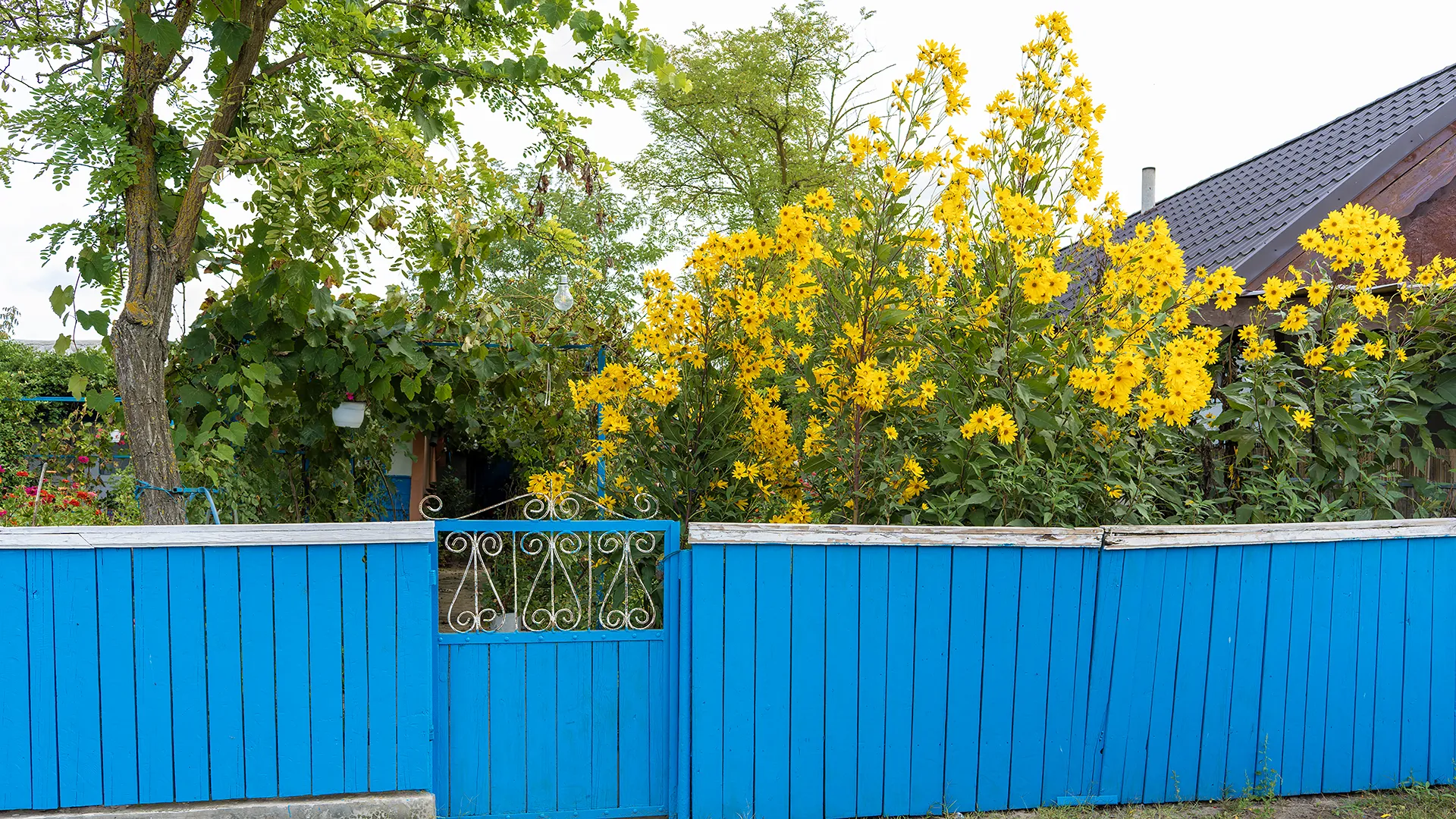
There is no paint code for Lipovan Blue. It was never mixed in a factory: every household made its own, by eye, in a bucket of lime. Some houses are a deep, clear blue, others a lighter shade close to turquoise, and the sun of Dobrogea softens all of them over the summer, so a wall in full sun turns pale while the shaded side keeps its strong colour. That is why no two houses are exactly alike.
Lime, laundry blue and bluestone
The base of it all is lime wash: slaked lime thinned with water, the oldest wall paint of the villages. To make it blue, people added one of two things they could easily buy.
The first was laundry blue, called sineala in Romanian and sinka in Russian. It is a cheap blue pigment, sold as powder or small tablets for whitening linen, and it gives the deep, clear blue. The most common blue pigment of this kind, Prussian blue, was discovered in Berlin at the beginning of the 18th century and soon spread across Europe.
The second was bluestone, the blue crystals of copper sulfate, piatra vanata in Romanian and mednyi kuporos in Russian, which every farmer kept for the vines. Crushed, dissolved and stirred into the lime, it gives a lighter, greener blue, close to turquoise.
Whitewashing was a spring task. Traditionally the walls were done again every year before Easter, so the village greeted the holiday clean and freshly painted.
Why it worked
The blue was beautiful, but it was also useful. Lime is strongly alkaline and kills bacteria and mould, which is why for centuries people whitewashed not only their houses but also their stables, cellars and the trunks of their fruit trees.
Lime mixed with copper sulfate is, in fact, the Bordeaux mixture, the fungicide first used on the vineyards of Bordeaux in the 1880s and still sprayed on vines today. A wall, a fence or an animal shed painted with it stays free of mould and rot much longer, and in the damp air of the Danube Delta that matters. The houses and the sheds stayed drier and cleaner and, as the old people say, so did the people and the animals living in them. Seen this way, it is easy to understand why the blue was felt as a protection, and why the custom stayed.
Where the blue goes on a Lipovan house
On a traditional Lipovan house the blue is never random. Against the white walls and the golden reed roof, it picks out the parts of the house that matter, and it follows you inside, up to the icons.
Outside
The carved eaves. Under the edge of the roof runs the podzor, a wooden board cut by hand into lace: geometric patterns, and sometimes horses, fish or birds. The carving is painted white and set against a blue background, so that from the street the white lace seems to float on a piece of sky.
The porch and its posts. Many houses have a porch along the front, under the wide reed eaves, held up by turned and carved wooden posts. Sheltered from the sun, the blue of the posts keeps its strong colour, and the porch becomes the cool, shaded place where the family sits on summer evenings.
The eyes of the house. The windows are framed by the nalichniki, carved wooden frames, and closed with heavy wooden shutters, the stavni, often painted blue from top to bottom. When the shutters are closed against the winter wind or the summer heat, the whole house turns blue.
The base. Along the foot of the walls runs the zavalinka, a low earthen ledge that protects the base of the house from the damp and doubles as a bench. It is often painted a darker blue, which seems to anchor the house to the ground.
Inside
The great stove. The heart of every old Lipovan house is the clay stove, the pech, big enough to bake bread, warm the whole house and, in the coldest nights, sleep on top of. It was whitewashed like the walls, and in many houses its body was tinted with the same laundry blue, while the hearth itself stayed white, so that any soot showed at once and was cleaned away.
The beautiful corner. Opposite the door, in the clean room, is the corner of the icons, the krasny ugol. Its name is usually translated as the red corner, but in old Russian krasny meant beautiful. In many houses the wall behind the icons is a deep blue, which makes the gold and silver covers of the icons shine. For the one who prays there, the corner of the room becomes a window to the sky.
Beams, chests and curtains. The main ceiling beam, the matitsa, and the wooden dowry chests, the sunduk, were often painted blue as well, and the short linen curtains of the small windows, the zanaveski, were embroidered with blue thread. In summer the light that comes through them gives the room a calm, cool feeling, far from the heat outside.
The colour of the Mother of God
The Lipovans are Old Believers: Russians who refused the church reforms of the 17th century and left Russia to keep the old rite. From the 18th century many of them settled in Dobrogea and in the Danube Delta, where they fished, built their villages and kept their faith and their customs to this day.
In the Orthodox tradition blue is the colour of the Mother of God and of heaven. Churchgoers in the villages say the blue of their houses is the colour of the sky and stands for closeness to God.
Where to see it
Mila 23, the fishing village in the heart of the Danube Delta where we stay on our tours, is one of the best places to see Lipovan Blue, house after house along the channels. Read more about the village in Mila 23, a village in the middle of the Danube Delta, or come and see it on our nature tours. Letea, on the great sand ridge near Letea Forest, is a Ukrainian village, but many of its people are Lipovans and many of its houses are blue and built in the Lipovan style; you see them on our day trip to Letea. On the shore of Lake Razim, Jurilovca and Sarichioi keep the same colours.
A thought of my own
This last part is not science, it is my own belief, after more than twenty years among these villages.
I think the love of the Lipovans for blue, on its spiritual side, is much older than Christianity. It comes from the steppe. For centuries the peoples of the Eurasian steppe worshipped Tengri, the god of the sky, and for them blue was the sacred colour. In the oldest Turkic inscriptions, carved in Mongolia at the beginning of the 8th century, he is Kok Tengri, the Blue Sky; the Mongols prayed to the Eternal Blue Sky. Chinese chronicles already mention this sky god among the Xiongnu, more than two thousand years ago.
The Russians did not live apart from that world. From the 11th century the Cumans, the Kipchaks of the steppe, called Polovtsy by the Russians, were their neighbours: they fought, made alliances and married. Andrey Bogolyubsky, Grand Prince of Kiev from 1169, was the grandson of a Cuman khan, and in 1223 Russians and Cumans fought side by side against the Mongols at the Kalka River. The Cumans worshipped Tengri, and they lived in these lands too: places like Comana, in southern Romania, still carry their name. Then came the Mongols, in 1237, and for almost two and a half centuries the Russian lands lived under the Golden Horde.
Nobody has proven that the Lipovan Blue comes from the Blue Sky of the steppe, and maybe nobody ever will. But when I look at a blue house in Mila 23 under the open sky of the Danube Delta, I like to think that the people who painted it carried, without knowing, a prayer much older than their church.
Iliuta Goean
See it with us
Slow open boats, small groups and a guide who knows the places and the wildlife. From a few hours on the water to a week in the Danube Delta and Dobrogea.
Keep reading
Keep reading
More from the blog
3 min read
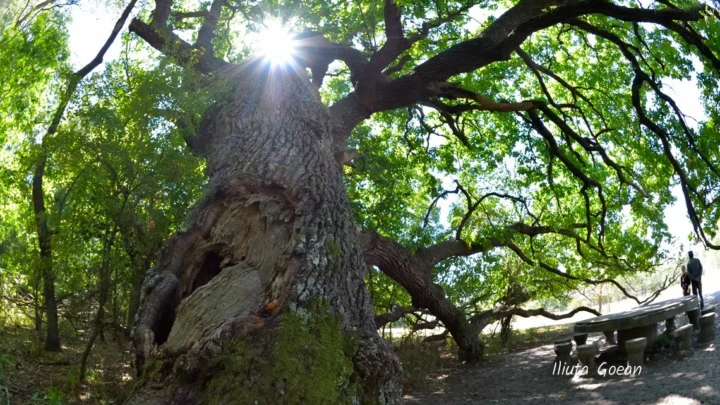
Caraorman: the Dark Forest in the Middle of the Danube Delta
Old oaks between bare sand dunes, the Kneeling Oak and a quiet Ukrainian village: Caraorman, the less known sister of Letea Forest.
5 min read
Winter in the Danube Delta: Ice, Eagles and Geese from the North
Geese and ducks from the north, white tailed eagles, Dalmatian pelicans in breeding plumage and frozen landscapes: the Danube Delta in winter, for birders...

4 min read
10 Must-Try Dishes in the Danube Delta
The Danube Delta is not just a paradise for birds and nature lovers – it’s also a dream destination for foodies who appreciate fresh,...