


No. 79 on our checklistLittle Ringed Plover (Thinornis dubius)
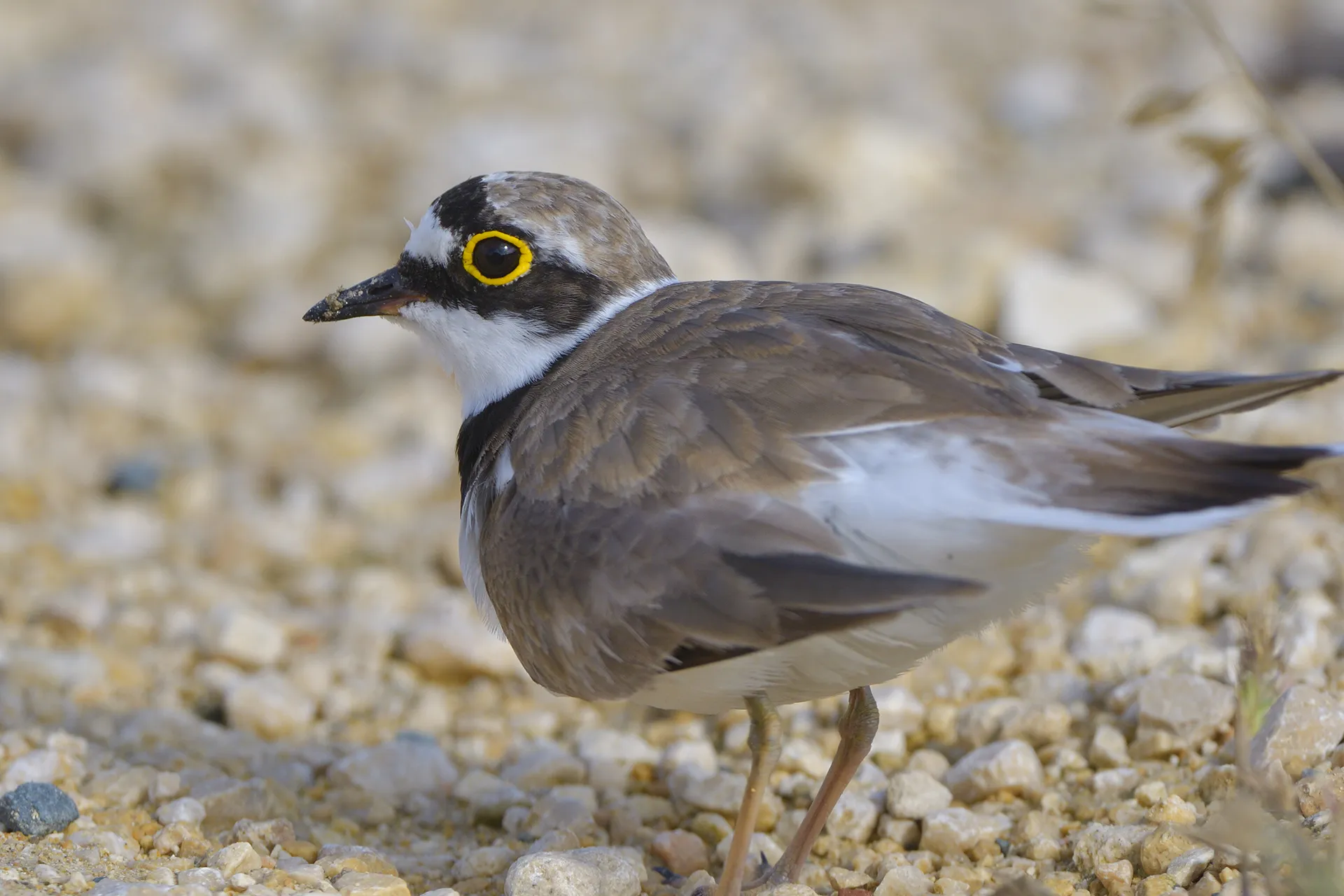
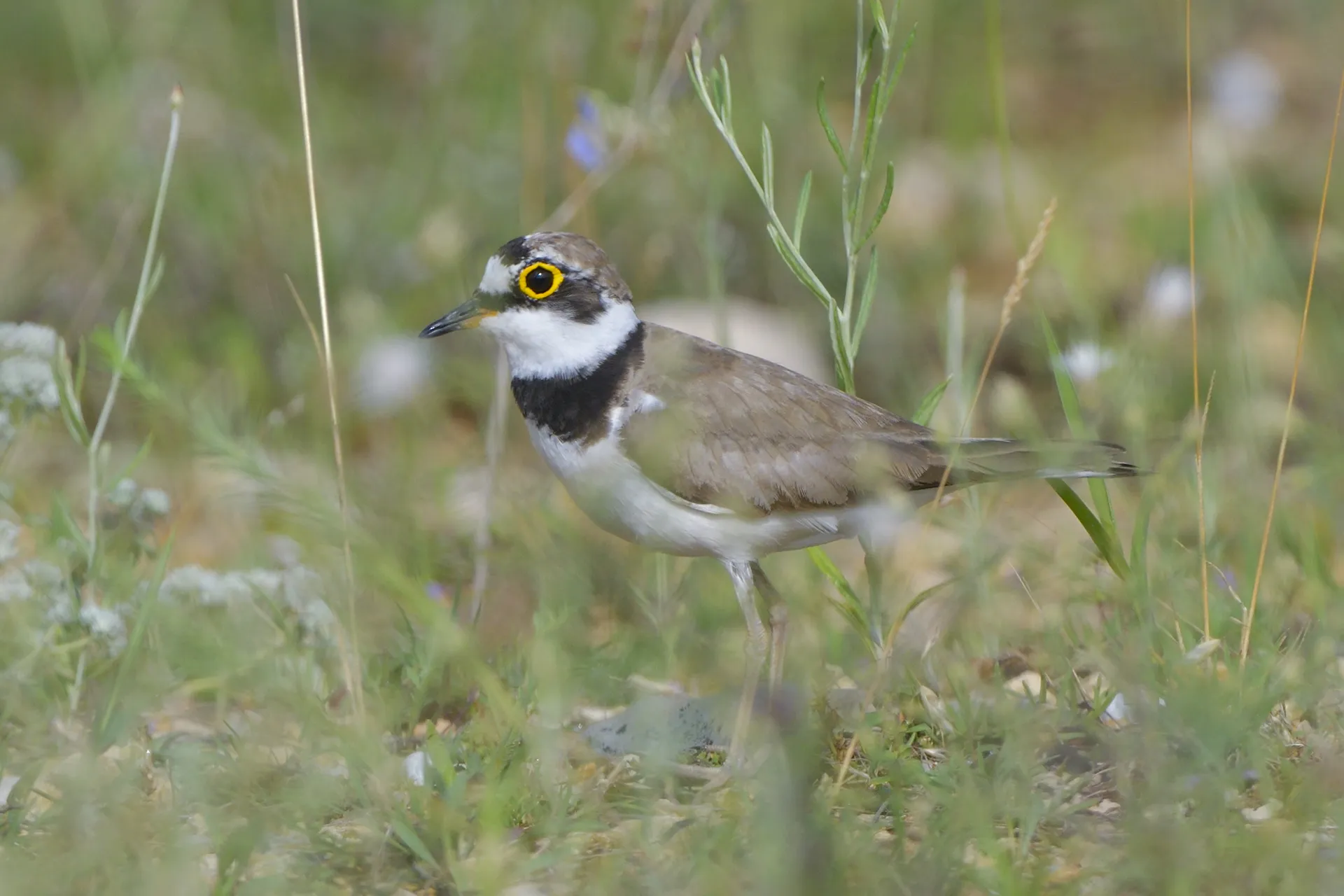
A bright yellow eye-ring distinguishes the Little Ringed Plover, which breeds on open ground near water in the Danube Delta and Dobrogea.
The Little Ringed Plover (Thinornis dubius) is a small shorebird with a narrow yellow eye-ring in adult plumage. It is a summer breeder in the Danube Delta and Dobrogea; the checklist also records it very rarely in November.
Scopoli originally described it as Charadrius dubius in 1786.

Quick facts
Quick facts
- Scientific name Thinornis dubius (Scopoli, 1786)
- Common name Little Ringed Plover
- Family Charadriidae
- Order Charadriiformes
- Weight about 38 g
- Habitat open gravel, shingle or sand, often near fresh water
- Breeding usually 4 eggs; both parents incubate for 24–25 days; young typically fledge at 25–27 days
- Conservation status Least Concern globally; Romania (2022): Least Concern as a breeding bird
When to see it in the Danube Delta and Dobrogea
- JanNot normally recorded
- FebNot normally recorded
- MarScarce
- AprPresent
- MayPresent
- JunPresent
- JulPresent
- AugPresent
- SepPresent
- OctScarce
- NovVery rare
- DecNot normally recorded
- Status here
- Summer breeder; recorded March–November, very rare in November.
- IUCN Red List
- Least Concern
- Our checklist
- No. 79 of 385 · see the full checklist
How to recognize it
An adult has a yellow ring around the eye, a dark bill and paler legs than an adult Common Ringed Plover. Its wing looks plain in flight rather than showing a strong white stripe. The eye-ring needs a good view; when a bird takes off, the wing pattern can be easier to check.
Open ground near water
Little Ringed Plovers favour fresh water and can breed on river gravels, shingle and the exposed ground around sand or gravel pits. The local checklist records them more regularly from April to September. If birds are active on a gravel bank during the breeding season, watch from a distance rather than walking across the open ground.
Interesting facts
- The eye-ring is yellow. It is one of the quickest clues on an adult seen well.
- There is no broad white wing stripe. Common Ringed Plover shows one clearly in flight.
- It nests on open gravel or sand. Gravel workings can offer suitable habitat as well as natural river banks.
- Both parents incubate. A typical clutch contains four eggs.
Status and conservation
The Little Ringed Plover is Least Concern globally. Romania’s 2022 Red List assessed the breeding population as Least Concern under the name Charadrius dubius. It reports 3,000–10,000 breeding pairs nationally and an unknown short-term trend.
See it on our tours
On our multi-day Danube Delta discovery tours, scan open sand or gravel near water without walking onto potential nesting ground. With a good view, check the fine yellow ring around the eye.
See it with us
Our birding guides are biologists and ornithologists who are on the water every day of the year. Small groups, open boats, the best hours of the day.
Keep reading
Keep reading
More from the blog

3 min read
Little Egret (Egretta garzetta)
The Little Egret, the snow white heron with yellow feet: identification, its active hunting, the plume trade that nearly wiped it out and where...

2 min read
Black-winged Stilt (Himantopus himantopus)
Long pink legs and a fine black bill make the Black-winged Stilt easy to recognize as it wades across shallow wetlands of the Danube...

3 min read
European Bee-eater (Merops apiaster)
The European Bee-eater, one of the most colourful birds in Europe: identification, how it disarms bees, colonies in sand banks and where to see...