

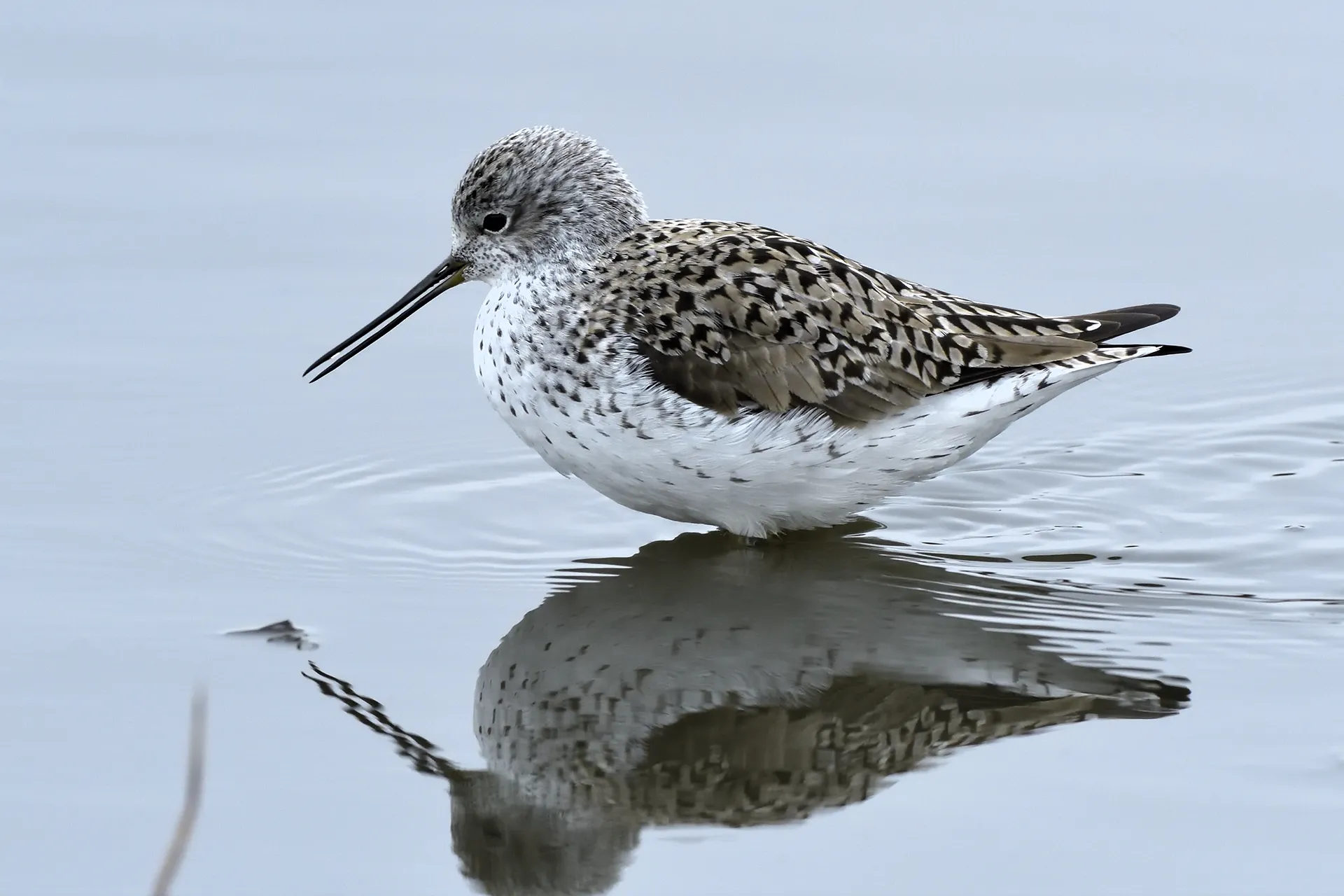
No. 100 on our checklistMarsh Sandpiper (Tringa stagnatilis)
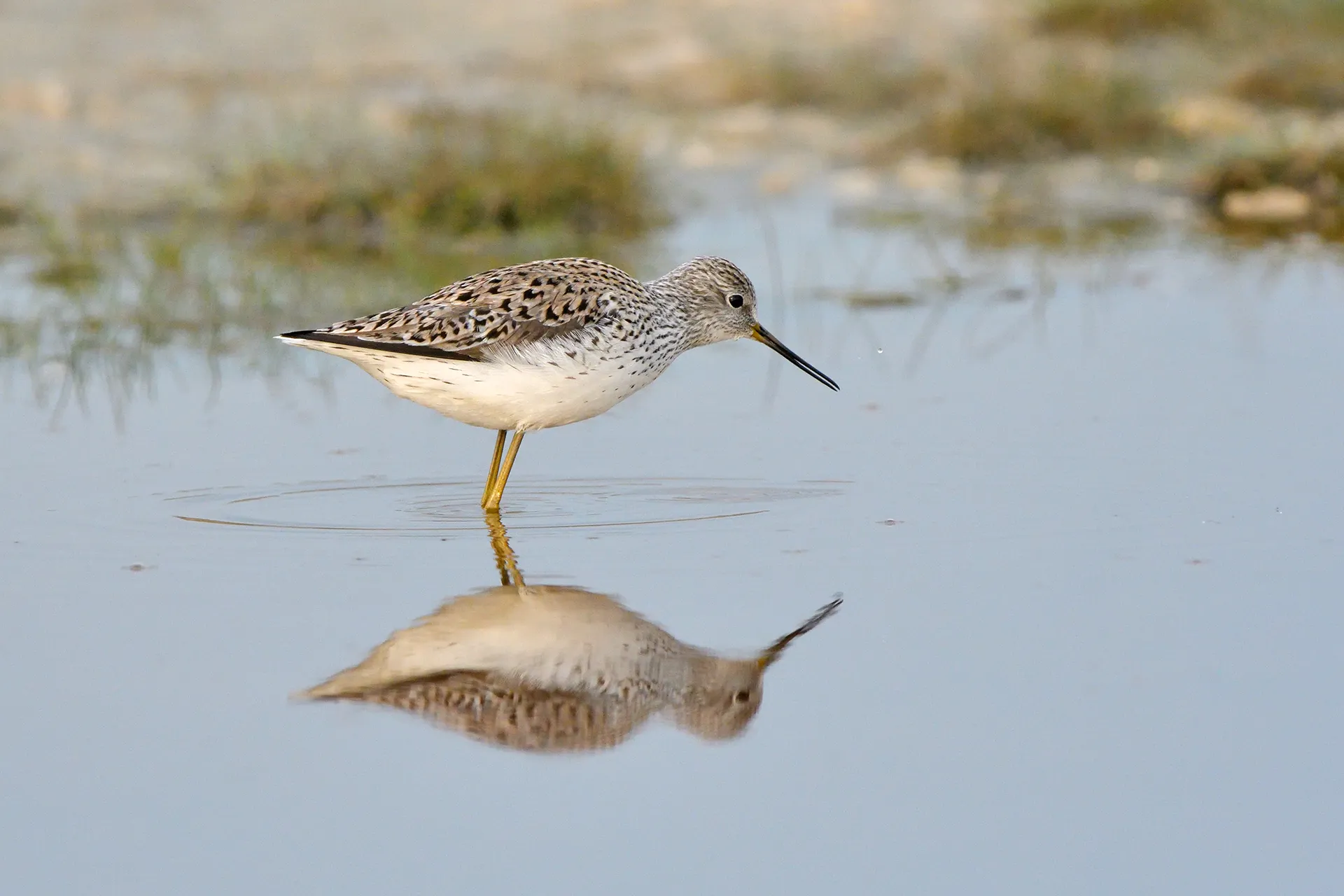
A needle-fine bill and long legs distinguish the Marsh Sandpiper, a spring and late-summer passage migrant in the Danube Delta.
The Marsh Sandpiper (Tringa stagnatilis) is a slender wader with long legs and a fine, straight bill. In the Danube Delta and Dobrogea the checklist records it on passage, most regularly in April, August and September.
Bechstein originally described it as Totanus stagnatilis in 1803.
Quick facts
Quick facts
- Scientific name Tringa stagnatilis (Bechstein, 1803)
- Common name Marsh Sandpiper
- Family Scolopacidae
- Order Charadriiformes
- Weight about 78 g
- Habitat shallow freshwater and brackish wetlands and flooded ground
- Breeding in breeding areas, nests in a shallow ground depression near wetlands
- Conservation status Least Concern globally; Romania (2022): passage population not evaluated
When to see it in the Danube Delta and Dobrogea
- JanNot normally recorded
- FebNot normally recorded
- MarScarce
- AprPresent
- MayScarce
- JunNot normally recorded
- JulScarce
- AugPresent
- SepPresent
- OctScarce
- NovNot normally recorded
- DecNot normally recorded
- Status here
- Passage migrant. Most regularly recorded in April, August and September.
- IUCN Red List
- Least Concern
- Our checklist
- No. 100 of 385 · see the full checklist
How to recognize it
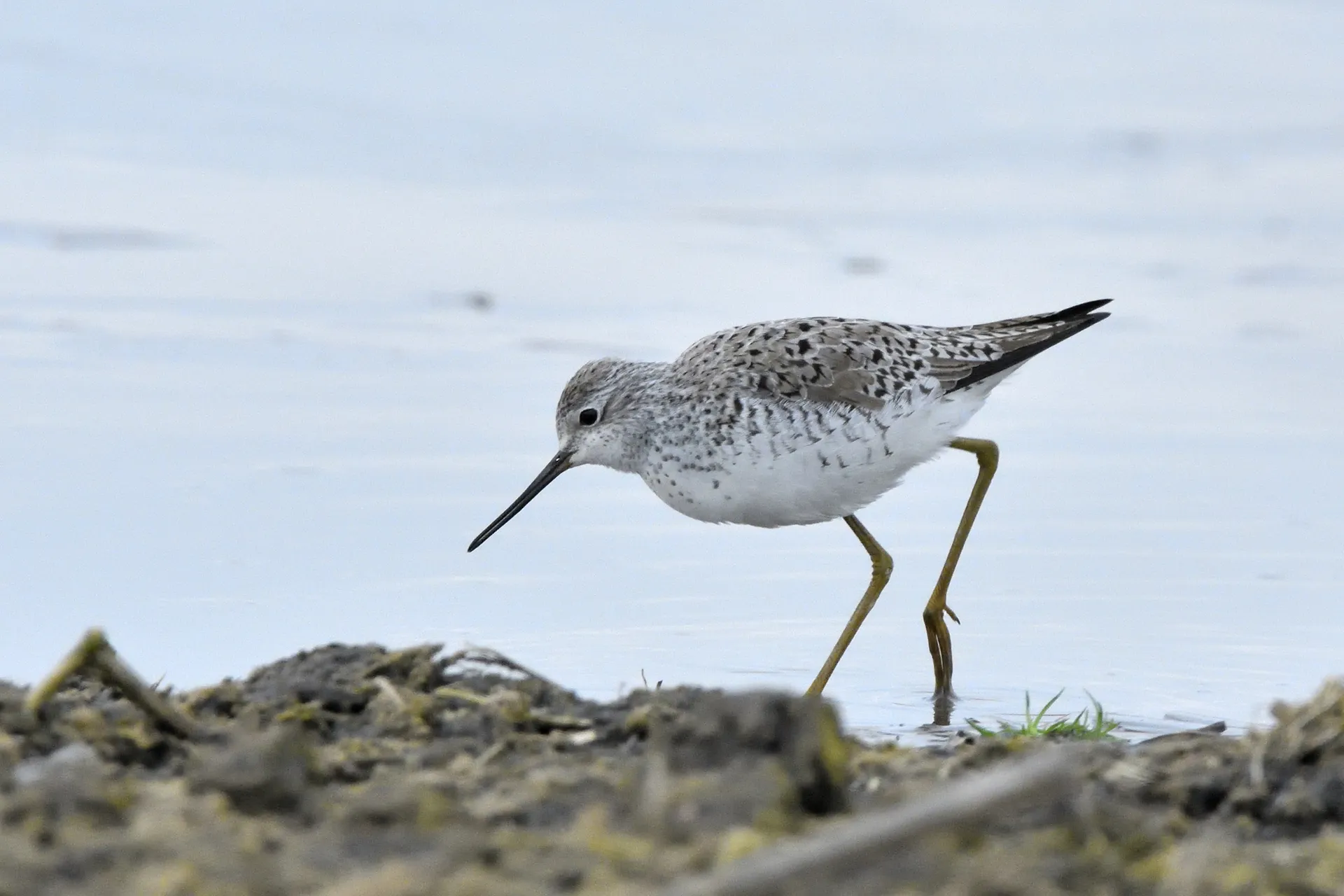
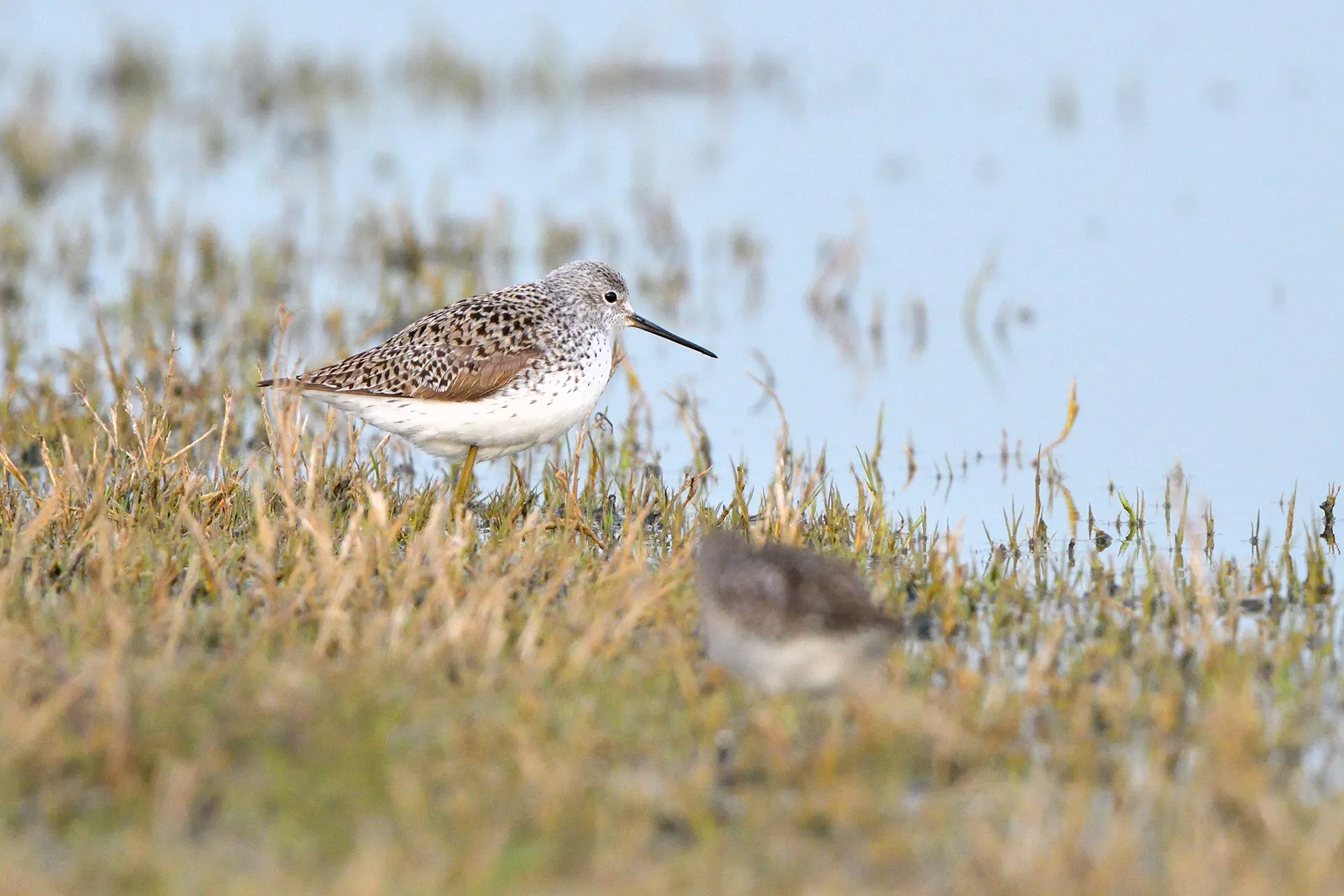
Start with the proportions: a slim body, very long greenish legs and a needle-fine straight bill. A Common Greenshank is bulkier and has a heavier bill, so the shape of the bill is a better clue than grey-and-white plumage alone. The long white patch on the back and rump also shows in flight, but is not unique to Marsh Sandpiper.
Passage, not confirmed local breeding
The Marsh Sandpiper breeds elsewhere around inland wetlands, including those in open steppe. Romania’s 2022 Red List mentions historical reports of possible breeding but does not accept them as confirmed evidence. The Danube Delta and Dobrogea checklist consequently serves here as a guide to passage records, not to a nesting season.
Interesting facts
- The bill is needle-fine. It looks much lighter than that of a Common Greenshank.
- The legs look very long for the body. That proportion contributes to its slender silhouette.
- The white back shows in flight. Bill shape and size are still needed because Greenshank shows a similar pattern.
- It is a long-distance migrant. Wintering areas include parts of Africa, Asia and Australia.
Status and conservation
The Marsh Sandpiper is Least Concern globally. The Romanian 2022 Red List records the passage population as Not Evaluated and does not assign a breeding category. The regional checklist lists it as a passage migrant.
See it on our tours
On our multi-day birdwatching tours in the Danube Delta and Dobrogea, scan shallow water at suitable wetland stops during migration. If a slender grey wader looks like a small Greenshank, check the bill before deciding.
See it with us
Our birding guides are biologists and ornithologists who are on the water every day of the year. Small groups, open boats, the best hours of the day.
Keep reading
Keep reading
More from the blog
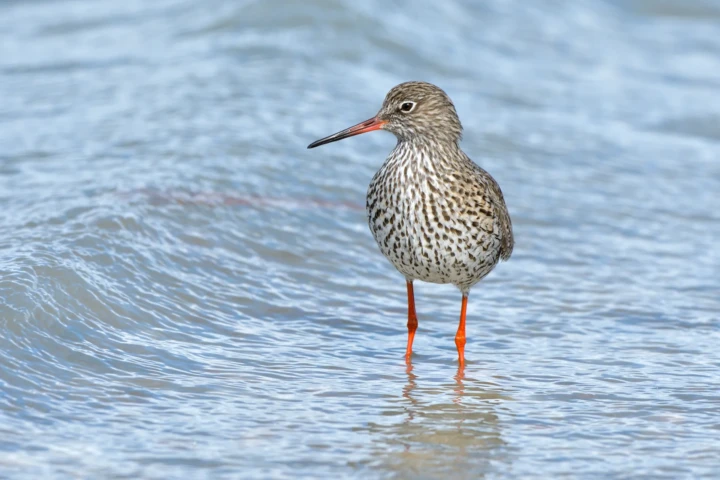
2 min read
Common Redshank (Tringa totanus)
Orange-red legs and a broad white wing edge identify Common Redshank, a rare breeder in the Danube Delta and Dobrogea.
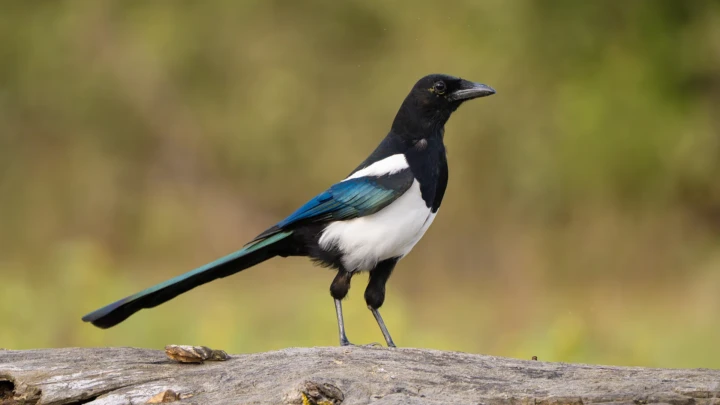
3 min read
Eurasian Magpie (Pica pica)
Black and white with a long, glossy tail and one of the brightest minds among birds: the Eurasian Magpie, a familiar resident of the...
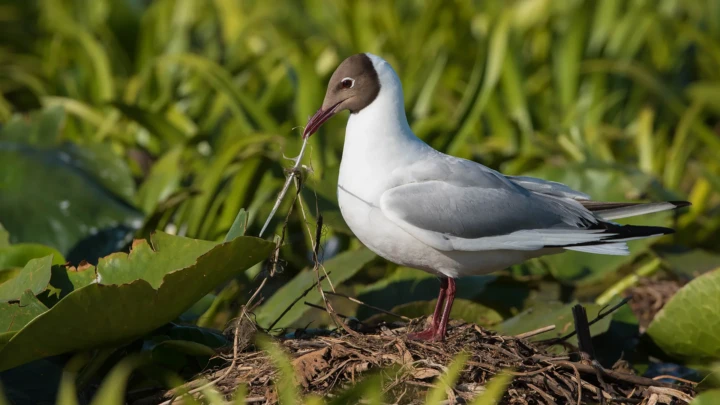
5 min read
Black-headed Gull (Chroicocephalus ridibundus)
Brown hood in summer, white head in winter: the Black-headed Gull in the Danube Delta and Dobrogea, its colonies, behaviour and old name Larus...