

No. 38 on our checklistNorthern Pintail (Anas acuta)
The Northern Pintail, perhaps the most elegant duck in Europe: identification, diet, breeding and when to see it on passage in the Danube Delta.
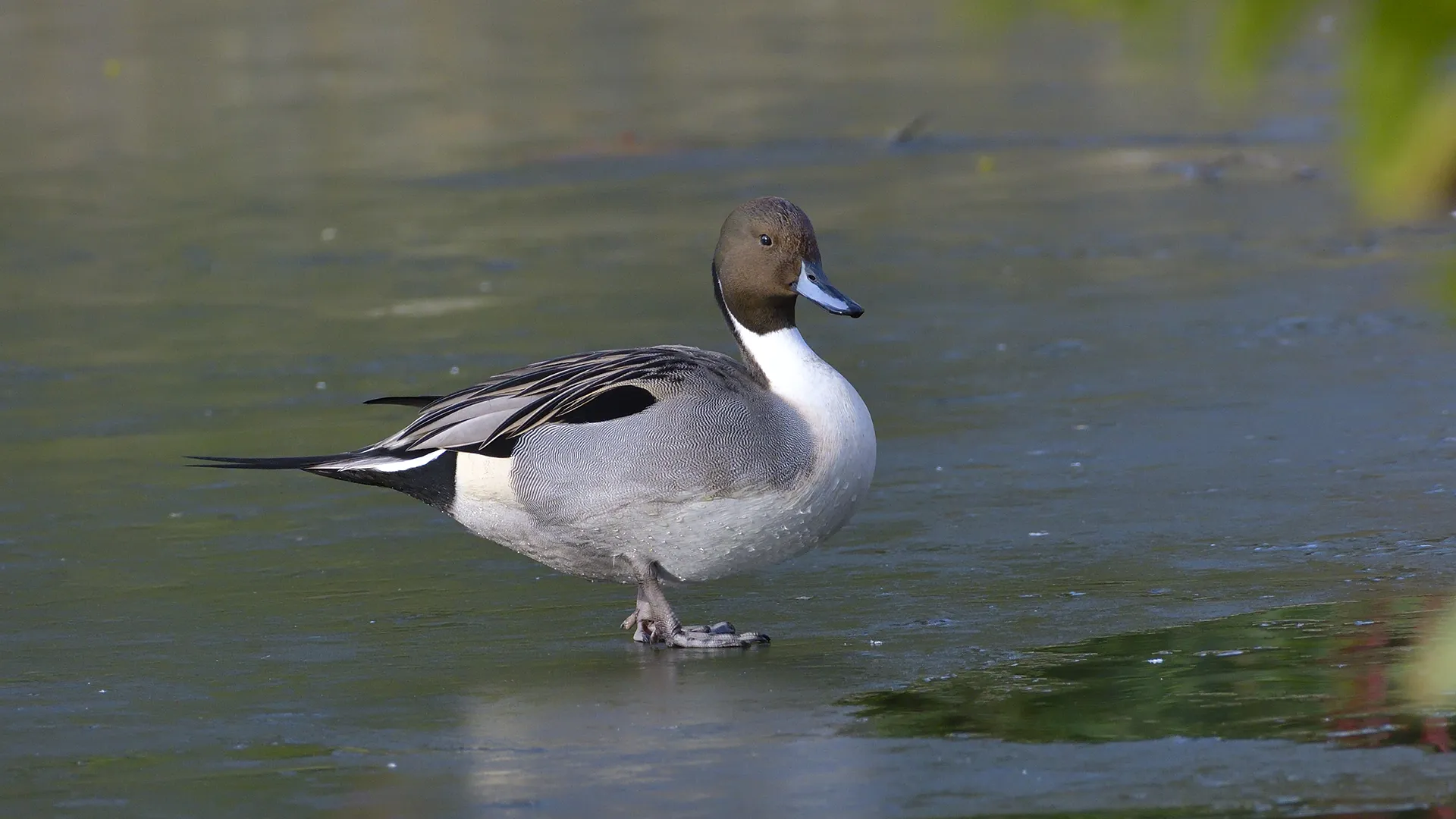
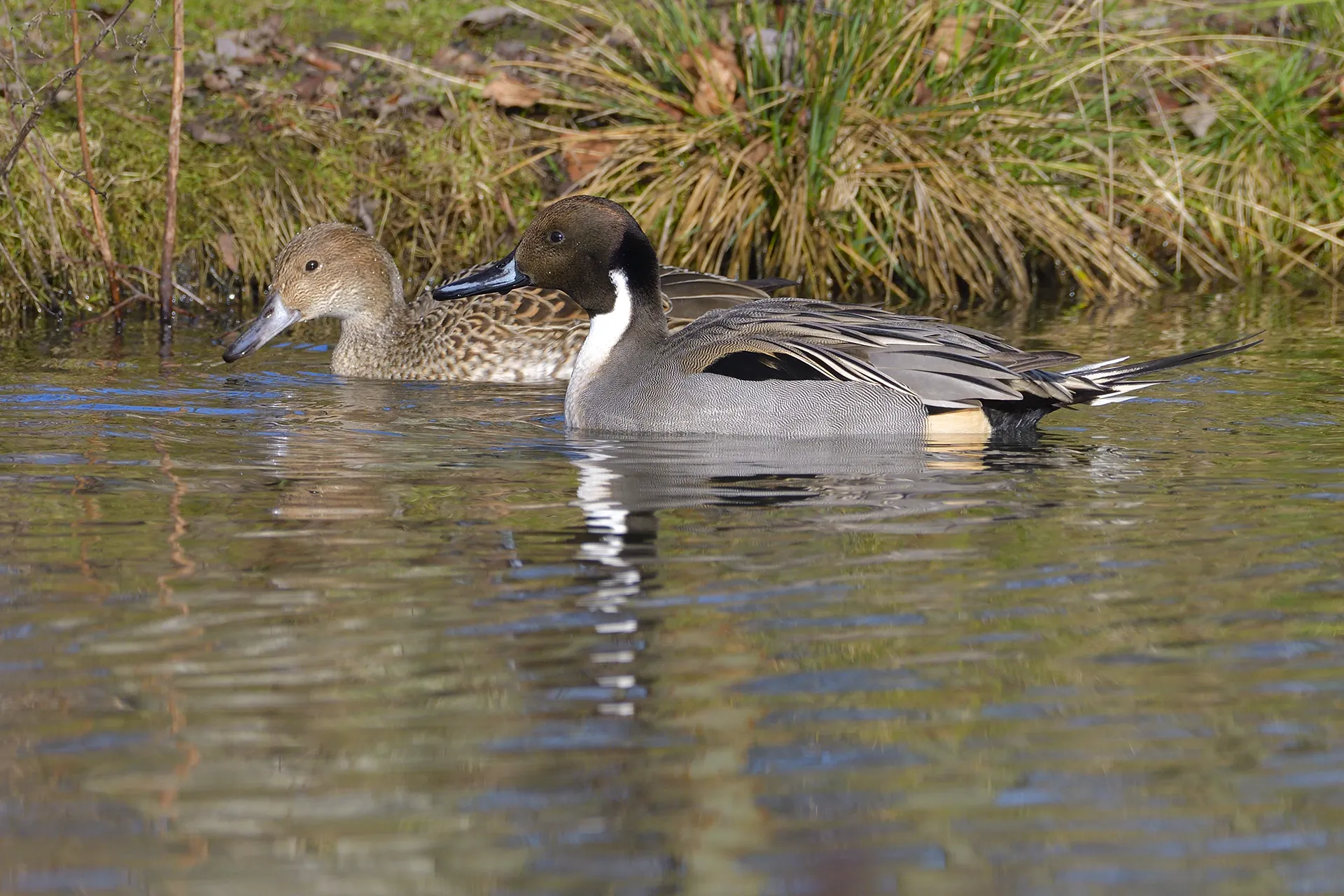
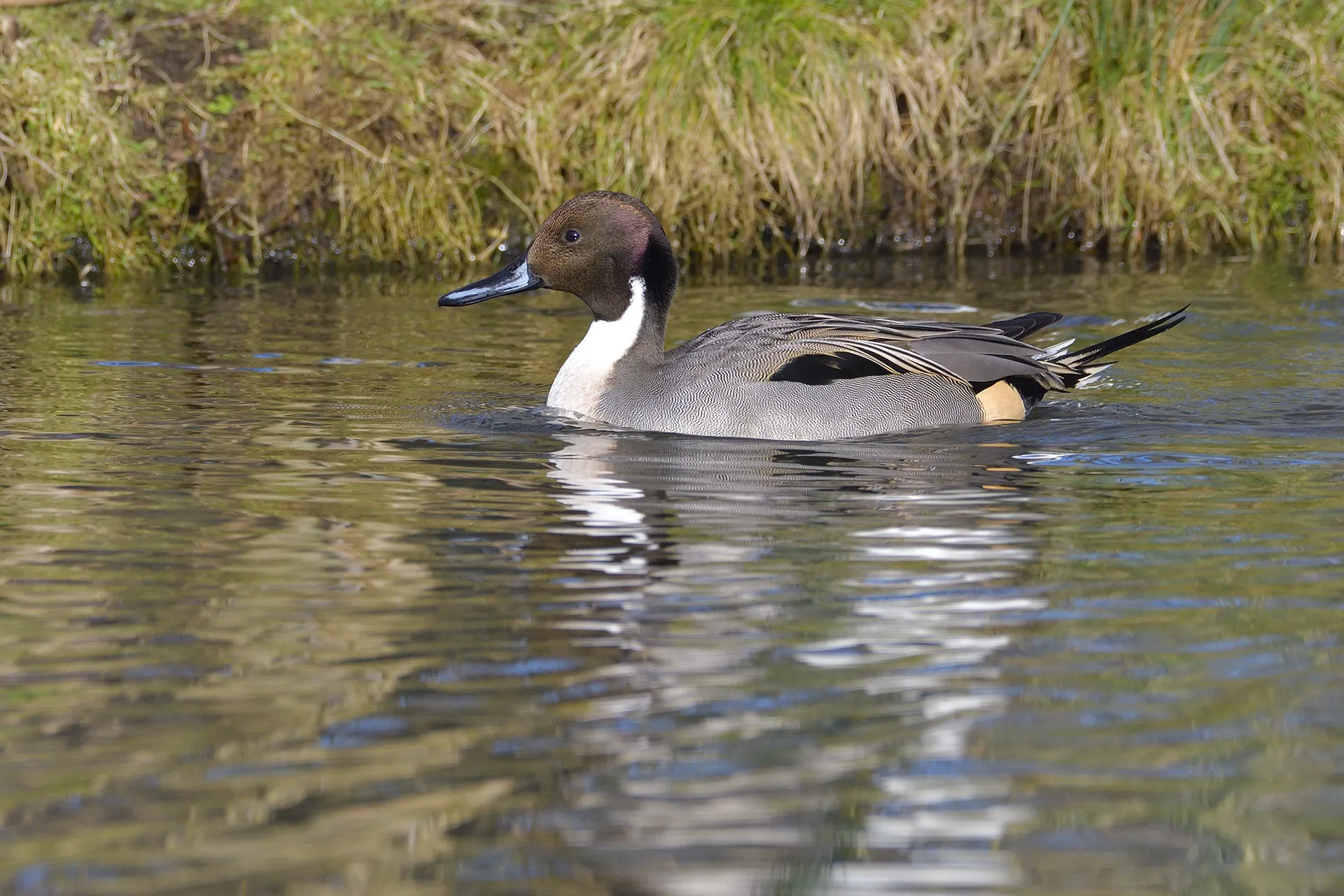
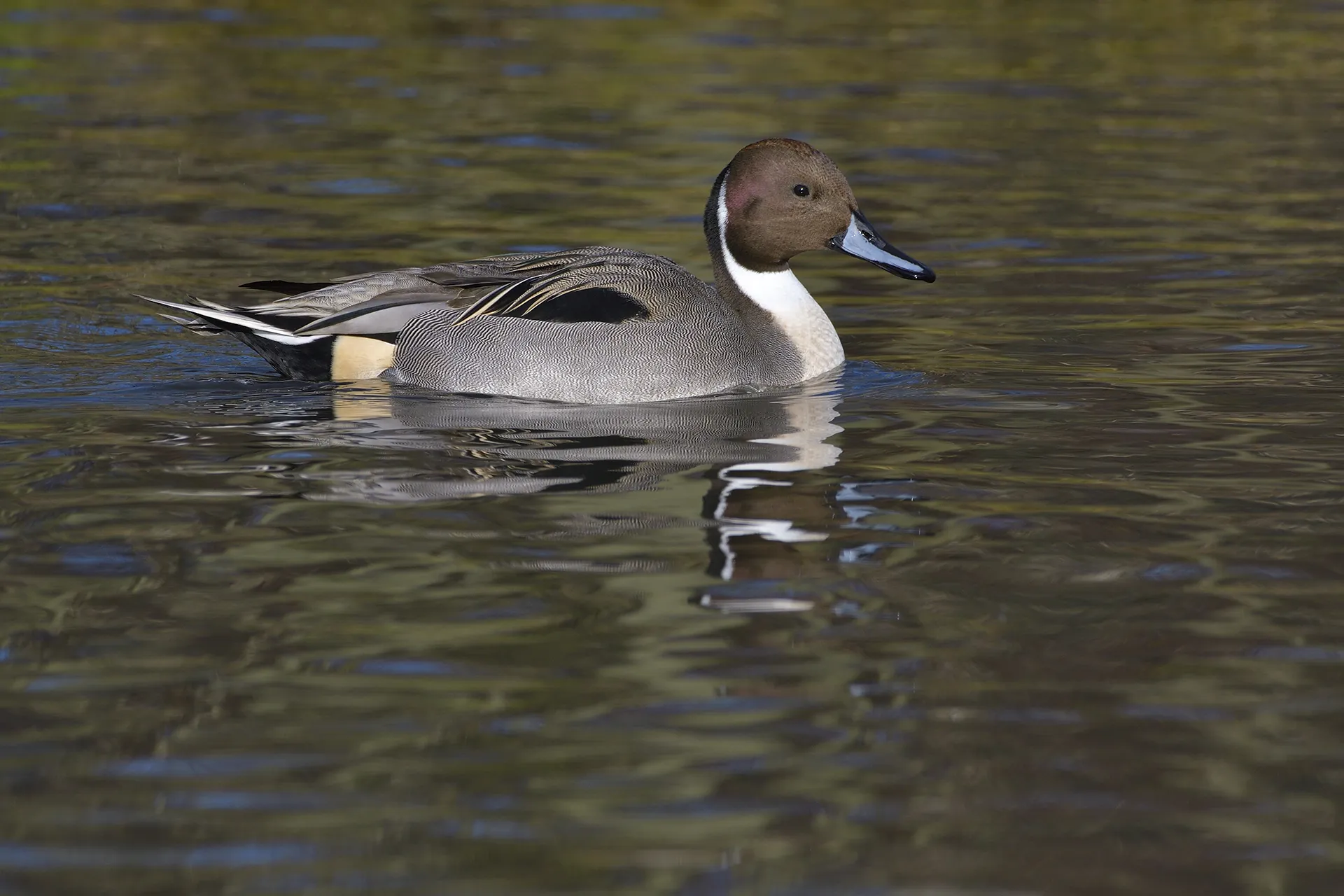
The male Northern Pintail is probably the most elegant duck in Europe: a chocolate head, a white stripe rising up the neck like a ribbon and a long, pointed tail, like a spear, which gives the bird its name. You see it mostly in spring, on passage, in flocks on the lakes of the Danube Delta.
Quick facts
- Scientific name Anas acuta
- Family Anatidae (ducks, geese and swans)
- Length 55-65 cm, including the male’s long tail
- Wingspan 88 cm
- Weight 700-900 g
- In the Danube Delta on passage in spring and autumn, a few winter, breeds very rarely
When to see it in the Danube Delta and Dobrogea
- JanRare
- FebRare
- MarRare
- AprRare
- MayAbsent
- JunAbsent
- JulAbsent
- AugAbsent
- SepRare
- OctRare
- NovRare
- DecRare
- Status here
- Winter visitor.
- IUCN Red List
- Least Concern
- Our checklist
- No. 38 of 385 · see the full checklist
Identification
The male has a chocolate brown head and upper neck, a white stripe running up from the breast along the side of the neck, a white breast, a finely vermiculated grey body, a black rear end with a cream patch and a black tail with two very long, pointed central feathers. The female is mottled brown, like a female Mallard, but slimmer, with a longer neck, a smaller head and a dark grey bill, and her tail is pointed, though shorter.
In flight the silhouette is the best clue: a long, thin neck, narrow wings and a pointed tail, a duck that looks longer than the others.
Diet
It is a dabbling duck. Its long neck lets it reach the bottom, upending, in deeper water than other dabbling ducks. It eats seeds, aquatic plants, roots, snails, small crustaceans and insect larvae, and in winter grain on flooded fields.
Nest and young
It breeds mainly in northern Europe and Asia, in the tundra and on wet meadows. The nest is a scrape on the ground, often in low vegetation, more open than in other ducks. The female lays seven to nine eggs and incubates them alone for about three weeks. It is one of the first ducks to start breeding in spring.
Where and when to see it in the Danube Delta
The best time is March and April, when large flocks pass north and stop on the shallow lakes of the Danube Delta and the lagoons of Dobrogea, and again in autumn. A few stay through the winter on unfrozen water. In spring, males in full breeding plumage are a highlight of our early season day trips.
Interesting facts
- A tail like a spear. The scientific name acuta means “pointed”, after the male’s tail, which alone can measure 10 cm.
- A long distance traveller. Pintails are among the greatest travellers of all ducks: birds from Siberia winter as far away as Africa and India.
- First on the nest. They breed very early, right after the snow melts, so the first clutches are sometimes lost to late floods or snowfall.
Status and threats
The Northern Pintail is widespread across the north of the hemisphere and is listed as Least Concern (LC) by the IUCN, but the European population has declined sharply. The drainage of wet meadows, intensive agriculture and hunting are the main threats.
See it with us
Our birding guides are biologists and ornithologists who are on the water every day of the year. Small groups, open boats, the best hours of the day.
Keep reading
Keep reading
More from the blog

4 min read
Black-necked Grebe (Podiceps nigricollis)
Golden fans behind the eyes and red eyes: in spring, one of the most elegant water birds of the Danube Delta lakes.
4 min read
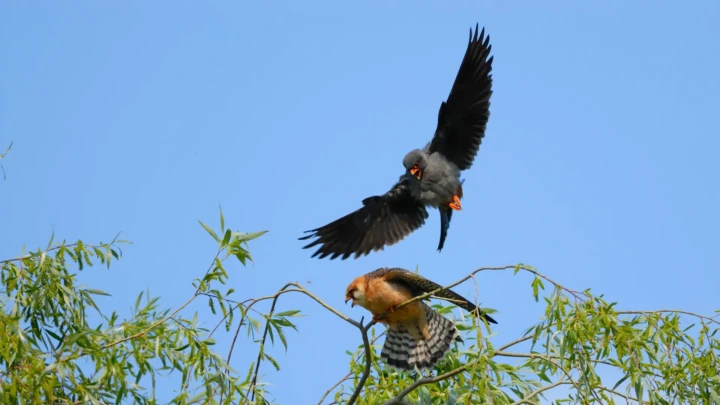
Red-footed Falcon (Falco vespertinus)
A small, sociable falcon that nests in old rook nests and gathers in big roosts before migrating to southern Africa: the Red-footed Falcon in...
4 min read
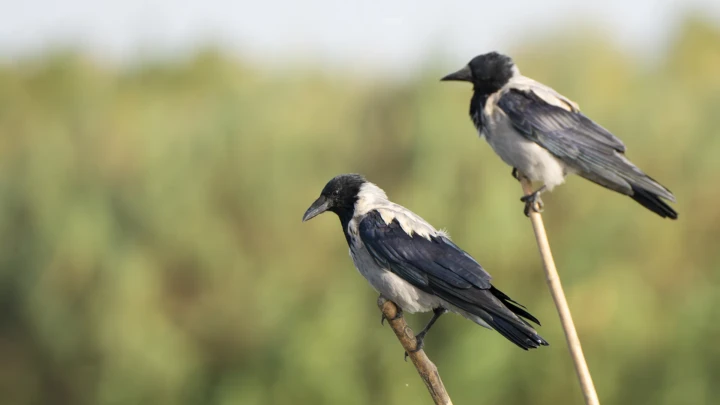
Hooded Crow (Corvus cornix)
Grey body, black hood and wings: the Hooded Crow is the common crow of the Danube Delta, a clever omnivore whose old nests have...