

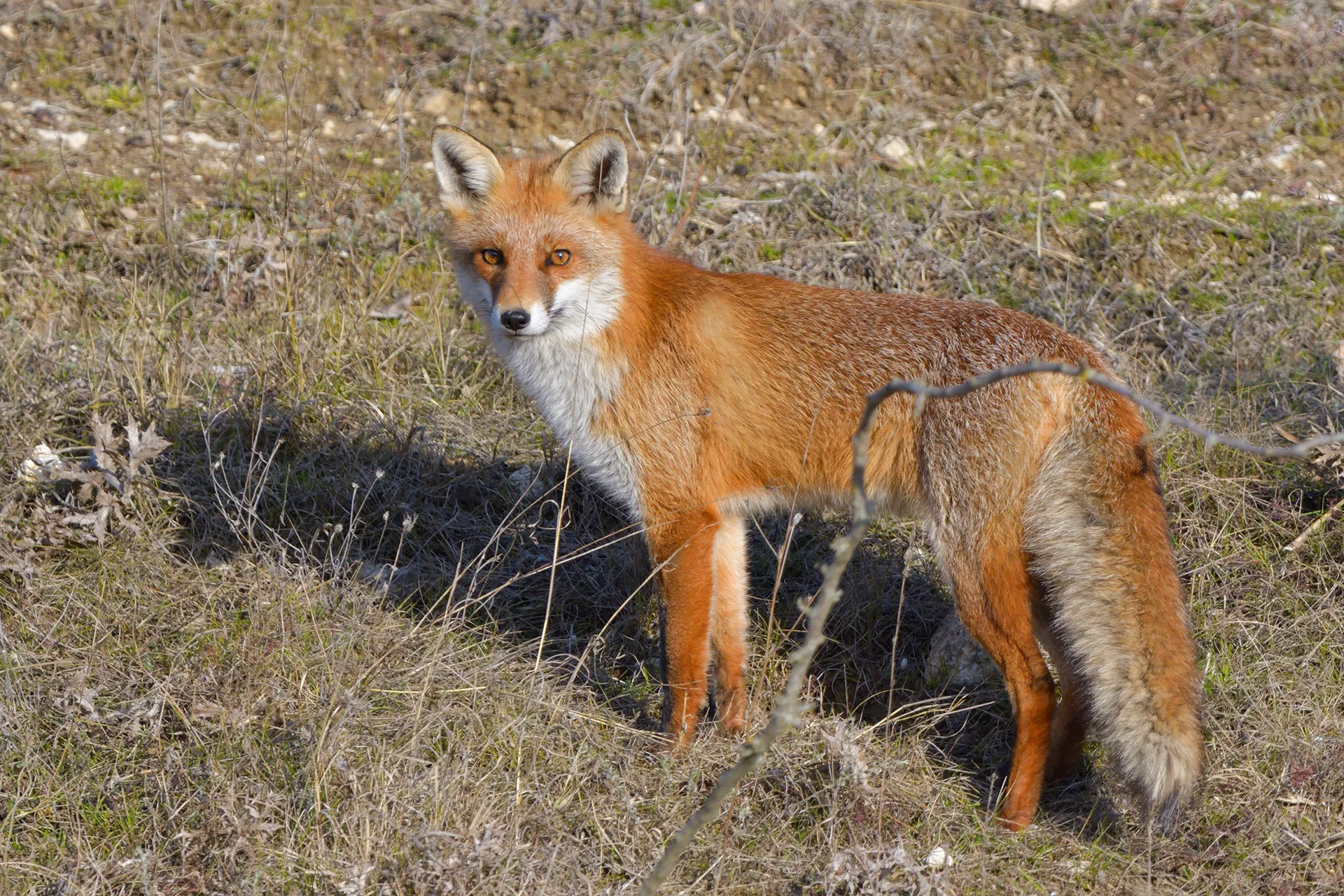
Red Fox (Vulpes vulpes)
The red fox is one of the most adaptable mammals in the Danube Delta, living among reed beds, dry ridges and village edges. Discover its hunting techniques, varied diet, family life and role as a predator in the wetland ecosystem.
A flash of rusty red moves between the reeds, stops for a moment on a dry bank and disappears into the willow scrub. The fox is one of the most familiar wild mammals in Europe, yet seeing one in the Danube Delta is always a special moment. Adaptable, intelligent and remarkably resourceful, it makes a living in a landscape of water, reed beds, dry ridges and scattered villages. It is a predator, a scavenger and an opportunistic feeder, equally at home hunting in open ground or searching for food near human settlements.
Quick facts
- Scientific name Vulpes vulpes (Linnaeus, 1758)
- Family dogs (Canidae)
- Order carnivores (Carnivora)
- Head and body length about 60 to 90 cm
- Tail length about 30 to 50 cm
- Weight usually 4 to 8 kg, with considerable regional variation
- Activity mainly at dusk and during the night, but also active by day
- Diet omnivorous, with small mammals often forming an important part of its diet
- In the Danube Delta present in the Delta and across Dobrogea
- IUCN Red List Least Concern


Description
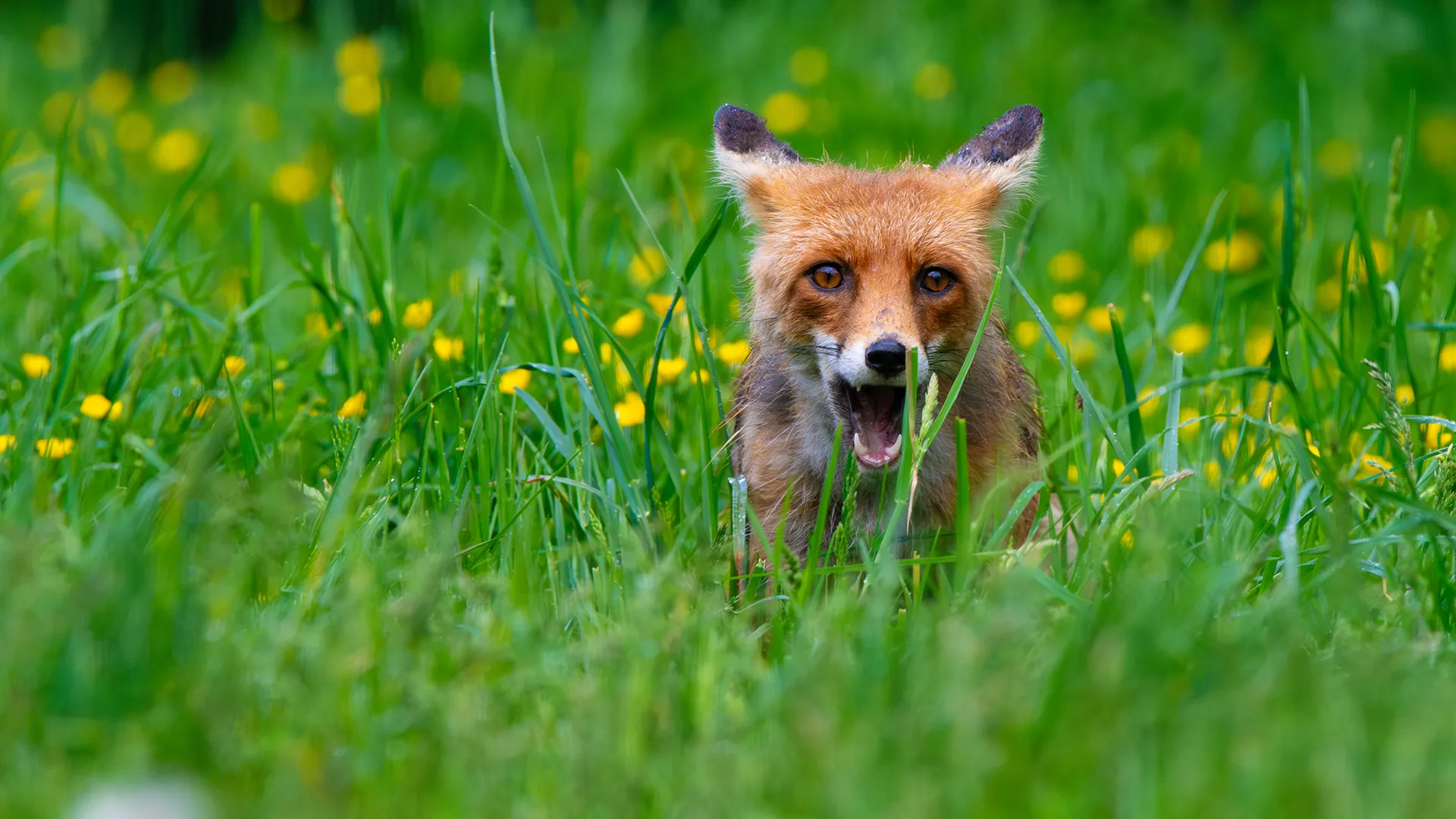
The red fox is a medium-sized canid with a slender body, pointed muzzle, upright triangular ears and a long, bushy tail. Its coat is usually reddish-orange on the back and sides, with a paler underside, dark markings on the lower legs and often a white tip to the tail. The intensity of the red colour varies considerably between individuals, and some foxes are much darker, with brown or almost black areas in their coat.
The bushy tail, known as a brush, is one of the fox’s most recognisable features. It helps the animal maintain balance when running and turning, provides warmth when curled up to rest and is also used in communication. In winter, the thick coat and full tail make the fox look considerably larger than it does during the warmer months.
Foxes have excellent hearing and a highly developed sense of smell. Their large ears can detect small movements in vegetation, while their eyes are adapted to low-light conditions. The combination of these senses makes them efficient hunters, particularly when searching for rodents hidden in grass or under snow.
Subspecies: which red fox lives in Romania?
The red fox has an enormous geographical range, extending across much of the Northern Hemisphere. Over time, numerous subspecies have been described, based mainly on geographical distribution and differences in size, coat colour and skull characteristics. The boundaries between some of these forms are not always clear, and classifications have changed between taxonomic authorities.
Romanian mammal checklists have traditionally listed the subspecies Vulpes vulpes crucigera (Bechstein, 1789) for the country’s fauna. The name is therefore relevant when discussing the historical taxonomy of Romanian red foxes, including those from Dobrogea.
However, this traditional subspecies assignment should not be confused with a genetic confirmation for the Danube Delta population. The red fox is highly variable across its range, and a detailed genetic study specifically addressing the foxes of the Delta would be needed to establish their population relationships with greater certainty. For this article, the most reliable identification is simply Vulpes vulpes, the red fox.
For reference, see the Revised checklist of the Mammal Species of the Romanian Fauna, which includes V. v. crucigera, and the IUCN Red List account for the red fox.
Habitat: from reed beds to village edges
Few carnivores are as adaptable as the red fox. It occupies forests, grasslands, agricultural land, wetlands, mountains and even large cities. It generally does well in landscapes where different habitats meet: woodland edges, open fields, scrub, riverbanks and areas with enough cover to provide shelter.
The Danube Delta offers a surprising variety of places for a terrestrial predator. Foxes use the higher natural levees, dry ridges, willow-covered banks and the edges of reed beds. They can also be found around villages, where gardens, poultry yards and discarded food may provide additional feeding opportunities.
In the wider Dobrogea region, the red fox is equally at home in agricultural landscapes, dry grasslands, small patches of woodland and the scrub-covered hills of the North Dobrogea Plateau. Its ability to exploit different habitats explains why it remains widespread even in areas where other large carnivores are absent.
A study of terrestrial mammals in Dobrogea recorded the red fox across the region, including areas around the Danube Delta Biosphere Reserve, the Măcin Mountains and the North Dobrogea Plateau. The researchers noted that widespread species such as the fox may receive less attention in field surveys precisely because they are so familiar.
Behaviour: a solitary hunter with a flexible routine
Red foxes are usually solitary outside the breeding season. An adult male and female may share a territory and raise their young together, but they generally forage independently. Their territories vary considerably in size, depending on food availability, habitat quality and the presence of other foxes.
Foxes are mainly crepuscular and nocturnal, becoming active around sunset and continuing through the night. However, they are not strictly nocturnal. In quiet areas, during the breeding season or when food is abundant, a fox may be seen during daylight. In the Danube Delta, early morning and the last hours of daylight can offer particularly good opportunities for observation.
Foxes communicate through scent marking, body language and a surprisingly varied range of calls. Urine and droppings are used to mark routes and territorial boundaries. Their vocalisations include barks, yelps, whines and the well-known harsh, almost scream-like call that can be heard during the breeding season.
A fox usually rests in a sheltered place during the day, often in dense vegetation, scrub or an underground den. It may dig its own den, but it can also use an abandoned burrow made by another animal. The same den system may be used over several years, especially when it offers a safe place to raise young.
Diet: the ultimate opportunist
The red fox is an omnivore with a remarkably flexible diet. Small mammals, especially mice and voles, are often important prey, but it also eats hares, rabbits, birds, eggs, reptiles, amphibians, insects and earthworms. Fruits, berries and other plant material become more important when they are available.
In wetlands such as the Danube Delta, its food may include rodents living along the banks, frogs, insects, fish and birds or eggs that it can find. It also feeds on carrion, taking advantage of animals that have died from natural causes or have been left behind by predators. The exact composition of its diet changes with the seasons and with local food availability.
One of the fox’s best-known hunting techniques is the high pounce used to catch rodents. It first listens carefully, locating movement beneath the grass or snow, then jumps and lands with its forepaws over the prey. The manoeuvre looks almost playful, but it is a highly effective way of catching small mammals hidden from view.
Foxes sometimes store surplus food by burying it in shallow holes. These caches can be retrieved later, allowing the animal to make use of a successful hunt even when it cannot eat everything at once.
Reproduction: raising a family in a hidden den
The breeding season usually takes place in winter, with mating most often occurring between December and February in much of Central and Eastern Europe. During this period, foxes become more vocal and may travel greater distances while searching for a mate.
After a gestation period of approximately 51 to 53 days, the female gives birth in a den, usually in March or April. A typical litter contains four to six cubs, although the number can vary. Newborn cubs are blind, deaf and covered in short, dark fur. Their eyes open after roughly two weeks, and they begin exploring the area around the den when they are about a month old.
The female spends most of the early weeks with the cubs, while the male usually brings food to the den. As the young grow, both parents may provide food, and the cubs gradually begin to accompany them outside. They are weaned at around eight to ten weeks and continue learning to hunt during the summer.
By autumn, young foxes usually begin to disperse and establish territories of their own. Some may remain close to their birthplace, while others travel much farther. This movement helps the species colonise new areas and maintain connections between populations.
The fox’s role in the ecosystem
As a medium-sized predator, the red fox plays an important role in the food web. By hunting rodents and other small mammals, it can influence their local populations. It also consumes carrion, helping remove animal remains from the environment, and disperses seeds through the fruit it eats.
Its diet is not limited to species that people consider pests. Foxes may also take ground-nesting birds, eggs and young animals, particularly when other food is scarce or when nests are easily accessible. This can create conflicts with poultry keepers and conservation interests, especially in areas important for breeding birds.
It is important, however, not to assume that every decline in a bird population is caused by foxes. Predation is a natural ecological process, and its effects depend on habitat conditions, predator density, alternative food sources and other pressures on wildlife. Understanding these relationships requires more than simply blaming one familiar predator.
Interesting facts
- It has an exceptionally wide range. The red fox is one of the most widely distributed terrestrial carnivores in the world, occurring across much of Europe, Asia and North America, as well as in parts of North Africa.
- Its tail is more than decoration. The bushy tail helps with balance, provides warmth during rest and plays a role in communication.
- It can hear rodents underground. Its sensitive hearing helps it locate small prey moving beneath vegetation or snow.
- It sometimes plays with its food. Young foxes practise hunting through play, stalking and pouncing on objects, siblings and insects.
- It is an excellent opportunist. A fox may hunt rodents one night, eat berries the next and feed on carrion when the opportunity arises.
- It does not live in a pack like a wolf. Foxes generally forage alone, although a breeding pair and their young form a family group around the den.
When and where to see the red fox in the Danube Delta
The red fox is present in the Danube Delta throughout the year, but sightings depend on the season, time of day and how much disturbance there is in the area. Look for it along dry banks, natural levees, willow ridges and the edges of villages, especially where open ground meets dense vegetation.
Early morning and late afternoon are good times to watch for foxes. In summer, they may be seen moving along the banks before the heat of the day, while in autumn and winter they can sometimes be active for longer periods during daylight. In spring, the presence of young cubs may bring adults into the open near their dens, although these places should always be observed from a respectful distance.
When travelling by boat, scan the higher banks and the margins of the reed beds rather than looking only at the water. A fox may be resting in the shade, crossing a narrow strip of open ground or following a familiar route along the shore. It often notices a boat long before we notice the animal, so a quiet approach and patience are essential.
Foxes are wild animals and should never be fed or approached in an attempt to obtain a closer photograph. Keeping a respectful distance allows us to observe their natural behaviour without changing it. You can discover more of the Delta’s wildlife on our nature and wildlife tours, and browse other species in our guide to the mammals of the Danube Delta and Dobrogea.
See it with us
Slow open boats, small groups and a guide who knows the places and the wildlife. From a few hours on the water to a week in the Danube Delta and Dobrogea.
Keep reading
Keep reading
More from the blog

9 min read
European Hare (Lepus europaeus) in the Danube Delta
The European hare is a familiar but often overlooked mammal of the Danube Delta and Dobrogea. Discover how it survives in open landscapes, why...
3 min read
The Free Horses of the Danube Delta: the True Story of the Letea Horses
They look wild and live free among the dunes and oaks of Letea, but their story is different: the true story of the horses...
3 min read
European Souslik (Spermophilus citellus): the Little Sentinel of the Steppe
Standing upright at the entrance of its burrow, the European souslik watches over the steppe of Dobrogea: its life, hibernation and why it is...