

Sulina: the Old Port Town where the Danube Meets the Black Sea
The only town in the Danube Delta: the European Commission of the Danube, the old lighthouse, the cemetery of many nations and the beach.
Sulina is the only town in the Danube Delta, the place where the Danube ends its long journey across Europe and flows into the Black Sea. A century and a half ago it was one of the busiest and most cosmopolitan ports of the region, home to sailors, merchants and engineers from all over Europe. Today you can still see a little of the charm and grandeur of those days.
Quick facts
- Where At the mouth of the Sulina branch, on the Black Sea coast
- First mentioned Around 950, as Selinas, by the Byzantine emperor Constantine VII
- Known for The old lighthouse, the churches, the cemetery of many nations and the beach
- Getting there Only by water: no road reaches Sulina
- With us Private day trip from Tulcea or a day of the private tour in Mila 23
The way to Sulina
The visit begins long before the town. On the private day trip from Tulcea the boat leaves the main river for small channels and quiet lakes, stops for a coffee in Mila 23, follows the winding Old Danube past Crisan and joins the Sulina branch for the last stretch to the sea. From Mila 23, on our private tour, the way leads along the Old Danube to Crisan and then down the Sulina branch. The boat docks at the promenade, and from there you explore the town on foot or by local taxi, paid on the spot.
A town built by a European commission
After the Crimean War, the Treaty of Paris of 1856 created the European Commission of the Danube, an international body charged with keeping the mouth of the river open to the ships of all nations. Sulina became its home. Its engineers straightened and deepened the Sulina branch, dredged the mouth and built lighthouses and jetties, and in a few decades the small village became a busy port where many languages were spoken. The Commission is often called an early ancestor of today’s European Union. Its palace, built in the 1860s, still stands on the waterfront and now houses the River Administration of the Lower Danube.
The writer Jean Bart, the pen name of Eugeniu Botez, who served in Sulina as a maritime commissioner, portrayed this world in his novel Europolis, published in 1933.
What to see in Sulina
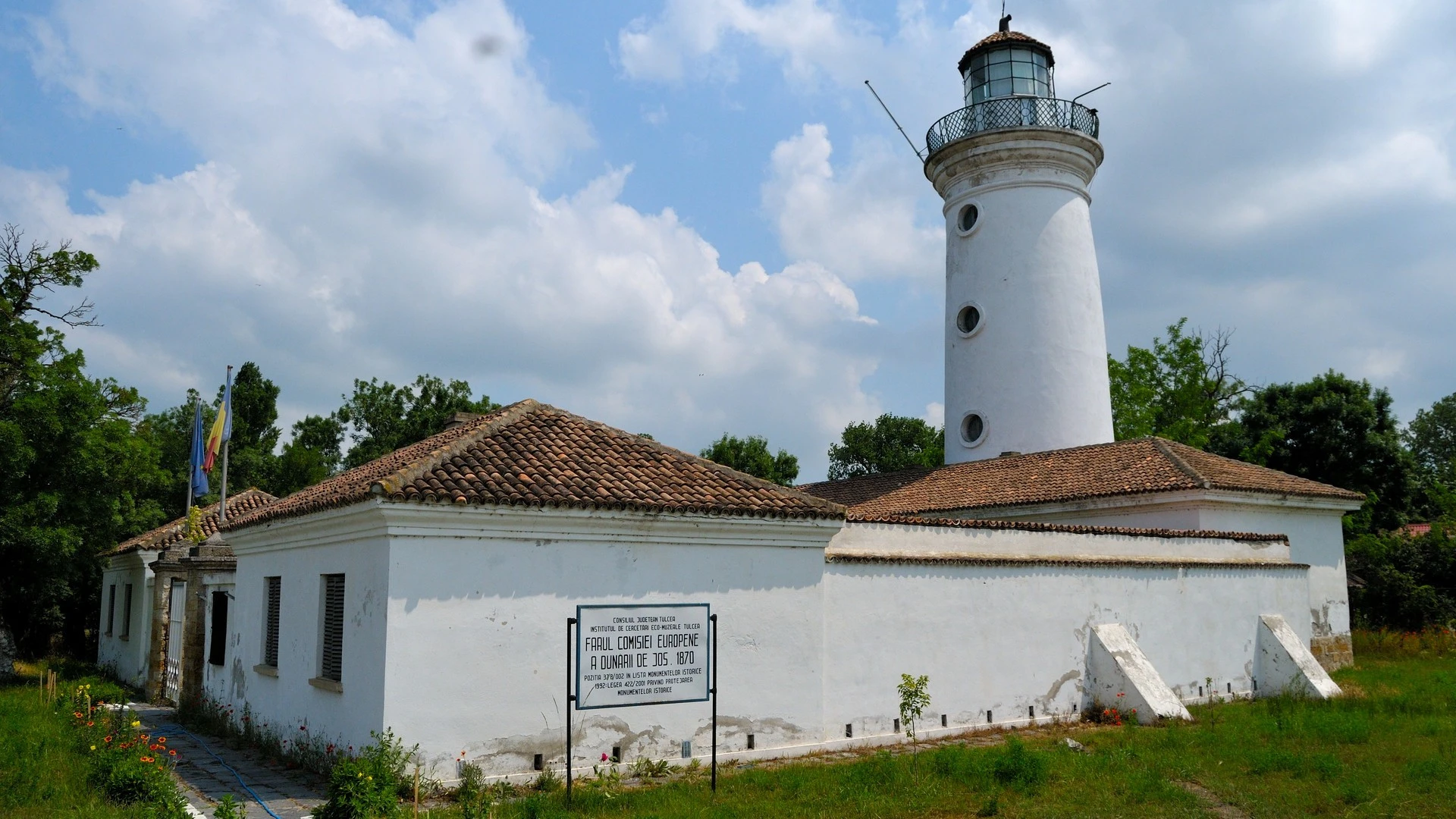
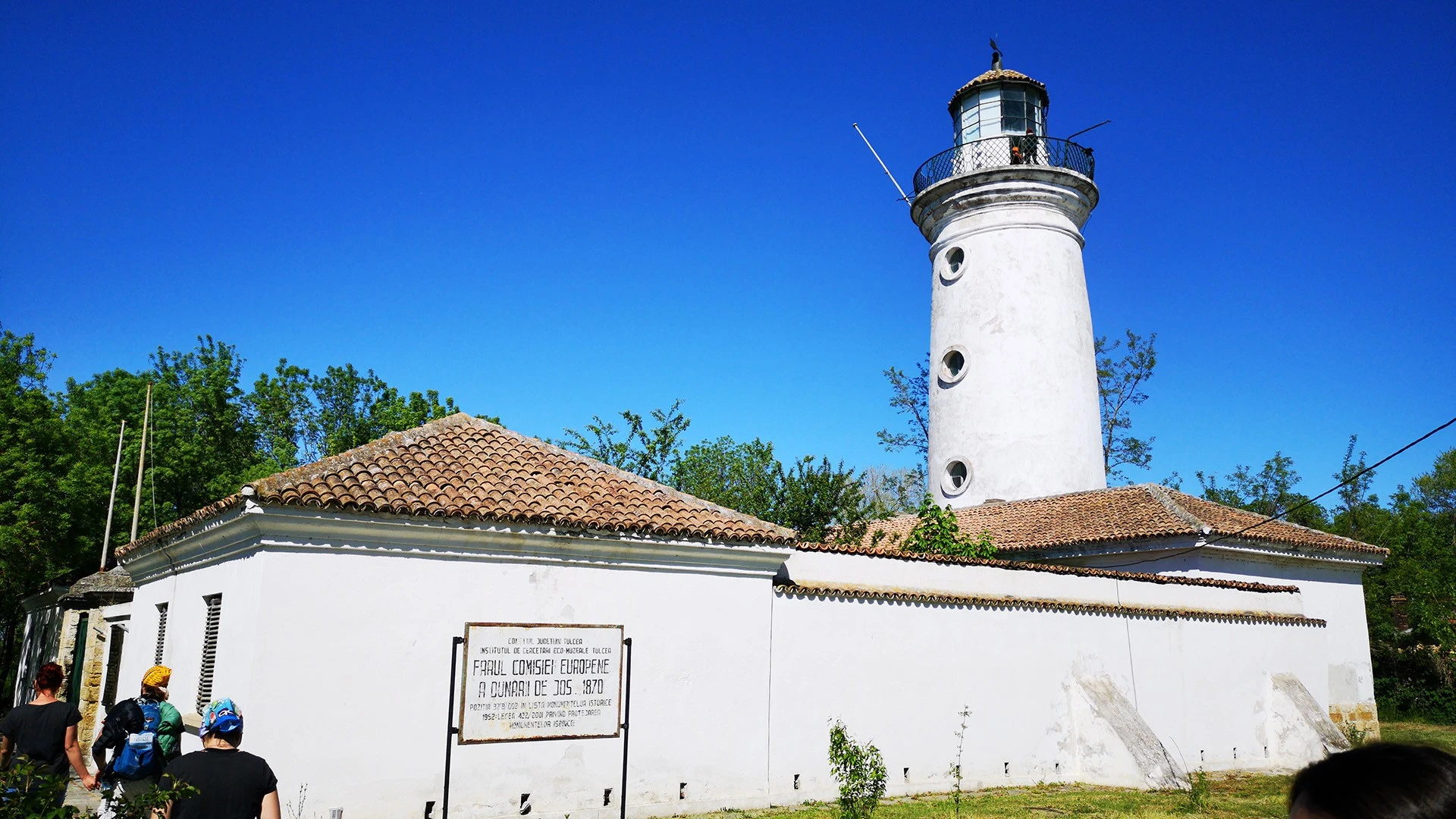
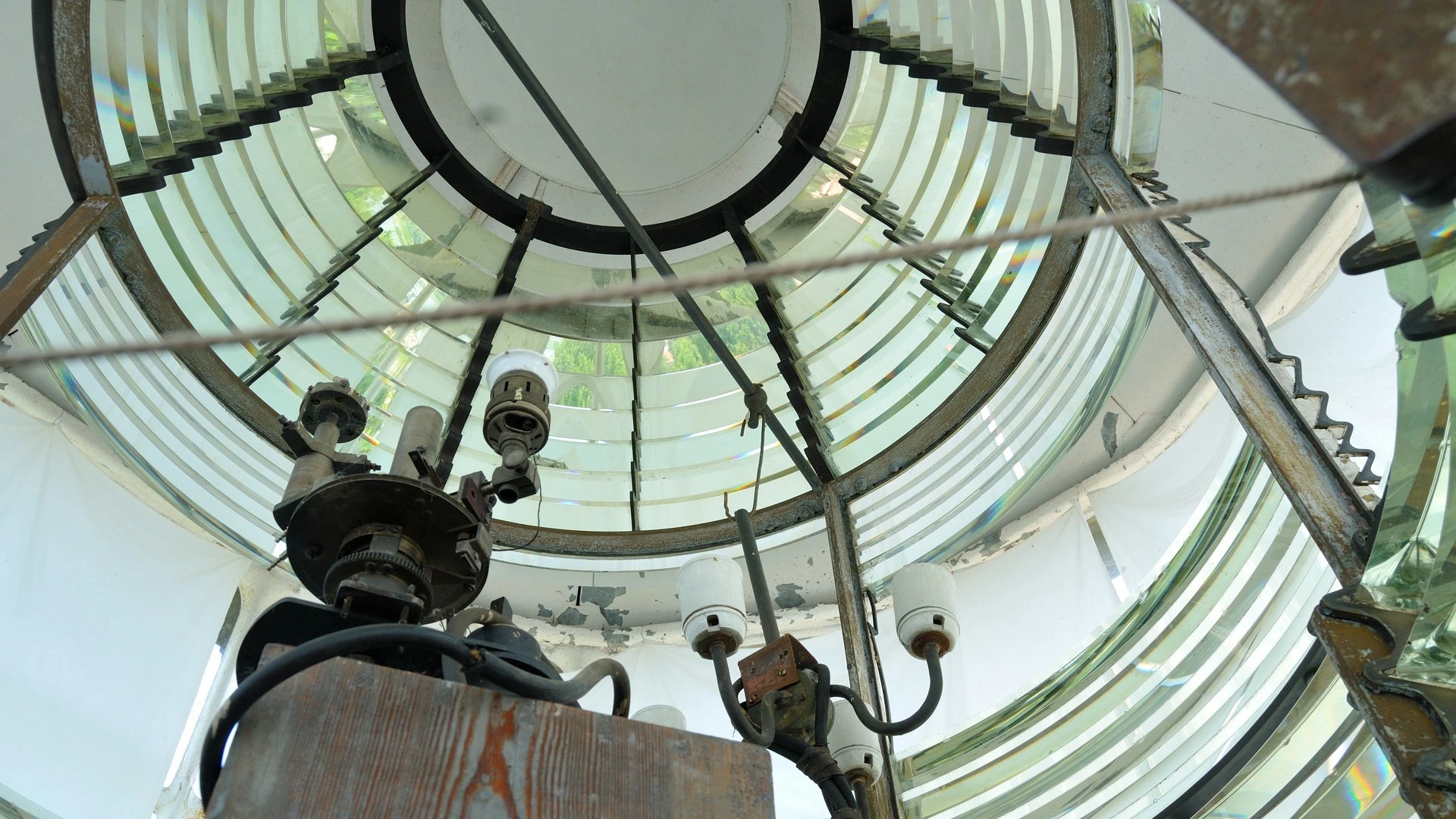
The old lighthouse. Built by the European Commission of the Danube in 1869 and 1870, 17.34 metres tall, it once stood close to the shore; as the Danube carried more and more land into the sea, it ended up well inside the town. Today it is a museum of the Commission, with the study of Jean Bart.
The cemetery. At the edge of the town, on the way to the beach, lie sailors and ship captains, merchants and soldiers, Christians of several churches, Muslims and Jews. An hour or two among its stones tells the story of this cosmopolitan port better than any book.
The churches. The Greek church of Saint Nicholas was built in the 1860s by the Greek community of Sulina, and many of its icons were brought from Greece by Greek sailors. Its restoration gave it modern windows and other modern changes, and it has lost much of its old look. The Orthodox cathedral of Saint Nicholas and Saint Alexander, whose foundation stone was laid by King Carol I, has so far escaped modern restoration and keeps its original mosaics, metal doors, windows and bells. The Roman Catholic church of Saint Nicholas, consecrated in 1863, was raised by the Italian community in Malta stone and brick; it is often closed, but worth seeing from the outside.
The water tower. The tall water tower and the waterworks still supply the town with filtered water. According to the town hall of Sulina, their construction was financed by the Queen of the Netherlands in 1897. The story told in Sulina is that the queen, stopping in the port, asked for a glass of water and was served water straight from the Danube, and that she then decided to give the town a waterworks. In the restoration, the original roof of handmade copper sheets was replaced with painted metal sheet, which took away much of its historic charm.
The beach and the sea
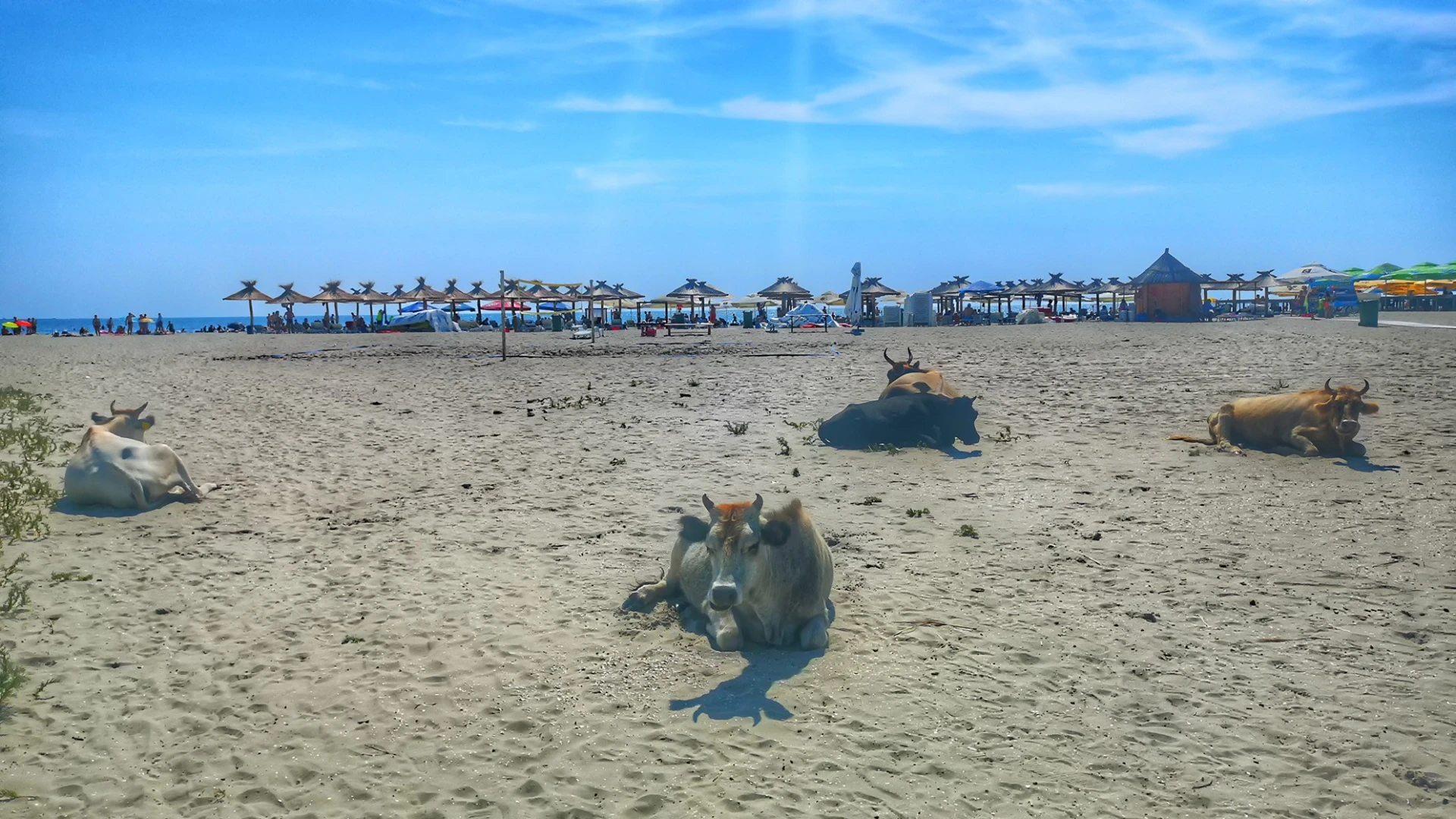
Beyond the cemetery stretches a wide, wild beach of fine sand, about half an hour on foot from the centre, or a short ride by local taxi. In summer there is time for a swim in the Black Sea; in spring and autumn, time enough to walk on the sand and look at the sea.
The Danube enters the sea through a long channel between stone jetties, built to keep its mouth from silting up. Large ships use it and raise strong waves, so you see the sea from the shore, not from the boat.
Know what to expect
Sulina is a town with a rich past, not a nature reserve. The Sulina branch is a wide, straight waterway used by ships, and the wildest part of the day is the journey out, through the channels and lakes. Lunch is on your own, in a restaurant of your choice. If your main wish is wildlife and wild landscapes, our private day trip to Letea is the better choice. If you want to cross the whole Danube Delta to the Black Sea, Sulina is your day.
See it with us
Slow open boats, small groups and a guide who knows the places and the wildlife. From a few hours on the water to a week in the Danube Delta and Dobrogea.
Keep reading
Keep reading
More from the blog

3 min read
Does the Low Water Level of the Danube Affect Trips in the Danube Delta?
Over the past few days, many travelers have contacted us after seeing news reports about the Danube’s unusually low water levels. Naturally, they wanted...

9 min read
The Strictly Protected Areas of the Danube Delta
The Danube Delta is part of UNESCO’s World Heritage and is classified as a Biosphere Reserve, at national level and as a national park...
5 min read
Winter in the Danube Delta: Ice, Eagles and Geese from the North
Geese and ducks from the north, white tailed eagles, Dalmatian pelicans in breeding plumage and frozen landscapes: the Danube Delta in winter, for birders...