

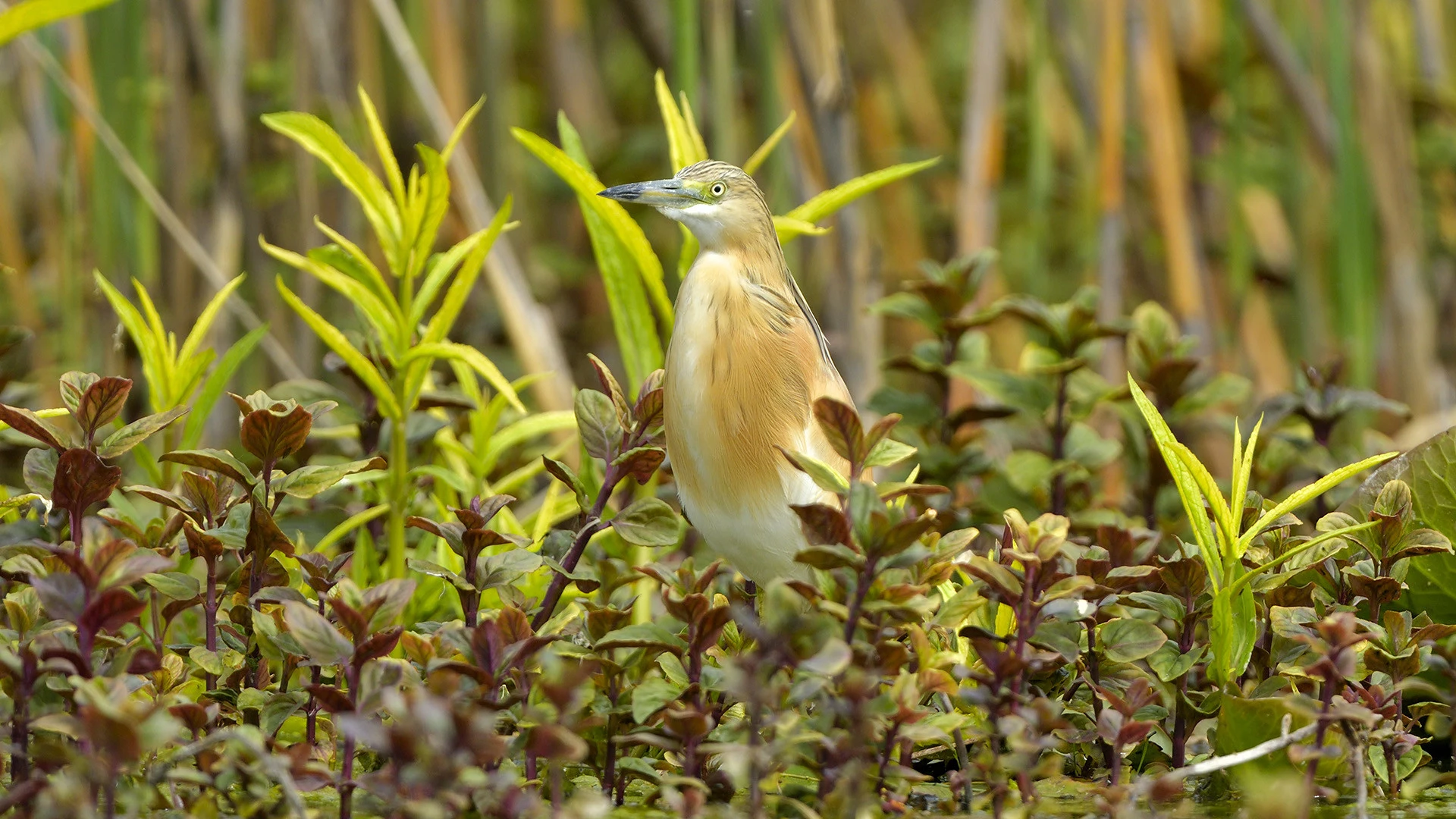
No. 164 on our checklistSquacco Heron (Ardeola ralloides)
A sandy heron that turns white the moment it takes off. Easy to see from the boat in summer, along the channels.
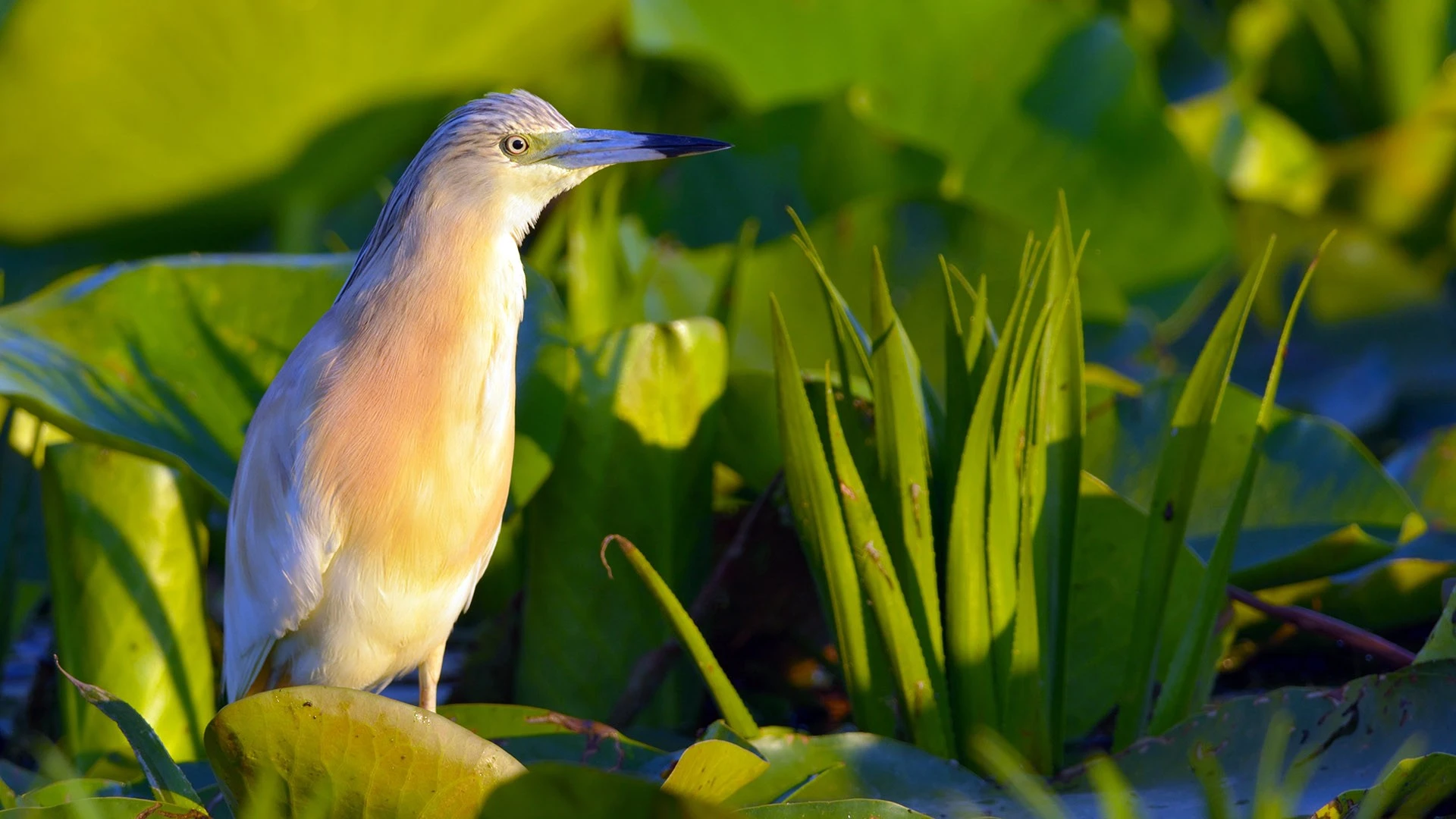
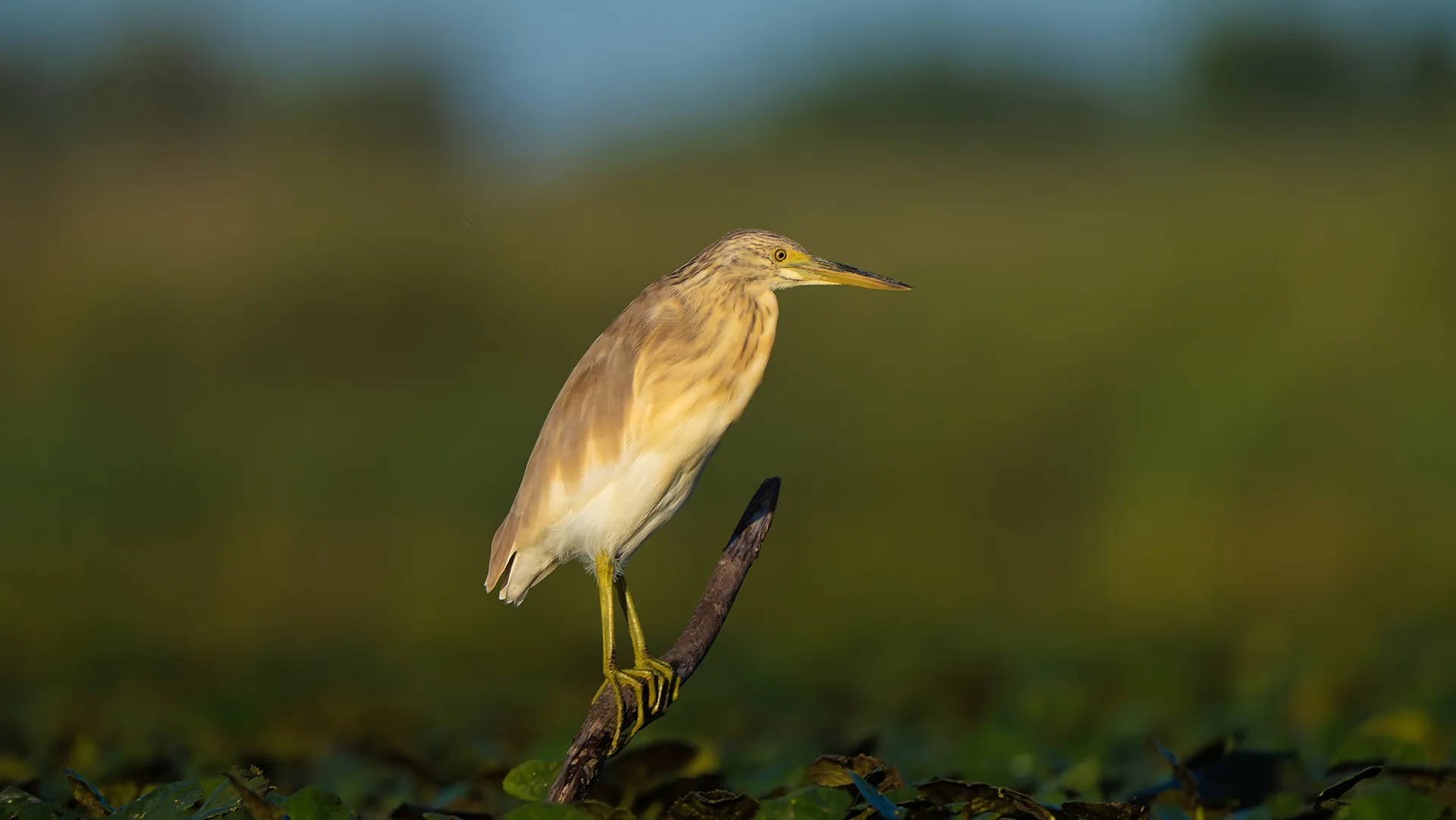
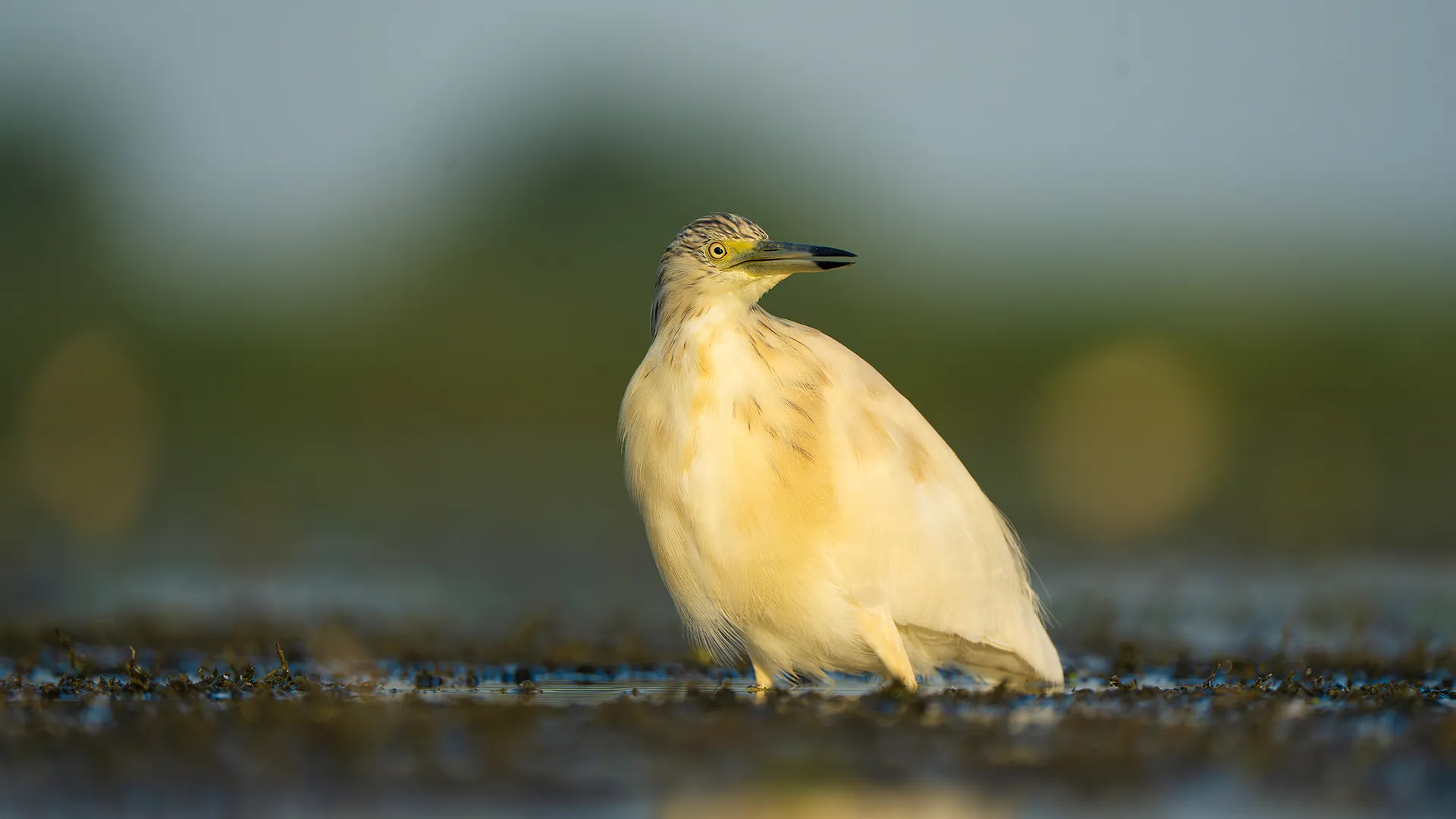
Standing on a water lily leaf at the edge of a channel, the Squacco Heron is a small, hunched, sandy brown bird that is easy to overlook. The moment it takes off, it changes completely: the wings, tail and rump are pure white, and in flight it looks like a little white egret. In summer it is one of the herons you see most often from the boat in the Danube Delta.
Quick facts
- Scientific name Ardeola ralloides
- Family herons (Ardeidae)
- Length 42 to 47 cm
- Wingspan 80 to 92 cm
- Weight about 230 to 370 g
- In the Danube Delta summer visitor, April to October
When to see it in the Danube Delta and Dobrogea
- JanAbsent
- FebAbsent
- MarAbsent
- AprRare
- MayAbundant
- JunAbundant
- JulAbundant
- AugAbundant
- SepAbundant
- OctRare
- NovAbsent
- DecAbsent
- Status here
- Summer breeder. Abundant population breeding.
- IUCN Red List
- Least Concern
- Our checklist
- No. 164 of 385 · see the full checklist
How to recognise it
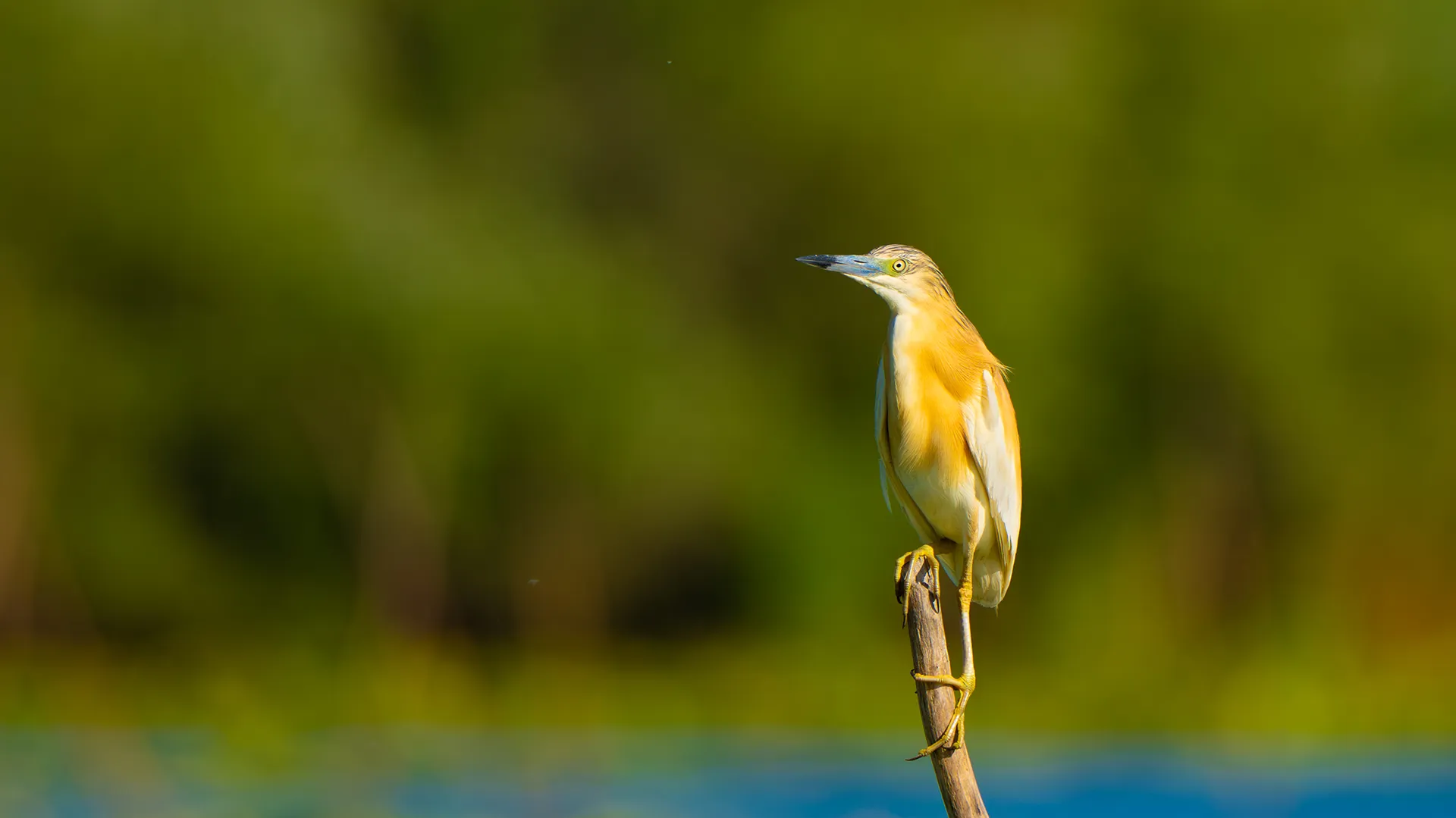
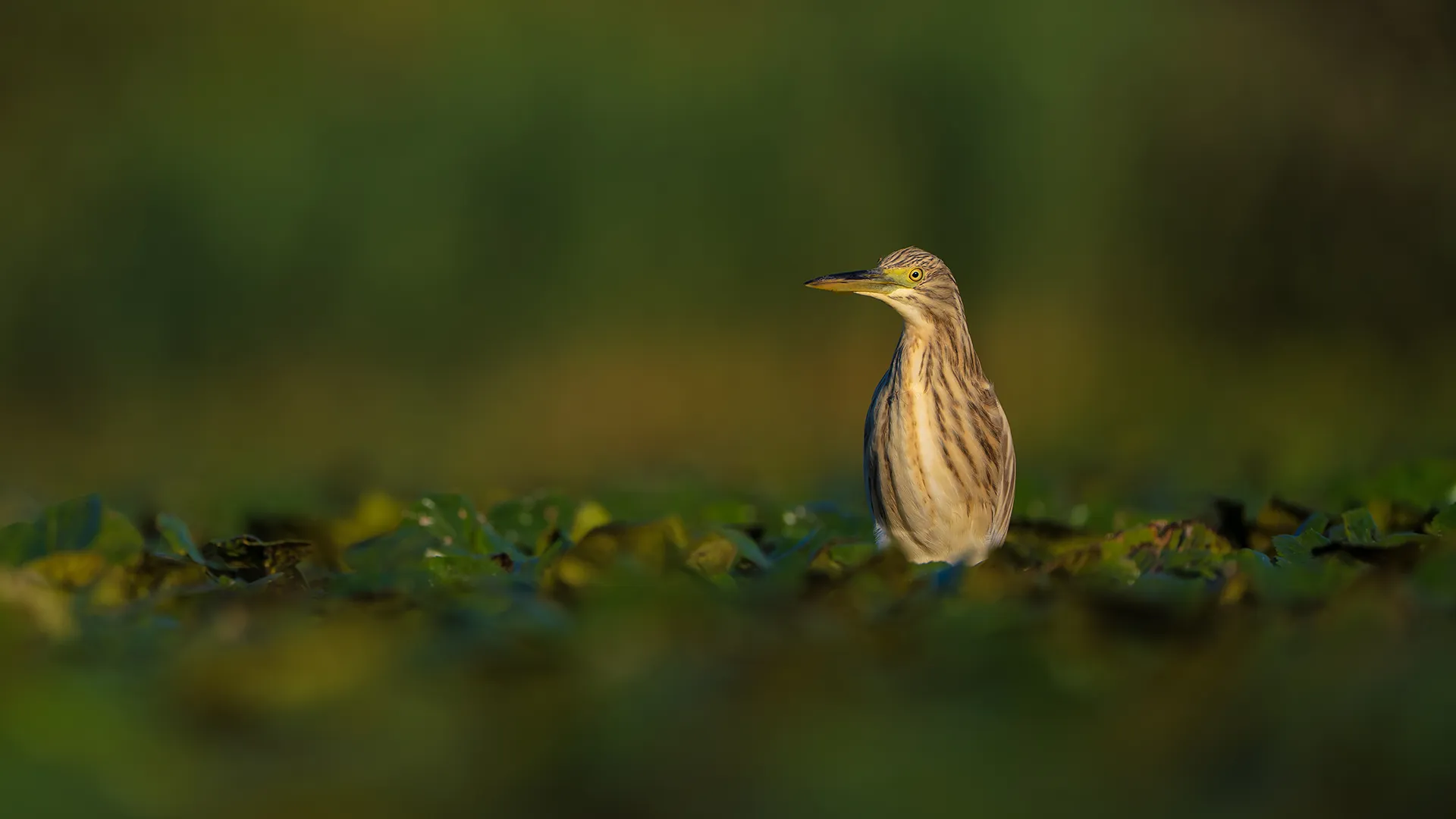
On the ground it is a stocky, short necked heron the colour of sand and straw, with fine dark streaks on the head and neck. In the breeding season the back turns warm golden buff, and long feathers striped black and white hang from the back of the head like a mane. At the peak of courtship the bill turns bright blue with a black tip and the legs flush pink to red. Outside the breeding season the bill is greenish yellow with a dark tip, and the plumage is duller and more streaked.
In flight the white wings make it look like a different bird. The trick is the colour of the back: on a Squacco Heron it stays buff even in flight, while a Little Egret is white all over and has a long black bill. On the ground it can be confused with a young Night Heron, but that bird is larger, heavier and covered in pale spots. The much smaller Little Bittern also shows pale wing patches in flight, but never all white wings.
Hunting and nesting
The Squacco Heron hunts by waiting. It stands still at the edge of the reeds, on a floating branch or a raft of water lily leaves, and strikes quickly at whatever comes close: water insects and their larvae, frogs and tadpoles, small fish. It is often most active early in the morning and in the evening, and is usually quiet, apart from a harsh, crow like call at dusk.
It nests in colonies, usually mixed with other herons, cormorants and ibises, in willows, bushes or dense reeds near the water. The nest is a platform of twigs and stems. The female lays usually four to six greenish blue eggs, and both parents incubate them for 22 to 24 days. The chicks leave the nest after about two weeks and climb around on nearby branches, and they can fly at about 45 days old.
Where to see it in the Danube Delta
Squacco Herons arrive in the Danube Delta in April and leave for Africa in September and October. From May to September they are abundant. The Danube Delta Biosphere Reserve holds an estimated 3,000 to 4,000 breeding pairs, according to the first complete bird checklist of the reserve, published by the Danube Delta National Institute in 2023, and in the mixed colonies it is one of the most numerous herons, together with the Night Heron. For comparison, the record count in the Camargue, the Rhône delta in France, was about 500 pairs in 2006. You see them along almost every channel with water lilies and a reed border, on floating vegetation at the edge of the lakes, and flying between the colonies and their feeding places. Our checklist marks it abundant from May to September and rare in April and October.
It is also one of the most rewarding birds to photograph from a boat, because it often lets a slow, quiet boat come close. You can see it on almost any summer trip with us: a private 4 hour birdwatching trip, a small group birdwatching tour in the Danube Delta, or a wildlife photo tour from Mila 23.
Interesting facts
- An Italian name. “Squacco” comes from “sguacco”, a local Italian name recorded by the English naturalist Francis Willughby around 1672. The scientific name ralloides means “like a rail”.
- Numbers that rise and fall. The great survey of the colonies of the Danube Delta found about 1,280 pairs in 2002; a later count found close to 3,000 pairs in 2016. Colonial herons change colony and numbers from year to year with the water level and the food.
- Blue for a few days. The bright blue bill and red legs of courtship last only a short time. For most of the summer the bill is greenish yellow again.
- Chicks that climb. About two weeks after hatching, the young leave the nest and clamber through the branches around it, long before they can fly.
Status and threats
The Squacco Heron breeds in southern and eastern Europe, western Asia and Africa, and is listed as Least Concern by the IUCN. It needs quiet colonies in willows and reeds and shallow water with plenty of floating vegetation to feed in.
In the Danube Delta today the greatest threat to nature is speed boats. The Squacco Heron feeds along the edges of the channels and nests in colonies close to the water, exactly where their noise and waves reach first. This is why our boats move slowly in the channels.
See it with us
Our birding guides are biologists and ornithologists who are on the water every day of the year. Small groups, open boats, the best hours of the day.
Keep reading
Keep reading
More from the blog

4 min read
White-winged Tern (Chlidonias leucopterus)
Jet black body and white wings in spring: the most striking of the marsh terns over the lakes of the Danube Delta.

4 min read
Red-necked Grebe (Podiceps grisegena)
A brick red neck, pale grey cheeks and a dagger bill with a yellow base: a shy breeding grebe of the quiet lakes of...

5 min read
Pallas’s Gull (Ichthyaetus ichthyaetus)
The largest black headed gull in the world, nesting on the islands of the Danube Delta coast since 2009.