

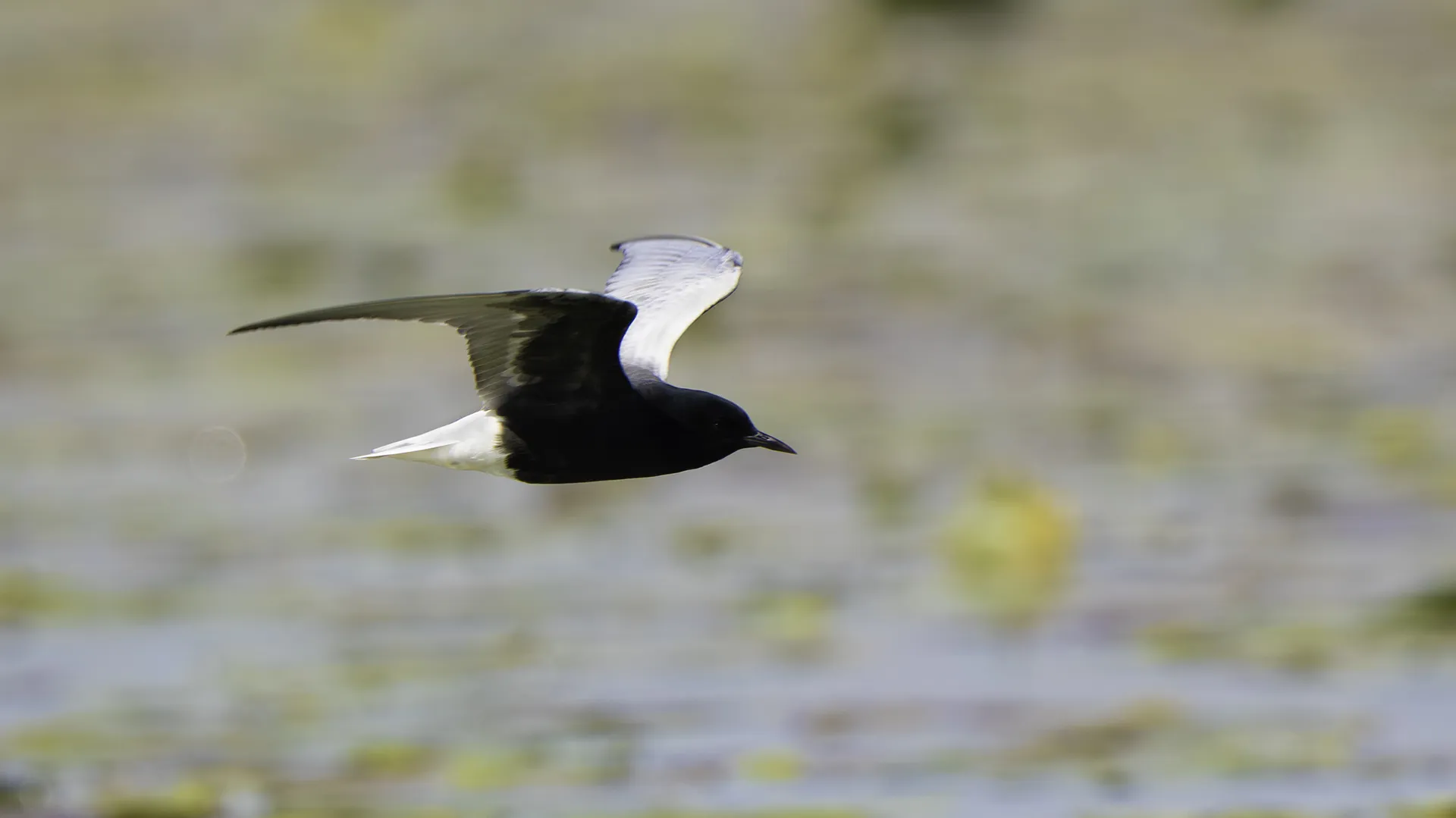
No. 127 on our checklistWhite-winged Tern (Chlidonias leucopterus)
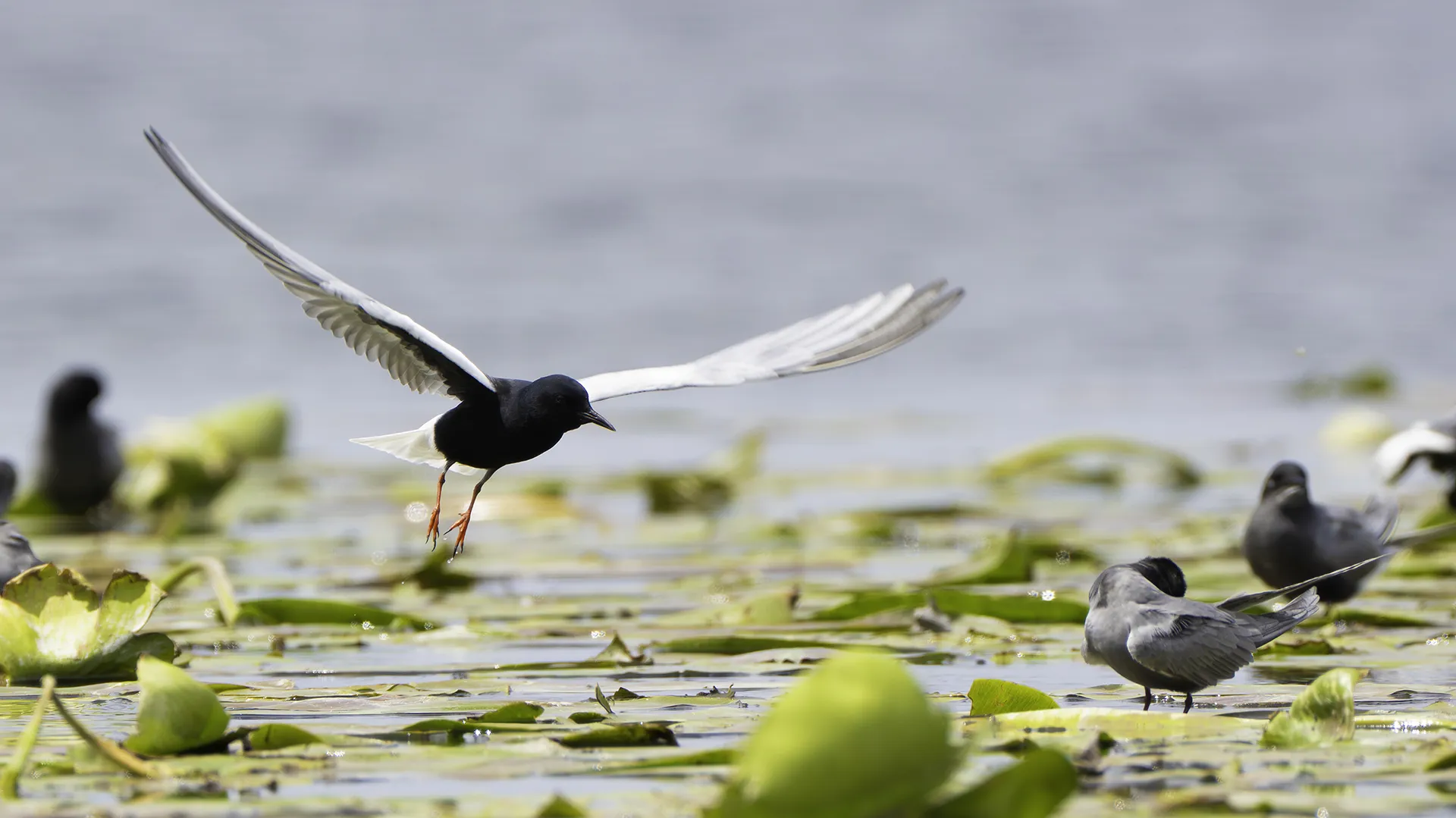
Jet black body and white wings in spring: the most striking of the marsh terns over the lakes of the Danube Delta.
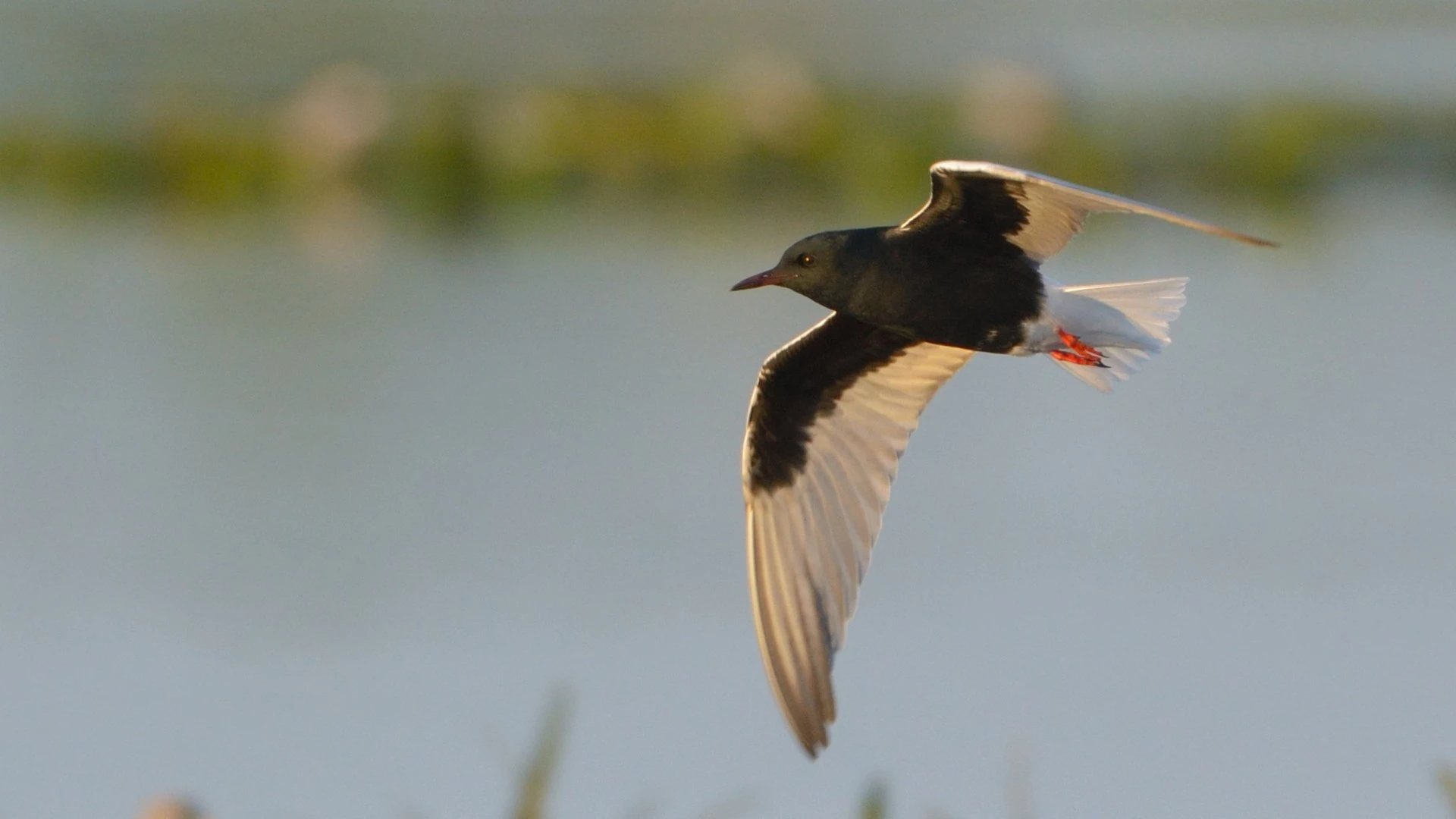
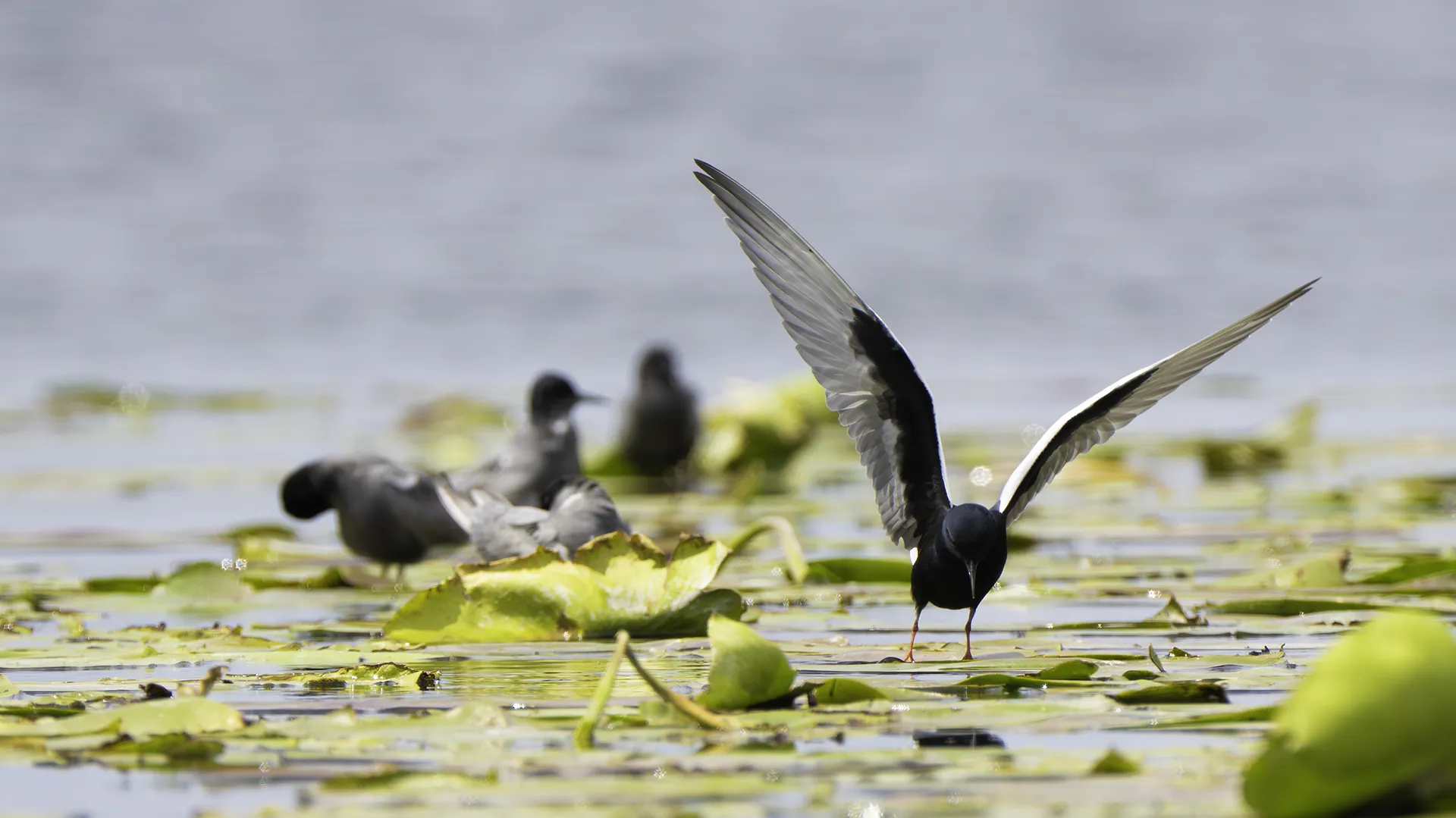
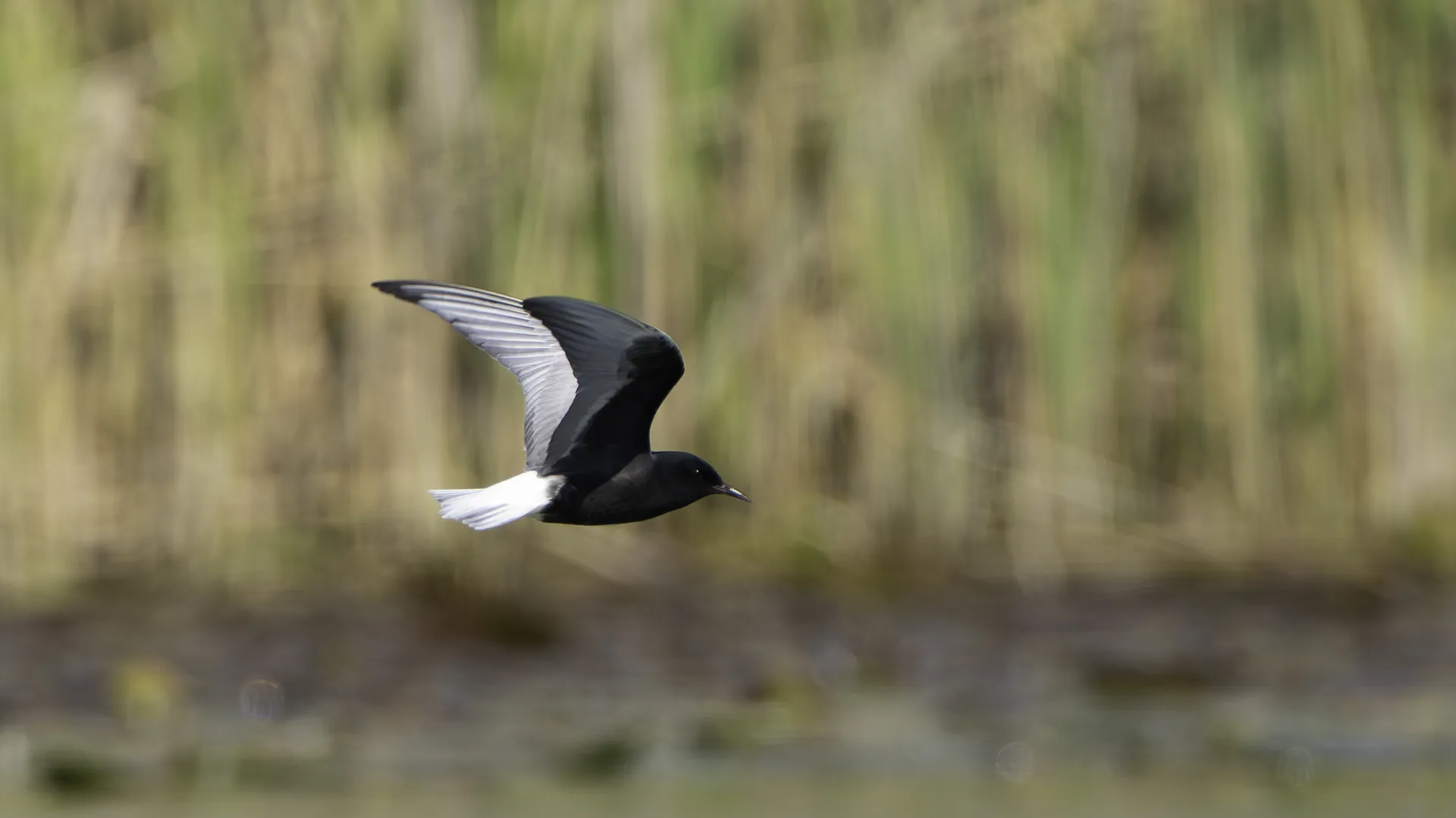
In May, flocks of small terns sweep low over the lakes of the Danube Delta, and some of them look as if they were painted: a jet black head and body, snow white wings and tail, and bright red legs. These are White-winged Terns in breeding plumage, the most striking of the three marsh terns of Europe, on their way from Africa to the steppes and marshes of the east.
Quick facts
- Scientific name Chlidonias leucopterus
- Family gulls and terns (Laridae)
- Length 20 to 24 cm
- Wingspan about 58 to 67 cm
- Weight about 55 to 70 g
- In the Danube Delta passage migrant in spring and late summer, very rare breeder
When to see it in the Danube Delta and Dobrogea
- JanAbsent
- FebAbsent
- MarAbsent
- AprModerate
- MayModerate
- JunVery rare
- JulVery rare
- AugModerate
- SepModerate
- OctRare
- NovAbsent
- DecAbsent
- Status here
- Passage migrant, summer breeder. Very rare breeder.
- IUCN Red List
- Least Concern
- Our checklist
- No. 127 of 385 · see the full checklist
How to recognise it
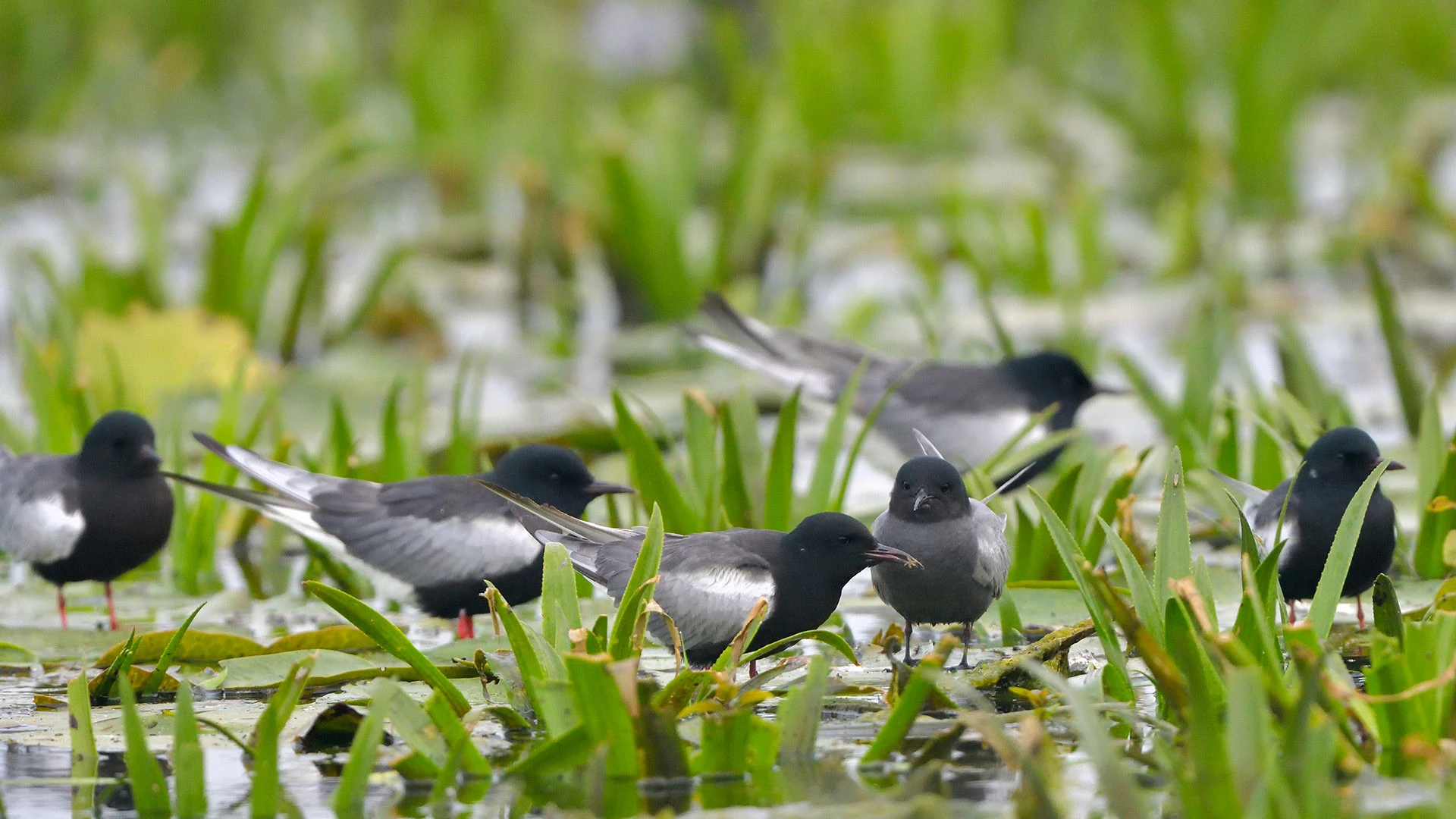
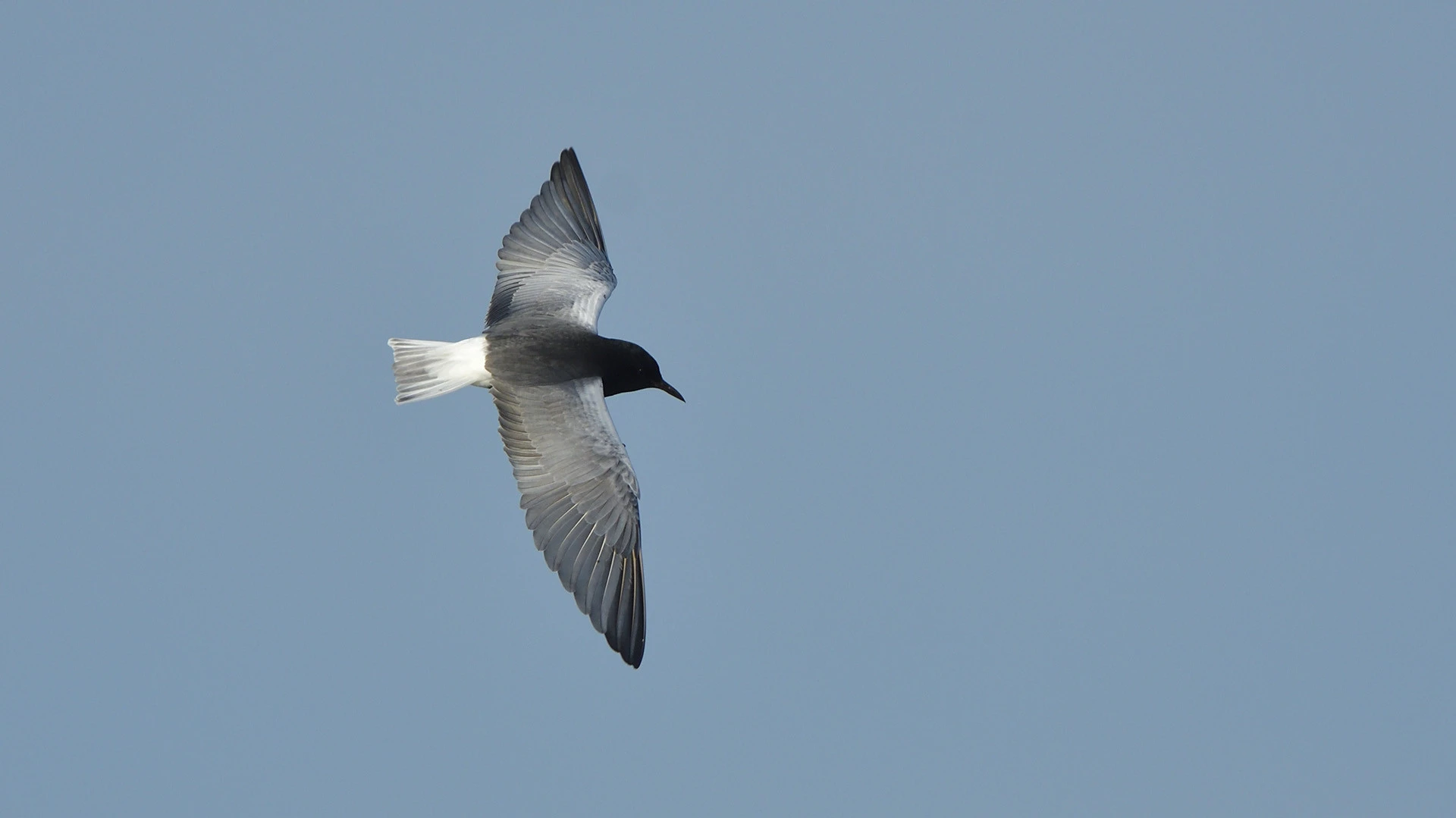
An adult in spring cannot be mistaken: head, neck, body and the lining of the wings jet black, the upper wing and the tail white, the bill dark and the legs bright red. In flight the black body between white wings shows from far away. It is the smallest of the three marsh terns, with a short bill and a short, square tail.
From July the adults moult and become white below, with a dark patch behind the eye and a pale crown, and some birds look patchy, half black and half white. In this plumage and as young birds they are much harder to tell from the Black Tern and the Whiskered Tern: look for the white rump, which the White-winged Tern always shows in flight, and for the lack of a dark mark on the side of the breast. Young birds have a dark brown back, like a saddle, against pale grey wings.
Feeding and nesting
Like the other marsh terns it does not dive. It flies low and buoyantly over shallow water and wet meadows and picks its food from the surface or catches it in the air: dragonflies, mayflies and other insects and their larvae, and also tadpoles and small fish. Flocks often hunt together over places where insects are hatching.
It nests in small colonies in shallow, flooded places with short vegetation: flooded meadows, the edges of marshes and lakes with low emergent plants. The nest is a small floating or half floating heap of wet plants. The female lays usually two or three eggs, and the chicks, brown and spotted, are well hidden in the vegetation. Its breeding places change from year to year with the water level, so in one year there may be a colony where the year before there was none.
Where to see it in the Danube Delta
Most White-winged Terns are seen on passage: in late April and May, often in mixed flocks with Whiskered and Black Terns over the lakes, and again from August to September, when adults in moult and young birds come back south. In June and July only a few remain. As a breeding bird it is very rare. The first checklist of the Danube Delta Biosphere Reserve, published by the Danube Delta National Institute in 2023, also lists it as a very rare breeder. Our checklist marks it moderate in April, May, August and September and very rare in midsummer.
The best chance to see the black and white spring birds is on our 5 day birdwatching tour in the Danube Delta or our 5 day wildlife photo tour in May.
Interesting facts
- White wings in a name. Leucopterus is Greek for “white winged”. Chlidonias means “like a swallow”, for the light, swerving flight of all the marsh terns.
- Three marsh terns, one lake. In May you can see all three European marsh terns together over the same lake in the Danube Delta: Whiskered, Black and White-winged.
- A wanderer. White-winged Terns breed from Eastern Europe to the Pacific coast of Asia and winter as far as southern Africa and Australia.
- A colony that moves. Because it needs shallow, freshly flooded ground, the White-winged Tern settles wherever the water level is right that year, and may not come back the next.
Status and threats
The White-winged Tern is listed as Least Concern by the IUCN. In Europe its numbers rise and fall from year to year, following the floods. It depends on flooded meadows and shallow marshes, the kind of habitat that disappears first when wetlands are drained or dammed.
In the Danube Delta today the greatest threat to nature is speed boats. Its few nests float in shallow water, where the waves of a fast boat reach them at once, and the flocks feeding low over the lakes are scattered by every boat that rushes through. This is why our boats move slowly in the channels.

See it with us
Our birding guides are biologists and ornithologists who are on the water every day of the year. Small groups, open boats, the best hours of the day.
Keep reading
Keep reading
More from the blog

4 min read
Squacco Heron (Ardeola ralloides)
A sandy heron that turns white the moment it takes off. Easy to see from the boat in summer, along the channels.

3 min read
Common Shelduck (Tadorna tadorna)
The Common Shelduck, a big black and white duck of the coastal lagoons that nests in fox burrows: identification, diet, crèches and where to...
4 min read
Eurasian Hobby (Falco subbuteo)
Fast enough to catch swallows and dragonflies in the air: the Eurasian Hobby, a summer falcon of the Danube Delta and Dobrogea, and its...