

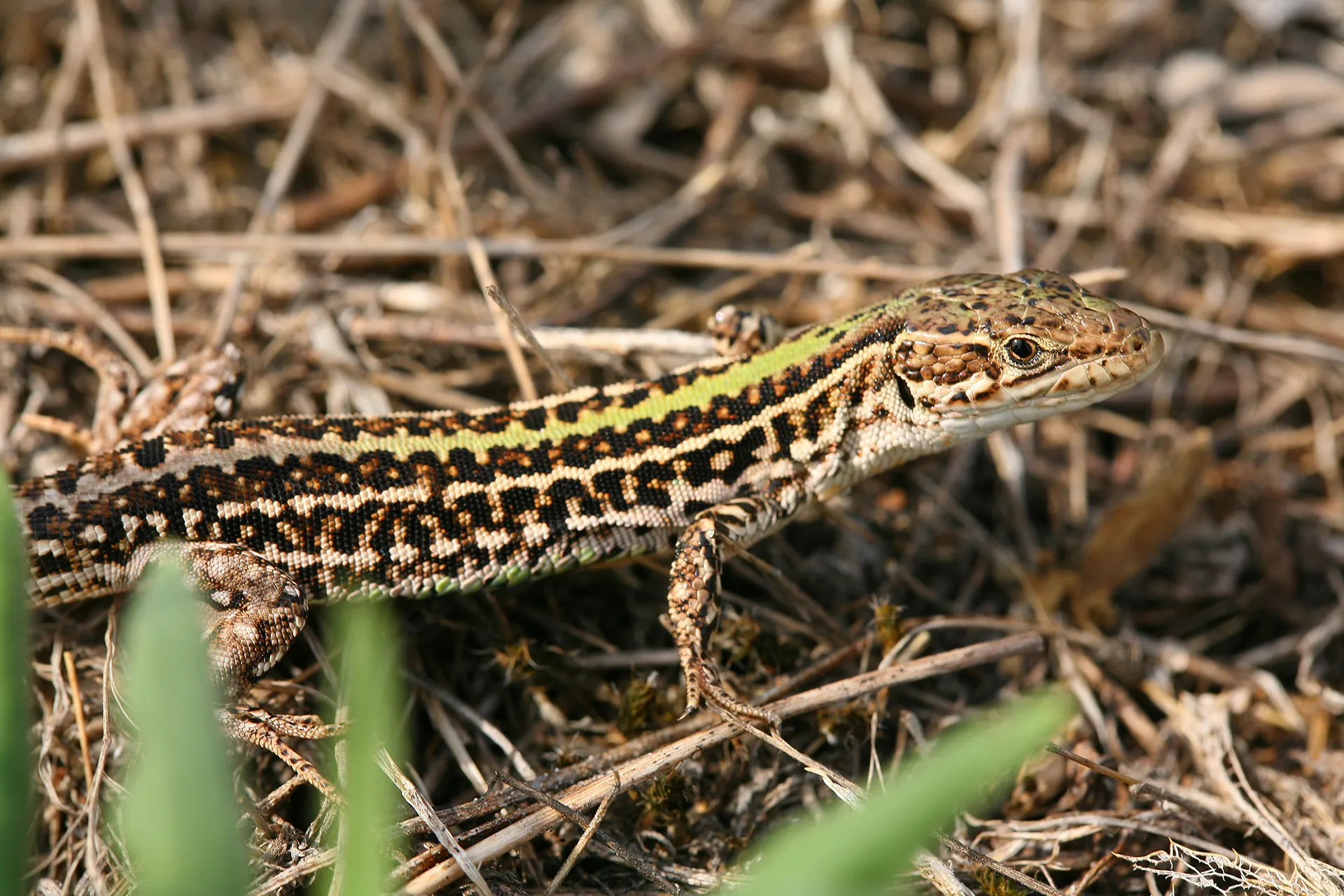
No. 21 on our checklistBalkan Wall Lizard (Podarcis tauricus) in Dobrogea
Meet the Balkan Wall Lizard, a small, colorful lizard of the Dobrogean steppes and the southern Danube Delta: identification, where it lives, names and conservation.
The Balkan Wall Lizard (Podarcis tauricus) is a small, lively lizard of dry grasslands, sandy and stony places in Dobrogea. In spring the males are among the most colorful reptiles of the region, with a green back and an orange throat and belly.
In the Danube Delta Biosphere Reserve it is found mainly in the south, around the Razim-Sinoie lagoon complex, Histria and the Beștepe Hills.
Quick facts
Quick facts
- Scientific name Podarcis tauricus (Pallas, 1814); older spelling Podarcis taurica, and in older literature Lacerta taurica
- Common name Balkan Wall Lizard
- Family Lacertidae (wall lizards and relatives)
- Order Squamata (lizards and snakes)
- Length up to about 19 cm including the tail, which makes up roughly two thirds; hatchlings about 3 cm
- Diet insects, spiders and other small invertebrates
- Habitat sandy or stony grassland, steppe slopes, forest edges, embankments, roadsides and lake shores
- Activity by day, from early spring to autumn; mostly on the ground, sheltering in tussocks, burrows and under stones
- Breeding lays eggs; young appear in summer
- Conservation status Least Concern (global IUCN Red List); EU Habitats Directive Annex IV
When to see it in the Danube Delta and Dobrogea
- JanWinter rest
- FebWinter rest
- MarEmerging
- AprMating colors
- MayMating season
- JunEgg-laying
- JulActive
- AugHatchlings
- SepActive
- OctLast activity
- NovWinter rest
- DecWinter rest
- Status here
- Widespread on the Dobrogean plateau and in the south of the Danube Delta Biosphere Reserve. Indicative seasonal pattern only.
- IUCN Red List
- Least Concern
- Our checklist
- No. 21 of 30 · see the full checklist
Description and identification
This is a small, slender lizard. Adults reach at most about 19 cm, roughly two thirds of which is tail, and hatchlings measure about 3 cm. Males have a broad green band along the back, bordered by brown, and a yellowish stripe along each flank, often with some blue scales on the sides. The throat and belly are orange or reddish orange, most intense in spring.
Females are brown, olive or greenish, with a whitish belly.
Unlike many other wall lizards, the Balkan Wall Lizard lives mostly on the ground rather than on walls and rocks. In Dobrogea it can be confused with young Sand Lizards, which are stockier and have ocelli on the flanks, and with the Western Meadow Lizard, a rare forest species. The green back of the males, the long tail and a habitat of open grassland are good clues.
Where it lives
In Romania the species is found in Dobrogea, both on the continental plateau and in the south of the lagoon complex, the part of the Danube Delta Biosphere Reserve that we call the southern Danube Delta. Zsolt Török’s monitoring guide lists sites on the shores of Lake Nuntași and Lake Histria, around the ancient city of Histria and the villages of Istria, Nuntași and Săcele, and on the Beștepe Hills.
On the plateau it is found from the Măcin Mountains and the Pricopan Ridge to Denistepe, the south of the Babadag forest, the Cheia and Gura Dobrogei reserves, the Canaraua Fetii valley, Hagieni and the area between Agigea and Techirghiol. In the hills of northern Dobrogea it lives alongside both the Balkan Green Lizard and the European Green Lizard, and Török found no clear difference in its density between areas with one or the other green lizard.
Typical habitats are sandy or stony places with grass, steppe slopes, forest edges, embankments, roadsides and the shores of lakes.
Daily life and breeding
Balkan Wall Lizards are active by day, from spring to autumn. They bask on bare ground or low stones and hunt insects, spiders and other small invertebrates in the grass. When disturbed they run into dense tussocks, burrows or under stones.
Mating takes place in spring, when males show their brightest colors. Females lay small clutches of eggs in the soil, and the tiny hatchlings appear in summer.
Taxonomy and names
Older sources use the spelling Podarcis taurica, or the name Lacerta taurica, and it is worth searching for these names too. Recent genetic studies have led to populations of the western and southern Balkans being treated as a separate species, Podarcis ionicus, a split followed by the 2025 European Red List. The Romanian populations remain Podarcis tauricus.
Conservation and responsible observation
The species is assessed as Least Concern globally and is not among the threatened reptiles in the 2025 European Red List. It is listed in Annex IV of the EU Habitats Directive, and in Romania it is protected under Annex 4A of Government Emergency Ordinance 57/2007. Locally it depends on the survival of natural steppe grassland, which is being lost to ploughing, afforestation and building.
Watch it without trying to catch it: like many lizards, it can shed its tail when grabbed. Stay on paths in steppe reserves and avoid turning stones.
Reptiles on our birdwatching tours
On our multi-day birdwatching tours in the Danube Delta and Dobrogea, we visit steppe slopes and lake shores for raptors, larks and wheatears. While we scan for birds, we also look for reptiles, mammals and other wildlife, and the bright males of the Balkan Wall Lizard are a frequent bonus on sunny spring days.
See it with us
Slow open boats, small groups and a guide who knows the places and the wildlife. From a few hours on the water to a week in the Danube Delta and Dobrogea.
Keep reading
Keep reading
More from the blog
5 min read
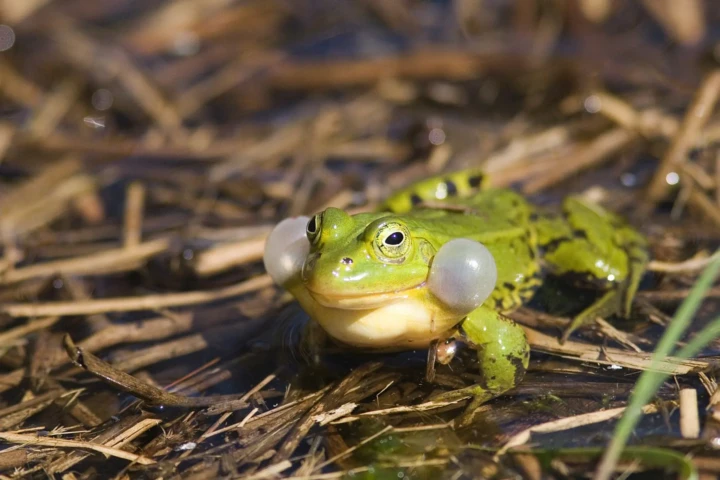
Pool Frog (Pelophylax lessonae)
Meet the Pool Frog, the smallest and scarcest green frog of the Danube Delta: how to recognize it, where it lives and why it...
5 min read
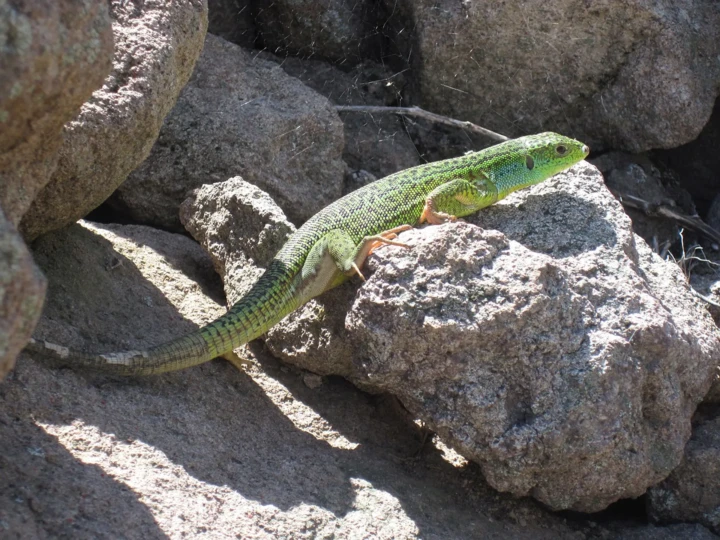
Balkan Green Lizard (Lacerta trilineata) in Dobrogea
Meet the Balkan Green Lizard, the largest lizard in Romania, found only in Dobrogea near the Danube Delta: identification, where it lives, behavior, taxonomy...
6 min read
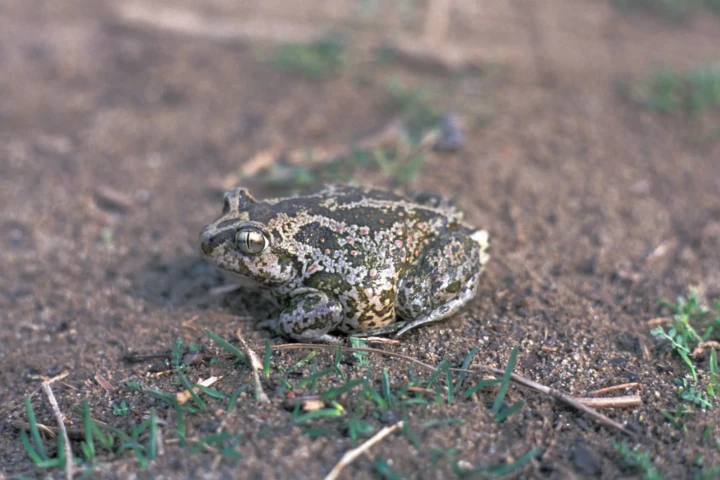
Balkan Spadefoot (Pelobates balcanicus)
Meet the Balkan Spadefoot, formerly Pelobates syriacus balcanicus: a large burrowing toad of the lagoon sands of the southern Danube Delta and the Dobrogea...