

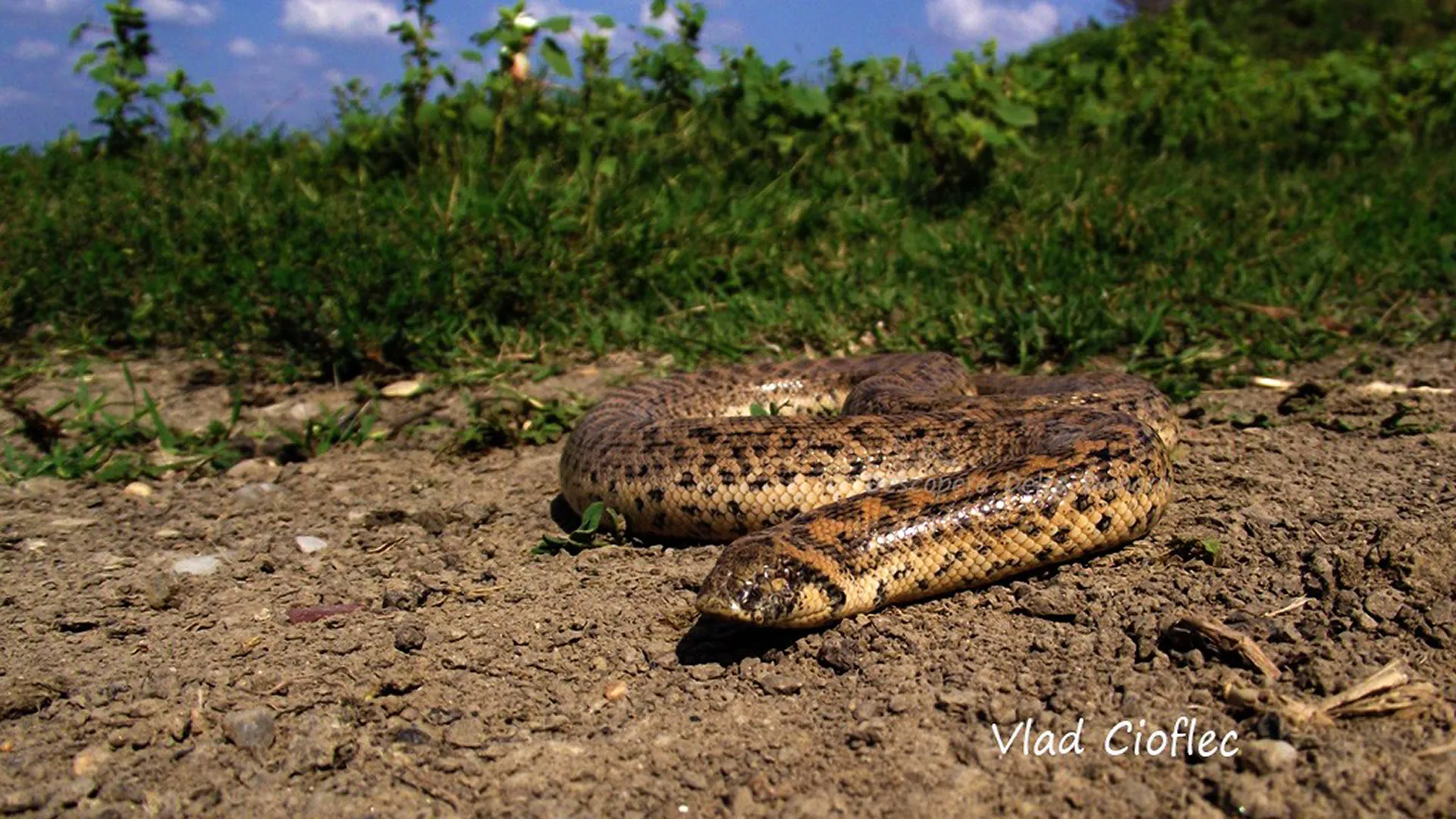
No. 22 on our checklistJavelin Sand Boa (Eryx jaculus) in Dobrogea
Meet the Javelin Sand Boa, the only boa in Europe and the rarest snake in Romania, rediscovered in Romania along the Danube and recorded in Dobrogea: identification, history, biology and conservation.
The Javelin Sand Boa (Eryx jaculus) is the only boa in Europe and the rarest snake in Romania. For decades it was feared extinct in the country, until new records in Dobrogea in 2014 and 2015 confirmed that it still survives near the Danube.
The northernmost record of the species in Europe comes from the edge of the Danube Delta, between Beștepe and Mahmudia, in 1986.
Quick facts
Quick facts
- Scientific name Eryx jaculus (Linnaeus, 1758); Romanian populations belong to Eryx jaculus turcicus (Olivier, 1801)
- Common name Javelin Sand Boa; also Sand Boa
- Family Boidae (boas)
- Order Squamata (lizards and snakes)
- Length usually 40–60 cm, rarely 70–80 cm; males smaller than females
- Diet mainly small rodents and lizards, which it catches from ambush and kills by constriction
- Habitat dry, sunny slopes with loose sandy or limestone soil and sparse steppe vegetation
- Activity secretive; spends much of its time underground or under stones, coming out mostly in warm evenings and at night
- Breeding gives birth to live young; a female found in 1986 near Mahmudia carried eight embryos
- Conservation status Least Concern (global IUCN Red List); Critically Endangered in the Romanian Red Data Book of Vertebrates (2005); EU Habitats Directive Annex IV
When to see it in the Danube Delta and Dobrogea
- JanWinter rest
- FebWinter rest
- MarWinter rest
- AprEmerging
- MayActive
- JunActive
- JulActive
- AugBirths
- SepActive
- OctLast activity
- NovWinter rest
- DecWinter rest
- Status here
- Extremely rare in Romania, known from very few localities in Dobrogea near the Danube. Not found in the Danube Delta wetlands. Indicative seasonal pattern only.
- IUCN Red List
- Least Concern
- Our checklist
- No. 22 of 30 · see the full checklist
Description and identification
The Javelin Sand Boa is a short, thick snake of almost uniform thickness from head to tail. Adults usually measure 40–60 cm, rarely up to 70–80 cm, and males are smaller than females. The head is not distinct from the neck and ends in a pointed snout, with the mouth set slightly underneath, an adaptation for pushing through loose soil.
The eyes are tiny, with vertical pupils, and the body is covered with small, glossy scales. The tail is short and ends in a blunt cone. Near the vent there are small spurs, remnants of hind limbs, which are more visible in males. The back is pale grayish or yellowish brown with darker blotches.
No other snake in Romania looks like it. Its thick body, tiny eyes and short tail set it apart from the young of other snakes, and it is harmless to people.
A story of loss and rediscovery
The first Romanian specimen was collected at Cernavodă in 1903 by Robert Dombrowski. That habitat was later destroyed by the construction of the Danube–Black Sea Canal. In 1937 Mihai Băcescu found the species at Cochirleni, and old records also exist from Cărpiniș, near Giuvegea, in southern Dobrogea.
The most recent record for decades came in 1986, when Olaf Zinke found a dead adult female on the road between Beștepe and Mahmudia, on the southern edge of the Danube Delta. It measured 526 mm and carried eight embryos. László Krecsák and Alexandru Iftime noted in 2006 that this was the northernmost record of the species in Europe. After it, many specialists considered the Javelin Sand Boa probably extinct in Romania.
In 2011 a road-killed sand boa was found between Turnu Măgurele and Corabia, the first record north of the Danube. In 2014 a small population was rediscovered in Dobrogea near the Danube, and its exact location has been kept secret to protect it from collectors. In April 2015 a dead individual was found at Rasova, in Constanța County, less than 10 km from Cochirleni, confirming that the species still survives in the region.
An old report from Letea forest, in the Danube Delta, was later shown to be a misidentification. In the Danube Delta proper there are no confirmed records, but Krecsák and Iftime pointed out that the species could survive in poorly surveyed corners of Dobrogea.
Life underground
The Javelin Sand Boa is a burrowing snake. It spends much of its time in loose soil, under stones or in rodent burrows, and comes to the surface mainly in warm evenings and at night. It ambushes its prey, mostly small rodents and lizards, and kills it by constriction.
Unlike most snakes in Romania, it does not lay eggs: the young develop inside the mother and are born alive, usually in late summer. In Romania the species lives on dry, sunny slopes with sandy or limestone soil, often near the Danube valley. The monitoring guide for reptiles of community interest includes the Beștepe Hills among the sites to be checked.
Conservation and responsible observation
Globally the species is assessed as Least Concern, because it is widespread in North Africa, the Middle East and the Caucasus. In Europe it is at the edge of its range, and in Romania it is listed as Critically Endangered in the Romanian Red Data Book of Vertebrates (2005). It is included in Annex IV of the EU Habitats Directive and protected under Annex 4A of Government Emergency Ordinance 57/2007. It is also listed in Appendix II of the Bern Convention and Appendix II of CITES, which regulates international trade.
The main threats are the loss of dry steppe slopes to ploughing, quarrying and construction, road traffic and illegal collection. If you ever find one, do not handle it, do not share the exact location publicly and report the observation to specialists.
Reptile photography on our tours
We do not search for the Javelin Sand Boa, and a sighting would be exceptional. On our multi-day photo tours in the Danube Delta and Dobrogea, the dry hills around the Danube Delta still offer many reptiles to photograph, from lizards to tortoises, always with respect for the animals and their habitat.
See it with us
Slow open boats, small groups and a guide who knows the places and the wildlife. From a few hours on the water to a week in the Danube Delta and Dobrogea.
Keep reading
Keep reading
More from the blog
5 min read
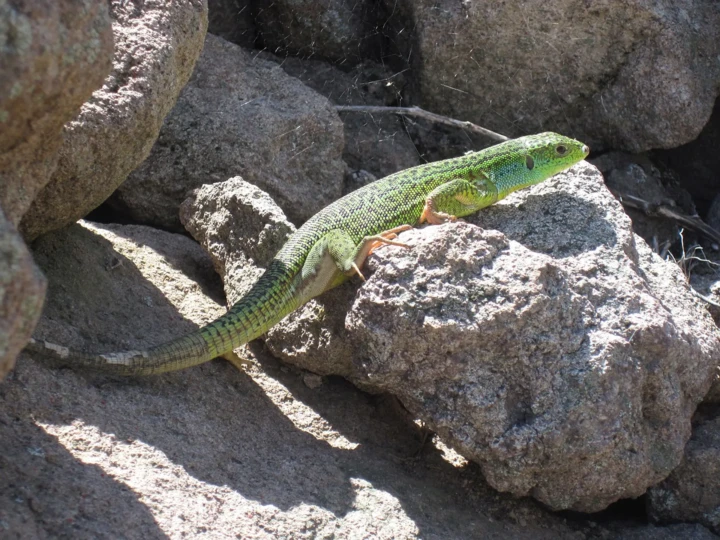
Balkan Green Lizard (Lacerta trilineata) in Dobrogea
Meet the Balkan Green Lizard, the largest lizard in Romania, found only in Dobrogea near the Danube Delta: identification, where it lives, behavior, taxonomy...
5 min read
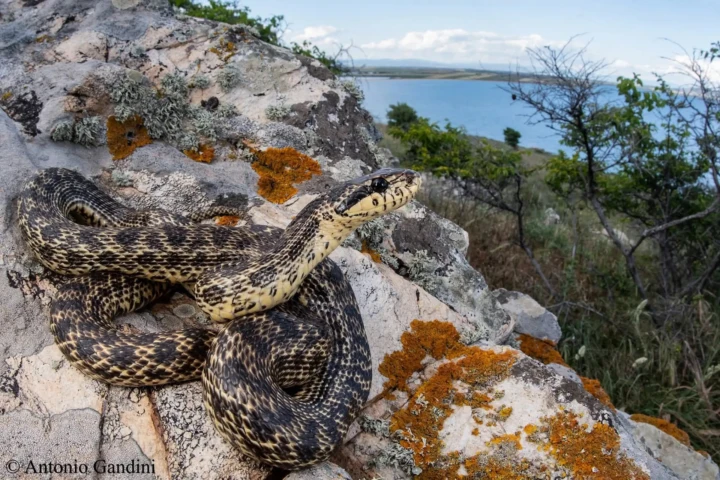
Blotched Snake (Elaphe sauromates)
Meet the elusive Blotched Snake of Dobrogea: identification, older scientific names, habitat and conservation, without promises of easy sightings.
5 min read
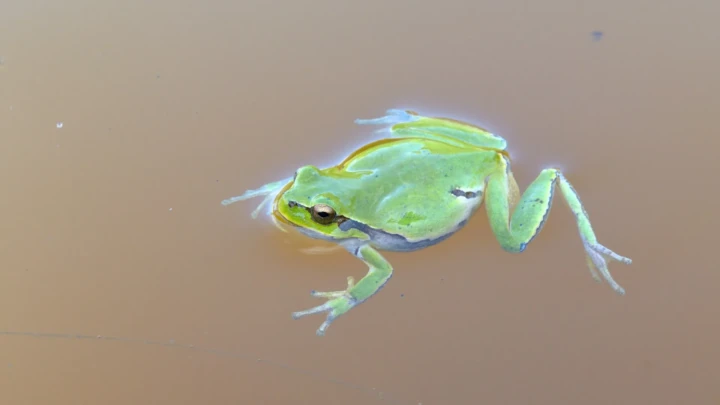
Eastern Tree Frog (Hyla orientalis)
The Eastern Tree Frog is a small amphibian with a surprisingly powerful voice. Discover its remarkable climbing abilities, changing colours, spring breeding calls and...