

No. 12 on our checklistLesser White-fronted Goose (Anser erythropus)
The Lesser White-fronted Goose, one of the most threatened geese in the world, hiding among wintering flocks in Dobrogea: how to find and identify it.
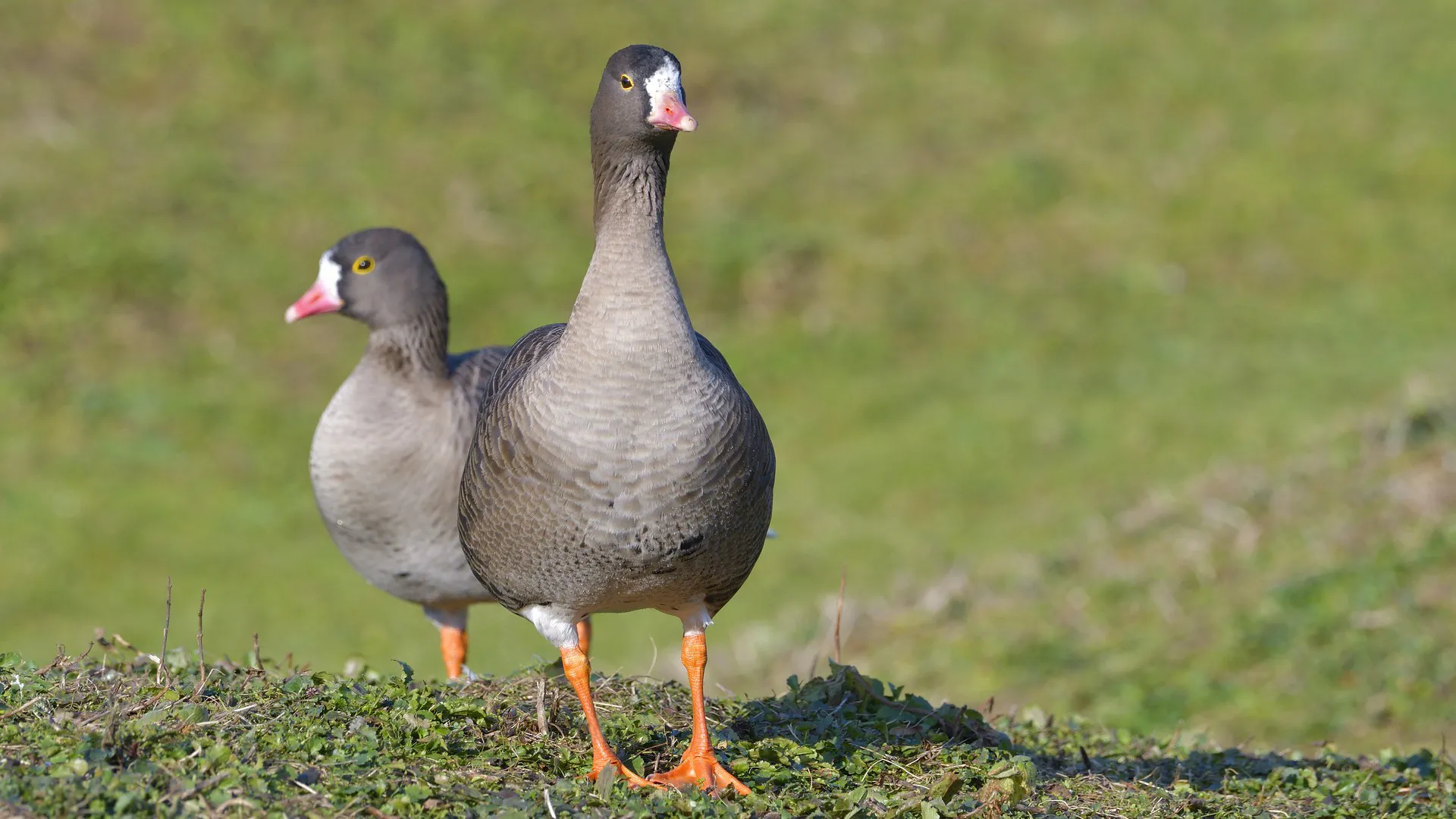
Among the tens of thousands of Greater White-fronted Geese that winter in Dobrogea there is sometimes a smaller goose, with white on the face reaching the crown and a yellow ring around the eye. This is the Lesser White-fronted Goose, one of the most threatened geese in the world. Finding one in a large goose flock is one of the finest challenges of winter.
Quick facts
- Scientific name Anser erythropus
- Family Anatidae (ducks, geese and swans)
- Length 53-66 cm
- Wingspan 115-135 cm
- Weight about 1.4-2.3 kg
- Breeds in the tundra and scrub zone of northern Scandinavia and Russia
- In Romania in winter, very rare, among Greater White-fronted Geese
When to see it in the Danube Delta and Dobrogea
- JanRare
- FebRare
- MarRare
- AprAbsent
- MayAbsent
- JunAbsent
- JulAbsent
- AugAbsent
- SepAbsent
- OctVery rare
- NovRare
- DecRare
- Status here
- Winter visitor. Rare winter visitor.
- IUCN Red List
- Vulnerable
- Our checklist
- No. 12 of 385 · see the full checklist
Identification
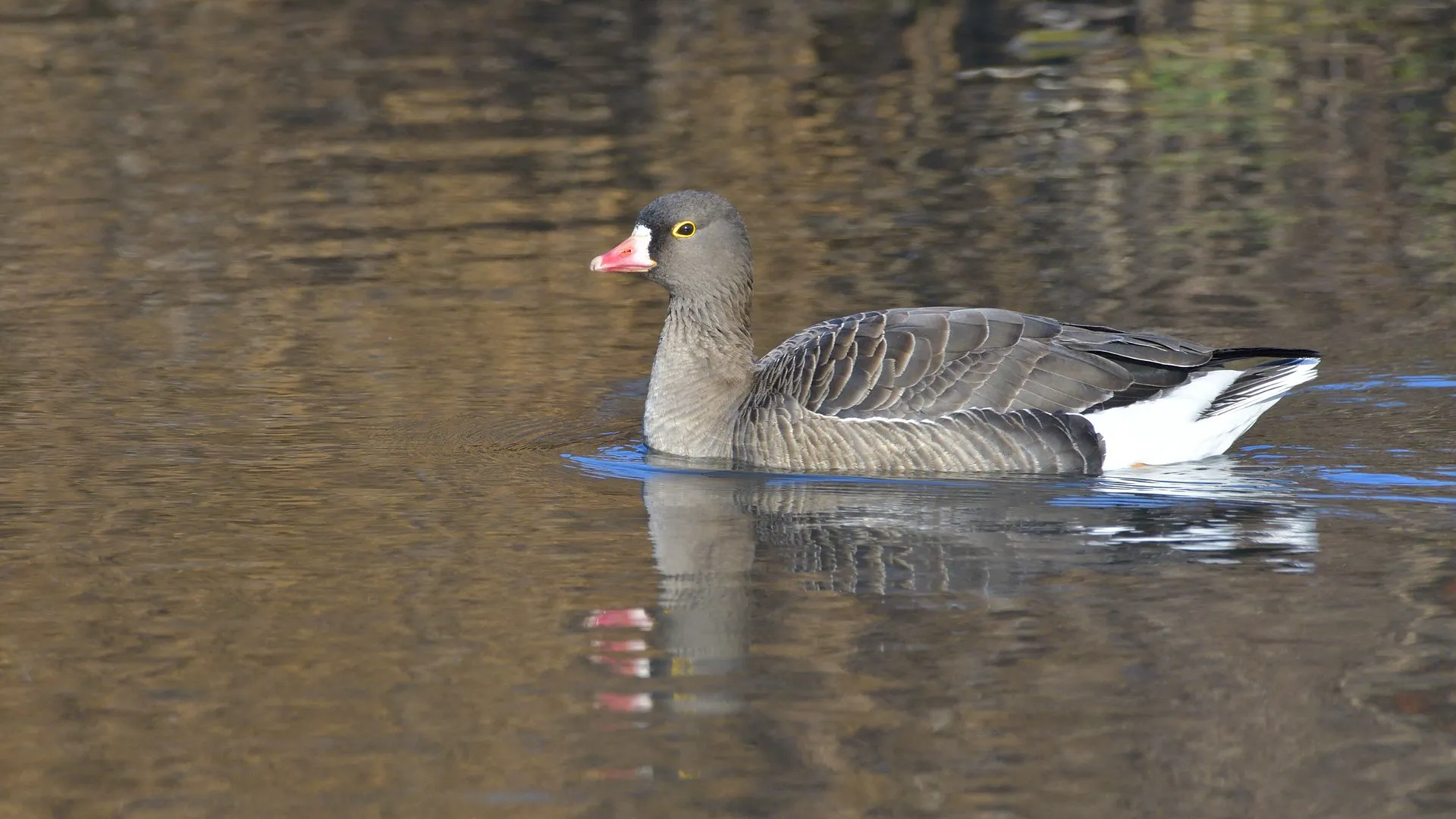
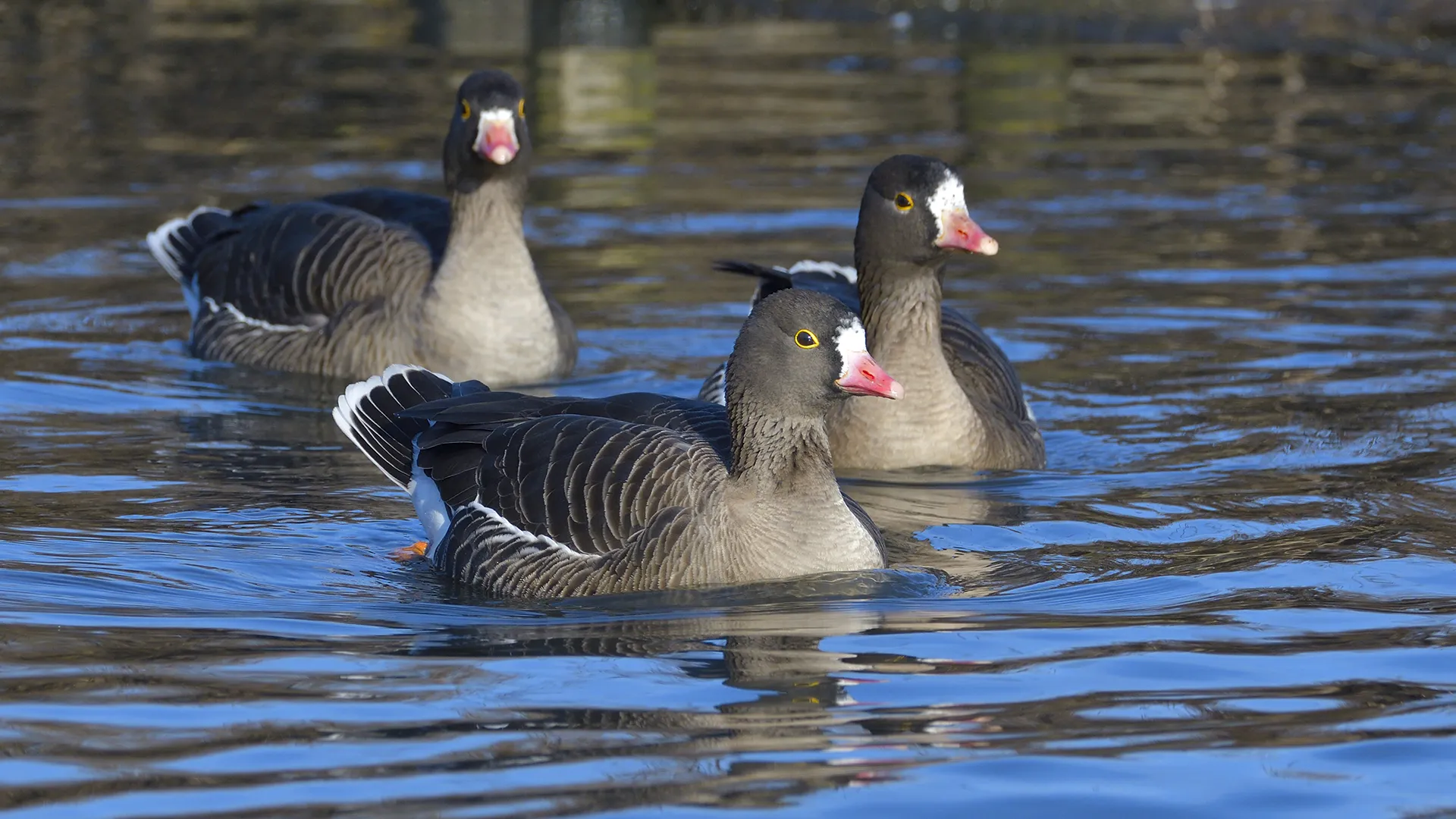
It looks very much like the Greater White-fronted Goose, but is smaller and more compact, with a shorter neck, a rounder head and a small pink bill. The white blaze on the forehead is larger and reaches up to the crown, and around the eye there is a ring of yellow skin, the most reliable feature. The wing tips project beyond the tail when the bird is standing. It has fewer black bars on the belly. In flight it beats its wings faster than the Greater White-fronted Goose.
Its life
It breeds in scrubby tundra and on slopes near rivers, from northern Scandinavia to eastern Siberia. The female lays four to six eggs, and families stay together on the way south. It winters in small numbers in southeastern Europe, around the Caspian Sea, in Iraq and in China. In Dobrogea and northeastern Bulgaria a few birds turn up every winter, almost always within flocks of Greater White-fronted Geese, with which they graze, roost and fly.
Where and when to see it
In winter, from November to March, on the fields and lakes of coastal Dobrogea, among the Greater White-fronted Geese. It is very rare and can only be found by scanning the flock carefully, bird by bird, with a telescope, from a distance. You can look for it on our private winter birding day trip in Dobrogea, and read also about winter in the Danube Delta.
Interesting facts
- A population that almost vanished. In the 20th century the Scandinavian population fell from tens of thousands of birds to just a few dozen pairs. Today it is protected through special conservation projects.
- The scientific name. Erythropus means “red footed”, after its orange legs.
- Easy to confuse, hard to protect. Because it is so similar to the Greater White-fronted Goose, which is hunted, the Lesser White-fronted Goose is shot by mistake more often than any other protected goose.
Status and threats
The Lesser White-fronted Goose is listed as Vulnerable (VU) on the IUCN Red List and is strictly protected in Romania and throughout the European Union. The greatest threat is hunting, even the legal hunting of Greater White-fronted Geese, in whose flocks it lives, followed by the loss of wetlands along its migration route and wintering grounds. Watching it from a distance, without flushing the flock, is the best thing you can do for it.
See it with us
Our birding guides are biologists and ornithologists who are on the water every day of the year. Small groups, open boats, the best hours of the day.
Keep reading
Keep reading
More from the blog
4 min read
Rook (Corvus frugilegus)
A black crow with a bare grey face, nesting in noisy colonies in tall trees: the Rook of the Danube Delta and Dobrogea, a...
4 min read
European Roller (Coracias garrulus)
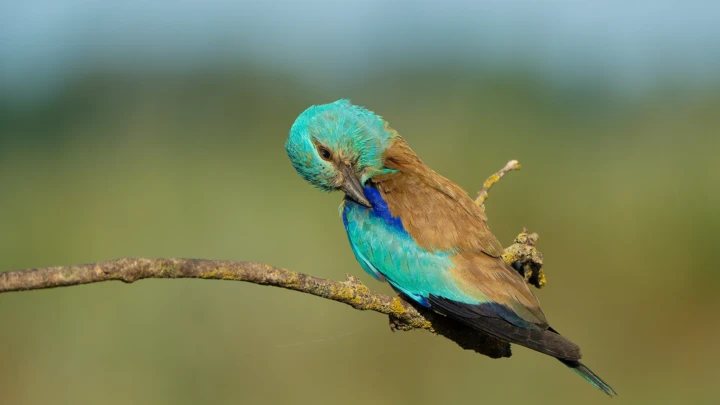
Turquoise wings and a cinnamon back on a dry branch over the steppe: the bird our photographers come to Dobrogea for in June.

5 min read
Purple Heron (Ardea purpurea)
The heron of the reed beds: once the most common heron of the Danube Delta, now second to the Grey Heron, and the reason...