

No. 155 on our checklistGreat Cormorant (Phalacrocorax carbo)
The Great Cormorant, the underwater fisherman of the Danube Delta: identification, how it hunts and dries its wings, colonies and where to see it.
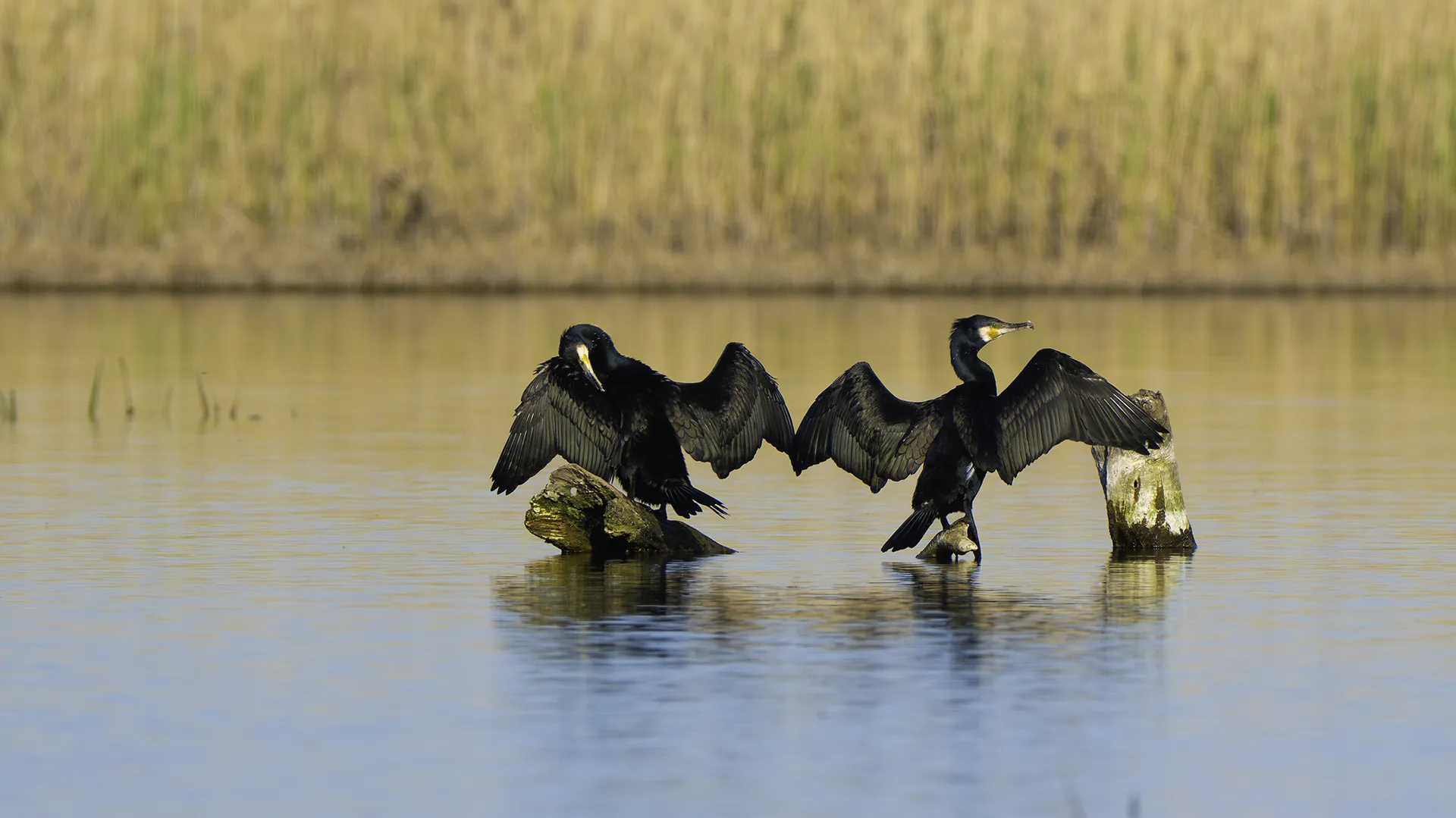
On a dead willow at the edge of a channel, black cormorants sit in a row with their wings spread like flags, drying. It is one of the best known images of the Danube Delta. The Great Cormorant is an accomplished underwater fisherman and one of the most numerous large birds here.
Quick facts
- Scientific name Phalacrocorax carbo (in continental Europe the subspecies sinensis)
- Family Phalacrocoracidae (cormorants)
- Length 80-100 cm
- Wingspan 130-160 cm
- Weight 2-2.5 kg
- In the Danube Delta present all year; breeds in large numbers, many winter on unfrozen water
When to see it in the Danube Delta and Dobrogea
- JanAbundant
- FebAbundant
- MarAbundant
- AprAbundant
- MayAbundant
- JunAbundant
- JulAbundant
- AugAbundant
- SepAbundant
- OctAbundant
- NovAbundant
- DecAbundant
- Status here
- All year. Common.
- IUCN Red List
- Least Concern
- Our checklist
- No. 155 of 385 · see the full checklist
Identification
The adult is black, with a metallic bluish green gloss on the body and a bronze sheen on the wings, where each feather has a dark edge, like a pattern of scales. The bill is long, thick and hooked at the tip, with bare yellow skin at its base, bordered with white on the cheek and chin. In spring, in breeding plumage, it has a large white patch on each thigh and fine white feathers on the head and neck, like frost. Juveniles are brown, with a dirty white belly.
On the water it swims low, with the body almost submerged and the bill tilted upwards. In flight it has an outstretched neck and a long tail and often flies in lines or V formations, like geese. Compared with the Pygmy Cormorant, it is twice the size, with a long neck and a massive bill.
An underwater fisherman
The Great Cormorant hunts by diving from the surface and chasing fish underwater, propelled by its feet, with all four toes joined by webbing. It usually dives a few metres down, but can go deeper than 10 metres. Its plumage holds less air than that of other waterbirds, which reduces buoyancy and helps it dive but lets it get wet; that is why it then sits with its wings spread in the sun and wind. It catches mostly fish of 10-25 cm and eats around 400-500 grams a day.
On the lakes of the Danube Delta you often see cormorants fishing together with pelicans: the cormorants drive the fish towards the surface, and the pelicans scoop them up in their pouches.
Nest and young
It nests in large groups, usually in willows, together with herons, egrets and Glossy Ibises. The nest is a platform of branches and reeds. The female lays three or four pale blue eggs with a chalky coating, incubated by both parents for about 30 days. The chicks hatch naked and black and are fed on regurgitated fish. After a few years, the droppings, rich in uric acid, burn the leaves, and the willows where cormorants nest die back; that is why the colonies move from place to place.
Where and when to see it in the Danube Delta
You see it all year, on practically every trip: fishing on the lakes, flying in lines over the reeds or drying its wings on willow branches. In spring and summer it breeds in large numbers, and in autumn and winter birds from the north join them. In the evening the flocks return in long lines to their roosts, a beautiful sight in the golden light, on our day trips and holidays.
Interesting facts
- The fishermen of Asia. In China and Japan, fishermen have used trained cormorants to catch fish for centuries, a tradition still kept alive in a few places.
- Wings out to dry. The cormorant spreads its wings not because it is hot, but to dry its wet plumage, and the posture probably also helps digestion.
- Green eyes. The adult has emerald green eyes, one of the details you only see up close.
- A victim of “optimisation” campaigns. In the late 1970s and early 1980s, campaigns against fish eating birds were carried out in the Danube Delta, and cormorants were among the hardest hit.
Status and threats
The Great Cormorant ranges across Europe, Asia, Africa, Australia and eastern North America and is listed as Least Concern (LC) by the IUCN. In Europe numbers increased greatly after protection in the 1980s, and the species is often in conflict with fishermen and fish farms.
In the Danube Delta today, the greatest threat to nature is fast boats. Their waves and noise flush fishing cormorants off the water and disturb the colonies in the willows along the water’s edge. That is why our boats go slowly on the channels.
See it with us
Our birding guides are biologists and ornithologists who are on the water every day of the year. Small groups, open boats, the best hours of the day.
Keep reading
Keep reading
More from the blog
3 min read
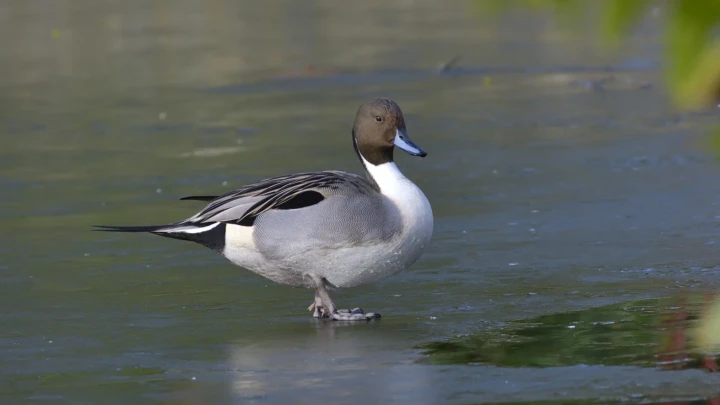
Northern Pintail (Anas acuta)
The Northern Pintail, perhaps the most elegant duck in Europe: identification, diet, breeding and when to see it on passage in the Danube Delta.

6 min read
Yellow-legged Gull (Larus michahellis)
Bright yellow legs, a pale fierce eye and a big red spot on the bill: the Yellow-legged Gull of the Black Sea coast, how...
5 min read
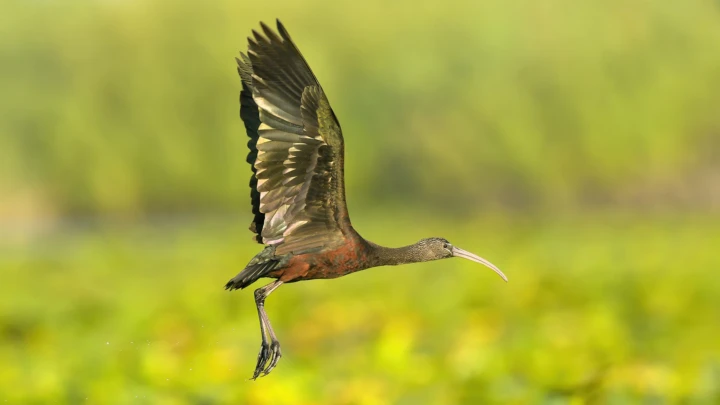
Glossy Ibis (Plegadis falcinellus)
Dark brown in the shade, green and bronze in the sun: the only ibis that breeds widely in Europe, and the Danube Delta is...