

No. 162 on our checklistLittle Egret (Egretta garzetta)
The Little Egret, the snow white heron with yellow feet: identification, its active hunting, the plume trade that nearly wiped it out and where to see it.
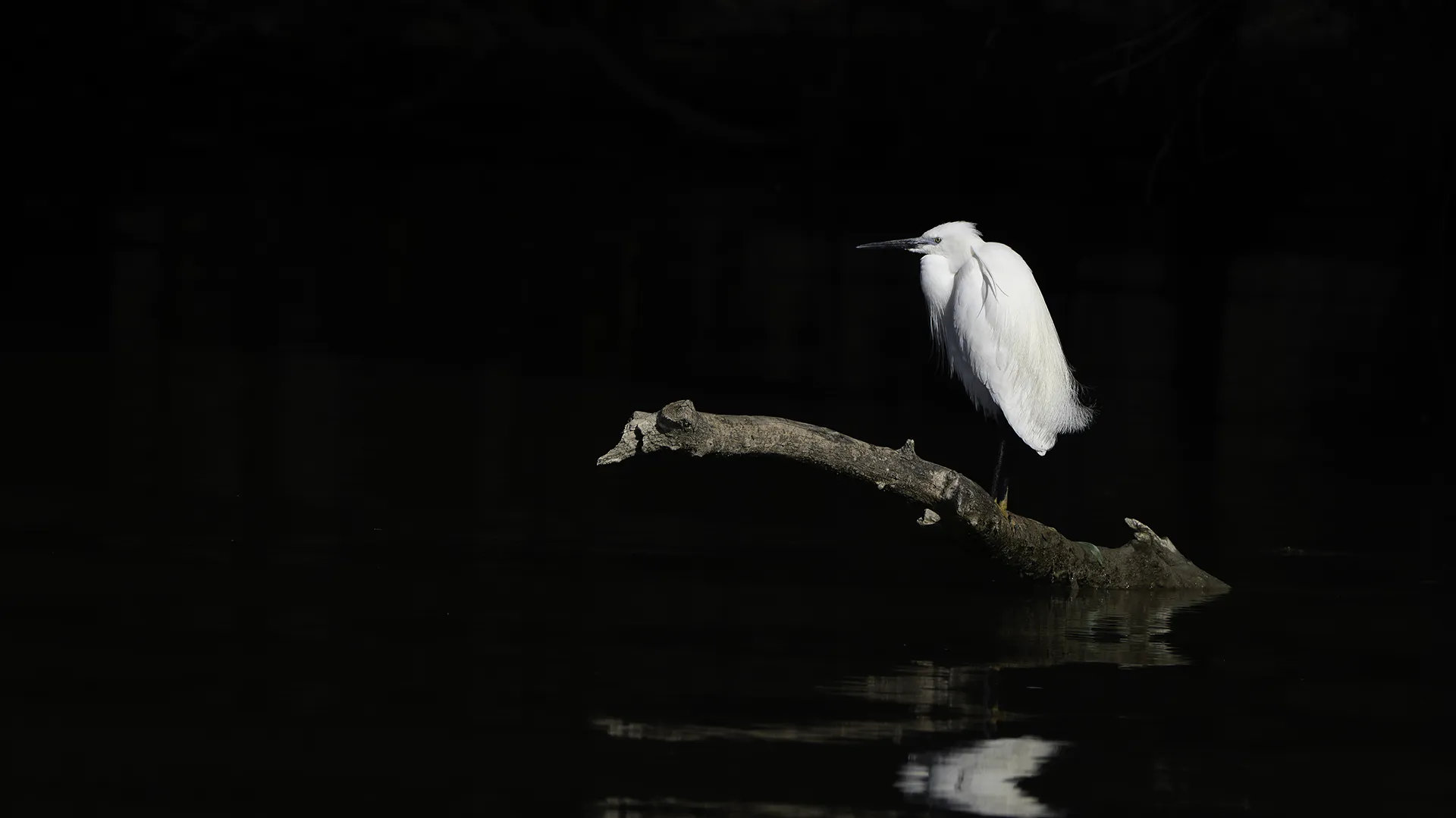
Snow white, slender and always on the move, the Little Egret hurries through the shallows at the edge of a channel, with black legs and yellow “slippers”, and spears its prey with a dagger like bill. In the 19th century it was hunted almost to extinction for its breeding plumes. Today it is one of the most common white birds of the Danube Delta.
Quick facts
- Scientific name Egretta garzetta
- Family Ardeidae (herons)
- Length 60 cm
- Wingspan 92 cm
- Weight 450 g
- In the Danube Delta summer visitor, April to October; a few birds winter
When to see it in the Danube Delta and Dobrogea
- JanAbsent
- FebAbsent
- MarAbsent
- AprModerate
- MayModerate
- JunModerate
- JulModerate
- AugModerate
- SepModerate
- OctRare
- NovAbsent
- DecAbsent
- Status here
- Summer breeder. Moderate population breeding.
- Our checklist
- No. 162 of 385 · see the full checklist
Identification
It is all white, with a slender black bill, black legs and yellow toes, which show well when the bird walks through water or flies. In the breeding season it has two long, thin plumes on the nape and on the back a veil of fine, silky feathers, called aigrettes, covering the tail. For a few days during courtship, the skin between bill and eye turns red, and the toes turn orange.
The Great Egret is much bigger, with a very long neck and a yellow bill for most of the year, and dark legs without yellow toes. The Squacco Heron also looks white in flight, but on the ground it is sandy buff and has a thick, greenish or blue bill.
An active hunter
Unlike herons that wait motionless, the Little Egret hunts actively. It walks quickly through shallow water, stops suddenly, runs a few steps, shakes a foot in the mud to startle small fish and crustaceans, and catches them with a quick stab of the bill. The yellow toes seem to help it flush prey. It feeds on small fish, frogs, tadpoles, crustaceans, aquatic insects and their larvae.
Nest and young
It nests in mixed colonies with other herons, Glossy Ibises and cormorants, in willows and bushes at the water’s edge. The nest is a platform of twigs. The female lays three to five bluish green eggs, incubated by both parents for 21-25 days. The chicks leave the nest after about a month and climb on the surrounding branches, and fly at 40-45 days. The last detailed census in the Danube Delta, in 2018, counted about 2,600 pairs.
Where and when to see it in the Danube Delta
Little Egrets arrive in April and leave for Africa and southern Europe in September and October; a few birds stay through the winter on unfrozen water. You see them along channels and lake edges, on mud banks, on wet meadows and in the coastal lagoons, often together with Squacco and Night Herons. They are easy to see on almost any summer day trip or holiday with us.
Interesting facts
- Feathers worth more than gold. At the end of the 19th century, egret breeding plumes were fashionable on ladies’ hats, and a kilogram was worth more than gold. The slaughter of egrets during the breeding season led to the founding of the first bird protection societies in England and America.
- Named after its plumes. The word egret comes from the French aigrette, the name given to those fine plumes on the back.
- Yellow slippers. The contrast between black legs and yellow toes is the simplest identification feature and, it seems, a hunting tool.
- Moving north. In recent decades the Little Egret has spread far into northern Europe and now breeds in England, where before the 1990s it was a rarity.
Status and threats
The Little Egret lives in southern Europe, Africa, Asia and Australia and is listed as Least Concern (LC) by the IUCN. It needs quiet nesting sites in willows and shallow, food rich water.
In the Danube Delta today, the greatest threat to nature is fast boats. The Little Egret feeds along the channel edges and nests close to the water, where their noise and waves reach first. That is why our boats go slowly on the channels.
See it with us
Our birding guides are biologists and ornithologists who are on the water every day of the year. Small groups, open boats, the best hours of the day.
Keep reading
Keep reading
More from the blog

4 min read
Eurasian Penduline Tit (Remiz pendulinus)
A tiny masked bird that weaves a hanging nest like a felt bottle at the tip of a willow branch over the water.
3 min read
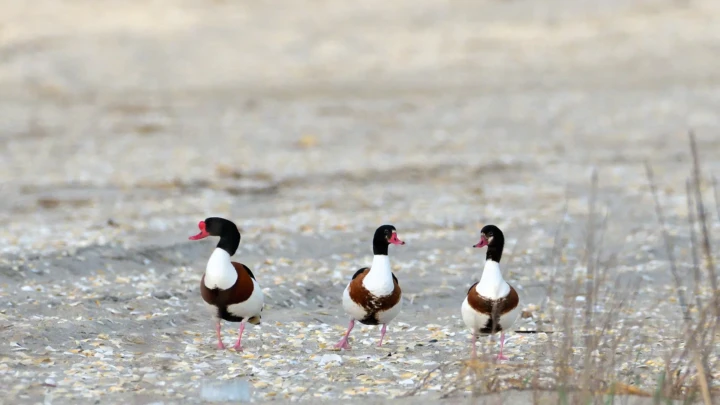
Common Shelduck (Tadorna tadorna)
The Common Shelduck, a big black and white duck of the coastal lagoons that nests in fox burrows: identification, diet, crèches and where to...
2 min read
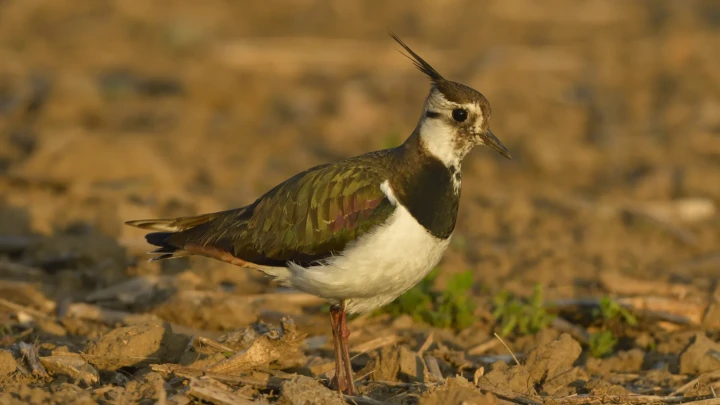
Northern Lapwing (Vanellus vanellus)
A long crest and broad rounded wings identify the Northern Lapwing, present all year in the Danube Delta and Dobrogea.