

No. 80 on our checklistNorthern Lapwing (Vanellus vanellus)
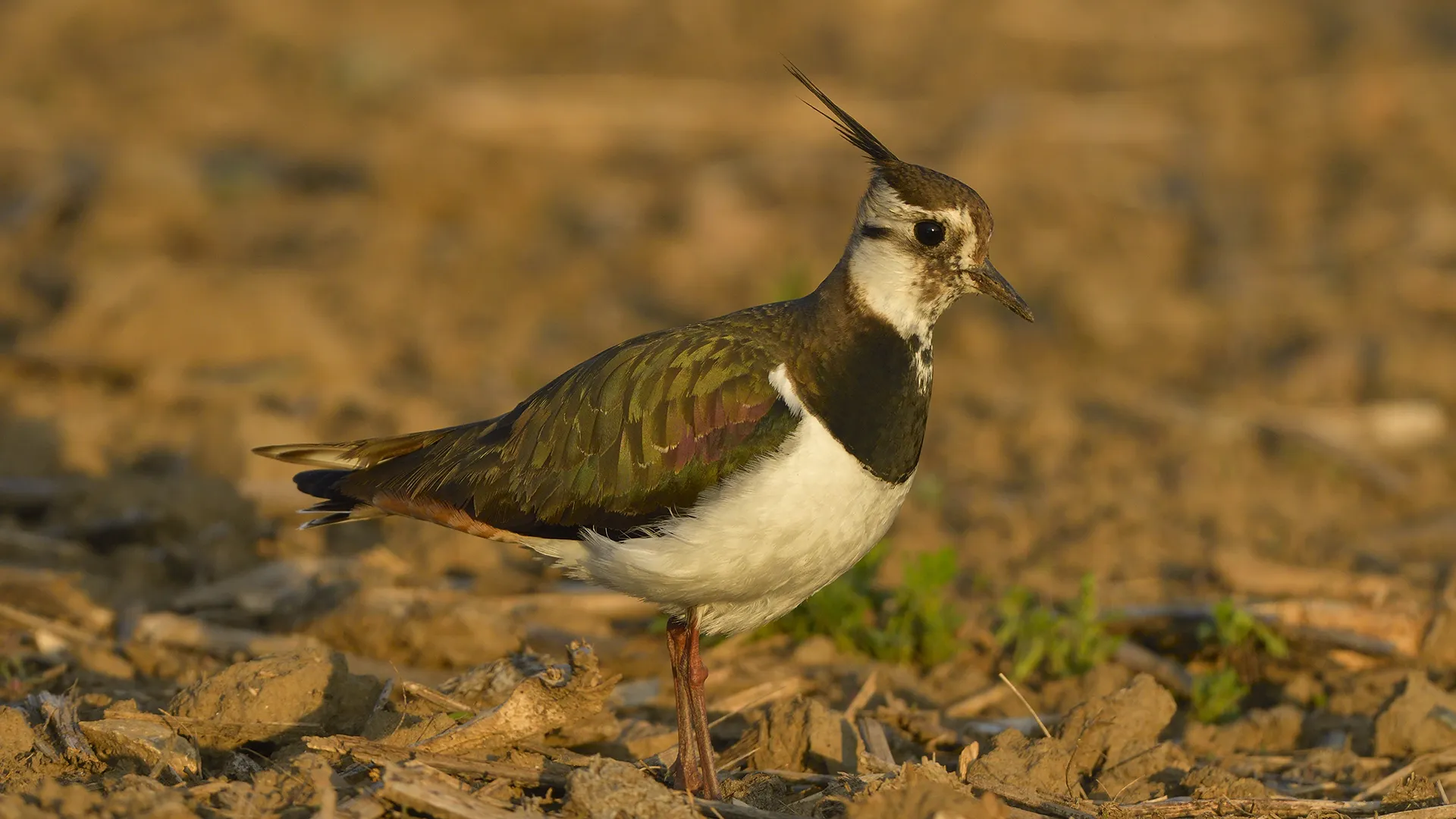
A long crest and broad rounded wings identify the Northern Lapwing, present all year in the Danube Delta and Dobrogea.
The Northern Lapwing (Vanellus vanellus) is a crested wader whose rounded wings and tumbling display flights make it recognizable even at a distance. The Danube Delta and Dobrogea checklist records it in every month.
Linnaeus originally described it as Tringa vanellus in 1758.
Quick facts
Quick facts
- Scientific name Vanellus vanellus (Linnaeus, 1758)
- Common name Northern Lapwing
- Family Charadriidae
- Order Charadriiformes
- Weight about 250 g
- Diet earthworms, insects and their larvae
- Habitat open farmland, wet grassland and marsh margins
- Breeding usually 4 eggs; incubation mainly by the female; young typically fledge at 35–40 days
- Conservation status Near Threatened globally; Romania (2022): Vulnerable as a breeding bird
When to see it in the Danube Delta and Dobrogea
- JanScarce
- FebScarce
- MarPresent
- AprPresent
- MayPresent
- JunPresent
- JulPresent
- AugPresent
- SepPresent
- OctPresent
- NovScarce
- DecScarce
- Status here
- Present all year; less frequently recorded November–February.
- IUCN Red List
- Near Threatened
- Our checklist
- No. 80 of 385 · see the full checklist
How to recognize it
The dark upperparts can look almost black from afar, but closer views reveal a green gloss. Look for the long crest and the contrast between dark and white plumage. In flight, the broad rounded wings are a useful clue even when the crest is invisible.
Open ground and wet grassland
Lapwings feed on worms and insects on the ground. Wet grassland can offer good feeding conditions, and short grassland or open farmland can provide nesting sites. In display flights the birds tumble and call. The local checklist shows more regular records from March to October, but also records the species in winter.
Interesting facts
- It is also called Peewit. The name imitates one of its familiar calls.
- Dark feathers can shine green. Look for the gloss when the light catches the upperparts.
- The wings are broad and rounded. Their shape is a useful clue in the air.
- Wet grassland provides food. Worms and insect larvae are among the prey it takes there.
Status and conservation
The Northern Lapwing is Near Threatened globally. Romania’s 2022 Red List classifies the national breeding population as Vulnerable. It reports 75,080–115,034 breeding pairs and a decline of about 74% in the national monitoring series for 2010–2021. That trend is national, not a measurement for the Danube Delta.
See it on our tours
On our multi-day birdwatching tours in the Danube Delta and Dobrogea, watch open fields and wet grassland. In flight, the rounded wings and bold dark-and-white pattern can give away a Lapwing before the crest is visible.
See it with us
Our birding guides are biologists and ornithologists who are on the water every day of the year. Small groups, open boats, the best hours of the day.
Keep reading
Keep reading
More from the blog
2 min read
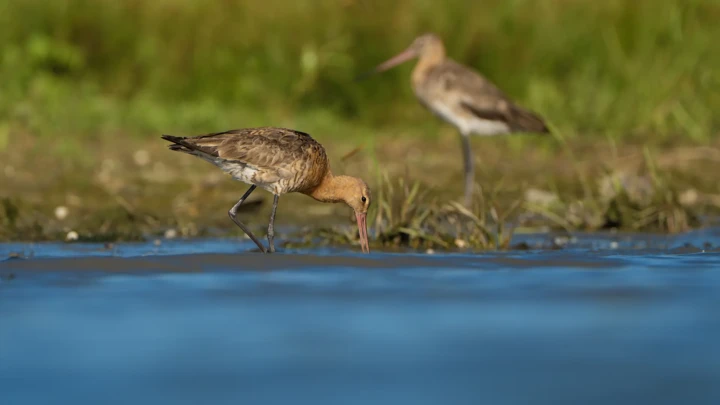
Black-tailed Godwit (Limosa limosa)
A long-billed wader with a bold wing stripe. Black-tailed Godwit occurs on passage and is a very rare breeder in the Danube Delta region.
4 min read
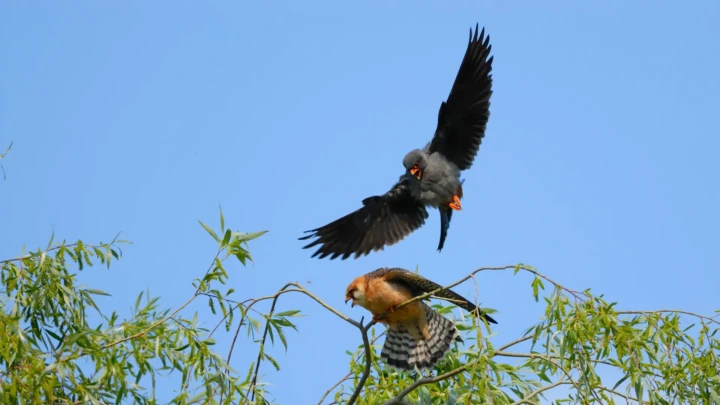
Red-footed Falcon (Falco vespertinus)
A small, sociable falcon that nests in old rook nests and gathers in big roosts before migrating to southern Africa: the Red-footed Falcon in...
5 min read
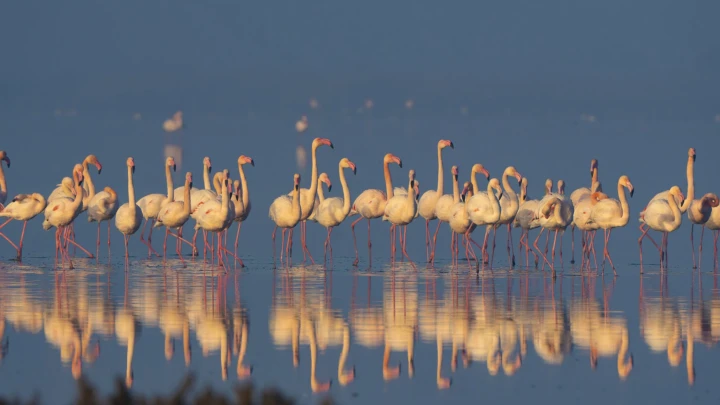
Greater Flamingo (Phoenicopterus roseus)
Once only a rare visitor, the flamingo now appears more and more often in the salty lagoons of the Danube Delta and Dobrogea.