

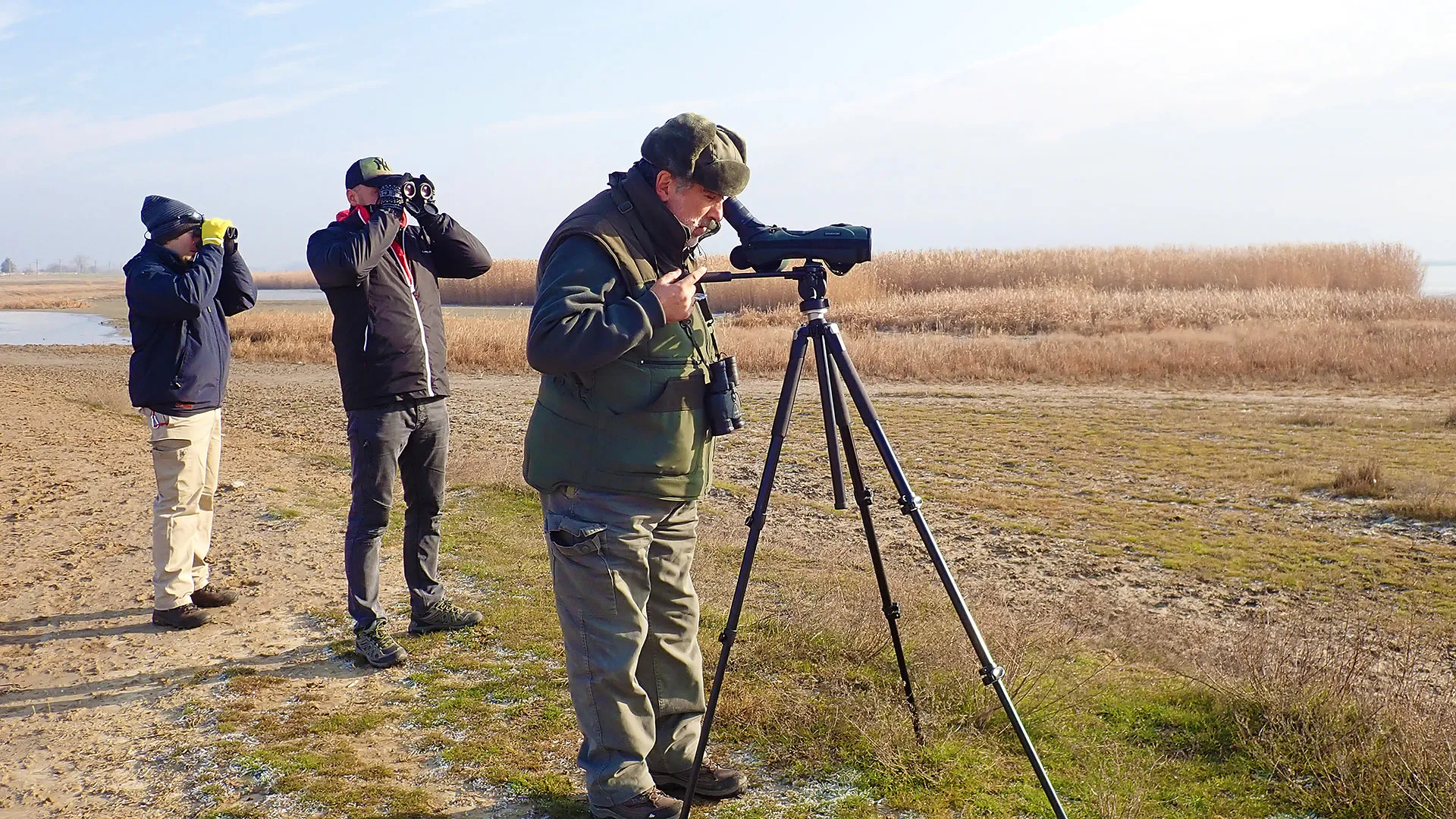
How to Become a Better Birder
How to train your eye and ear for birds, keep a notebook, share your sightings and plan what comes after your first 100 species.
You have started recognising your first birds and want more. The next step is to train your eye and ear, write down what you see and learn from others. Birdwatching is relaxing, but it is also a skill built with patience, attention to detail and many hours in the field.
Train your eye
The more time you spend outdoors, the faster you recognise the shapes, flight and behaviour of each species. Start with the common birds around your home: House Sparrow, Great Tit, Blackbird, Collared Dove. Watch them closely, then try to identify them without looking at the guide. Once you know these for sure, you will immediately notice the bird that does not fit.
Look at the bird first, not at the book. Note its size compared with a species you know, the shape of the bill, the colour of the legs, the wing pattern and what the bird is doing. Only then open the guide. That is how you learn to see what matters, not just to flip through pictures.
Learn to listen
Many species are easier to identify by voice than by sight, especially in woods and reedbeds, where birds are hard to see. Learn songs one at a time, starting with common species, and listen to recordings before going out. Sound identification apps can help, but always check what they tell you: they are often wrong, and a reliable identification comes from what you hear and see yourself.
Keep a notebook
Write down every outing: date, place, weather and the species seen, with their numbers. After a year you will see for yourself when the summer birds arrive, when they leave and where to find them. Over time your personal list becomes a map of your own learning.
Share your sightings
Your observations are also useful for science. When you enter them in a public database, they help us understand the distribution, migration and status of birds:
- eBird, the worldwide database run by Cornell University, where you can keep your lists and see what has been seen recently at any site.
- Ornitodata, the database and app of the Romanian Ornithological Society, where your Romanian sightings go straight to Romanian ornithologists.
Birding groups on social media are a good place for questions and for help with a difficult photo. When you ask for help, say where and when the photo was taken: it matters as much as the picture.
Respect the birds
A good birder is one the birds hardly notice. Keep your distance, especially near nests and colonies, do not play recordings to attract birds in the breeding season, and do not flush flocks from the water or fields to see them in flight. Every forced flight costs them energy, which in winter or on migration can matter enormously.
I have seen my first 100 species. What now?
Congratulations! Now is the time to go where the birds you dream of live. Make a list of the species you want, find out their habitat and the months when they are easiest to see, then plan your trips by season. The Danube Delta and Dobrogea are among the best places in Europe for this: our checklist holds more than 380 species, from pelicans and Pygmy Cormorants to bee-eaters, rollers and Red-breasted Geese.
See the bird list of the Danube Delta and Dobrogea, with the months each species occurs, and our birdwatching tours and day trips, where a guide helps you find and identify them.
Good luck, and let us know which new species you discover!
See it with us
Our birding guides are biologists and ornithologists who are on the water every day of the year. Small groups, open boats, the best hours of the day.
Keep reading
Keep reading
More from the blog
4 min read
Birdwatching: Discover the World of Birds
How to start birdwatching: binoculars, a field guide, a notebook and a camera, then the first trips to discover the birds of the Danube...

2 min read
Birds of Transylvania: Birding Around Brasov and Sibiu
Old forests, alpine ridges and hay meadows: the birds of Transylvania around Brasov and Sibiu, with a checklist of more than 275 species.

2 min read
Bird List of the Danube Delta and Dobrogea
The 385 birds of the Danube Delta and Dobrogea, month by month: what you can see on your dates, with names in five languages.