

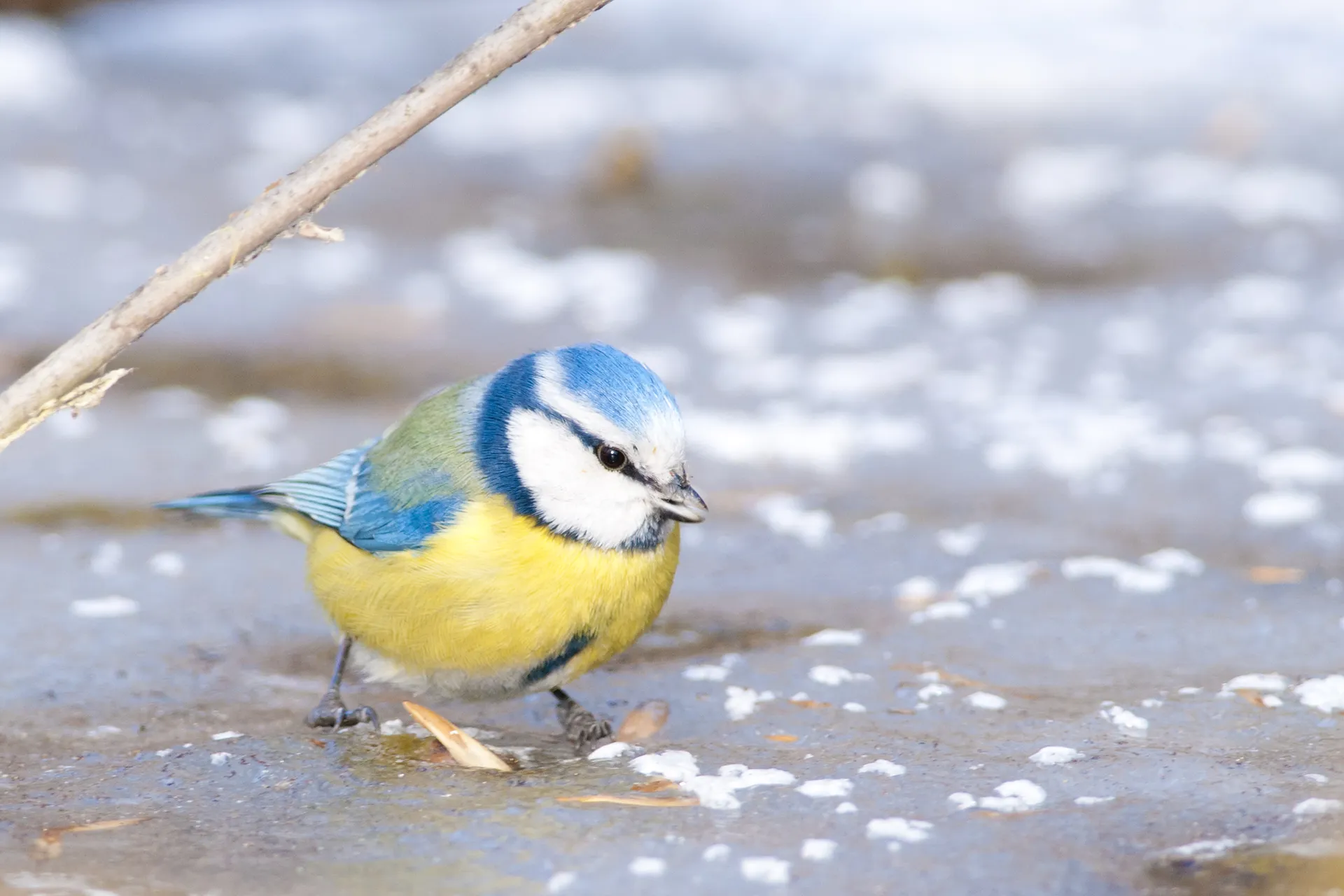
No. 244 on our checklistEurasian Blue Tit (Cyanistes caeruleus)
A tiny blue and yellow acrobat of willow forests, gardens and orchards: the Eurasian Blue Tit in the Danube Delta and Dobrogea, a bird whose blue crown shines in ultraviolet light.
The Eurasian Blue Tit (Cyanistes caeruleus), described as Parus caeruleus by Linnaeus in 1758, is one of the smallest and most colourful birds of the Danube Delta and Dobrogea. It lives all year in willow and poplar forests, oak woods, orchards, parks and gardens.
Its blue crown is even brighter than we can see, because it reflects ultraviolet light, which tits can see.
Quick facts
Quick facts
- Scientific name Cyanistes caeruleus (Linnaeus, 1758); formerly Parus caeruleus
- Common name Eurasian Blue Tit
- Family Paridae (tits and chickadees)
- Order Passeriformes
- Wing length about 6.3 cm (adults, British ringing data)
- Weight about 11 g
- Diet insects, especially caterpillars, and spiders; seeds and fruit in winter
- Habitat deciduous and riverine forests, orchards, parks, gardens and villages
- Breeding in tree holes and nest boxes; usually 8–10 eggs, incubated by the female for 13–14 days; young leave the nest at 18–21 days; sometimes two broods
- Conservation status Least Concern (global IUCN Red List); Least Concern on the Romanian Red List (2022)
When to see it in the Danube Delta and Dobrogea
- JanMixed flocks
- FebMixed flocks
- MarPairs, song
- AprNest building, egg-laying
- MayChicks in the nest
- JunYoung fledge, second broods
- JulFamily groups
- AugMixed flocks
- SepPresent all year
- OctMixed flocks
- NovMixed flocks
- DecMixed flocks
- Status here
- Resident, present all year in forests, orchards and villages.
- IUCN Red List
- Least Concern
- Our checklist
- No. 244 of 385 · see the full checklist
How to recognize it
The Blue Tit is a tiny bird with a blue cap, wings and tail, a white face crossed by a dark line through the eye, and a yellow breast with a small dark mark in the middle. The back is greenish. Males are on average slightly brighter than females. It moves constantly, often hanging upside down from thin twigs while searching for insects. Its song is a clear, high trill.
A blue we cannot see
Birds have four types of colour receptors in their eyes and can see near-ultraviolet light. Two studies published in 1998 measured the light reflected by Blue Tit feathers and found that the blue crown reflects strongly in the ultraviolet, peaking at about 352 nm, outside the range of human vision. Males and females differ in this ultraviolet colour, so to each other the sexes look more different than they do to us. Females preferred males with the brightest crowns, and pairs tended to be matched by the ultraviolet colour of the crown. One of the studies was titled simply “Blue tits are ultraviolet tits”.
Life through the seasons
Blue Tits nest in tree holes and readily use nest boxes. The female lays a large clutch for such a small bird, usually 8 to 10 eggs, and breeding is timed to the spring peak of leaf-eating caterpillars, the main food of the chicks. In winter Blue Tits join mixed flocks with Great Tits and other small birds. Most are resident in southern Europe, but some move in autumn: at two ringing stations in neighbouring Hungary, almost 7,000 Blue Tits were caught between 2004 and 2013, nearly nine in ten of them young birds, and some years saw large movements.
Interesting facts
- The ultraviolet tit. The blue crown of the Blue Tit reflects ultraviolet light, which tits can see but we cannot.
- Milk thieves. In Britain, from 1921 onwards, tits learned to peck through the tops of milk bottles left on doorsteps to drink the cream. Of 400 records, 246 involved Blue Tits.
- A big family for a tiny bird. A female weighing about 11 g lays up to 16 eggs, though 8 to 10 are usual.
- A new genus. The Blue Tit was long placed in the genus Parus, with the Great Tit, and is now placed in Cyanistes.
Status and conservation
The Eurasian Blue Tit is listed as Least Concern on the global IUCN Red List. In Romania it is Least Concern on the Romanian Red List (2022), with 875,292–1,255,047 breeding pairs and an increasing trend.
See it on our tours
On our multi-day Danube Delta discovery tours, Blue Tits are among the busiest birds in the willow forests and village gardens of the Danube Delta. Listen for their high trills and look for them hanging upside down from the thinnest branches.
See it with us
Our birding guides are biologists and ornithologists who are on the water every day of the year. Small groups, open boats, the best hours of the day.
Keep reading
Keep reading
More from the blog
3 min read
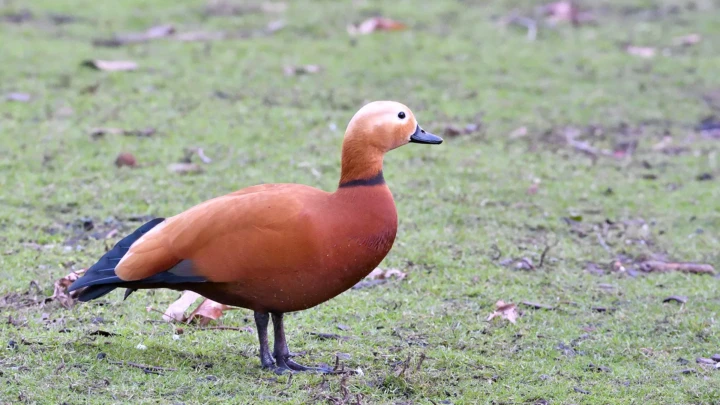
Ruddy Shelduck (Tadorna ferruginea)
The Ruddy Shelduck, an orange duck of Asian steppes and salt lakes at the western edge of its range in Dobrogea: identification, nesting and...

4 min read
Bearded Reedling (Panurus biarmicus)
A small long tailed bird of the reed beds, heard as a ringing “ping” long before it is seen.
4 min read
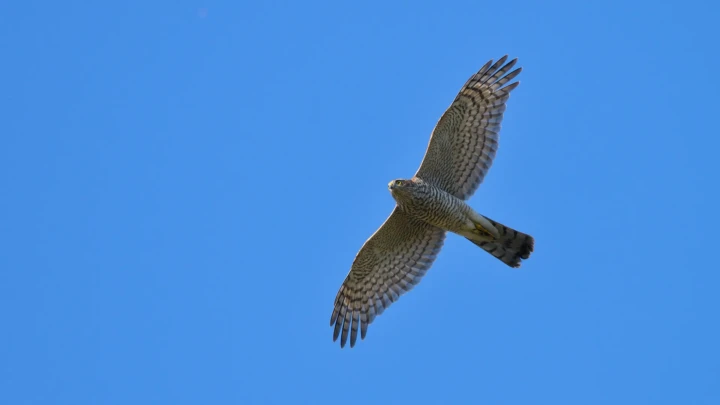
Eurasian Sparrowhawk (Accipiter nisus)
A fast hunter of small birds that turns up in villages, reedbeds and woods: the Eurasian Sparrowhawk is common in the Danube Delta and...