

No. 66 on our checklistEurasian Coot (Fulica atra)
Black, white-billed and everywhere on the water: the Eurasian Coot in the Danube Delta, its breeding, winter flocks and Near Threatened status in Romania.
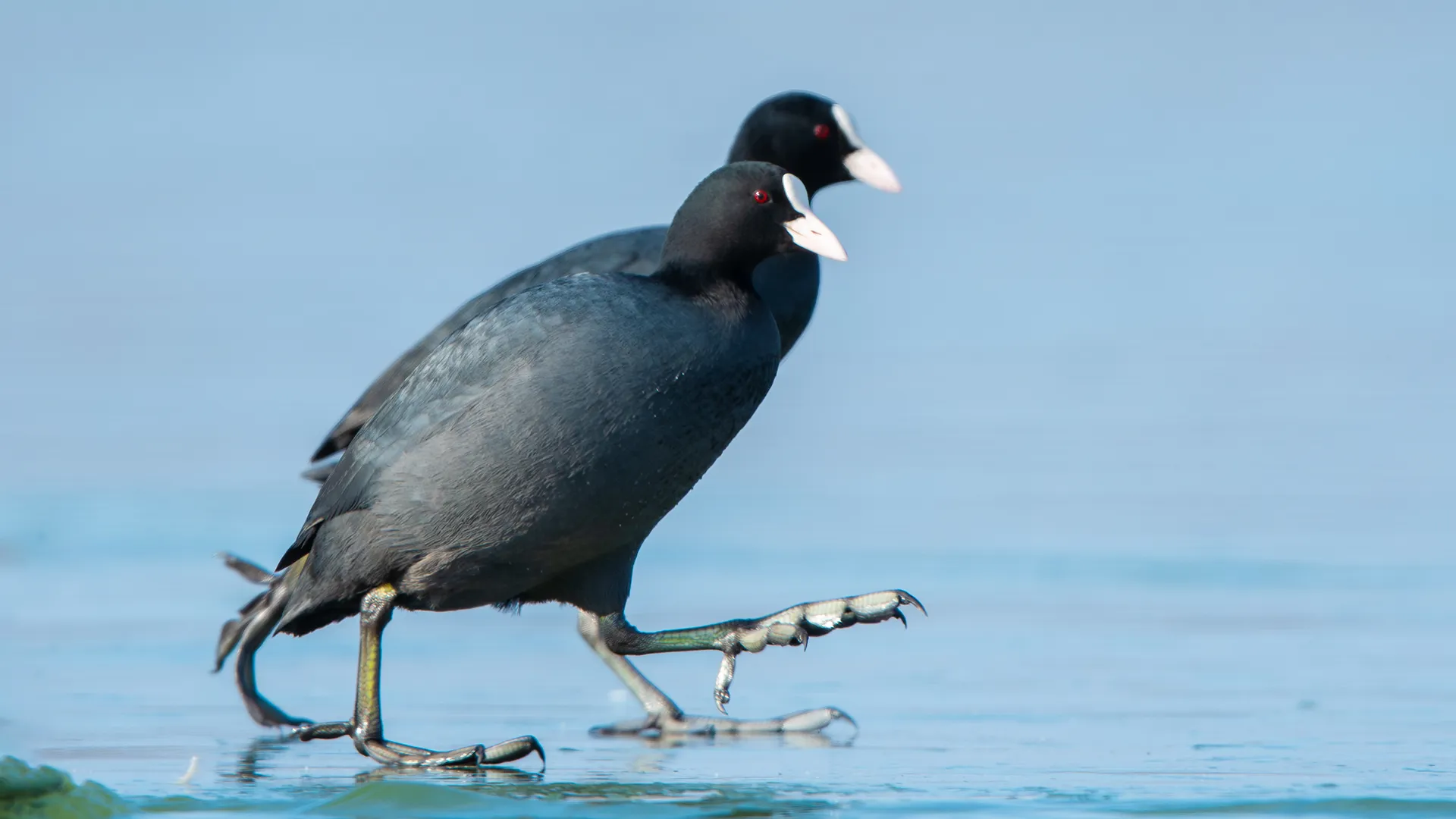
The Eurasian Coot (Fulica atra) is the black waterbird with a white bill and a white frontal shield that swims, dives and squabbles on almost every lake and channel of the Danube Delta. It is present all year and in winter gathers in flocks of thousands on the open water.
It is so common that many visitors overlook it. Yet its numbers as a breeding bird in Romania have fallen, and it is now listed as Near Threatened on the Romanian Red List.
Quick facts
Quick facts
- Scientific name Fulica atra Linnaeus, 1758
- Common name Eurasian Coot; also Common Coot
- Family Rallidae (rails, crakes and coots)
- Order Gruiformes (cranes, rails and allies)
- Length 36–40 cm
- Wingspan 75 cm
- Weight 800 g
- Diet mainly aquatic plants, taken at the surface or by diving; also seeds, grass, insects, snails and other small animals
- Habitat lakes, channels, fishponds and marshes with open water and fringing vegetation; in winter also large lakes, lagoons and reservoirs
- Breeding one or two broods a year; usually 5–7 eggs, incubated by both parents for 21–24 days; the young fly at 55–60 days
- Conservation status Least Concern (global IUCN Red List); Near Threatened on the European Red List and on the Romanian Red List (2022) as a breeding bird; a game species in Romania
When to see it in the Danube Delta and Dobrogea
- JanWintering flocks
- FebWintering flocks
- MarPairs, territorial fights
- AprNesting
- MayNesting, chicks
- JunFamilies with chicks
- JulSecond broods, moult
- AugFlocks gather
- SepAutumn migrants arrive
- OctLarge autumn flocks
- NovWintering flocks
- DecWintering flocks
- Status here
- Present all year: breeds throughout the Danube Delta; large flocks of migrants and wintering birds from autumn to early spring.
- IUCN Red List
- Least Concern
- Our checklist
- No. 66 of 385 · see the full checklist
How to recognize it
The Eurasian Coot is a rounded, slate-black waterbird with a white bill and a white, fleshy frontal shield on the forehead. The eye is red. On the water it sits high, with a jerky, nodding swimming action. In flight it shows a narrow white trailing edge to the wing, and the long legs and big feet trail behind the tail.
The feet are a good field mark when the bird walks on land: the long, grayish-green toes have broad lobes of skin, not webs as in ducks. Juveniles are gray-brown above with a whitish face and throat, and lack the white shield. The chicks are black and fluffy, with bright orange and red down on the head and a red bill.
The call is a loud, sharp “kowk” or “pitts”, often heard at night. The Common Moorhen, which also lives in the Danube Delta, is smaller, brown and dark blue, with a red shield and a red and yellow bill.
Life in the Danube Delta
Coots use almost every type of open water in the Danube Delta, from the small lakes hidden in the reed beds to the large lakes and the lagoons of the southern Danube Delta. They feed mainly on aquatic plants, which they pick from the surface, pull up by diving or graze on the shore. Gadwalls often wait beside them and steal the plants they bring up from the bottom, a habit studied in detail by researchers (see our Gadwall article).
In the breeding season coots are strongly territorial. Rival birds puff up their feathers, lower their heads, then rush across the water and fight, leaning back on their tails and striking with their feet.
Breeding
The nest is a bulky pile of reed and other plants, built among emergent vegetation or on floating material, sometimes in surprisingly exposed places. Both parents build, incubate and care for the chicks. After hatching the chicks follow their parents on the water and are fed by them for several weeks.
For 2013–2018, Romania reported about 48,700–95,100 breeding pairs. The breeding population declined by an estimated 31% over seven years, although the data were limited.
Migration and winter
Coots from northern and eastern Europe migrate at night, and in autumn they join the local birds on the large lakes and lagoons of the Danube Delta and Dobrogea. Romania reported 78,800–134,600 wintering birds for 2013–2018. During the January 2026 waterbird count, 119,466 coots were recorded in Romania, compared with 165,314 in January 2025, the second most numerous waterbird after the Mallard.
When a coot takes off, it runs across the surface for several meters, pattering with its feet, before it becomes airborne.
Interesting facts
- Parents with favorites. A study of Eurasian Coots showed that parents decide which chicks come with them on foraging trips. The favored chicks are fed more and grow faster, while the others grow more slowly, even though they try harder to feed themselves.
- Eggs in a neighbor’s nest. Some female coots lay eggs in the nests of other coots. This conspecific brood parasitism seems to be fairly common, and researchers have learned to recognize the foreign eggs by small differences in their size, shape and spotting.
- A shield that grows in spring. The white frontal shield is larger in males, and in rails it expands before the breeding season under the influence of testosterone, in both sexes.
- Long-lived rail. Coots can live a long time for a bird of their size: the longevity record for a ringed Eurasian Coot in Britain is more than 15 years.
- Lobes, not webs. Coots are rails, not ducks. Instead of webbed feet they have lobed toes, which spread on the power stroke when swimming and fold on the return stroke, and which also allow them to walk easily on mud and floating vegetation.
Status and conservation
Globally the Eurasian Coot is widespread and listed as Least Concern on the IUCN Red List. In Europe it is assessed as Near Threatened, and the Romanian Red List (2022) also classifies the breeding population as Near Threatened because of its decline. The wintering population in Romania is assessed as Least Concern.
The coot is a game species in Romania, hunted from 15 August. Loss of aquatic vegetation, eutrophication, disturbance and hunting pressure are the main concerns for the species.
See it on our tours
On our multi-day birdwatching tours in the Danube Delta and Dobrogea, coots are everywhere on the lakes. In spring and early summer we watch their territorial fights and the parents feeding their bright-headed chicks, and in winter the large rafts of coots on the lagoons sometimes attract hunting White-tailed Eagles.
See it with us
Our birding guides are biologists and ornithologists who are on the water every day of the year. Small groups, open boats, the best hours of the day.
Keep reading
Keep reading
More from the blog

5 min read
Great White Pelican (Pelecanus onocrotalus)
The Great White Pelican, symbol of the Danube Delta, home to its largest European population: identification, team fishing, colonies, migration.
5 min read
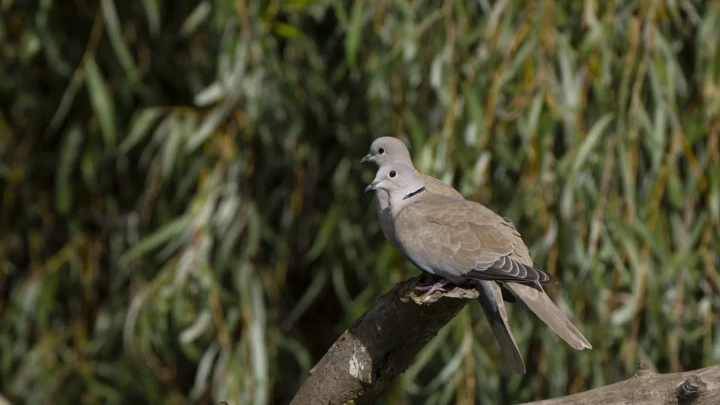
Eurasian Collared Dove (Streptopelia decaocto)
Unknown in most of Europe 200 years ago, the Eurasian Collared Dove now lives in every Danube Delta village: identification, spread, breeding and legend.
3 min read
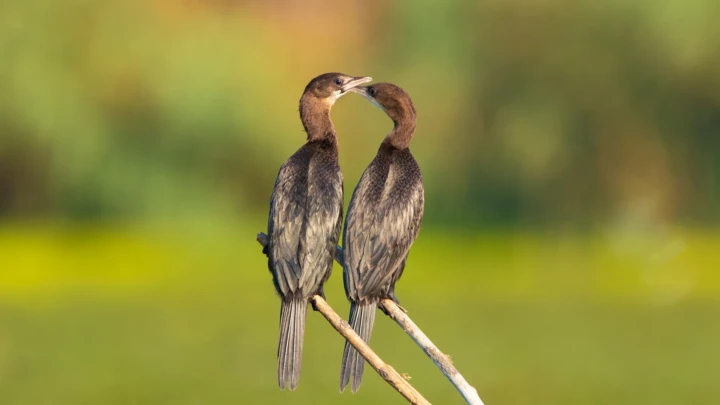
Pygmy Cormorant (Microcarbo pygmaeus)
The Pygmy Cormorant, one of the signature birds of the Danube Delta: how to tell it from the Great Cormorant, what it eats, nesting...