

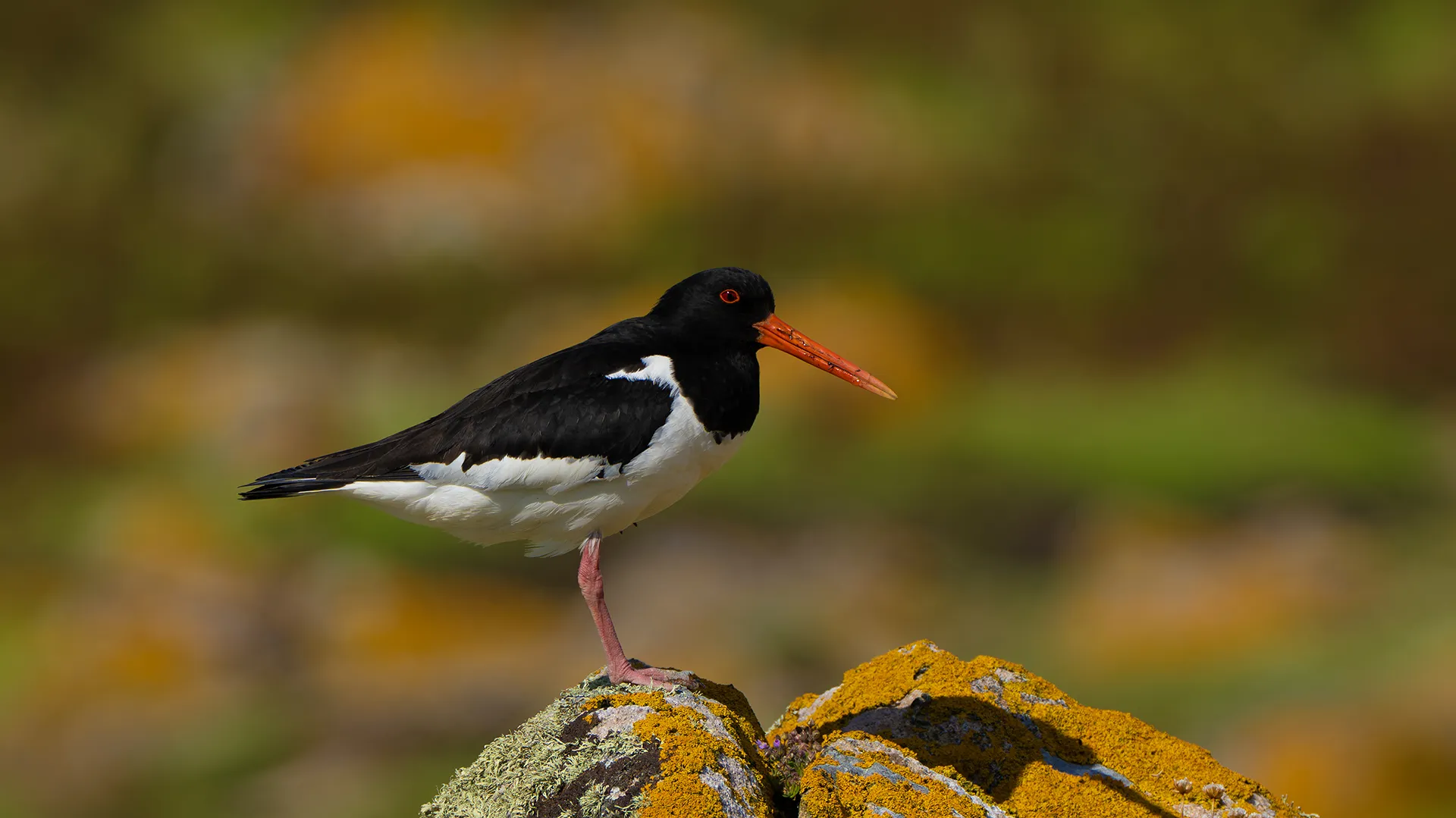
No. 72 on our checklistEurasian Oystercatcher (Haematopus ostralegus)
A bold black-and-white shorebird with an orange bill. Eurasian Oystercatcher is more regular on passage than as a breeding bird in the Danube Delta.
The Eurasian Oystercatcher (Haematopus ostralegus) is a black-and-white shorebird with a long orange-red bill. The Danube Delta and Dobrogea checklist lists it as a very rare breeder and more regular on passage.
Quick facts
Quick facts
- Scientific name Haematopus ostralegus Linnaeus, 1758
- Common name Eurasian Oystercatcher
- Family Haematopodidae
- Order Charadriiformes
- Weight about 546 g
- Diet shellfish and other invertebrates; prey varies with habitat
- Habitat open shores, beaches, coastal wetlands and some inland shores
- Breeding usually 2–3 eggs; both adults incubate for 24–27 days; young typically fledge at 34–37 days
- Conservation status Near Threatened globally; Vulnerable as a breeding bird in Romania (2022)
When to see it in the Danube Delta and Dobrogea
- JanNo checklist code
- FebScarce
- MarPresent
- AprPresent
- MayPresent
- JunVery rare
- JulVery rare
- AugPresent
- SepPresent
- OctPresent
- NovScarce
- DecNo checklist code
- Status here
- Very rare breeder; more regular on passage. Monthly entries run from February to November.
- IUCN Red List
- Near Threatened
- Our checklist
- No. 72 of 385 · see the full checklist
How to recognize it
The long orange-red bill contrasts with the black head and white underparts. The legs are pinkish. Watch the bird’s shape and bill as well as its colour: this is a sturdier shorebird than many of the smaller waders that share open shores.
What an Oystercatcher actually eats
Despite its name, the species does not rely on oysters. Cockles and mussels are important at some wintering sites, and the food varies with the habitat. It uses a range of open coastal habitats, from sandy shores to estuaries, and some populations also breed inland.
Passage and very rare local breeding
When planning a visit, use the monthly entries rather than assuming it can be seen every month. The checklist marks June and July as very rare and gives no monthly code for January or December. Local breeding is described as very rare; a bird seen on the shore is not, on its own, evidence of a nest.
Interesting facts
- The bill is a strong field mark. Its bright colour stands out against the black-and-white plumage.
- The name does not describe the whole diet. At some wintering sites cockles and mussels are important foods.
- Both parents incubate. A typical clutch contains two or three eggs.
- The original scientific name is unchanged. Linnaeus named it Haematopus ostralegus in 1758.
Status and conservation
The Eurasian Oystercatcher is Near Threatened globally. Romania’s 2022 Red List classifies the national breeding population as Vulnerable, with 50–150 breeding pairs and an unknown short-term trend. These are national figures, not a count for the Danube Delta.
See it on our tours
On our multi-day birdwatching tours in the Danube Delta and Dobrogea, scan open shorelines during passage if the itinerary reaches suitable coastal habitat. Check for a long orange-red bill before narrowing down the identification.
See it with us
Our birding guides are biologists and ornithologists who are on the water every day of the year. Small groups, open boats, the best hours of the day.
Keep reading
Keep reading
More from the blog
6 min read
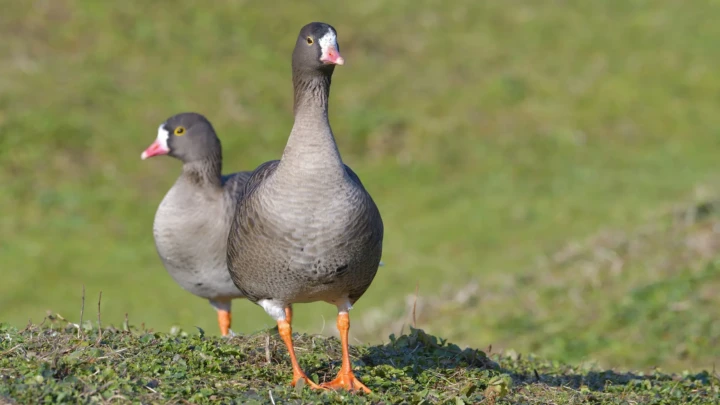
Greater White-fronted Goose (Anser albifrons)
Meet the Greater White-fronted Goose, the most numerous wintering goose in Romania: identification, migration from the Arctic, winter life in Dobrogea, numbers and status.
2 min read
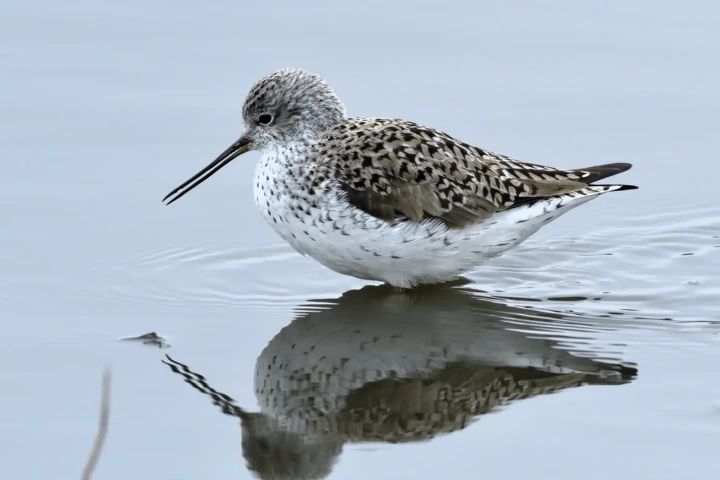
Marsh Sandpiper (Tringa stagnatilis)
A needle-fine bill and long legs distinguish the Marsh Sandpiper, a spring and late-summer passage migrant in the Danube Delta.

4 min read
Red-necked Grebe (Podiceps grisegena)
A brick red neck, pale grey cheeks and a dagger bill with a yellow base: a shy breeding grebe of the quiet lakes of...