


No. 47 on our checklistGreat Crested Grebe (Podiceps cristatus)
A long-necked diving bird with an ornate crest and a courtship display on the water. Great Crested Grebe is present year-round in the Danube Delta.
The Great Crested Grebe (Podiceps cristatus) is a long-necked diving bird that can be seen all year in the Danube Delta and Dobrogea. The breeding adults’ head plumes and their paired courtship displays are among the easiest ways to recognize it.
Linnaeus originally described it as Colymbus cristatus in 1758.
Quick facts
Quick facts
- Scientific name Podiceps cristatus (Linnaeus, 1758)
- Common name Great Crested Grebe
- Family Podicipedidae
- Order Podicipediformes
- Weight about 1 kg
- Diet fish and aquatic invertebrates
- Habitat reed-bordered freshwater lakes and rivers for breeding; also estuaries and coastal waters in winter
- Breeding usually 3–4 eggs; both parents incubate for 27–29 days; young typically fledge at 71–79 days
- Conservation status Least Concern globally; Least Concern as a breeding bird in Romania (2022)
When to see it in the Danube Delta and Dobrogea
- JanPresent
- FebPresent
- MarPresent
- AprPresent
- MayPresent
- JunPresent
- JulPresent
- AugPresent
- SepPresent
- OctPresent
- NovPresent
- DecPresent
- Status here
- Present all year.
- IUCN Red List
- Least Concern
- Our checklist
- No. 47 of 385 · see the full checklist
How to recognize it
Look for a slender neck, a pointed bill and, in breeding plumage, a dark crest and a chestnut-and-black ruff around the head. Winter birds have plainer heads, so the long neck and structure become more useful than the ornamental feathers.
A courtship display on water
Two grebes face one another and shake their heads. In one display they dive for aquatic vegetation, then rise breast to breast with weed in their bills. The display takes place on the water, where the birds can also escape by diving.
Open water and reed margins
Look for feeding grebes on open water and breeding birds near the edges of reed-fringed lakes. The nest is built from aquatic vegetation and can form a floating platform anchored to surrounding plants.
Interesting facts
- The feet are set well back. That helps explain why a Great Crested Grebe is clumsy on land.
- Both birds bring weed to the display. They rise together with the vegetation in their bills.
- Both parents incubate. A typical clutch of three or four eggs takes around four weeks to hatch.
- The chicks are striped. Dark longitudinal stripes mark their pale downy heads and necks.
Status and conservation
The Great Crested Grebe is Least Concern globally and as a breeding bird in Romania’s 2022 Red List. The national estimate is 15,000–30,000 breeding pairs, with an unknown short-term trend.
See it on our tours
On our multi-day photo tours in the Danube Delta and Dobrogea, scan open water and reed margins. Watch an approaching pair from a distance; facing and head-shaking can be the start of a display.
See it with us
Our birding guides are biologists and ornithologists who are on the water every day of the year. Small groups, open boats, the best hours of the day.
Keep reading
Keep reading
More from the blog
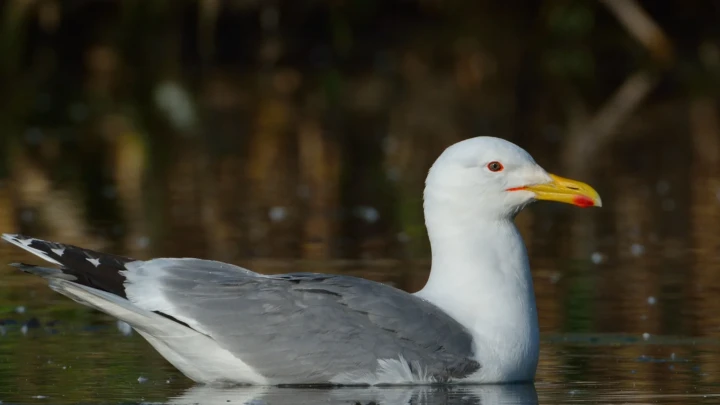
5 min read
Caspian Gull (Larus cachinnans)
Long legs, a small pear-shaped head and a laughing call: how to recognize the Caspian Gull in the Danube Delta, its range expansion and...
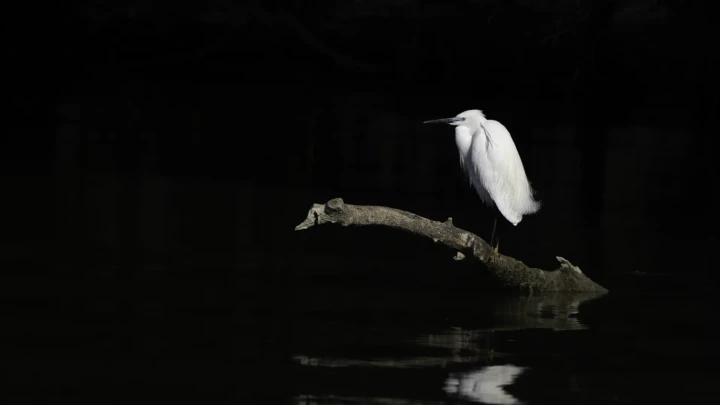
3 min read
Little Egret (Egretta garzetta)
The Little Egret, the snow white heron with yellow feet: identification, its active hunting, the plume trade that nearly wiped it out and where...
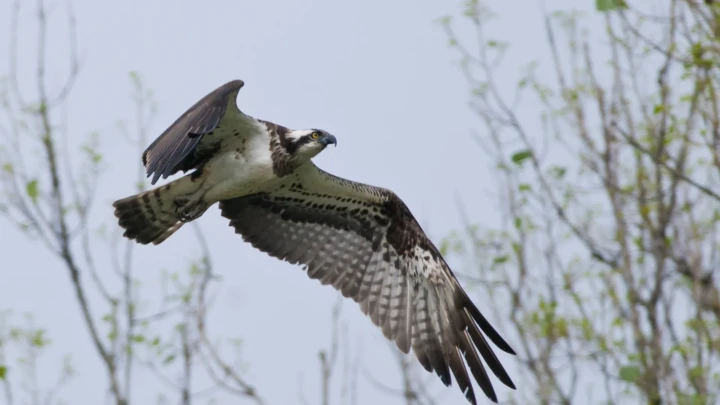
4 min read
Osprey (Pandion haliaetus)
A fish-hunting raptor that dives feet-first into the water: when to see the Osprey on migration in the Danube Delta and Dobrogea, and why...