

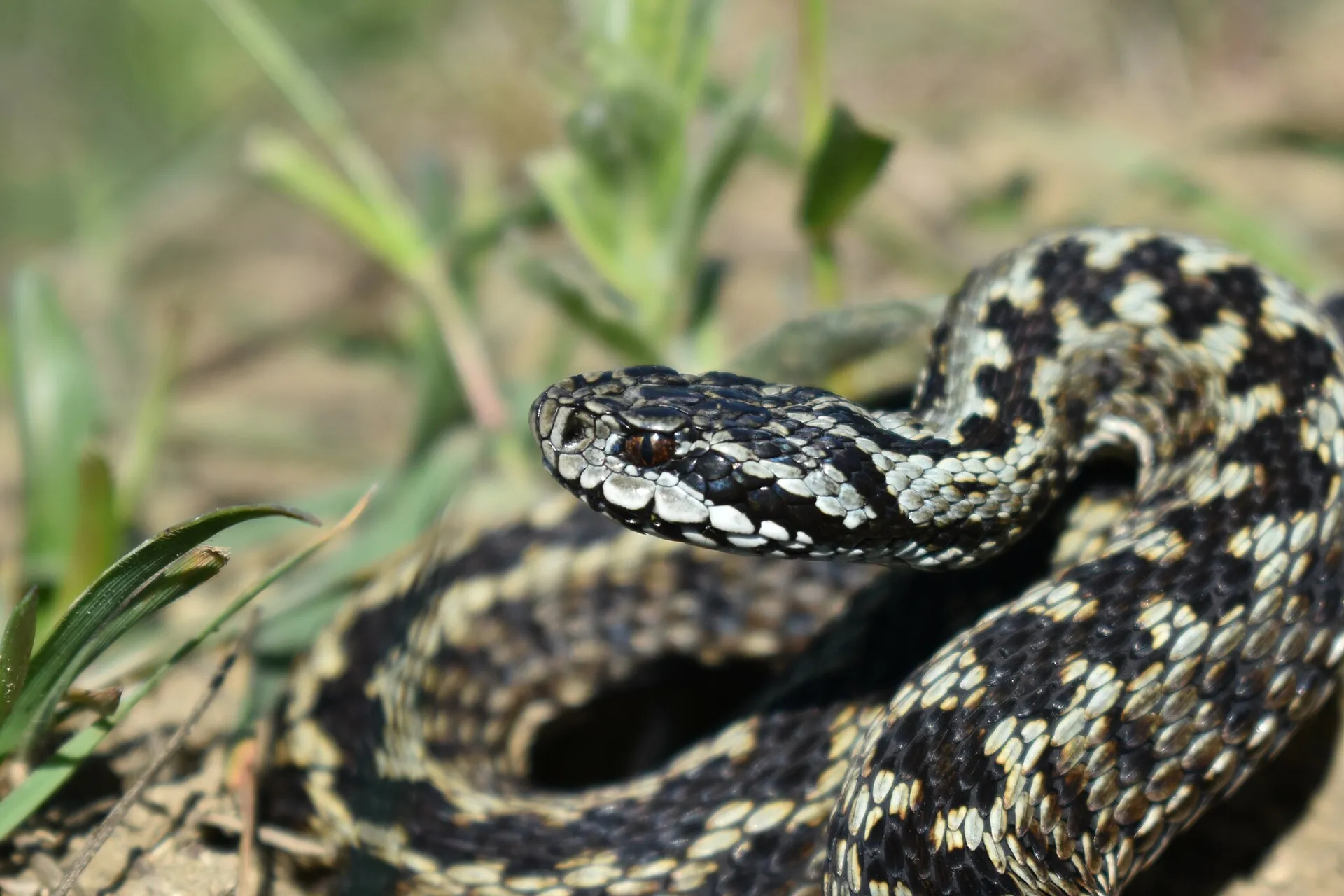
No. 30 on our checklistMeadow Viper (Vipera ursinii) in the Danube Delta
Meet the Meadow Viper, a small, threatened viper that survives on a few sandy levees of the Danube Delta: identification, where it lives, names, biology and conservation.
The Meadow Viper (Vipera ursinii) is a small, mild-tempered viper of open grasslands and one of the most threatened reptiles in Europe. In the Danube Delta it survives on a few dry, sandy levees surrounded by wetlands, as the subspecies Vipera ursinii moldavica.
The populations of Letea, Sfântu Gheorghe and Perișor-Periteașca are among the most important for this subspecies anywhere in its range.
Quick facts
Quick facts
- Scientific name Vipera ursinii (Bonaparte, 1835); in the Danube Delta Vipera ursinii moldavica Nilson, Andrén & Joger, 1993; older literature refers the Danube Delta vipers to Vipera ursinii renardi or Vipera ursinii ursinii
- Common name Meadow Viper; the Romanian subspecies is also called Moldavian Meadow Viper
- Family Viperidae (vipers)
- Order Squamata (lizards and snakes)
- Length small; up to about 60 cm, most adults clearly shorter
- Diet mainly grasshoppers and crickets; also lizards and small rodents
- Habitat dry, open grasslands with grass tussocks on the sandy levees of the Danube Delta
- Activity by day, from spring to autumn; makes only short movements between shelter and feeding areas
- Breeding gives birth to live young, usually in late summer; not all adult females breed every year
- Conservation status Vulnerable (global IUCN Red List); Vulnerable in Europe and the EU27 (European Red List, 2025); Critically Endangered in the Romanian Red Data Book of Vertebrates (2005); EU Habitats Directive Annexes II and IV
When to see it in the Danube Delta and Dobrogea
- JanWinter rest
- FebWinter rest
- MarEmerging
- AprMating season
- MayActive
- JunActive
- JulActive
- AugBirths
- SepActive
- OctLast activity
- NovWinter rest
- DecWinter rest
- Status here
- Very local in the Danube Delta, on a few sandy levees; strictly protected. Indicative seasonal pattern only.
- IUCN Red List
- Vulnerable
- Our checklist
- No. 30 of 30 · see the full checklist
Description and identification
The Meadow Viper is the smallest viper in Europe, reaching up to about 60 cm, though most adults are clearly shorter. The body is gray or light brown, with a band of darker, connected rhombs along the back. On the head there is usually a dark mark shaped like a V, with the point directed forward. The belly is gray or black with lighter spots.
The head is narrow for a viper, only slightly distinct from the neck, and the pupils are vertical. The iris is orange or reddish. Females tend to be larger than males, which have a longer, thicker tail.
The Nose-horned Viper, the other viper on our checklist, is larger, has a horn on the snout and lives on the rocky hills of Dobrogea, not in the Danube Delta. Harmless snakes of the levees, such as young Dice Snakes and Grass Snakes, have round pupils and lack the dark zigzag pattern.
Meadow Vipers of the Danube Delta
The Meadow Viper has been known in the Danube Delta since 1937, when Mihai Băcescu reported it from Letea, Caraorman and Sărăturile, near Sfântu Gheorghe. Today three important populations are recognized within the Danube Delta Biosphere Reserve. The first lives on the sandy meadows of Grindul Perișor and Periteașca, near the Black Sea coast in the south. The second lives on the Letea levee, near the border with Ukraine, and the third on Grindul Sărăturile, north of Sfântu Gheorghe.
The Council of Europe action plan for the species, which draws on the work of Zsolt Török, considers the Perișor-Periteașca population the most important of the three. At Letea the vipers are restricted to a small area of dunes near Cardon, and around Sfântu Gheorghe the habitat is under the strongest pressure from people. Outside the Danube Delta, the same subspecies survives in a handful of grasslands in Romanian Moldavia, such as the Valea lui David reserve near Iași.
Names and taxonomy
The vipers of the Danube Delta have been given several names. Older Romanian literature, including the monograph by Fuhn and Vancea, treated them as Vipera ursinii renardi or Vipera ursinii ursinii. In 1993 Nilson, Andrén and Joger described Vipera ursinii moldavica from Moldavia and later included the Danube Delta populations in it. Genetic work by Ferchaud and colleagues (2012) confirmed that the Danube Delta vipers belong to this lineage. The steppe viper, Vipera renardi, is now treated as a separate species living farther east.
Daily life and breeding
Meadow Vipers live among grass tussocks, where they bask, hunt and hide. They move only short distances, so a population can depend on a small patch of good habitat for many years. The diet consists mainly of grasshoppers and crickets, with lizards and small rodents also taken, especially by larger adults.
Mating takes place in spring, and the young are born alive, usually in late summer. A study on one Danube Delta population by Strugariu and colleagues (2010) found a sex ratio close to 1:1, many juveniles, and only half of the adult females gravid, which suggests that females do not breed every year.
Conservation and responsible observation
Globally the Meadow Viper is assessed as Vulnerable. The European Red List published in 2025 also lists it as Vulnerable in Europe and in the EU27, as did the first assessment in 2009. In Romania it is listed as Critically Endangered in the Romanian Red Data Book of Vertebrates (2005). It is included in Annexes II and IV of the EU Habitats Directive, which means that special areas of conservation must be designated for it, and it is strictly protected under Government Emergency Ordinance 57/2007.
The main threats are the loss of grassland to agriculture and building, overgrazing, burning, tourism and illegal collection. Its venom is weak and bites are rare, but it should never be handled. Stay on existing tracks on the levees, do not drive or camp on the grasslands, do not search under tussocks, and never share precise locations.
Reptiles on our birdwatching tours
On our multi-day birdwatching tours in the Danube Delta, the dry levees of Letea and the southern Danube Delta are visited for steppe birds, raptors and migrants. During these walks we also look out for reptiles and mammals, and a Meadow Viper basking at the edge of a tussock is one of the rarest sights the Danube Delta can offer.
See it with us
Slow open boats, small groups and a guide who knows the places and the wildlife. From a few hours on the water to a week in the Danube Delta and Dobrogea.
Keep reading
Keep reading
More from the blog
5 min read
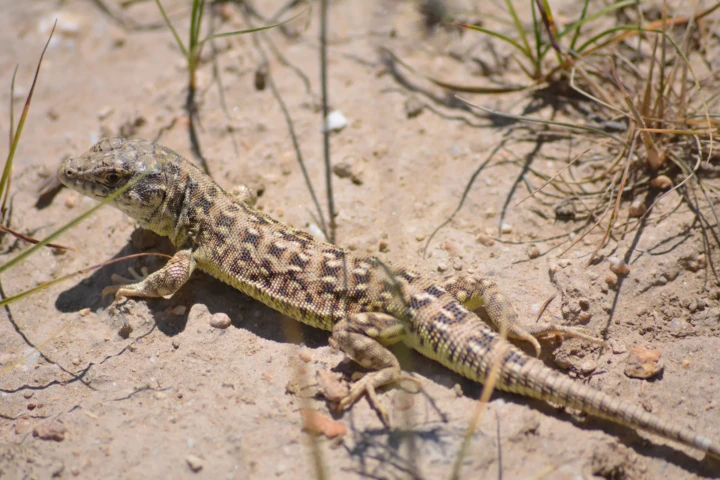
Steppe Runner (Eremias arguta)
Meet the Steppe Runner, a fast steppe lizard that in the EU lives only in Romania, on the sand dunes of the Danube Delta:...
4 min read
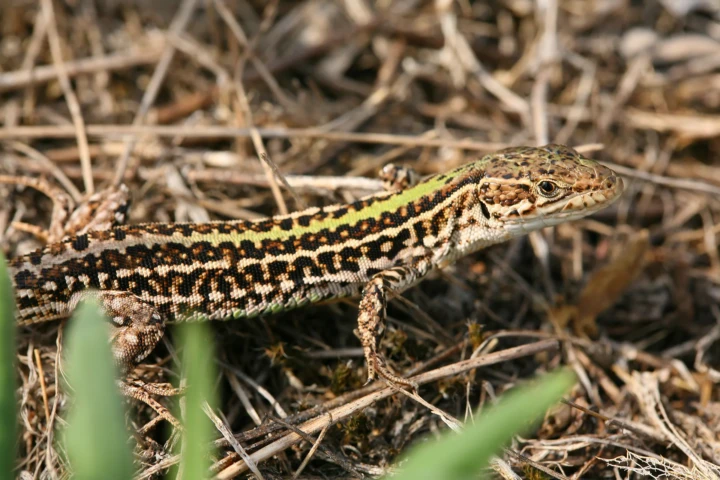
Balkan Wall Lizard (Podarcis tauricus) in Dobrogea
Meet the Balkan Wall Lizard, a small, colorful lizard of the Dobrogean steppes and the southern Danube Delta: identification, where it lives, names and...
4 min read
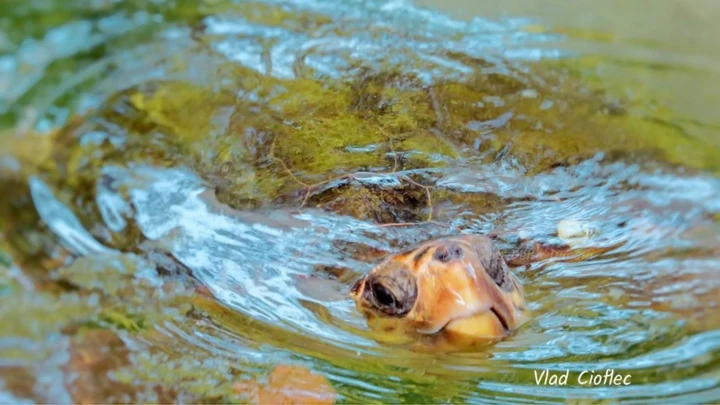
Loggerhead Sea Turtle (Caretta caretta) in the Black Sea
The Loggerhead Sea Turtle reaches the Black Sea only by chance. How to identify it, the only two records from Romania, both on Danube...