

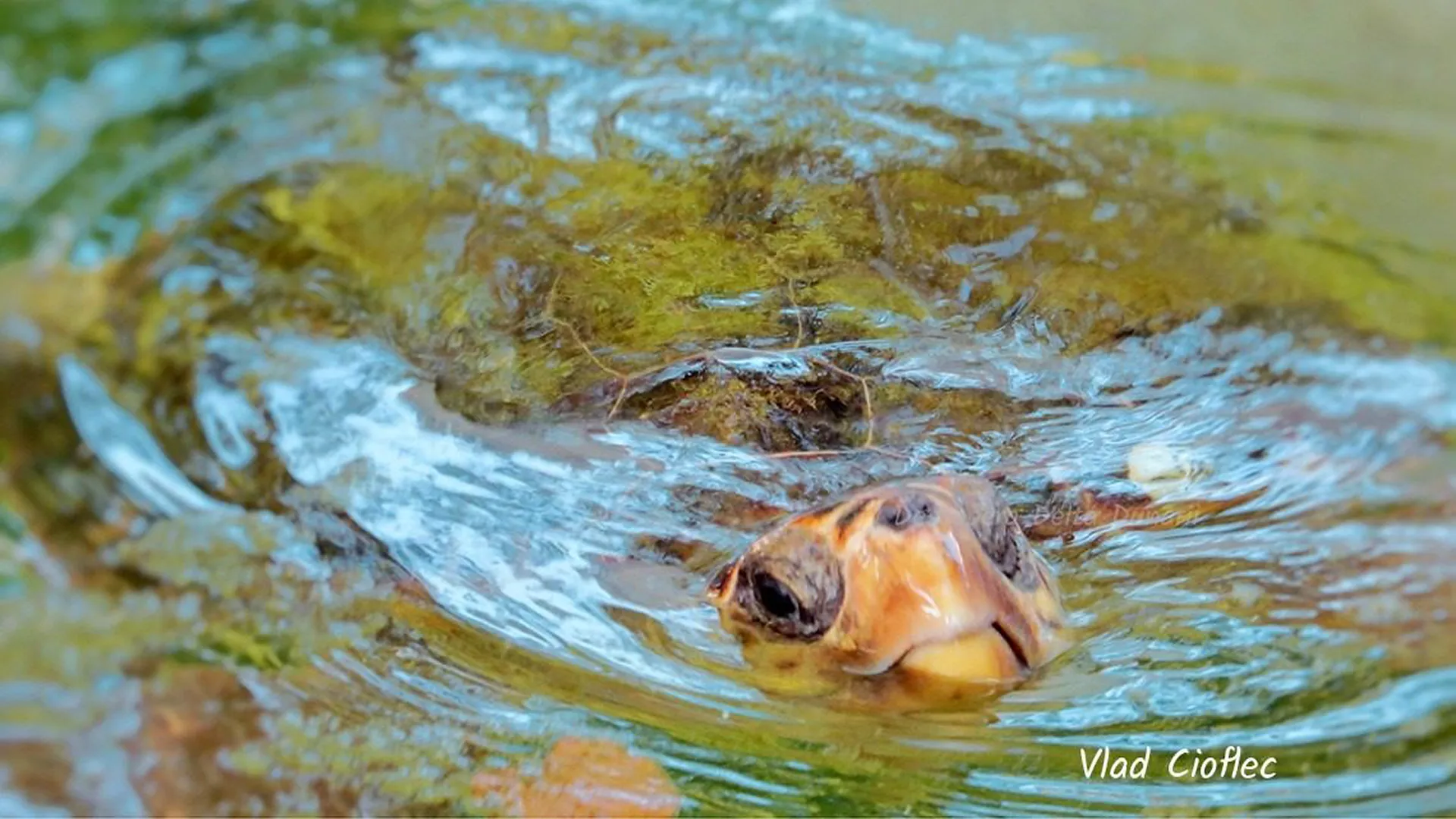
Loggerhead Sea Turtle (Caretta caretta) in the Black Sea
The Loggerhead Sea Turtle reaches the Black Sea only by chance. How to identify it, the only two records from Romania, both on Danube Delta beaches, and the full list of Black Sea records.
The Loggerhead Sea Turtle (Caretta caretta) is a marine reptile of the Mediterranean and the warm oceans, and it reaches the Black Sea only by chance, through the Bosphorus. It is one of the rarest visitors in the Romanian fauna: so far only two individuals have been documented in Romania, both on the beaches of the Danube Delta Biosphere Reserve. Like every turtle, it is a reptile, not an amphibian.
Quick facts
Quick facts
- Scientific name Caretta caretta (Linnaeus, 1758)
- Family Cheloniidae (sea turtles)
- Shell length adults average about 92 cm; Mediterranean adults are smaller
- Weight adults average about 113 kg
- Hatchlings about 4.5 cm and 20 g
- Age at maturity 16 to 40 years; around 25 years in the Mediterranean
- Diet molluscs, crabs and other crustaceans, jellyfish, fish
- Status in Romania vagrant, two documented individuals, in 1968 and 2016
- Conservation status Vulnerable (VU), IUCN Red List
Identification
It is the largest hard-shelled turtle that can reach Romanian waters. The carapace is reddish brown and heart shaped, the plastron yellowish. The head is very large for the body, with powerful jaws built to crush snail shells and crab carapaces. The limbs are flippers, each with two claws.
The most reliable feature is the number of costal scutes, the large plates along the side of the shell: the Loggerhead has five on each side. The Green Turtle (Chelonia mydas), which looks similar and has also been seen a few times in the Black Sea, has only four.
The Romanian records
Romanian herpetologist Vlad Cioflec, author of the blog Herpetofauna României, has compiled every documented record of the species in the Black Sea. Romania has only two:
- April 1968: a female, in Tulcea County
- September 2016: a male, at Vadu, in the southern part of the Danube Delta Biosphere Reserve
The 2016 turtle was found on 6 September by fishermen at a fish collection point in Vadu. It was taken to the Natural Sciences Museum Complex in Constanța, kept in a seawater pool and fed. It weighed about 40 kg. Vlad Cioflec photographed it on 9 September, and the next day, Saturday 10 September 2016, the turtle was released at sea off Mangalia, about 6.5 miles from the shore, where the water is more than 40 m deep. The biologists chose the southern end of the Romanian coast to give it a better chance of catching a current heading south, towards warmer water.
At the time, the press reported it as the first record of the species in Romania. The 1968 female shows it was not the first, but it remains one of the rarest reptile encounters on our coast.
Records from the Black Sea
Documented records, as compiled by Vlad Cioflec:
- December 1585, Türkiye
- March 1937, Bulgaria
- November 1947, Bulgaria
- September 1962, Ukraine
- April 1968, Romania
- August 1981, Bulgaria
- August 1987, Bulgaria
- April 2012, Russia
- September 2016, Romania
- June 2017, Türkiye
- March 2019, Georgia
- September 2020, Ukraine
Records have become more frequent in recent years. The Ukrainian researchers who described the 2020 turtle note that Loggerheads from the eastern Mediterranean are increasingly seen in the Sea of Marmara and the Black Sea, a possible sign of range expansion linked at least partly to warming waters.
Why it is so rare in the Black Sea
The Black Sea is much less salty than the Mediterranean, about 17 parts per thousand, and its winters are cold, with surface water below 10 °C. For a marine reptile that needs warm water all year, these conditions are hostile. The few turtles that pass the Bosphorus are most likely individuals carried by currents or drawn north by food in the warm months.
Interesting facts
- A head like a log. The name “loggerhead” refers to the huge head, packed with powerful jaw muscles.
- It comes home. After years at sea, thousands of kilometres away, females return to lay their eggs on the beaches where they hatched.
- Sand decides the sex. The sex of the hatchlings depends on the temperature of the sand around the eggs: warmer nests produce more females.
- Greece, its Mediterranean home. About 60% of all Mediterranean nests are on Greek beaches, mainly on Zakynthos and in the Gulf of Kyparissia. Females nest every 2 to 4 years, between June and September. In 2024 about 7,500 nests were counted in the southern Gulf of Kyparissia alone, a record.
- Other sea turtles in the Black Sea. The Green Turtle has also been documented a few times in the Black Sea, in Bulgaria, Türkiye and Georgia, but never in Romania. In 2026 the first records of the Leatherback Turtle (Dermochelys coriacea) in the Black Sea were published, from the coast of Türkiye.
Threats
Worldwide, Loggerheads are hit by bycatch in the nets and longlines of industrial fisheries, by plastic pollution, which they mistake for jellyfish, and by development on their nesting beaches. There, artificial lights disorient the hatchlings, which naturally head for the brighter sky over the sea.
If you find one
Do not lift it and do not push it back into the sea. Photograph it, note the place and time, and call the Danube Delta Biosphere Reserve Authority or the Natural Sciences Museum Complex in Constanța, which cared for the 2016 turtle. Every record matters for science.
Read about the native species in our articles on the European Pond Turtle and the Spur-thighed Tortoise, and see the full reptile and amphibian checklist of the Danube Delta and Dobrogea.
See it with us
Slow open boats, small groups and a guide who knows the places and the wildlife. From a few hours on the water to a week in the Danube Delta and Dobrogea.
Keep reading
Keep reading
More from the blog
5 min read
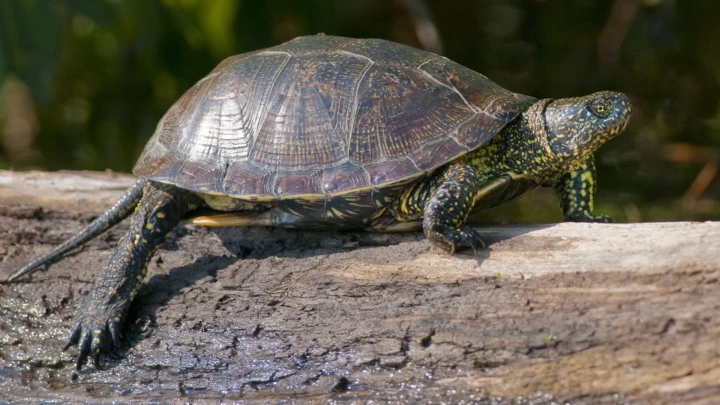
European Pond Turtle (Emys orbicularis)
The European Pond Turtle is one of the most frequently encountered reptiles in the Danube Delta. Discover how to identify it, why it spends...
5 min read
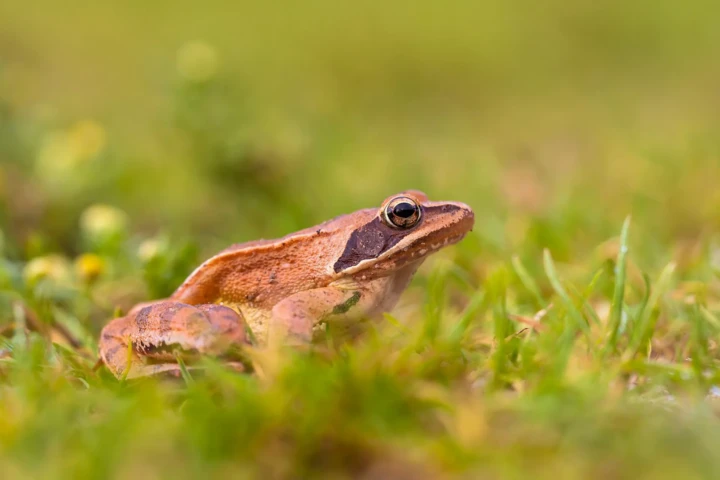
Agile Frog (Rana dalmatina)
Meet the Agile Frog of Dobrogea: long-legged woodland life, early spring breeding and responsible observation during a wider Danube Delta journey.
5 min read
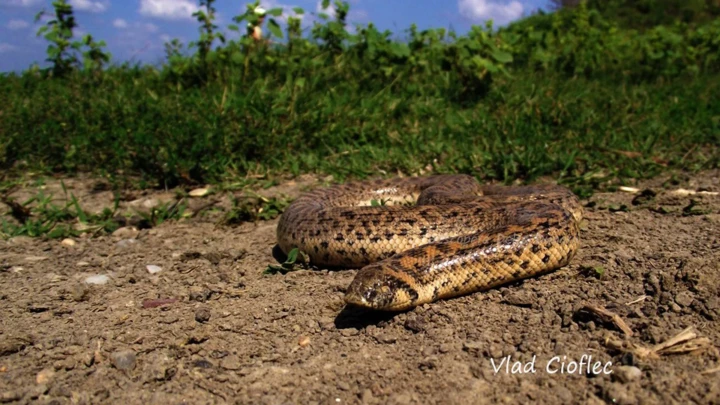
Javelin Sand Boa (Eryx jaculus) in Dobrogea
Meet the Javelin Sand Boa, the only boa in Europe and the rarest snake in Romania, rediscovered in Romania along the Danube and recorded...