

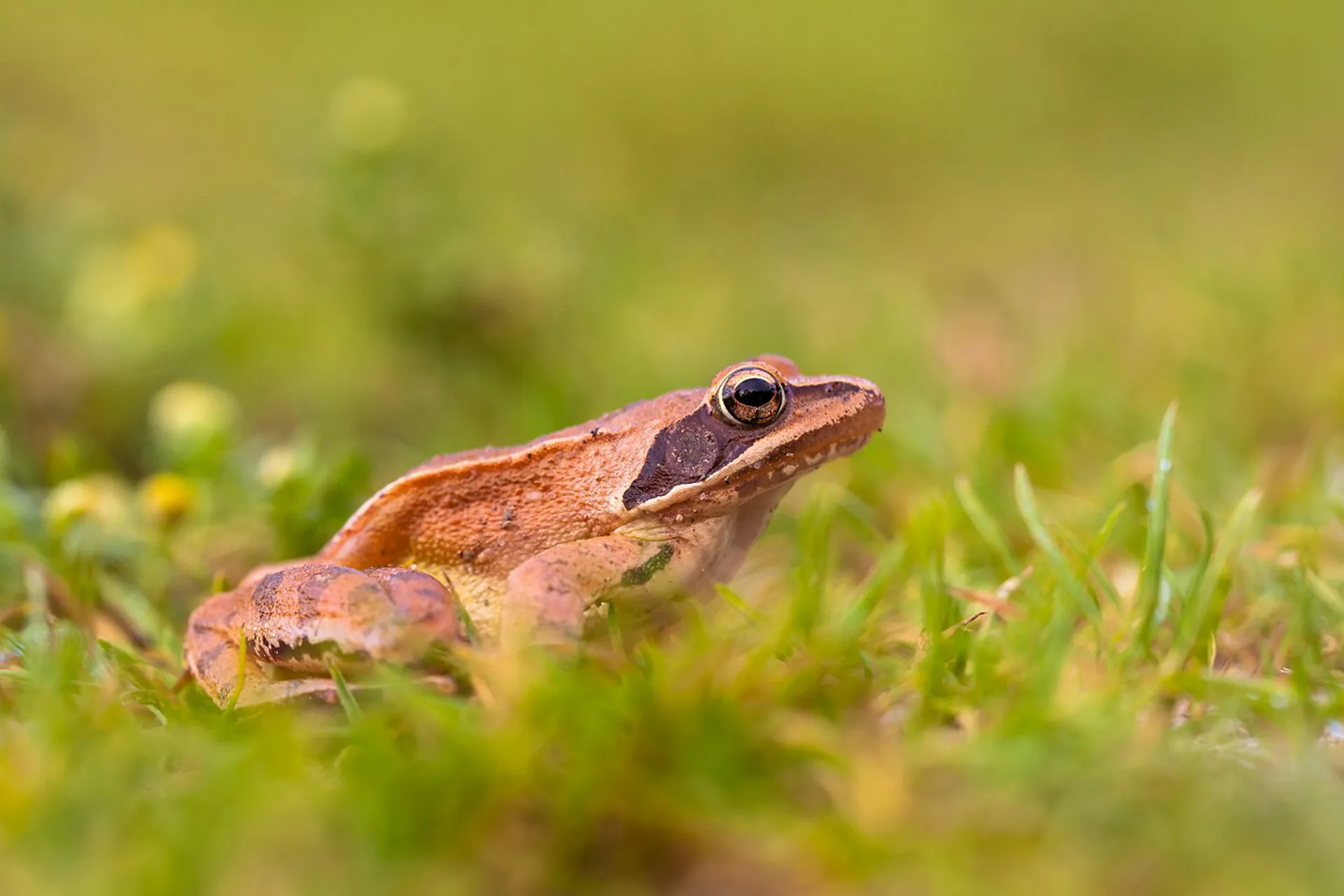
No. 12 on our checklistAgile Frog (Rana dalmatina)
Meet the Agile Frog of Dobrogea: long-legged woodland life, early spring breeding and responsible observation during a wider Danube Delta journey.
The Agile Frog (Rana dalmatina) is a woodland frog with remarkably long hind legs. A small brown shape among fallen leaves can suddenly clear a surprising distance, leaving little more than moving vegetation to show where it landed.
For wildlife travelers combining the Danube Delta with Dobrogea, this is a species to understand through the relationship between woodland and breeding water, rather than by watching only the banks of large channels.
Quick facts
Quick facts
- Scientific name Rana dalmatina Fitzinger in Bonaparte, 1838
- Common name Agile Frog
- Family Ranidae (true frogs)
- Order Anura (frogs and toads)
- Length up to about 9 cm; usually smaller, with females larger than males
- Diet mainly terrestrial insects, with other small invertebrates also taken
- Habitat deciduous woodland, scrub and associated open habitats; breeds in ponds
- Activity daytime and twilight; breeding activity can also occur at night
- Breeding early spring; eggs deposited in gelatinous clumps attached to submerged vegetation
- Conservation status Least Concern in Europe and EU27, European Red List published in 2025; Habitats Directive Annex IV
When to see it in the Danube Delta and Dobrogea
- JanWinter rest
- FebWeather-led
- MarBreeding season
- AprBreeding season
- MayMainly on land
- JunMainly on land
- JulMainly on land
- AugMainly on land
- SepMainly on land
- OctWeather-led
- NovWinter rest
- DecWinter rest
- Status here
- Indicative seasonal pattern; breeding can begin in February in mild conditions. No abundance estimate.
- IUCN Red List
- Least Concern in Europe and EU27 (European Red List published 2025)
- Our checklist
- No. 12 of 30 · see the full checklist
Description and identification
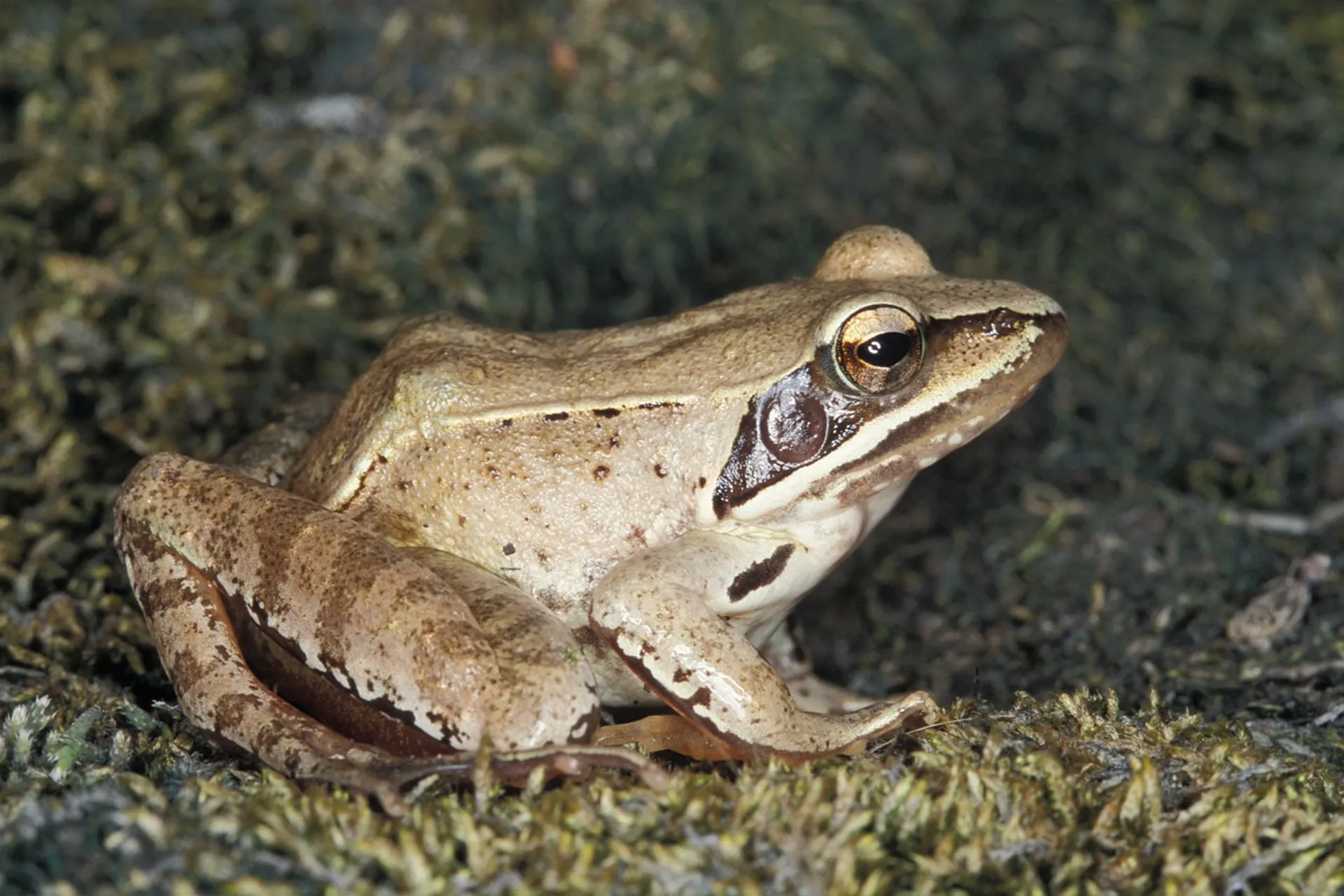
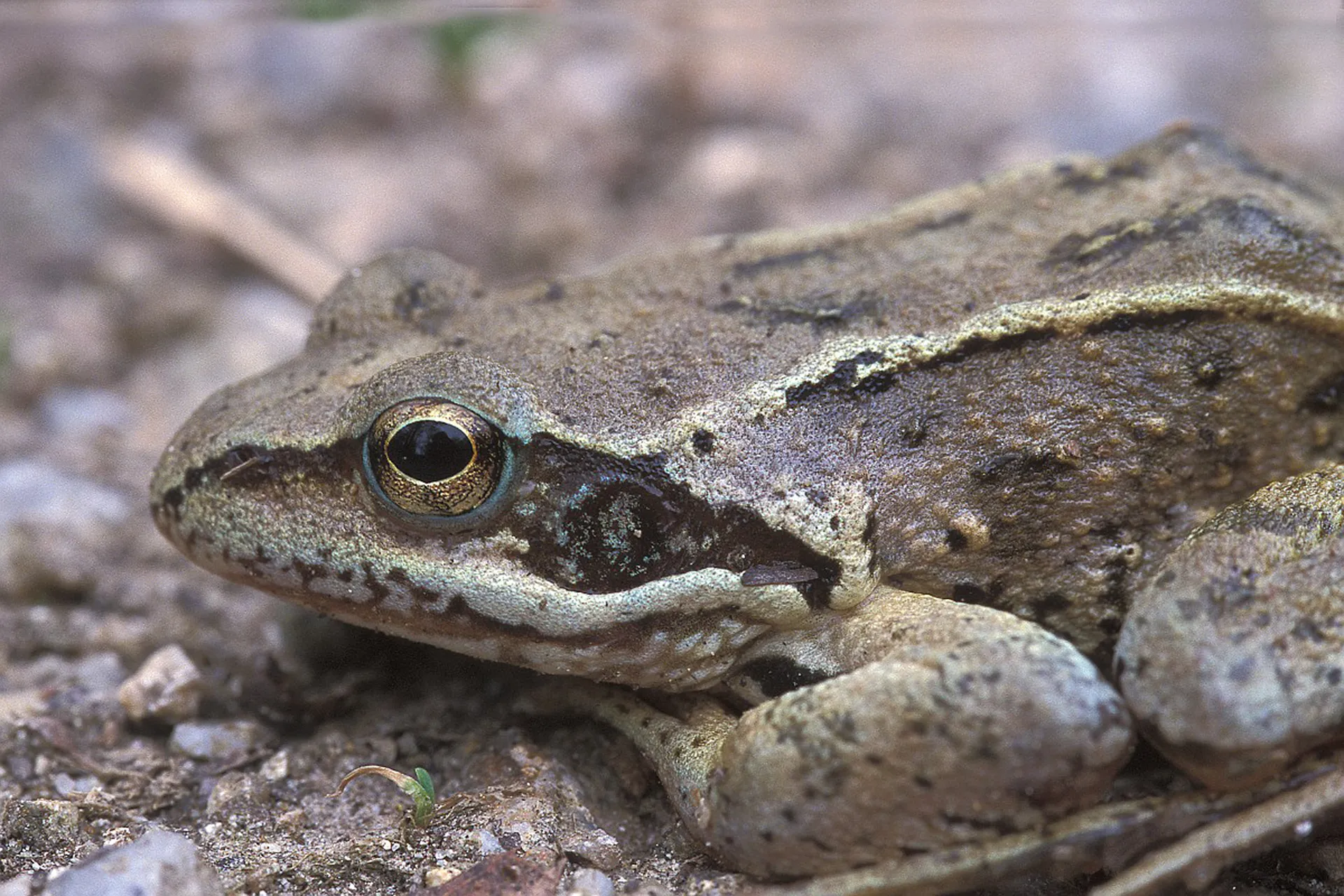
The body is slender, the snout pointed and the legs conspicuously long. The upper surface may be yellowish, brown, grayish or reddish, often with variable dark markings. A broad dark patch behind the eye surrounds the eardrum, or tympanum; the belly is generally pale and unpatterned.
The large, clearly visible tympanum lies close to the eye and is a useful feature in a good side-on photograph. Long legs, overall proportions and the pale underside help complete the picture. Brown frogs can be difficult to distinguish, however, and a brief glimpse of a leaping animal is not always enough for a confident identification.
Older taxonomic literature also used Rana temporaria agilis, now treated as a synonym of this species. Identification should rely on photographs rather than manipulating a frog to check its proportions.
Woodland habitat in Dobrogea
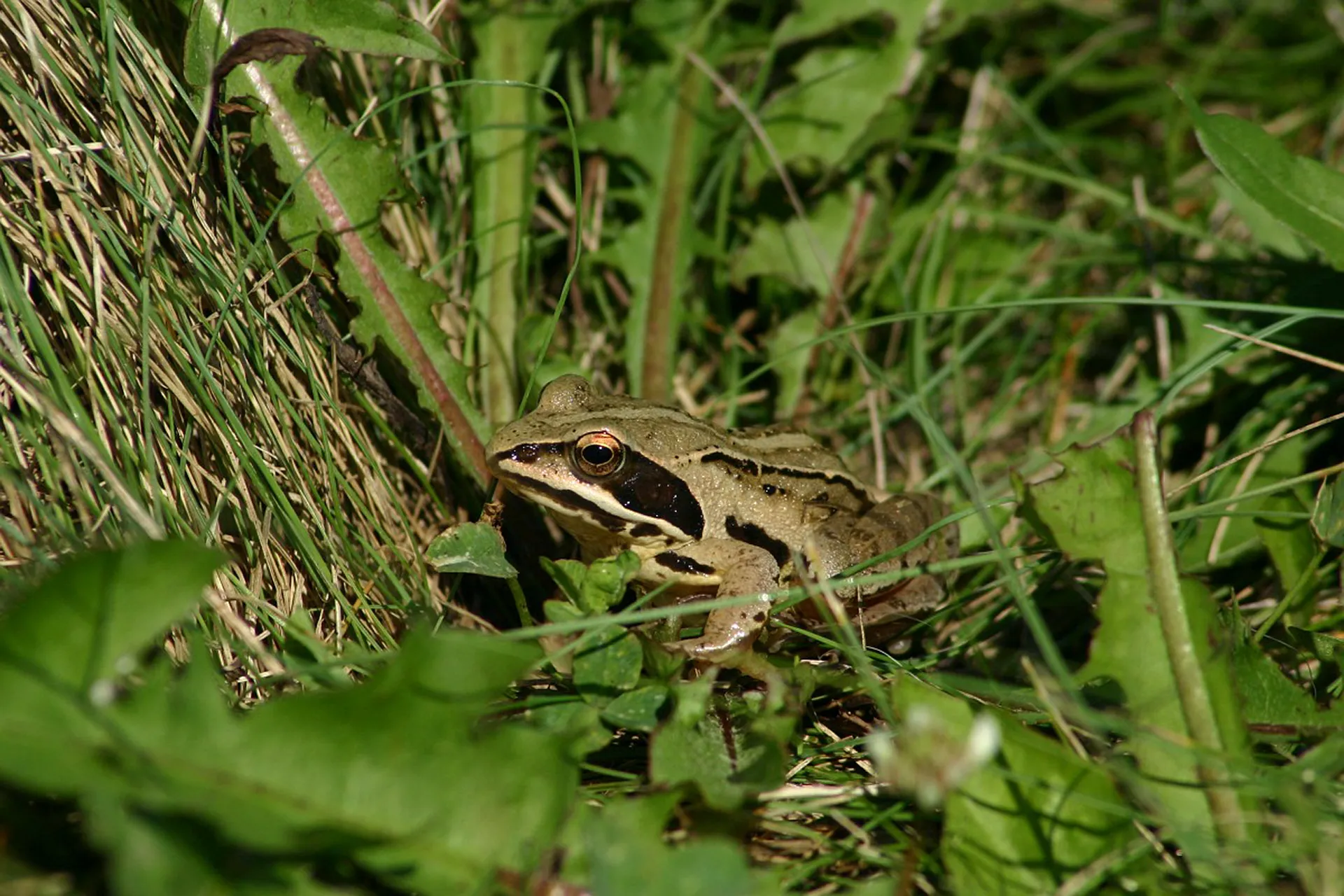
The species is strongly associated with deciduous woodland, but it also uses scrub and nearby open habitats. It is not restricted to permanently waterlogged ground. Outside breeding, an adult can spend much of its time on land, feeding and sheltering away from the pond where it reproduced.
A regional amphibian synthesis published in 2009 documented records from both northern and southern Dobrogea. Its locality list includes the Babadag and Măcin areas, alongside southern localities such as Băneasa and Canaraua Fetii. The authors combined literature, collection material and field information, so the list should not be read as a recent survey of every named place.
Suitable terrestrial cover and nearby breeding water are the important combination. A frog can depend on a relatively small pond even though the larger landscape seems dominated by forest.
Long legs and a terrestrial diet
The English name is well earned: published accounts describe escape leaps reaching one to two meters. That is an indication of the species’ ability, not the distance every individual will cover. When approached, a frog may disappear into leaf litter before an observer has noticed the features needed for identification.
Terrestrial insects form the main part of the adult diet, with other small invertebrates also recorded. This makes the woodland floor a feeding habitat, not simply a route between ponds. The same leaf cover that conceals a frog also contains its potential prey.
Adults can be active during the first part of the day and around twilight. During reproduction, activity extends through both day and night.
Early spring breeding
Breeding usually takes place early in the year, often during March and April, with February breeding reported in parts of the range. Weather and location influence the timing. The dates are a seasonal guide, not a fixed appointment that applies to every pond in Dobrogea.
A male holds a female behind the forelegs in axillary amplexus, and fertilization occurs externally as the eggs are laid. The female deposits a gelatinous clutch attached to submerged vegetation. This differs from the long spawn strings of toads and the individually wrapped eggs of newts.
AmphibiaWeb gives a broad clutch range of approximately 450–1,800 eggs. Conditions must remain suitable through the aquatic developmental stages, so egg numbers alone do not predict the number of young frogs leaving a pond.
From tadpole to woodland frog
After hatching, the tadpoles develop in the breeding water. Metamorphosis usually takes place during summer, although development can extend later under some conditions. Temperature and the persistence of water influence the outcome, making pond condition important well beyond the short period when adults gather to breed.
Once the young frogs leave the water, the terrestrial surroundings become essential. A pond isolated from useful cover is not equivalent to one connected to woodland and scrub. Later in the year, activity declines as the animals enter winter shelter, with the timing again depending on local weather.
Conservation and responsible observation
The European Red List published in 2025 assesses the Agile Frog as Least Concern in both Europe and the EU27. It is nevertheless included in Annex IV of the EU Habitats Directive, which provides strict species protection. A broad regional Red List category and legal protection describe different aspects of conservation.
Habitat alteration is a documented threat. Losing breeding water, degrading the surrounding woodland or interrupting the connection between the two can affect different stages of the same life cycle. Conservation therefore needs to consider the complete habitat rather than a pond in isolation.
Leave spawn where it is, avoid entering breeding water and do not move frogs to a different pond. The calendar above indicates seasonal activity, not local abundance.
When to look during a photography tour
Early spring offers breeding observations; later woodland walks may reveal adults on land. On multi-day photography programs combining the Danube Delta and Dobrogea, woodland animals complement wetland subjects. Allow an Agile Frog to remain in its natural setting: the leaf litter and vegetation help tell the story of how it lives.
See it with us
Slow open boats, small groups and a guide who knows the places and the wildlife. From a few hours on the water to a week in the Danube Delta and Dobrogea.
Keep reading
Keep reading
More from the blog
4 min read
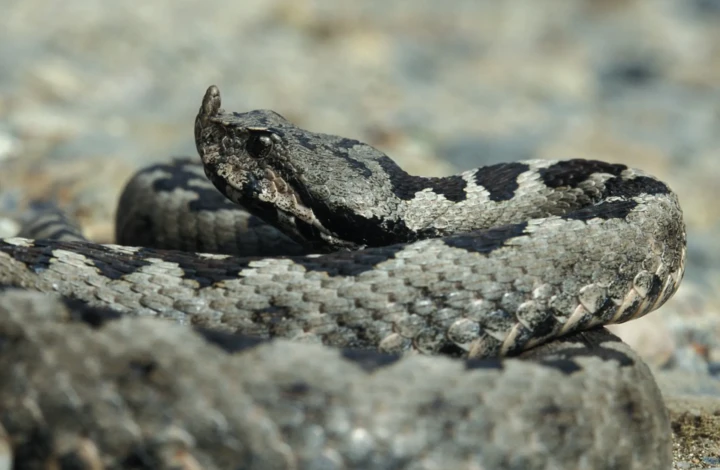
Nose-horned Viper (Vipera ammodytes) in Dobrogea
Meet the Nose-horned Viper, the largest viper and most venomous snake in Romania, on the rocky hills of Dobrogea: identification, where it lives, behavior,...
5 min read
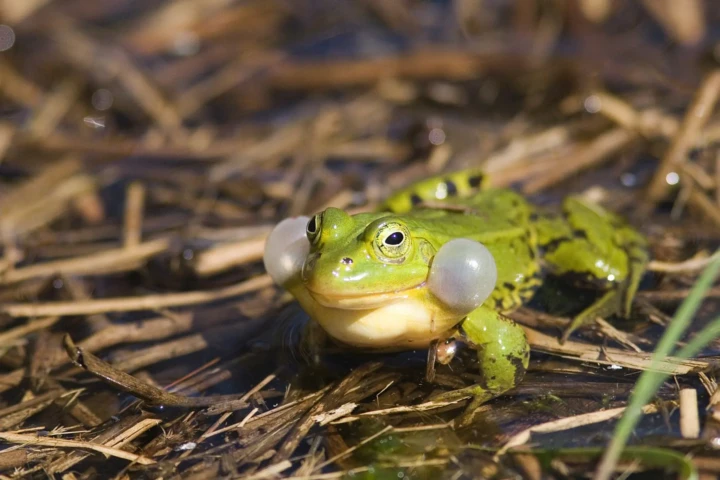
Pool Frog (Pelophylax lessonae)
Meet the Pool Frog, the smallest and scarcest green frog of the Danube Delta: how to recognize it, where it lives and why it...
5 min read
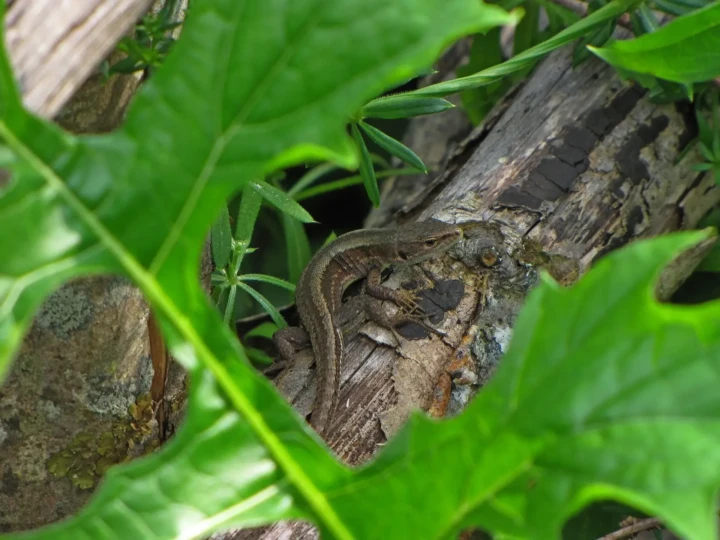
Western Meadow Lizard (Darevskia pontica) in Dobrogea
Meet the Western Meadow Lizard, a small forest lizard at its northern limit in Romania and one of the rarest reptiles of Dobrogea: identification,...