

No. 29 on our checklistNose-horned Viper (Vipera ammodytes) in Dobrogea
Meet the Nose-horned Viper, the largest viper and most venomous snake in Romania, on the rocky hills of Dobrogea: identification, where it lives, behavior, safety and conservation.
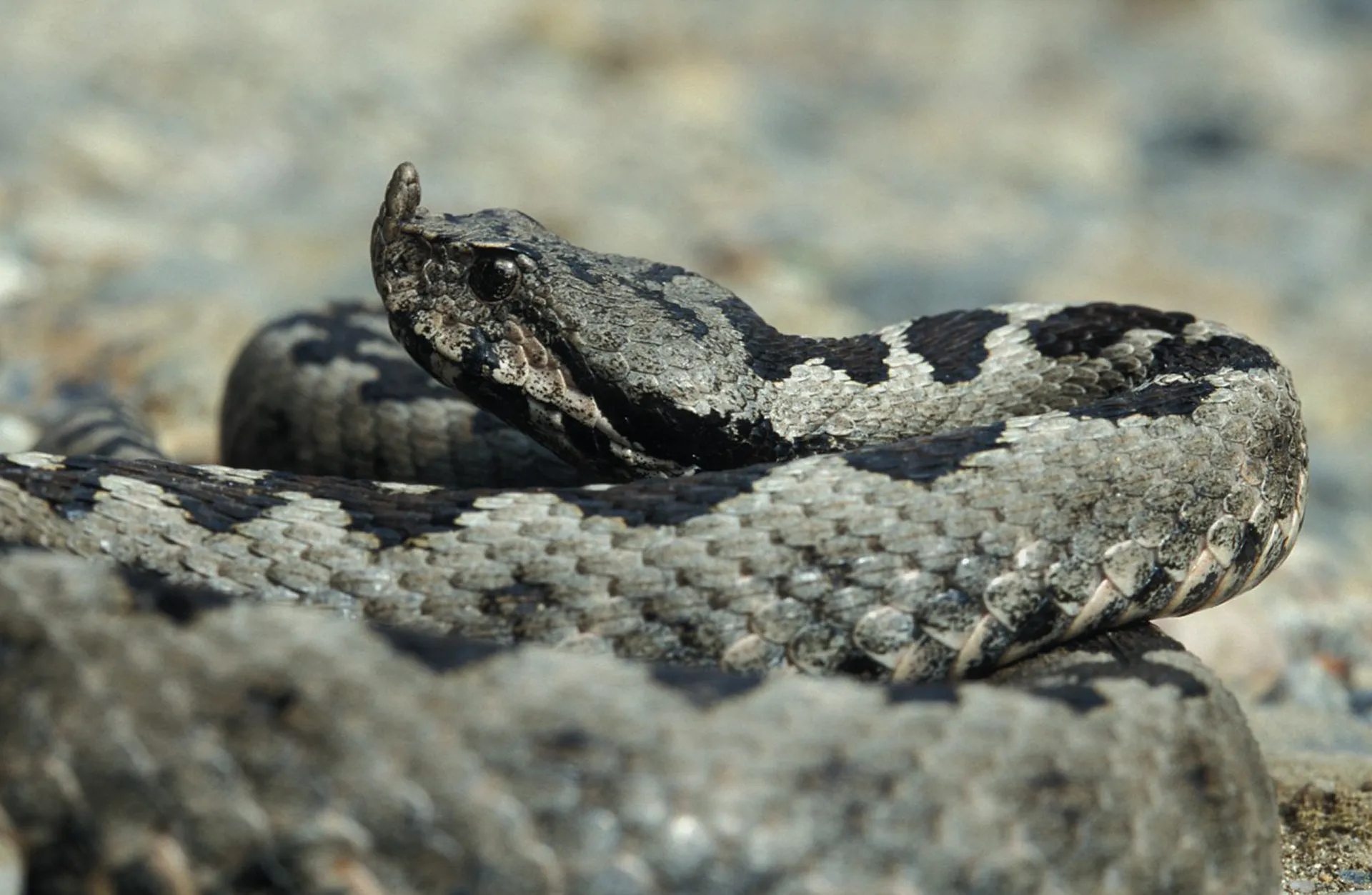
The Nose-horned Viper (Vipera ammodytes) is the largest viper and the most venomous snake in Romania, easily recognized by the soft horn on the tip of its snout. In Dobrogea it lives on the rocky, bushy hills of the mainland, as the subspecies Vipera ammodytes montandoni.
It is not found in the wetlands of the Danube Delta, but it lives in the Măcin Mountains, the Babadag area and other hills of Dobrogea.
Quick facts
Quick facts
- Scientific name Vipera ammodytes (Linnaeus, 1758); in Dobrogea Vipera ammodytes montandoni Boulenger, 1904
- Common name Nose-horned Viper; also Horned Viper or Long-nosed Viper
- Family Viperidae (vipers)
- Order Squamata (lizards and snakes)
- Length usually 60–80 cm, rarely up to 90 cm; females smaller than males
- Diet mainly small mammals and lizards; young vipers often eat lizards
- Habitat sunny, rocky and bushy slopes, scree, forest edges and open oak woods on the hills of Dobrogea
- Activity by day in spring and autumn, more in the evening in hot summer weather; basks near rocks and shrubs
- Breeding gives birth to live young, usually in late summer
- Conservation status Least Concern (global IUCN Red List); EU Habitats Directive Annex IV
When to see it in the Danube Delta and Dobrogea
- JanWinter rest
- FebWinter rest
- MarEmerging
- AprBasking
- MayMating season
- JunActive
- JulActive
- AugBirths
- SepActive
- OctLast activity
- NovWinter rest
- DecWinter rest
- Status here
- Local on the rocky hills of the Dobrogean mainland; absent from the Danube Delta wetlands. Indicative seasonal pattern only.
- IUCN Red List
- Least Concern
- Our checklist
- No. 29 of 30 · see the full checklist
Description and identification
The Nose-horned Viper is a heavy-bodied snake, usually 60–80 cm long and rarely up to 90 cm, with females smaller than males. The head is triangular and clearly distinct from the neck, the pupil is vertical and the tip of the snout carries a soft horn covered with small scales. This horn is the easiest way to identify the species.
The back is gray, brown or reddish, with a dark zigzag band along the spine. Males usually have a stronger contrast, with a gray background and a black band, while females tend to be brown with a less contrasting pattern.
The Meadow Viper, the only other viper in our area, is much smaller, has no horn and lives in a different habitat, on the grassy levees of the Danube Delta. Harmless snakes such as the Smooth Snake have round pupils and a narrower head.
Where it lives in Dobrogea
In Romania the Nose-horned Viper lives in the hills of Banat, southwestern Transylvania and Dobrogea. In Dobrogea it occurs on the mainland, in places such as the Canaraua Fetii valley, the Măcin Mountains, including the Pricopan Ridge, Dealul lui Stănilă and Chetrosul Mare, the area of Cernavodă, Arheuziu and Priopcea, the Dumbrăveni forest, the Gura Dobrogei reserve, the south of the Babadag forest and the Codru area, and the Hagieni forest. These sites are listed in Zsolt Török’s monitoring guide for reptiles of community interest.
It prefers sunny slopes with rocks, scree or stone piles, often on south-facing hillsides, where shrubs and rocks provide shelter and places to spend the winter. It can also be found at forest edges and in sparse oak woods. We are not aware of any record from the Danube Delta wetlands.
Daily life and breeding
Nose-horned Vipers spend a lot of time basking near cover and rely on camouflage rather than escape. In spring and autumn they are active by day; in the heat of summer they are more often out in the evening. They hunt mainly small mammals and lizards, and young vipers feed largely on lizards.
Mating takes place in spring, after the vipers leave their winter shelters. Like the other vipers in Europe, the species gives birth to live young, usually in late summer.
Safety and responsible observation
The Nose-horned Viper is venomous, and its bite needs medical attention. It is not aggressive: it usually stays still or moves away, and most bites happen when people try to catch or kill the snake or put their hands among rocks without looking. Wear closed shoes on rocky slopes, watch where you place your hands and feet, and never try to handle a viper. If someone is bitten, keep the person calm, avoid cutting or sucking the wound, and go to a hospital.
The species is assessed as Least Concern globally and is not among the threatened reptiles in the 2025 European Red List, which also notes a proposed taxonomic revision of the group. It is listed in Annex IV of the EU Habitats Directive and protected under Annex 4A of Government Emergency Ordinance 57/2007. Killing vipers, collection and the loss of rocky, bushy slopes are its main local threats.
Seeing it on a nature tour
On our multi-day nature tours in the Danube Delta and Dobrogea, the Măcin Mountains and the hills around Babadag can be combined with the Danube Delta. With a careful guide and a bit of luck, a Nose-horned Viper basking near the rocks on a spring morning can be watched safely from a distance.
See it with us
Slow open boats, small groups and a guide who knows the places and the wildlife. From a few hours on the water to a week in the Danube Delta and Dobrogea.
Keep reading
Keep reading
More from the blog
5 min read
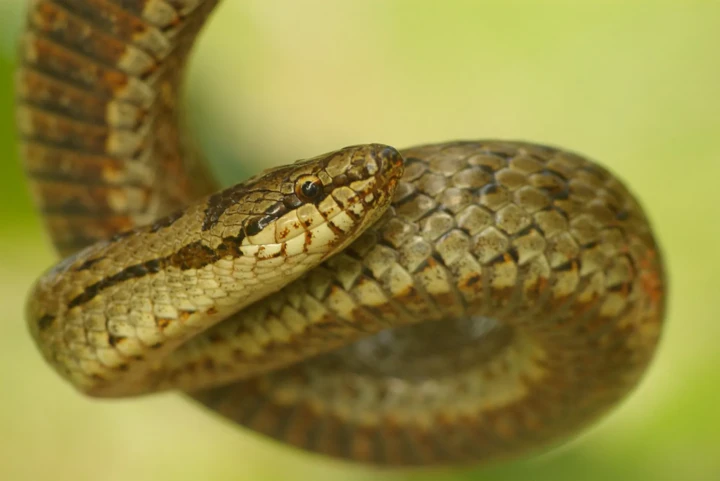
Smooth Snake (Coronella austriaca)
Discover the Smooth Snake in the Danube Delta and Dobrogea: identification, live-bearing reproduction, dry refuges and responsible wildlife watching.
5 min read
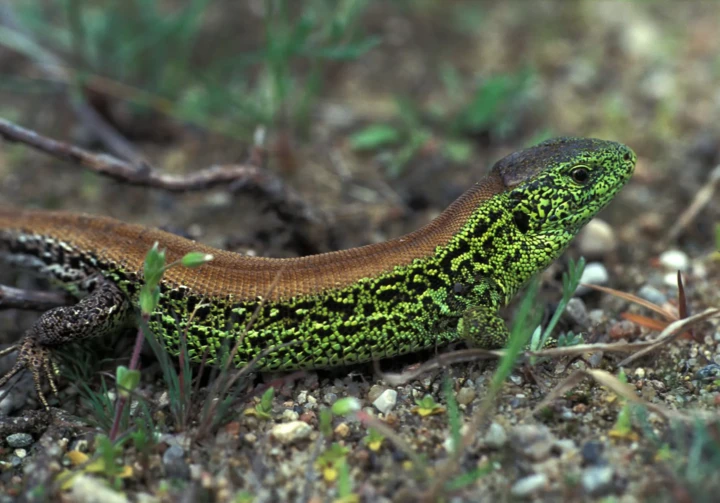
Sand Lizard (Lacerta agilis) in the Danube Delta
Meet the Sand Lizard, a common and photogenic lizard of the Danube Delta levees and Dobrogea: identification, where to see it, the euxinica subspecies,...
5 min read
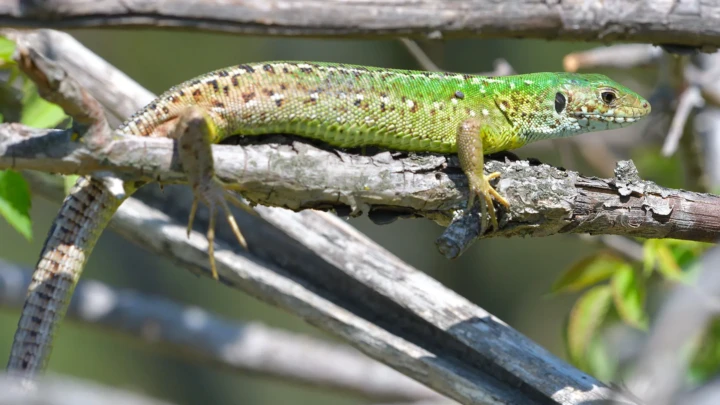
European Green Lizard (Lacerta viridis)
A bright green lizard up to 40 cm long, basking on the bushes of Dobrogea's hills. Discover the European green lizard and where to...