

No. 23 on our checklistSmooth Snake (Coronella austriaca)
Discover the Smooth Snake in the Danube Delta and Dobrogea: identification, live-bearing reproduction, dry refuges and responsible wildlife watching.
The Smooth Snake (Coronella austriaca) is a small, nonvenomous snake that is easily overlooked among grass, scrub and ground cover. Its smooth scales, dark eye stripe and paired markings are worth learning, particularly because an unfamiliar brown snake is too often mistaken for a viper.
In the Danube Delta and Dobrogea, understanding the habitat is as important as recognizing the animal: relatively dry refuges can occur within a landscape better known for its wetlands.
Quick facts
Quick facts
- Scientific name Coronella austriaca Laurenti, 1768
- Common name Smooth Snake
- Family Colubridae (typical snakes)
- Order Squamata (scaled reptiles)
- Length adults commonly about 60–70 cm
- Diet especially small reptiles; small mammals and other vertebrates are also taken
- Habitat sunlit ground with vegetation and refuges, including woodland edges and rocky habitats
- Activity diurnal but secretive, often concealed in vegetation or beneath cover
- Breeding live-bearing; young generally appear in late summer or early autumn
- Conservation status Least Concern in Europe and EU27, European Red List 2009; Habitats Directive Annex IV
When to see it in the Danube Delta and Dobrogea
- JanWinter rest
- FebWinter rest
- MarWeather-led
- AprSurvey window
- MaySurvey window
- JunSurvey window
- JulSurvey window
- AugSurvey window
- SepSurvey window
- OctWeather-led
- NovWinter rest
- DecWinter rest
- Status here
- April–September is the Romanian guide’s monitoring window, not an exhaustive activity limit. No abundance estimate.
- IUCN Red List
- Least Concern in Europe and EU27 (European Red List 2009)
- Our checklist
- No. 23 of 30 · see the full checklist
Description and identification
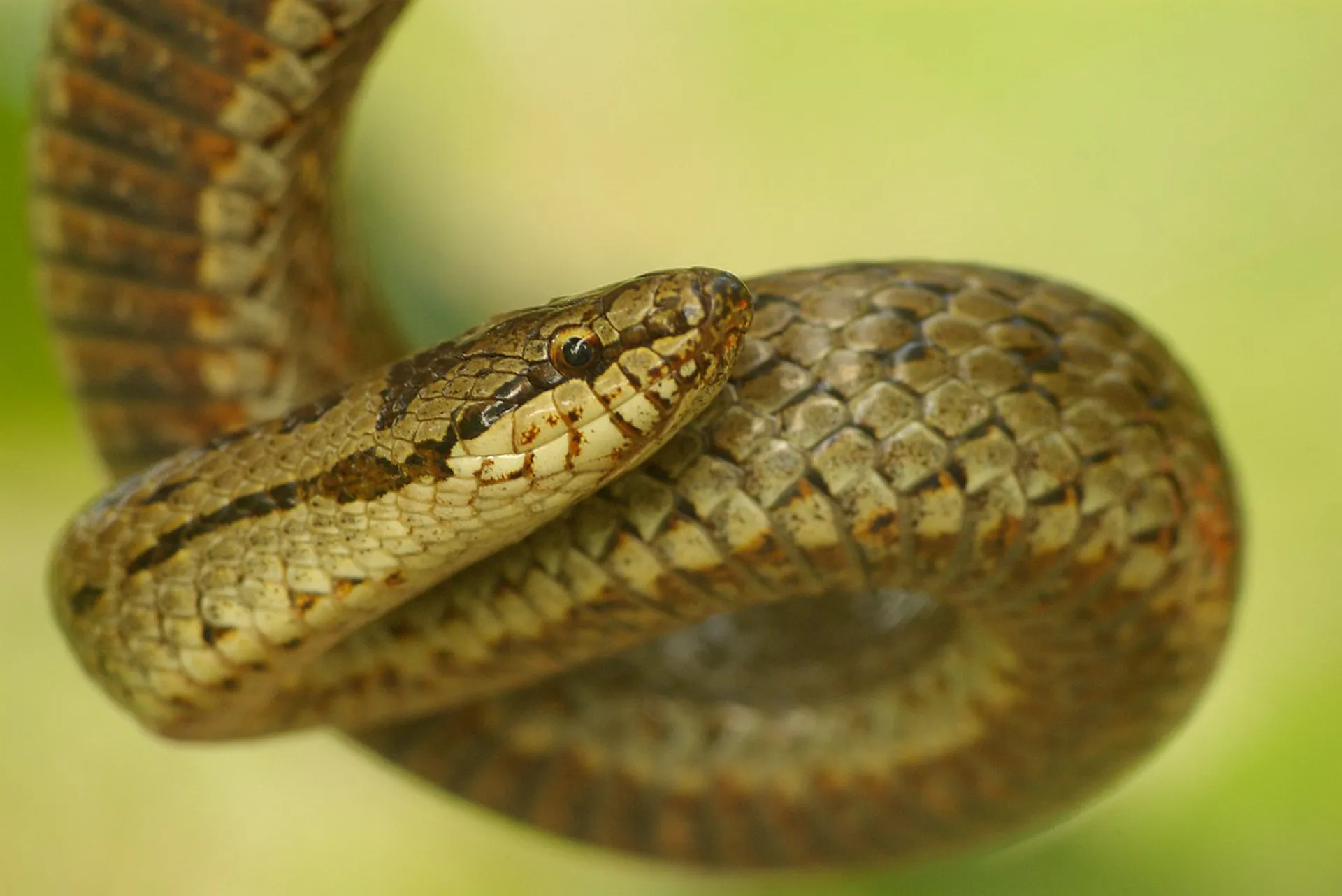
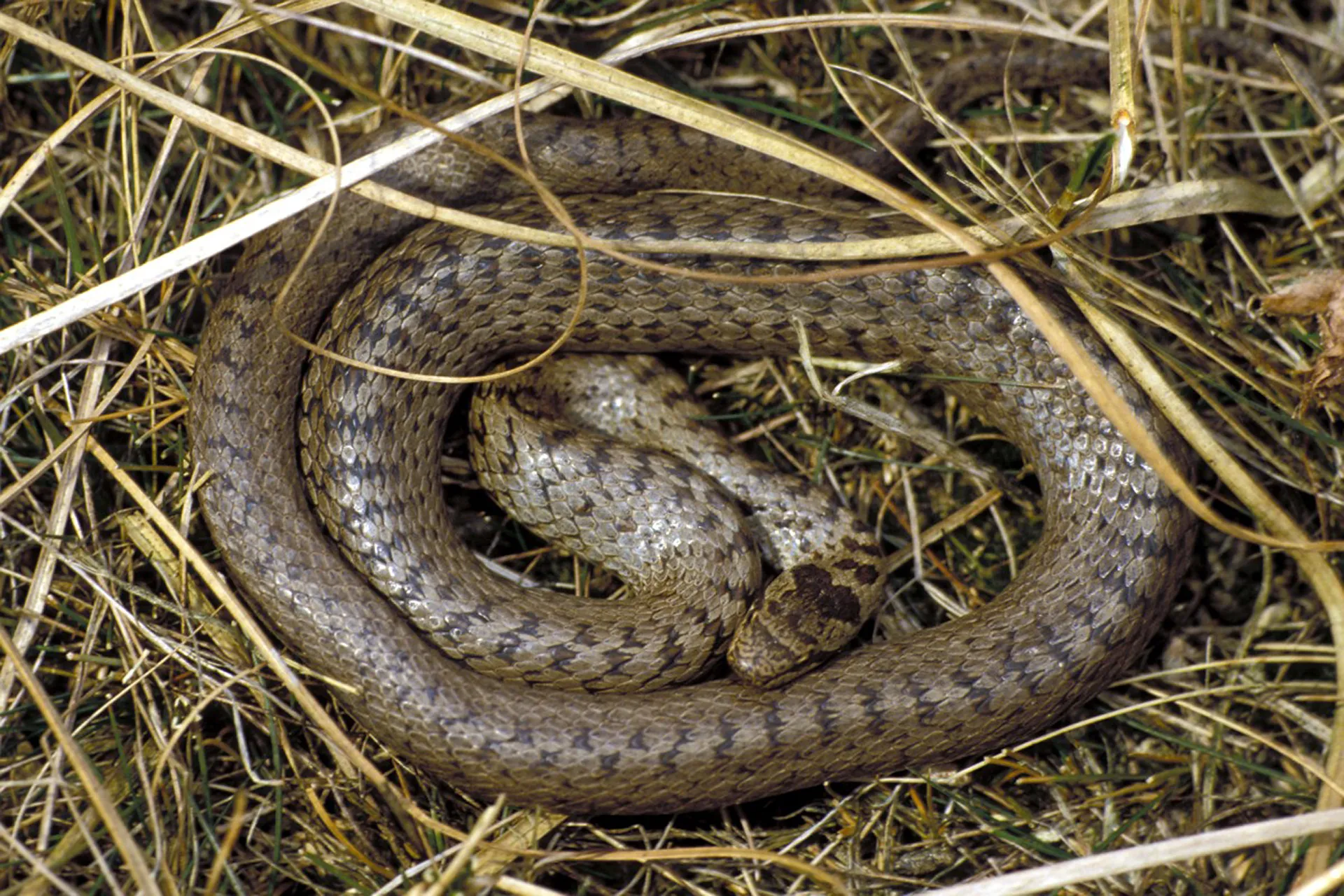
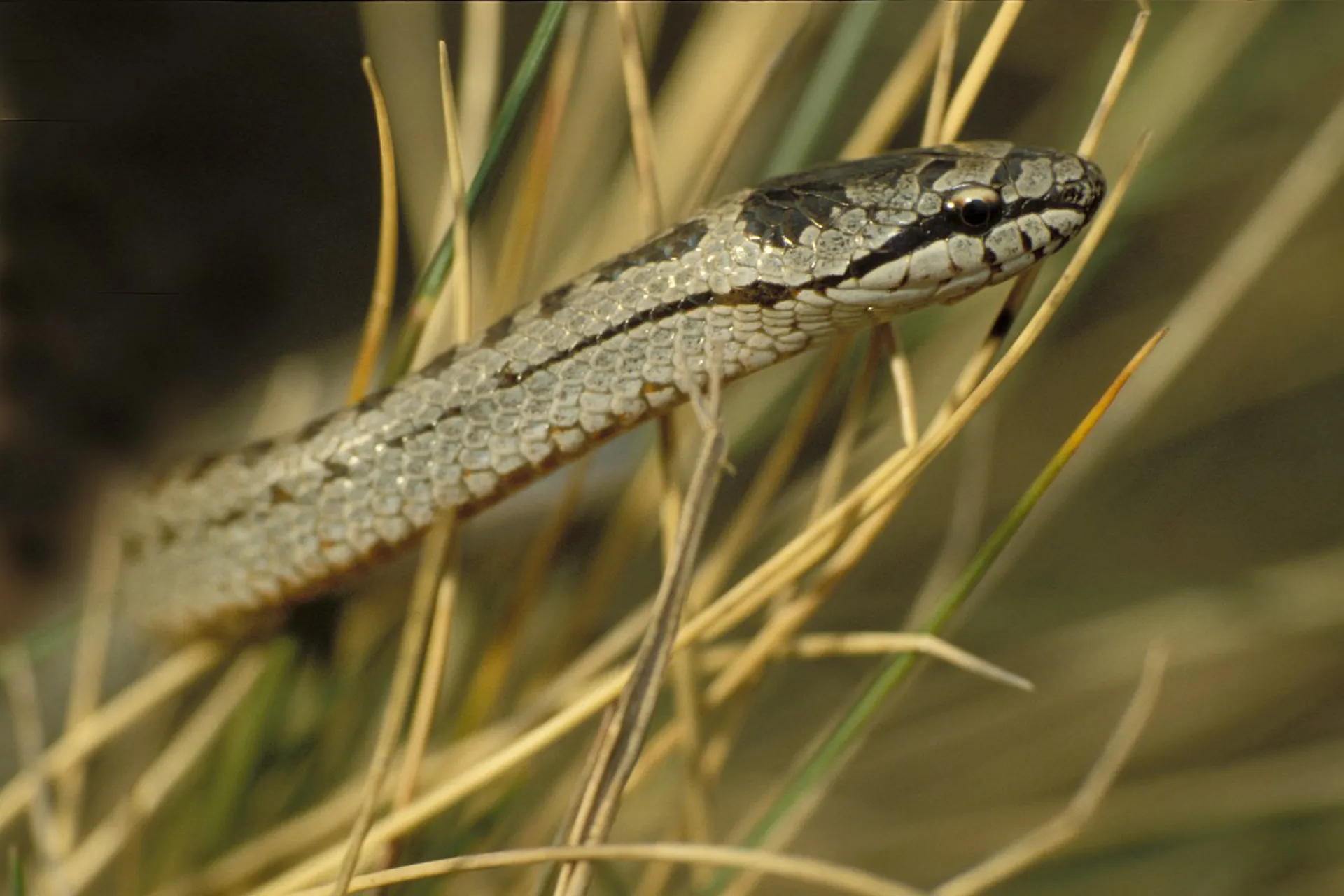
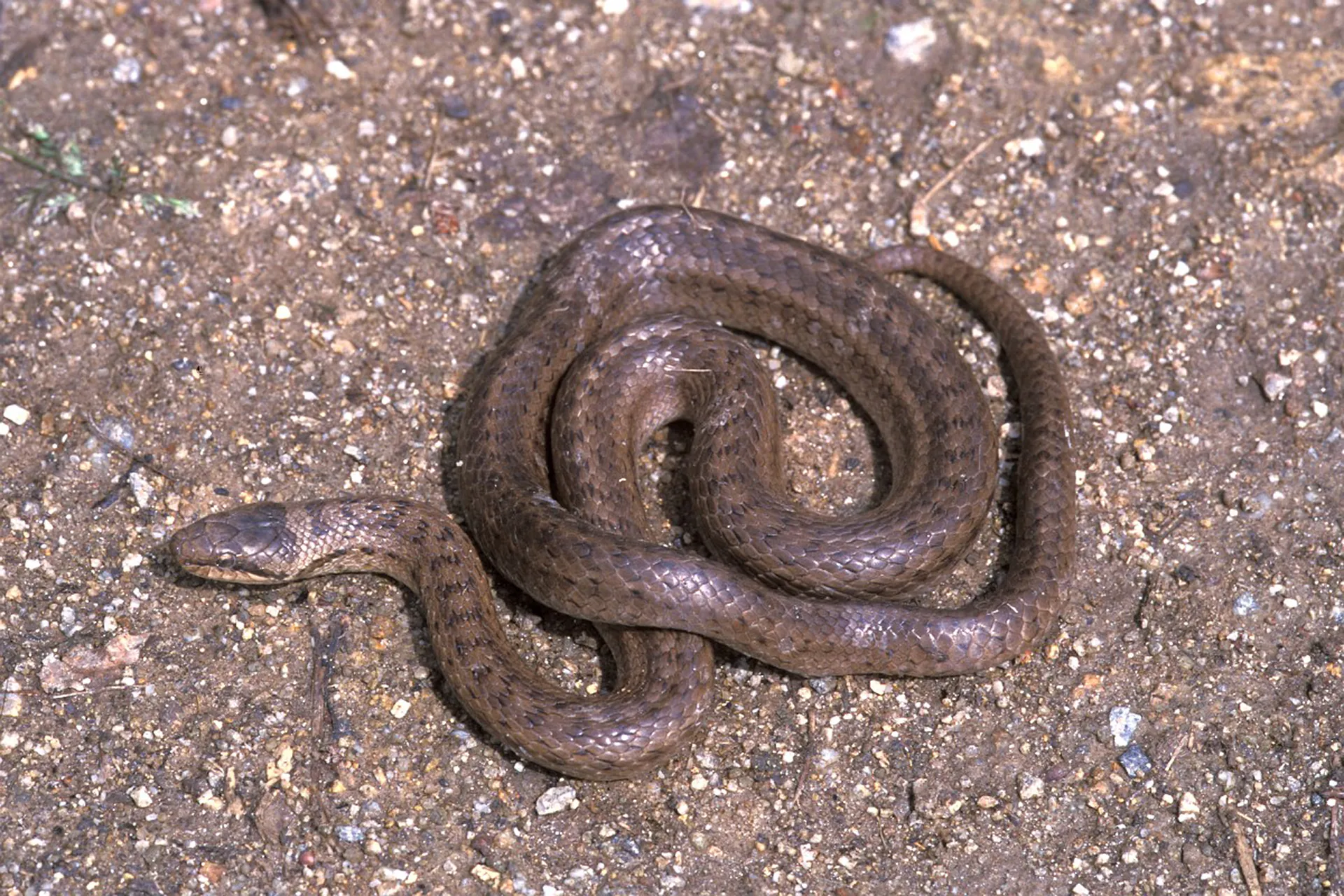
Adults are usually gray or brown, with a slender body and rows of dark spots that may partly merge. A dark stripe passes through the eye along the side of the head, and a larger marking lies on the crown. Individual appearance varies, so no single spot should be treated as an infallible identification mark.
The name refers to the scales: they lack the raised central keel found in several other European snakes. The pupils are round, and the head is relatively modest in size. These features can help in a clear photograph, but they are not a reason to approach an unknown snake’s face.
Older natural-history literature may use Coronella laevis, a name included in the species’ historical synonymy. The accepted name is Coronella austriaca. Recognizing an old name helps connect past accounts with the modern checklist without assuming that every differently named snake is a different species.
Dry refuges within a wetland region
Romanian monitoring guidance describes sunny habitats with herbaceous vegetation and shrubs, including woodland edges, rocky ground and embankments. Cover matters as much as sunshine: a patchwork of vegetation and refuges lets the snake remain concealed while using a warm site.
The same guide explicitly reports the species from lowlands including the Letea ridge in the Danube Delta. This does not make it an aquatic snake. A dry ridge or wooded patch within the wider wetland provides a different microhabitat from the channels and flooded reed beds around it.
The national monitoring plan also includes sites in the Măcin area and southern Babadag Forest. These are designated monitoring locations, not guaranteed viewing spots.
A concealed hunter
Smooth Snakes are often described as specialists on small reptiles, particularly lizards. They also take other prey, including small mammals and occasionally snakes. Diet can vary between populations, so a percentage measured elsewhere should not become an unsupported figure for Dobrogea.
A Romanian paper published in 2014 documented a Smooth Snake eating a live young Grass Snake in Iași. That observation was outside our region and shows a possible prey relationship, not its local frequency. It also illustrates why a short, general prey list is more honest than presenting every unusual record as a routine meal.
Suitable prey is subdued by constriction. The snake has no venom, but a wild animal may still defend itself if restrained. There is no benefit to catching it for an identification demonstration or a photograph.
Why an occupied habitat may look empty
This is a diurnal reptile, but “active by day” does not mean “exposed on an open path.” Smooth Snakes can remain among vegetation or beneath objects and may freeze when disturbed. Concealment makes casual observation unreliable as a measure of whether the species is present.
A quiet walk may produce no sighting even where the habitat is suitable. Visitors should not imitate professional refuge searches by lifting or dismantling objects that might shelter wildlife.
Temperature also affects reptile activity: the hottest exposed ground is not always the best place to observe a snake. A choice of sheltered and sunlit positions helps make structurally varied habitat useful.
Live young rather than an external clutch
Unlike an egg-laying Caspian Whipsnake or Aesculapian Snake, the female Smooth Snake retains the developing offspring within her body and gives birth to live young. Older accounts often call this ovoviviparity; modern descriptions also use viviparity or simply live-bearing.
Young generally appear in late summer or early autumn and resemble small adults. Precise birth dates and reproductive output vary across the range rather than following an identical timetable in every region.
The Romanian monitoring guide recommends April to September for species-specific surveys. The calendar marks that monitoring window, not an exhaustive activity limit or an abundance estimate.
Conservation and mistaken identity
The 2009 European Red List lists the species as Least Concern in both Europe and the EU27. Romanian monitoring guidance also places it in Annex IV of the EU Habitats Directive. The regional category should not be confused with an assessment of the condition of every local population.
Habitat loss and degradation threaten the refuges and feeding grounds used by this secretive snake. Killing an animal because it resembles a viper is an additional avoidable harm. Correct identification is useful, but keeping a safe distance and leaving any wild snake undisturbed does not require identifying it first.
Watching during a nature tour
On multi-day nature programs in the Danube Delta and Dobrogea, dry wooded ridges and mainland habitats add variety to the wetland landscape. A Smooth Snake encounter is a possibility, not a promised highlight. If one appears, pause at a distance and leave its way into cover clear: a brief, undisturbed view is more valuable than a prolonged encounter created by blocking its escape.
See it with us
Slow open boats, small groups and a guide who knows the places and the wildlife. From a few hours on the water to a week in the Danube Delta and Dobrogea.
Keep reading
Keep reading
More from the blog
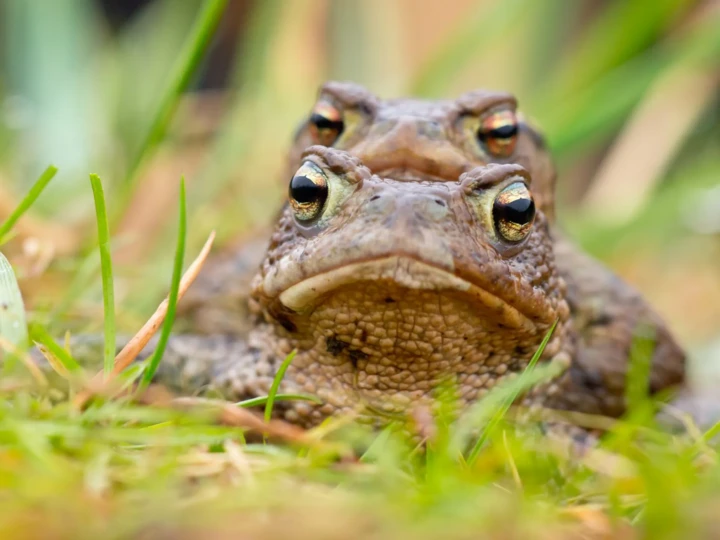
5 min read
Common Toad (Bufo bufo)
Meet the Common Toad in the Danube Delta and Dobrogea: golden eyes, spring breeding journeys and a mostly hidden life on land.
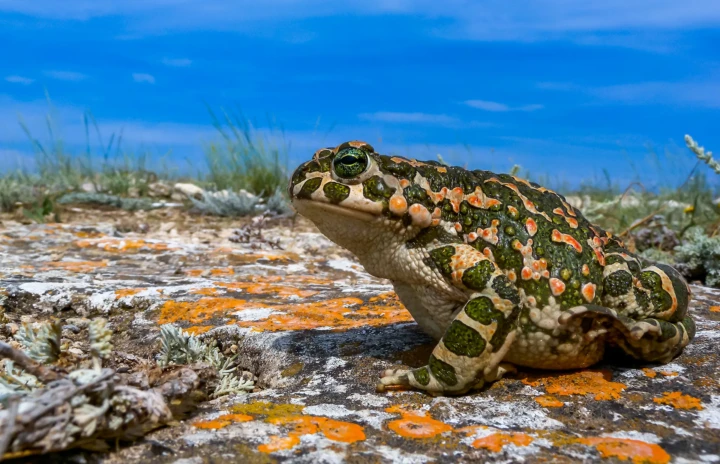
5 min read
European Green Toad (Bufotes viridis)
The green-spotted toad of Dobrogea's dry steppe, singing its trilling chorus in warm spring evenings. Discover the European green toad and where to find...
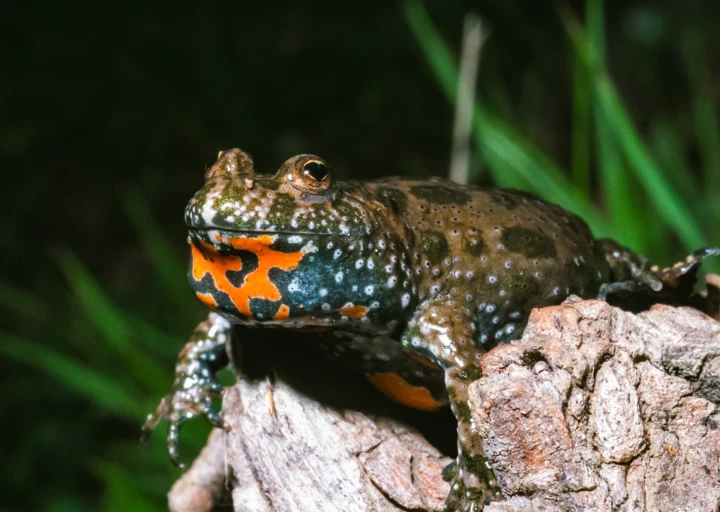
5 min read
European Fire-bellied Toad (Bombina bombina)
A small, dark toad with a fire-coloured belly, hidden in the still waters of the Danube Delta. Discover its warning colours, its soft unk...