

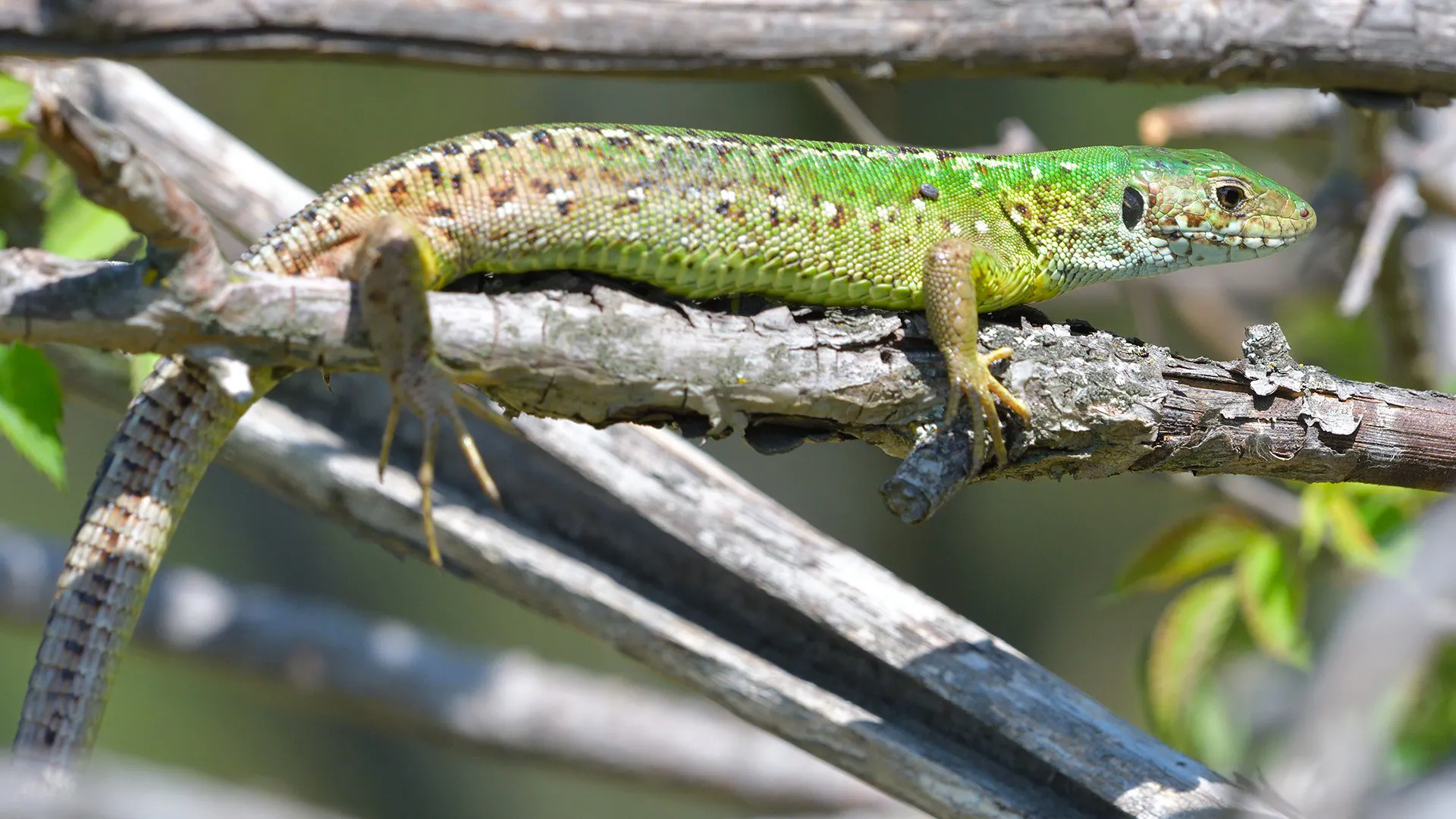
No. 19 on our checklistEuropean Green Lizard (Lacerta viridis)
A bright green lizard up to 40 cm long, basking on the bushes of Dobrogea's hills. Discover the European green lizard and where to see it around the Danube Delta.
The European Green Lizard (Lacerta viridis) is one of the largest lizards in Europe, and certainly the most spectacular: adult males, up to 40 cm long including the tail, shine in bright green with a deep blue throat in spring. Around the Danube Delta it is the lizard of Dobrogea’s hills, basking on bushes and rocks within sight of the water.
For visitors on a nature tour that combines the Danube Delta’s wetlands with the dry hills of Dobrogea, this lizard is a highlight: big, colourful, fearless enough to pose for photographs, and often seen without any special effort at all.
Quick facts
Quick facts
- Scientific name Lacerta viridis (Laurenti, 1768)
- Common name European Green Lizard
- Family Lacertidae (wall lizards)
- Order Squamata (scaled reptiles)
- Length up to about 40 cm including the very long tail
- Diet mainly insects and other invertebrates
- Habitat dense bushes, forest edges, clearings and rocky slopes
- Activity strictly diurnal
- Breeding eggs laid in early summer; hatchlings emerge in late summer
- Conservation status Least Concern (IUCN); strictly protected under Annex IV of the EU Habitats Directive and Annex II of the Bern Convention
When to see it in the Danube Delta and Dobrogea
- JanVery rare
- FebVery rare
- MarRare
- AprModerate
- MayAbundant
- JunAbundant
- JulAbundant
- AugAbundant
- SepModerate
- OctRare
- NovVery rare
- DecVery rare
- Status here
- Active from April to September; hibernates in winter.
- IUCN Red List
- Least Concern
- Our checklist
- No. 19 of 30 · see the full checklist
Description and identification
The European green lizard is a robust, large headed lizard. The body reaches about 13 to 15 cm from snout to vent, and the tail, about two thirds of the total length, can bring the animal to almost 40 cm. Adult males are bright green, spotted with fine black speckles, with a yellowish or greenish belly; in the breeding season the throat and the sides of the head turn a deep, vivid blue. Females are usually a duller green or brownish, with a distinct dark spotted pattern, and juveniles are brown with pale sides.
Like most lizards, the green lizard can shed its tail when seized by a predator, leaving the wriggling tail behind while the animal escapes; the tail regrows over the following months, usually a bit shorter and darker. A lizard seen with a stumpy or oddly coloured tail has survived exactly such an encounter.
Habitat
Green lizards live on the ground and in low, dense vegetation: bushy slopes, forest edges, clearings, hedgerows, rocky hillsides and old walls. They need sunshine for basking and cover for escaping, and they climb willingly into bushes and low trees, where much of their hunting happens.
In our region the species is characteristic of Dobrogea rather than the Danube Delta itself: it is common in the Măcin Mountains, on the Beștepe Hills, in the forests of Babadag and Somova, at Cape Doloșman and in the Cheia area, on the sunny forest edges and bushy slopes that surround the Danube Delta’s wetlands on three sides.
Diet
Green lizards feed mainly on insects: beetles, grasshoppers and crickets, caterpillars, flies. They also take spiders, snails and earthworms, and large adults are opportunistic enough to eat small lizards, young rodents, bird eggs and nestlings, and occasionally fruit. Prey is caught by ambush or after a short rush, and larger items are held in the jaws and crushed before being swallowed.
Behaviour and reproduction
This is a strictly diurnal, territorial lizard. Males emerge from hibernation in early April, females a week or two later, and the first weeks of the season are spent basking and feeding. Males patrol their territory, bobbing their heads and displaying the blue throat to rivals and to females; the brilliance of that blue, invisible in detail to our eyes but striking to a lizard’s, is an honest signal of the male’s condition.
Mating takes place in late April and May. In early summer the female digs a hole in loose soil, 20 to 30 cm deep, in a warm, sunny spot, and lays 6 to 20 soft shelled eggs, usually 8 to 12, covering them carefully and leaving them to the heat of the ground. The eggs hatch after about two months, in late summer; the juveniles, only 7 to 8 cm long and coloured brown, are independent from the first day and double in size before their first winter.
Conservation and threats
The European green lizard is listed as Least Concern globally by the IUCN: it is common across the Balkans and central Europe and adapts well to rural landscapes. It is nevertheless strictly protected at European level, in Annex IV of the EU Habitats Directive and Annex II of the Bern Convention, which prohibit capture, killing or disturbance.
The main threats are local: clearance of bushes and forest edges, agricultural intensification, pesticide use that reduces its insect prey, and predation by domestic cats near villages. In Dobrogea, with its mosaic of steppe, oak forests and rocky slopes, the species remains widespread and often abundant.
Where and when to see the European Green Lizard around the Danube Delta
Look for it on the dry hills that surround the Danube Delta: the slopes of the Măcin Mountains, the Beștepe Hills near Murighiol, the forest edges of Babadag, the rocky Cape Doloșman and the Cheia valley. In spring and early summer, males bask conspicuously on bushes, rocks and fallen trunks in the morning sun, and a careful walk along a sunny forest edge almost always produces a sighting.
The species is best searched on the warm, calm mornings of May and June, on photo tours that combine the Danube Delta with the hills of Dobrogea: the green lizard is a favourite photography subject, and after a cool night the animals need to warm up before they become active, so a patient observer with binoculars — or a camera — can work with them at length from a few metres away.
See it with us
Slow open boats, small groups and a guide who knows the places and the wildlife. From a few hours on the water to a week in the Danube Delta and Dobrogea.
Keep reading
Keep reading
More from the blog
5 min read
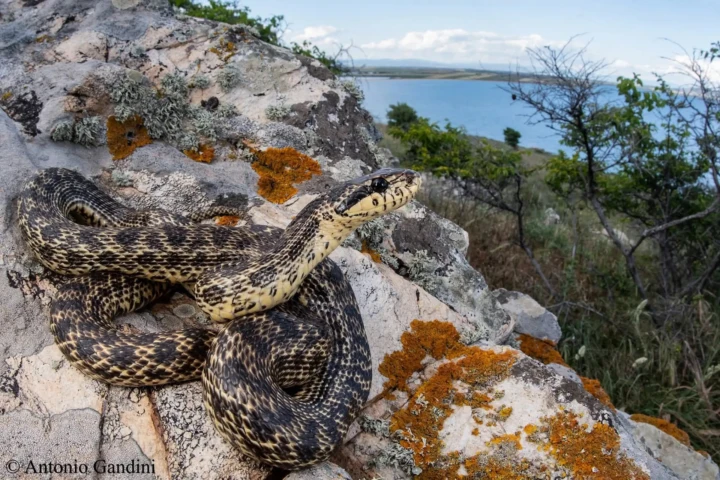
Blotched Snake (Elaphe sauromates)
Meet the elusive Blotched Snake of Dobrogea: identification, older scientific names, habitat and conservation, without promises of easy sightings.
5 min read
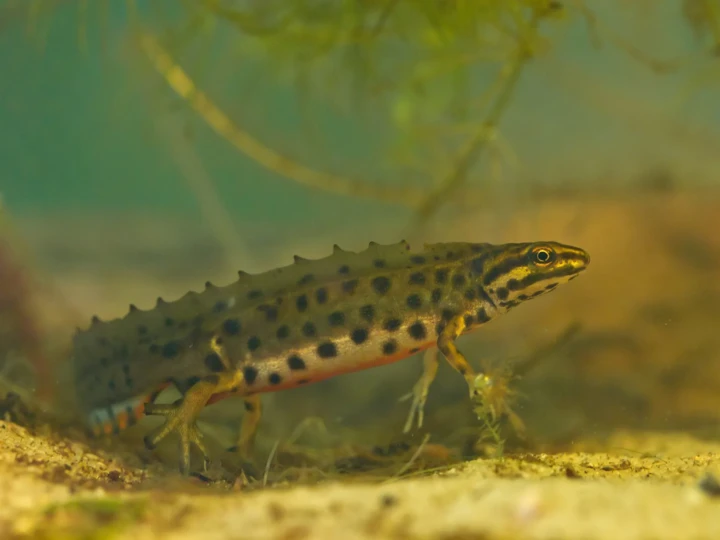
Smooth Newt (Lissotriton vulgaris)
Discover the Smooth Newt in the Danube Delta and Dobrogea: identification, leaf-wrapped eggs, seasonal habitats and responsible wildlife watching.
5 min read
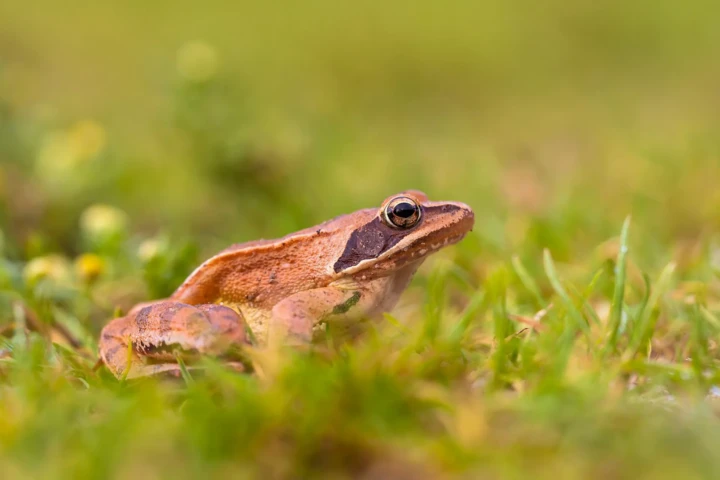
Agile Frog (Rana dalmatina)
Meet the Agile Frog of Dobrogea: long-legged woodland life, early spring breeding and responsible observation during a wider Danube Delta journey.