

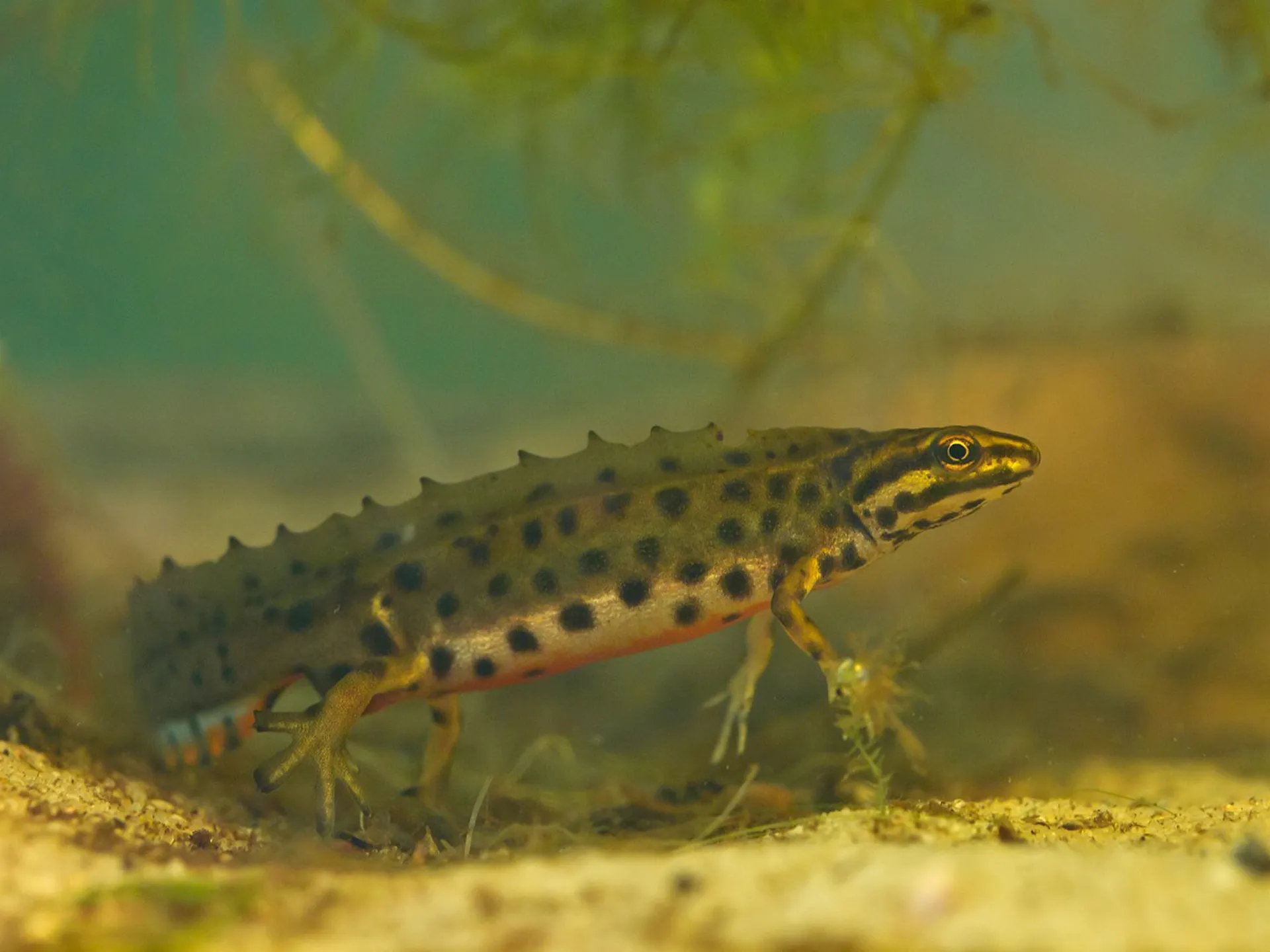
No. 1 on our checklistSmooth Newt (Lissotriton vulgaris)
Discover the Smooth Newt in the Danube Delta and Dobrogea: identification, leaf-wrapped eggs, seasonal habitats and responsible wildlife watching.
The Smooth Newt (Lissotriton vulgaris) lives two different lives: a breeding season in water, followed by a much less conspicuous existence on land. A spring male, with a rippling crest and a spotted orange-yellow belly, looks quite different from the small brown animal sheltering among leaves later in the year.
This is an amphibian, not a miniature lizard. Its story belongs as much to sheltered ground around a pond as to the water itself, a useful reminder when exploring the Danube Delta and Dobrogea.
Quick facts
Quick facts
- Scientific name Lissotriton vulgaris (Linnaeus, 1758)
- Common name Smooth Newt
- Family Salamandridae (newts and salamanders)
- Order Caudata (tailed amphibians)
- Length up to about 10 cm, including the tail
- Diet small invertebrates; aquatic adults may also take amphibian larvae
- Habitat vegetated breeding ponds with suitable terrestrial shelter nearby
- Activity especially around dusk and dawn; aquatic during breeding
- Breeding spring; individual eggs folded into aquatic plant leaves
- Conservation status Least Concern in Europe and the EU27, European Red List published in 2025
When to see it in the Danube Delta and Dobrogea
- JanWinter shelter
- FebWinter shelter
- MarAquatic phase
- AprAquatic phase
- MayAquatic phase
- JunAquatic phase
- JulMostly on land
- AugMostly on land
- SepMostly on land
- OctMostly on land
- NovWinter shelter
- DecWinter shelter
- Status here
- Indicative seasonal phases, varying with weather and site; not an abundance estimate.
- IUCN Red List
- Least Concern in Europe and EU27 (European Red List published 2025)
- Our checklist
- No. 1 of 30 · see the full checklist
Description and identification
The back is gray or brown, but the underside provides a more distinctive combination: yellow to orange coloring with dark spots, and a spotted throat. Breeding males develop a wavy crest along the back and become more conspicuous than females. Outside the breeding season the crest recedes, and a newt on land can appear surprisingly plain.
The animal’s appearance also changes with its surroundings. On land, the skin can look velvety rather than glossy, despite the English name. A newt found away from water has not necessarily become stranded: terrestrial life is a normal part of its annual cycle.
Older field guides use Triturus vulgaris, so that name remains helpful when reading Romanian literature. Recent taxonomic work has also separated some populations formerly included within the wider Smooth Newt complex. A record under an old name needs to be interpreted in its geographic and historical context, rather than assumed to describe every modern species in the group.
A documented resident of the region
A 2009 synthesis of amphibian records in Dobrogea listed the species from 22 localities, mainly in northern Dobrogea and the Danube Delta. The compilation included published records, museum material and field observations; its authors explicitly noted that many regional records were old.
Named localities include Mila 23, Caraorman, Maliuc and Murighiol, alongside records from the Măcin area and southern Dobrogea. These establish a regional history, not a promise that a visitor will find newts at a particular stop today. Small amphibians can remain undetected even where suitable habitat survives.
For observation, the important setting is shallow, sheltered breeding water with aquatic plants, rather than the broad middle of a busy channel. The surrounding terrestrial habitat matters too: roots, leaf litter and other undisturbed cover allow adults and juveniles to shelter between feeding periods and through unfavorable weather.
Courtship beneath the surface
In spring, adults move to breeding water. A male displays in front of a female, using an elaborate courtship routine rather than the loud calls that advertise many frogs and toads. Watching quietly through clear, shallow water can reveal behavior that would disappear the moment someone entered the pond.
Fertilization is internal, following transfer of a sperm packet called a spermatophore. The female then lays eggs individually, folding a leaf of an aquatic plant around each one with her hind feet. This small parcel protects a single developing embryo; it is very different from the spawn strings of a toad or the conspicuous clumps of some frogs.
Plant cover is therefore more than background scenery. It provides egg-laying material as well as shelter, making the condition of the pond’s vegetation part of breeding habitat quality. Do not unfold leaves to inspect eggs during a wildlife visit: close observation should not expose an embryo for the sake of identification.
Larvae and life on land
The larvae carry feathery external gills behind the head, unlike the familiar appearance of most frog tadpoles. Before metamorphosis they reach a few centimeters in length. Development depends on water temperature and other local conditions, so a timetable from western Europe should not be treated as a precise forecast for a Romanian pond.
At metamorphosis, the gills are absorbed and young newts begin terrestrial life. Adults also spend much of the later year out of the water. Their hiding places may be close to a pond, but suitable cover is easily lost when the surrounding ground is cleared or repeatedly disturbed.
Winter is largely spent in shelter, although mild spells can allow activity. For this reason, the calendar above describes a broad seasonal pattern, not an absolute boundary between presence and absence. A brown newt seen on a damp autumn path is just as much in its normal habitat as a crested male in spring water.
Food, predators and conservation
Smooth Newts eat a range of small invertebrates. Aquatic adults can also take amphibian larvae, while the newts themselves are prey for fish, snakes and birds. Their larvae face additional predators, including aquatic beetles and dragonfly larvae, within the same small pond community.
The European Red List published in 2025 places the species in Least Concern in both Europe and the EU27. This regional assessment does not mean all breeding sites are secure. Pond loss, deterioration and separation from suitable terrestrial habitat can still undermine local populations.
Protecting the complete habitat means retaining both breeding water and nearby cover. Visitors can help by avoiding capture, leaving submerged vegetation intact and never transferring animals or pond water between sites. A newt should not be moved into another pond simply because it appears to offer a better home.
When to look during a nature tour
Spring offers the clearest opportunity to observe breeding adults in water, while later encounters are more likely to involve animals on land. Visibility changes with vegetation, water clarity and weather, so an occupied pond can look empty during a brief visit.
On multi-day nature programs in the Danube Delta and Dobrogea, smaller wildlife adds another dimension to the landscape. Where suitable breeding water is accessible without disturbance, a pause to watch its margins can reveal an amphibian life cycle easily missed from a moving boat.
See it with us
Slow open boats, small groups and a guide who knows the places and the wildlife. From a few hours on the water to a week in the Danube Delta and Dobrogea.
Keep reading
Keep reading
More from the blog
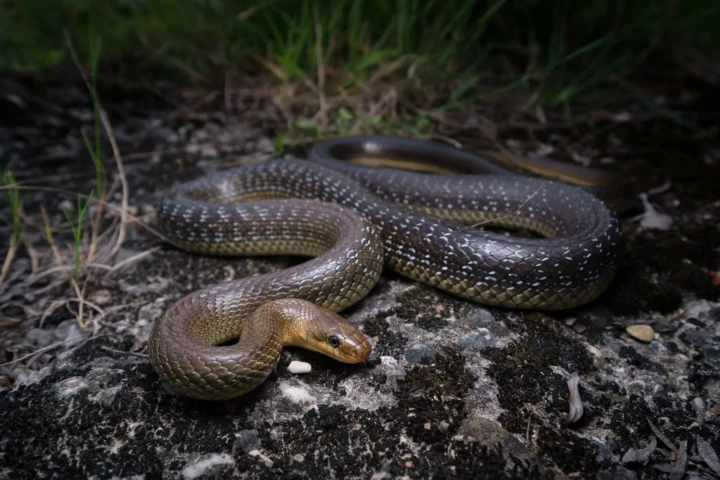
5 min read
Aesculapian Snake (Zamenis longissimus)
The snake of the god of medicine, one of Europe's longest serpents, living in the forests of Dobrogea. Discover the harmless Aesculapian snake and...
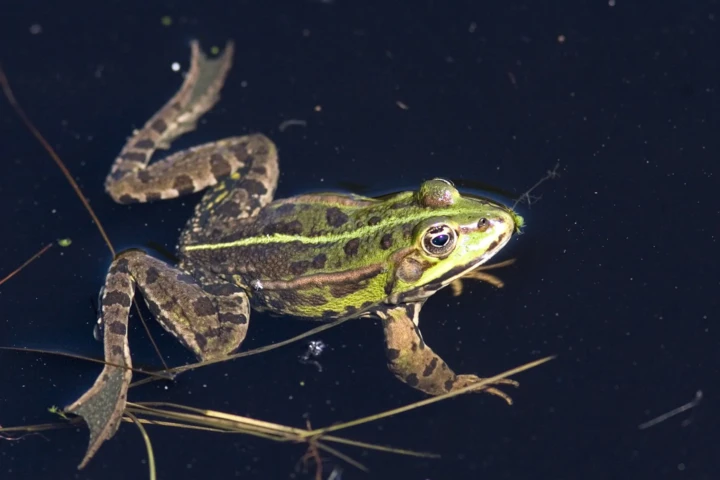
5 min read
Edible Frog (Pelophylax kl. esculentus)
Meet the Edible Frog, a hybrid of the Marsh Frog and the Pool Frog that lives in the lakes of the Danube Delta and...
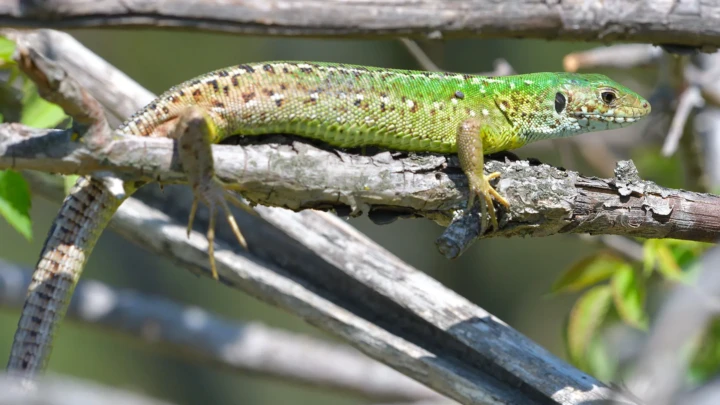
5 min read
European Green Lizard (Lacerta viridis)
A bright green lizard up to 40 cm long, basking on the bushes of Dobrogea's hills. Discover the European green lizard and where to...