

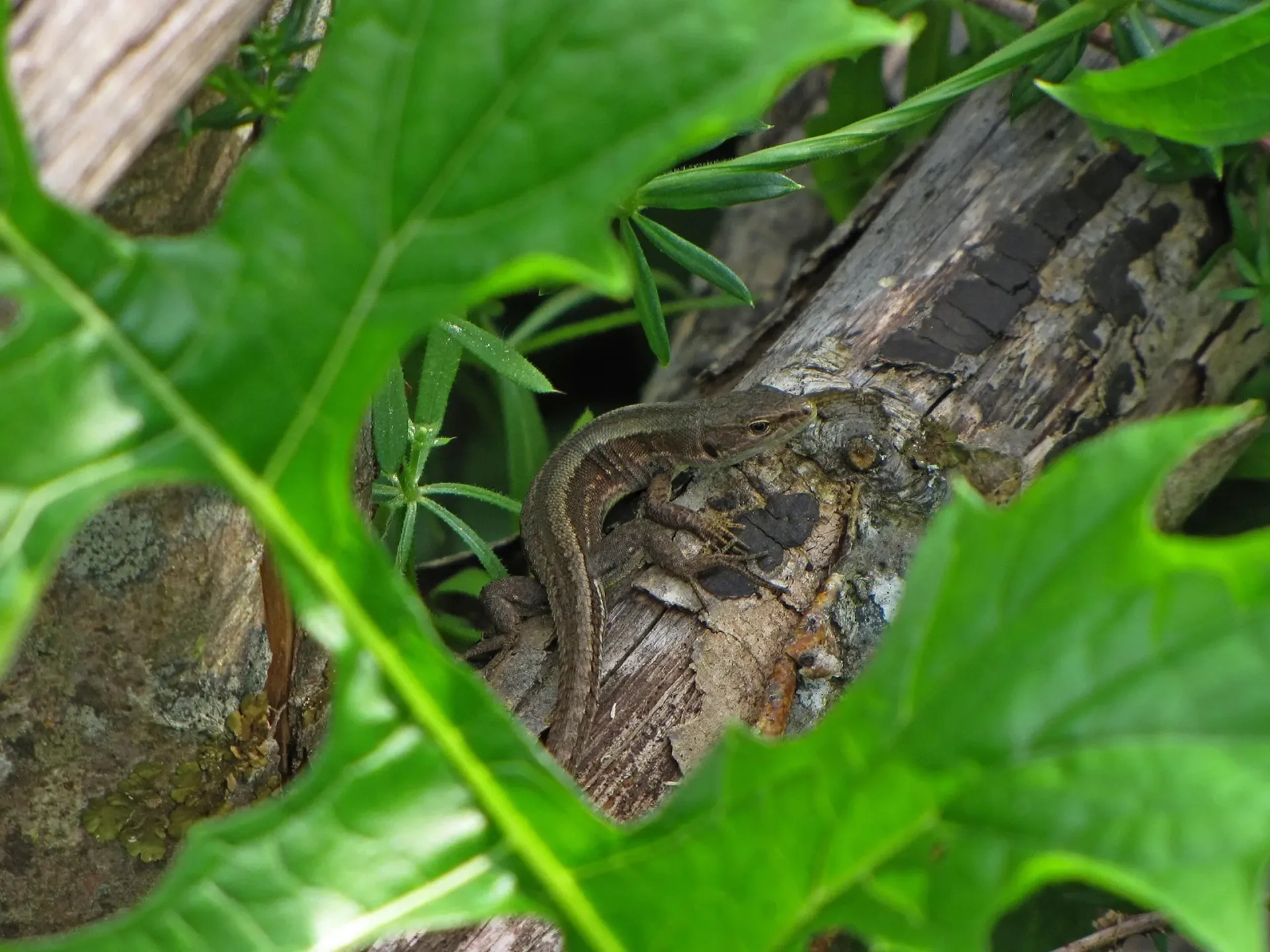
No. 17 on our checklistWestern Meadow Lizard (Darevskia pontica) in Dobrogea
Meet the Western Meadow Lizard, a small forest lizard at its northern limit in Romania and one of the rarest reptiles of Dobrogea: identification, names, habitat and conservation.
The Western Meadow Lizard (Darevskia pontica) is a small, secretive lizard of damp broadleaf woods. Romania lies at the northern edge of its range, and in Dobrogea it is one of the rarest and least known reptiles on our checklist.
Unlike most of its relatives in the genus Darevskia, which live on rocks in the Caucasus, this species keeps to leaf litter, grassy clearings and shady stream banks inside forests.
Quick facts
Quick facts
- Scientific name Darevskia pontica (Lantz & Cyrén, 1919); older names Lacerta praticola pontica and Darevskia praticola pontica, and many sources still list it as Darevskia praticola
- Common name Western Meadow Lizard; also Meadow Lizard or Pontic Meadow Lizard
- Family Lacertidae (wall lizards and relatives)
- Order Squamata (lizards and snakes)
- Length about 17 cm including the tail; head and body usually under 6.5 cm, the tail 1.5–2 times longer
- Diet insects and other small invertebrates
- Habitat damp, shady broadleaf forests, grassy clearings, stream banks and forest tracks
- Activity by day, from about April to October; avoids strong heat and is seen mostly in the morning and late afternoon
- Breeding lays eggs; usually 4–6 eggs in June, hatching after about 45 days
- Conservation status Near Threatened (global IUCN Red List, 2009, as Darevskia praticola); strictly protected in Romania
When to see it in the Danube Delta and Dobrogea
- JanWinter rest
- FebWinter rest
- MarWinter rest
- AprEmerging
- MayActive
- JunEgg-laying
- JulActive
- AugHatchlings
- SepActive
- OctLast activity
- NovWinter rest
- DecWinter rest
- Status here
- Rare and very local in Dobrogea, restricted to a few forests; not expected in the Danube Delta itself. Indicative seasonal pattern only.
- IUCN Red List
- Near Threatened (2009, as Darevskia praticola)
- Our checklist
- No. 17 of 30 · see the full checklist
Description and identification
This is a slender little lizard with a small, high head, a short, blunt snout and relatively short legs. The tail is long and thin, one and a half to two times the length of the head and body. The upper side is reddish brown, with a fairly broad, rusty band along the spine, and the flanks are darker.
The belly has no spots. In males it is yellowish green, with a stronger green on the hind legs; in females it is white or yellowish. Males are a little smaller than females but have a longer tail and longer hind legs, a shorter body and better developed femoral pores on the underside of the thighs.
In Dobrogea it could be confused with young Sand Lizards or with female Balkan Wall Lizards. The shady, damp forest setting, the small size and the plain rusty-brown back are the best clues. Close views are rare, because the lizard usually slips into leaf litter at the first movement.
One species, several names
The name of this lizard has changed several times, and both old and new names are still in use. It was first described as a subspecies of the Caucasian Meadow Lizard, Lacerta praticola pontica, and later moved to the genus Darevskia. Genetic work found that the Balkan populations, including those in Romania, form a lineage distinct from the Caucasian ones.
The Reptile Database now treats Darevskia pontica as a valid species, while the European checklist by Speybroeck and colleagues (2020) prefers to keep the Balkan lizards within Darevskia praticola. In our checklist we follow Darevskia pontica. If you search the literature, it is worth trying all three names, because the older Romanian papers use Lacerta praticola pontica.
Where it lives in Romania and Dobrogea
In Romania this lizard is found mainly in the south of the country, in Banat, Oltenia and Muntenia, with a few records farther north in the western hills. Its distribution is fragmented and closely tied to surviving patches of broadleaf forest, often lowland oak woods with damp valleys.
In Dobrogea the records are very few. The classic Romanian monograph by Fuhn and Vancea lists the Alimanu forest, in the south of Constanța County near the Danube. A later note reported Lacerta praticola pontica from the Dumbrăveni forest, also in southern Dobrogea, and Romanian herpetologists described it at the time as a new lizard for the region.
We are not aware of any confirmed record from the Danube Delta. The open dunes, reed beds and salty grasslands there do not offer the shady, damp forest floor it needs. It is on our checklist because it belongs to the reptile fauna of Dobrogea, not because visitors should expect it in the wetlands.
Life in the leaf litter
Meadow Lizards are usually seen alone, more rarely in small groups, basking on the bank of a forest path or on dead leaves. They are active from about April to October. They avoid strong heat, so the best chance of seeing one is in the morning or in the late afternoon.
They feed on insects and other small invertebrates. Larger lizards, such as the European Green Lizard, and snakes, such as the Smooth Snake, prey on them. According to Fuhn and Vancea, the female lays four to six pinkish-yellow eggs in June. The young hatch after about 45 days and measure around 5 cm.
Conservation and responsible observation
The global IUCN assessment from 2009, made under the name Darevskia praticola, lists the species as Near Threatened, mainly because its range is highly fragmented. The European Red List of 2009 gave the same category for Europe and the EU27; in the 2025 revision it does not appear among the threatened reptiles. The species is not included in the EU Habitats Directive, but it is protected by Romanian law and listed in Appendix III of the Bern Convention.
Its main need is the survival of old, damp broadleaf woods with a natural forest floor. Clear-cutting, drainage and the replacement of native forest with plantations remove its habitat. If you are lucky enough to find one, enjoy it from a distance, do not turn logs or rake leaf litter, and leave the forest floor as you found it.
Reptiles on our birdwatching tours
On our multi-day birdwatching tours in the Danube Delta and Dobrogea, the forests of Dobrogea are visited for woodpeckers, raptors and songbirds. During these walks we also keep an eye on the ground for lizards, snakes and tortoises. The Western Meadow Lizard is a rare bonus rather than a target, but it is a good reminder of how much wildlife lives in the leaf litter.
See it with us
Slow open boats, small groups and a guide who knows the places and the wildlife. From a few hours on the water to a week in the Danube Delta and Dobrogea.
Keep reading
Keep reading
More from the blog
5 min read
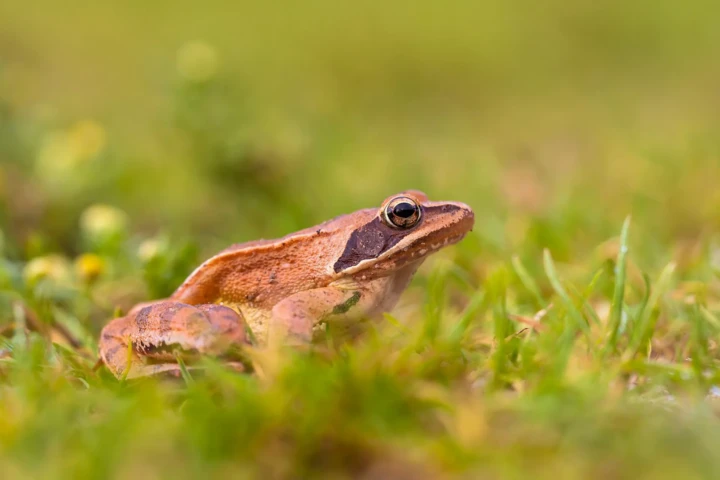
Agile Frog (Rana dalmatina)
Meet the Agile Frog of Dobrogea: long-legged woodland life, early spring breeding and responsible observation during a wider Danube Delta journey.
5 min read
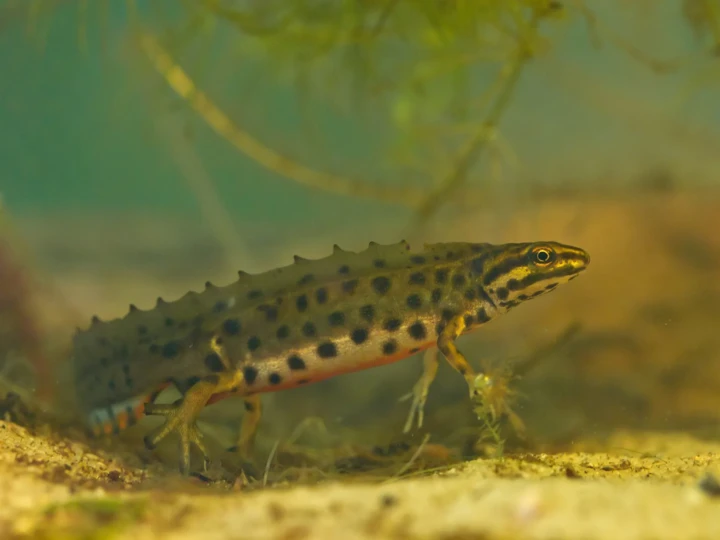
Smooth Newt (Lissotriton vulgaris)
Discover the Smooth Newt in the Danube Delta and Dobrogea: identification, leaf-wrapped eggs, seasonal habitats and responsible wildlife watching.
5 min read
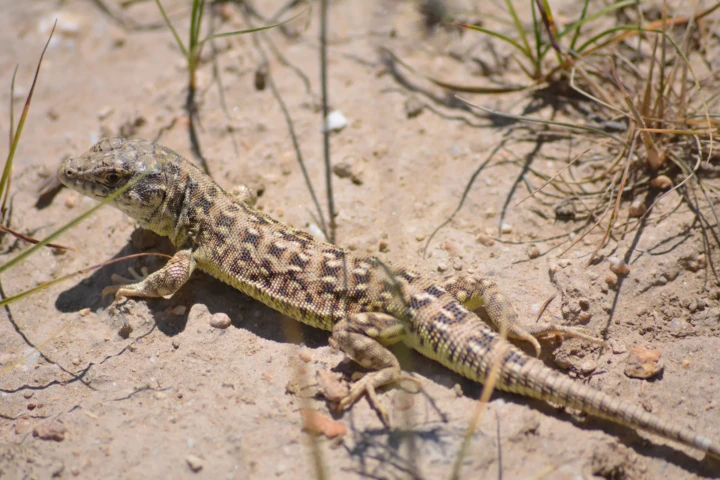
Steppe Runner (Eremias arguta)
Meet the Steppe Runner, a fast steppe lizard that in the EU lives only in Romania, on the sand dunes of the Danube Delta:...