

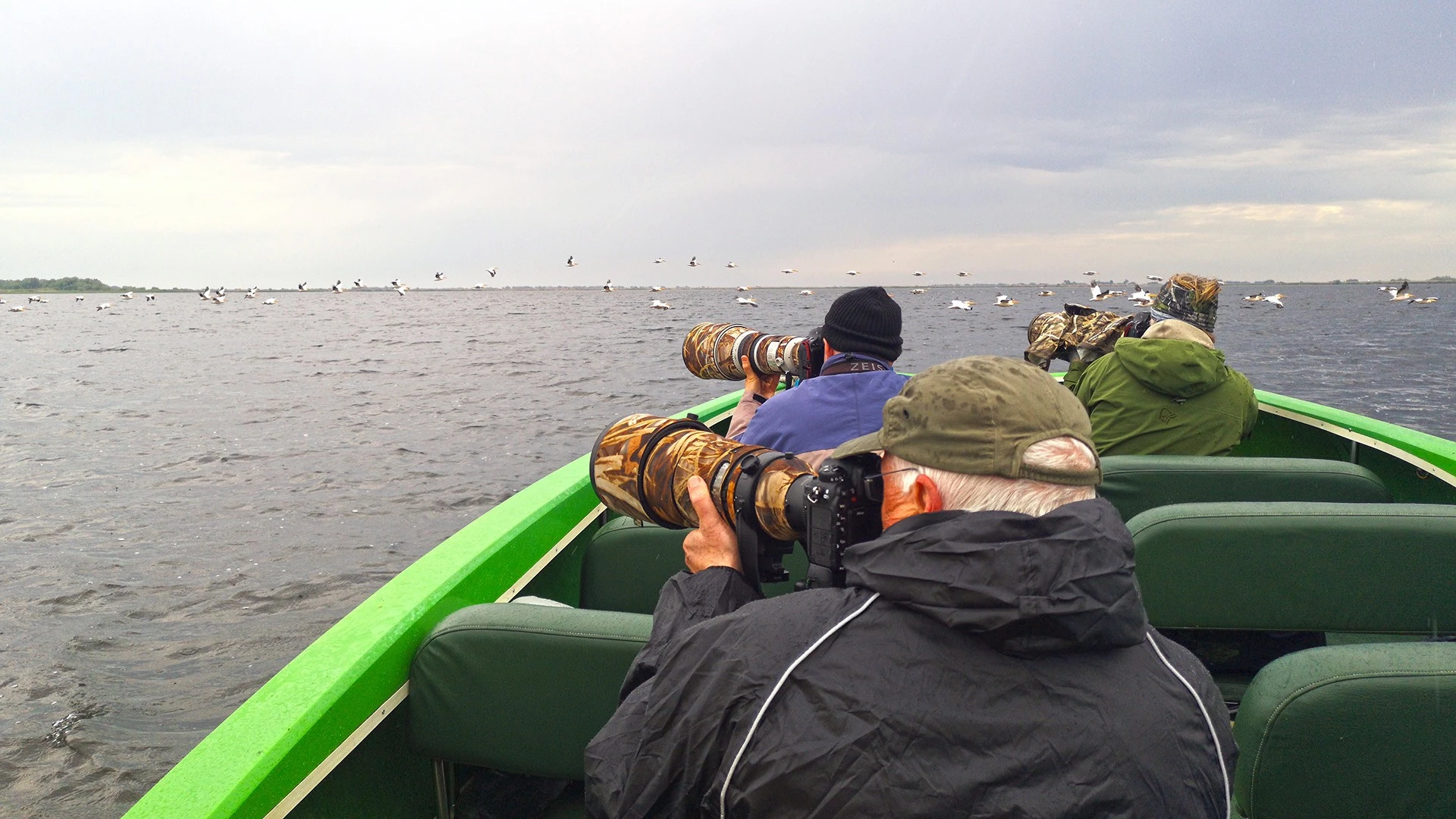
Photographing from a Boat in the Danube Delta: Tips from a Wildlife Photographer
The right boat, the right seat, a dry camera and respect for the birds: practical lessons from many years of wildlife photography on the water of the Danube Delta.
A photo trip in the Danube Delta happens almost entirely on the water, and the water has its own rules. Here are the lessons I have learned in many years of guiding photographers by boat in the Danube Delta: how to choose the boat, where to sit, how to protect your gear and, above all, how to behave around the birds.
Quick facts
- Best boat Open, wide, flat bottom, low sides, outboard engine
- Most stable seat At the stern, near the engine
- Camera on the move Lens pointing down, raise it only to shoot
- Tripod Only with the engine off
- Golden rule Never go closer than the bird accepts
The boat is the key
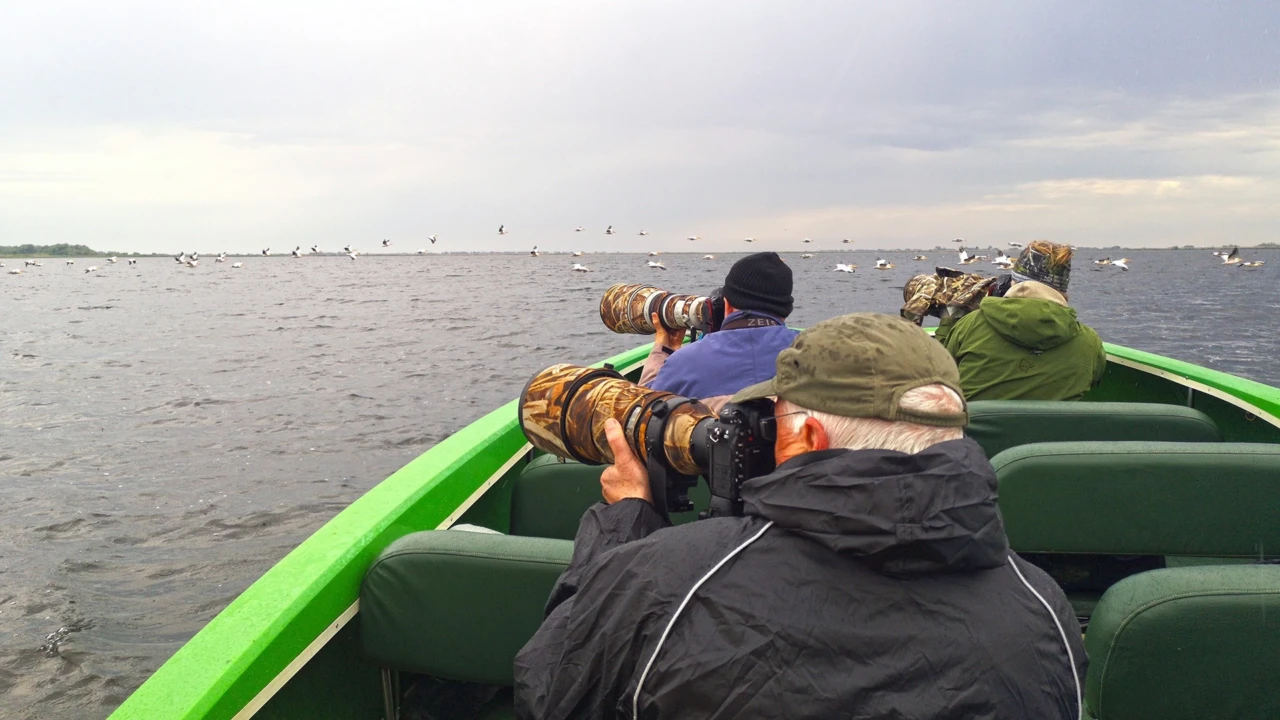
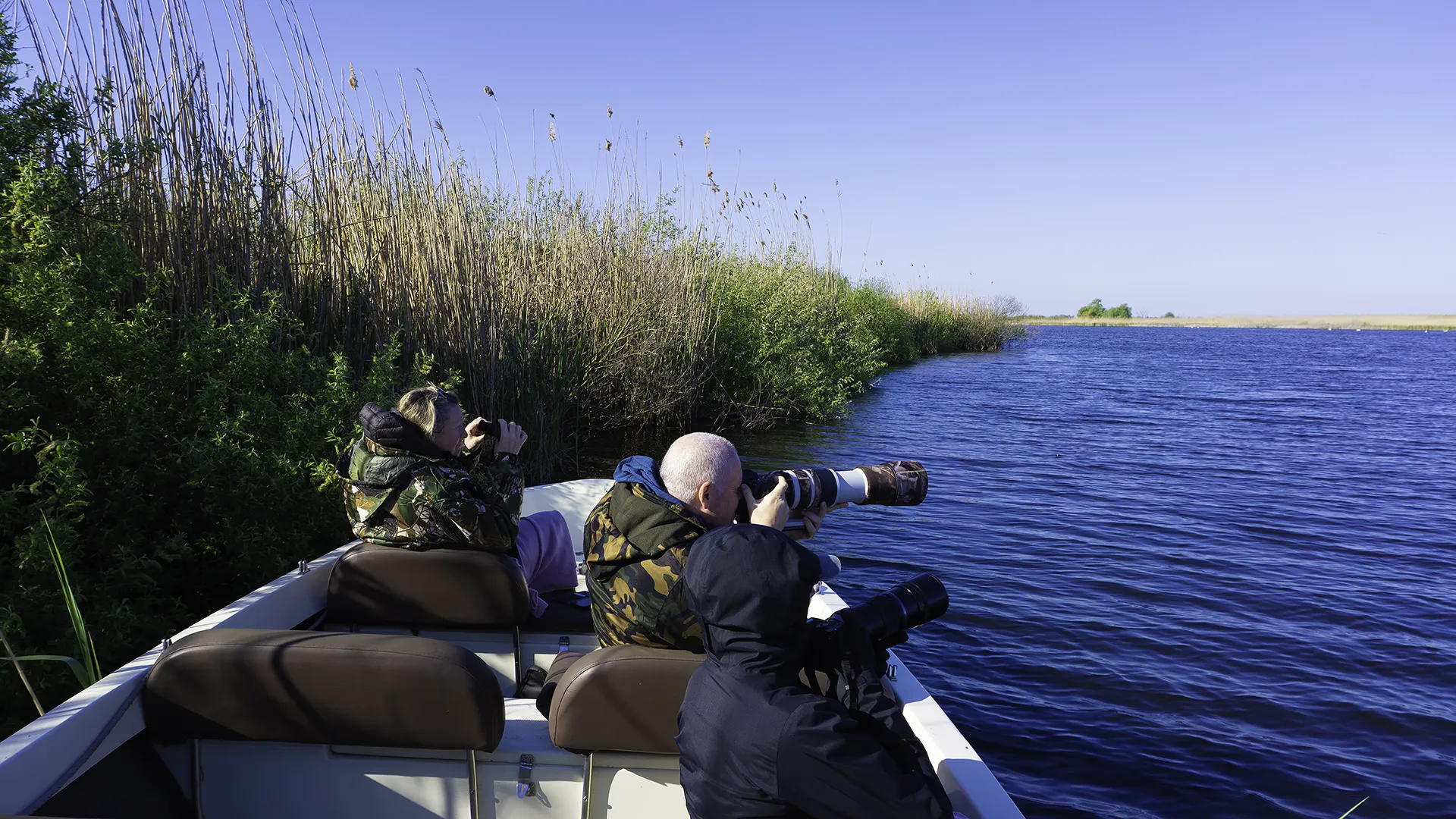
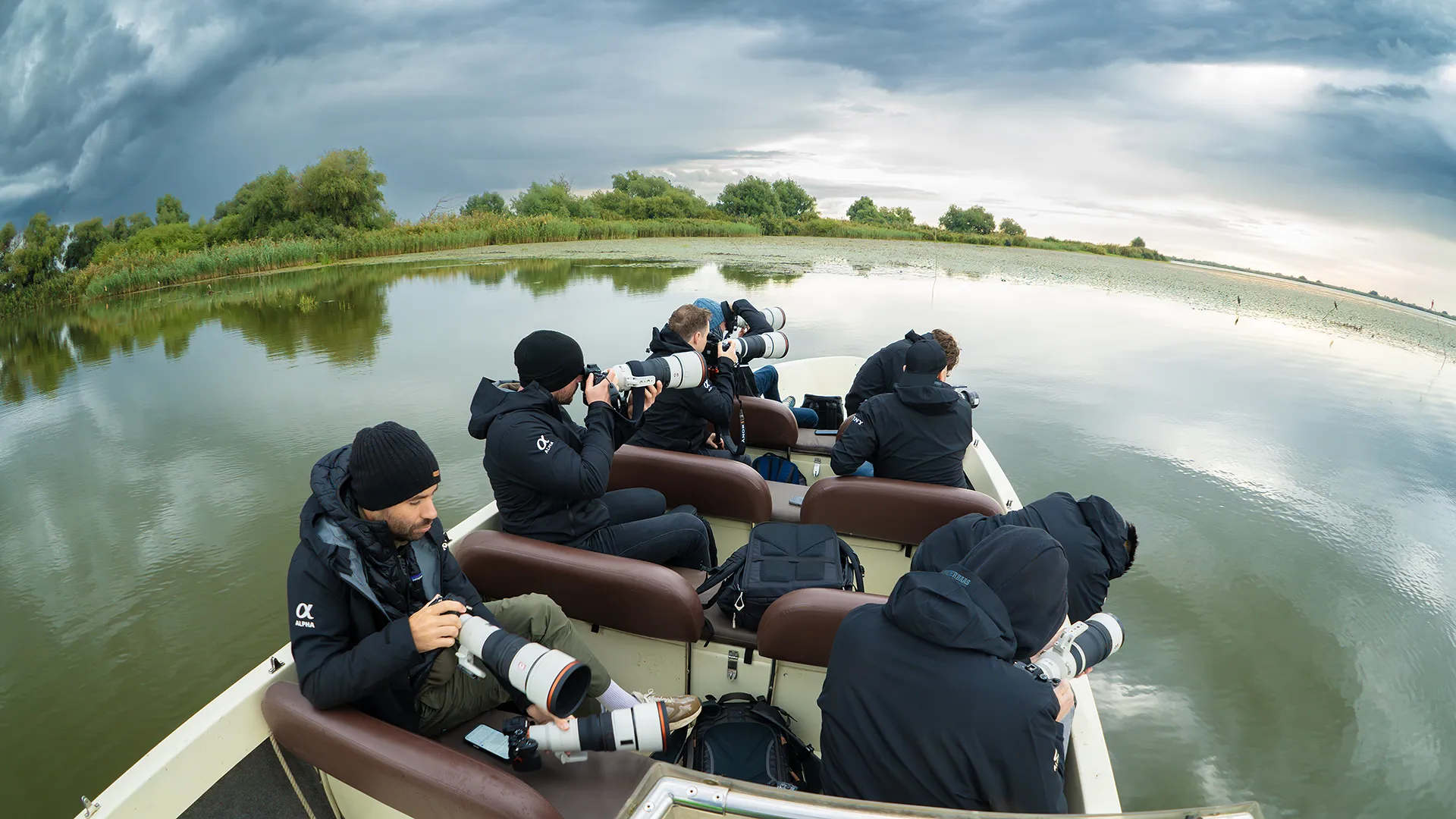
When you plan a photo trip in a land of water, find out first what boat you will use. I have tried everything, from kayaks to large cabin boats, and for photography the best by far is an open boat with low sides, a wide flat bottom and an outboard engine.
Low sides. In a low boat (sides under about 50 cm) you shoot close to the level of the birds on the water or on the bank, eye to eye. The pictures feel natural and intimate. From a high boat you look down on your subjects, and the photos show it.
Open, without a roof. Birds in flight are some of the best moments of the day, and a roof or a sun shade hides half the sky.
Wide and flat. Width gives stability: a narrow boat rocks at every move of the photographers and at every small wave. A flat bottom adds stability and needs little water, so the boat can enter the shallow lakes and channels, the richest places for birds.
Outboard engine. An outboard engine passes far less vibration to the boat than an inboard one, so you can shoot while moving slowly or with the engine idling. Read more about our boats, built exactly for this.
In the boat
The most stable place in a boat is at the stern, near the engine; the bow moves the most. If stability matters for a shot, sit as close to the engine as you can.
On the move, even small waves can splash the front of your lens. Keep the camera with the lens pointing down while the boat is running, raise it only to shoot, then lower it again. Never leave a lens pointing at the sun: the boat turns all the time, and a lens can focus the sun inside the camera like a magnifying glass, enough to damage it in seconds.
No boat is completely safe for your gear. A wave can come in, rain can start at any moment. After trying all kinds of waterproof bags and backpacks, I trust only a hard case: a Pelican case (the 1560 is my favourite) with a padded divider stayed completely dry inside after hours in the rain. The one drawback is the black colour, which heats up in the sun; open it now and then to let it breathe, or cover it with a reflective emergency blanket.
How to behave around the birds
For the birds, a boat full of people is a noisy, clumsy visitor, and they notice it long before you see them. If a bird stays when the boat passes, it has accepted the boat, not you. That acceptance depends above all on a steady course and a steady speed: birds often ignore a boat gliding past slowly, and take off the moment it stops or turns toward them. So keep your movements slow and fluid, avoid sudden gestures and pointing arms, and shoot as the boat glides by.
Every species, and every bird, has a distance at which it tolerates people. Respect it. If you push closer, you stress the bird and send it away, and it will keep a greater distance for a long time. Wait at the limit instead, stay still, and very often curiosity brings the bird closer to you. For me the wellbeing of the birds always comes first: a good photo is never worth disturbing them.
When the wind is behind you, you can let the boat drift slowly toward a subject with the engine off, keeping low with only your head and the camera above the side. Prepare everything well before, far from the bird.
Tripod or hand held
With the engine running, a tripod only passes the vibrations of the boat to the camera; shooting by hand, your body absorbs them. A tripod makes sense only with the engine off.
My best pictures on the water came when I used the boat as a hide: in a good position, in good light, engine off, tripod set, the boat or myself covered with a camouflage net. Then you wait without moving and look at the birds only through the viewfinder. Shooting from low, at the level of the water, gives the most natural and intimate images.
Come and shoot with us
Our photo tours use open boats built for photographers, with few people per boat, sessions in the best hours of light and guides who know where the birds are. If you have a question about photographing in the Danube Delta, write to us at contact@discoverdanubedelta.com.
Iliuta Goean
See it with us
Photo tours in open boats designed for photography, at low speed and at the best light, guided by wildlife photographers.
Keep reading
Keep reading
More from the blog

4 min read
The Danube Delta: a Complete Guide for Photographers and Nature Lovers
When to come, where to go, what you can see and how to photograph it: a complete guide to the Danube Delta for photographers...
2 min read
Bee-eater Hide Rules
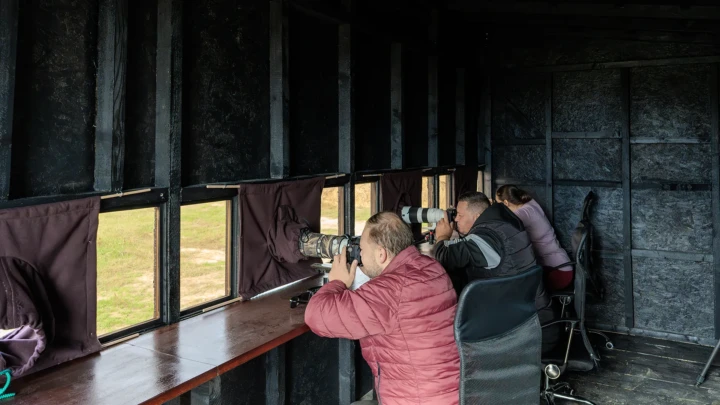
The rules every photographer follows in our bee-eater hide: one position and one camera, no smoking, everyone in and out together, silence.

Dobrogea4 min read
Argamum (Orgame), the Ancient City on Lake Razim
Founded by Greek settlers in the 7th century BC on a cliff above Lake Razim, Orgame is the first town in Romania named in...