

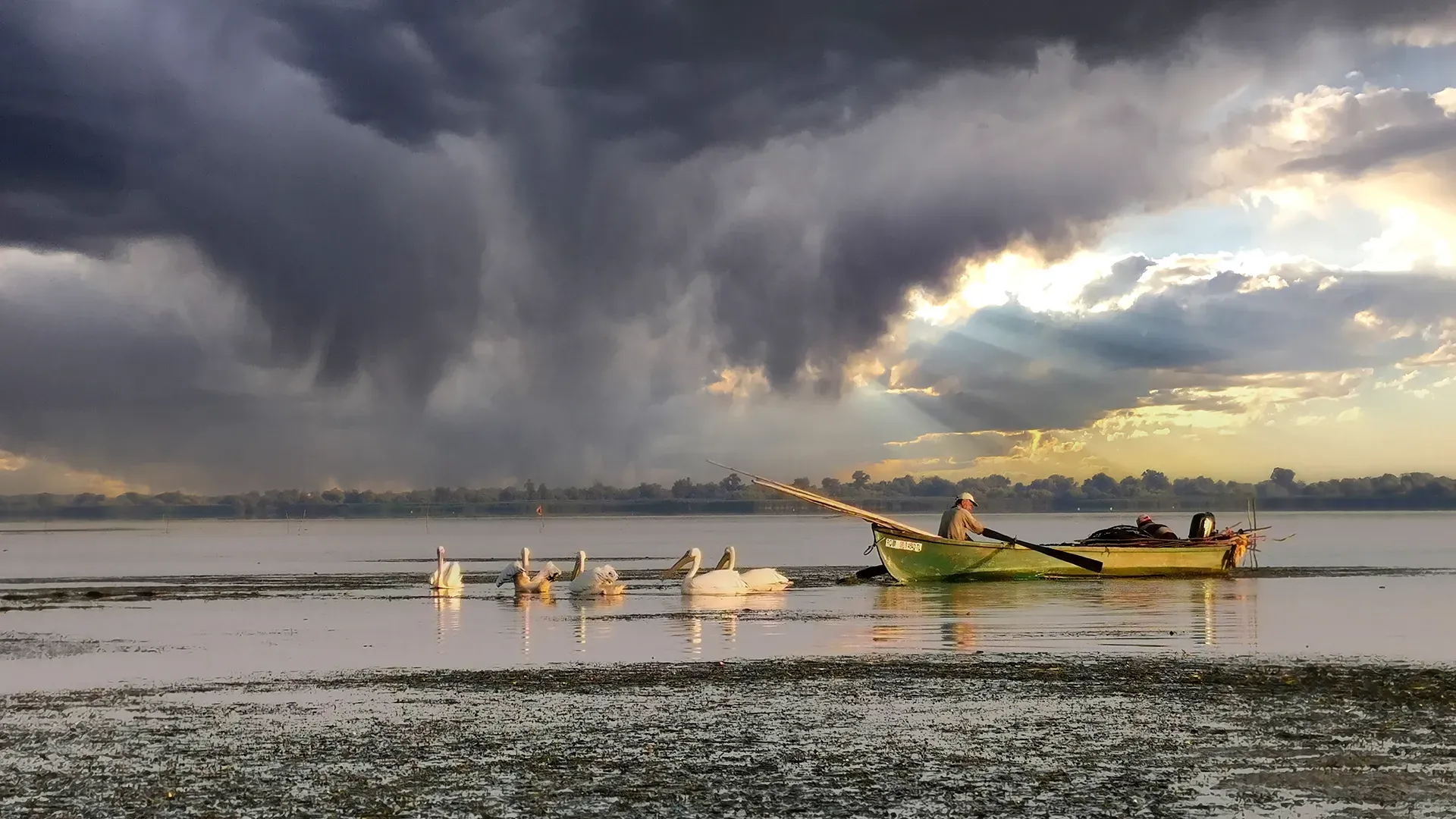
The Danube Delta: a Complete Guide for Photographers and Nature Lovers
When to come, where to go, what you can see and how to photograph it: a complete guide to the Danube Delta for photographers and nature lovers.
The Danube Delta is one of the wildest places left in Europe: a labyrinth of channels, lakes, reed beds, sand dunes and old oak forests, where the Danube ends its long journey into the Black Sea. For photographers and nature lovers it is a world apart. This guide gathers what you need to plan your trip: when to come, where to go, what you can see and how to travel here the right way.
Quick facts
- Where Southeast Romania, where the Danube meets the Black Sea
- Protected Biosphere reserve since 1990, UNESCO World Heritage Site since 1991
- Birds More than 300 species
- Gateway Tulcea; most of the Danube Delta can be reached only by boat
- Best seasons April to June and September to October; in summer, sunrise and evening
Why the Danube Delta
The Danube Delta is the second largest delta in Europe, after the Volga, and one of the best preserved. Most of it lies in Romania. It is a land shaped by water: the river and the sea have built it together, and they keep building it today. For a photographer this means endless horizons of reed, mirrors of water lilies, mist on the channels at dawn, and wildlife living close to the water, where you can watch it from a boat at its own level.
It is also a place of people: fishermen’s villages reached only by water, and the Lipovan communities, with their white and Lipovan Blue houses and their old faith.
When to come
Spring, April to June. The most spectacular season for birds: the migrants return, the colonies are busy, pelicans fish together on the lakes and the reed beds are full of song. See spring in the Danube Delta.
Summer, July and August. Warm days, water lilies in bloom and young birds everywhere. The best hours are at sunrise and in the evening, outside the hours of the speed boats, now the greatest threat to nature in the Danube Delta. See summer in the Danube Delta.
Autumn, September and October. Golden reeds, soft light, migration and a great calm on the water. See autumn in the Danube Delta.
Winter, December to February. Ice, mist and large flocks of wintering birds, for specialised birders and photographers dressed as for the North Pole. See winter in the Danube Delta.
Places to see
Mila 23 and the heart of the Danube Delta. In the very middle of the Danube Delta, the Lipovan village of Mila 23 opens the way to the lakes and channels of the north and the centre, the richest places for birds and the most photogenic landscapes. Read about Mila 23.
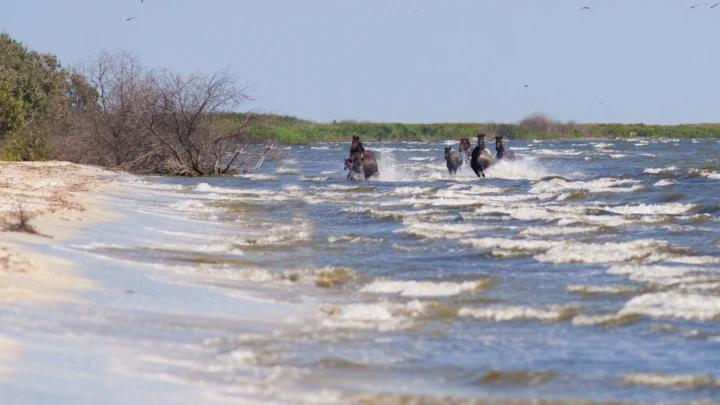
Letea. On the sand ridge of the marine delta, old oaks grow between the dunes, wrapped in climbing plants that give the forest an almost tropical look. Around it graze the free horses of the Danube Delta, and nearby lie salt marshes and saline lakes full of shore birds. See the trip to Letea.
Caraorman and Sulina. Caraorman, on another sand ridge, has the same habitat of oaks and dunes. In Sulina, the town where the Danube reaches the sea, you can still see a little of the charm and grandeur of the old days. Read about the trips to Caraorman and Sulina.
What you can see
Birds. Great White and Dalmatian Pelicans, herons, egrets, spoonbills, Glossy Ibises, cormorants, terns, White-tailed Eagles and many more. Explore our bird pages and the bird list of the Danube Delta and Dobrogea.
Mammals. Golden jackals, otters, foxes and, with a lot of luck, the rare European mink. See the mammals of the Danube Delta and Dobrogea.
Life in the water. Pike, tench, catfish and the Pontic shad, which swims up the Danube every spring. See the fishes of the Danube Delta and the Black Sea.
Photographing in the Danube Delta
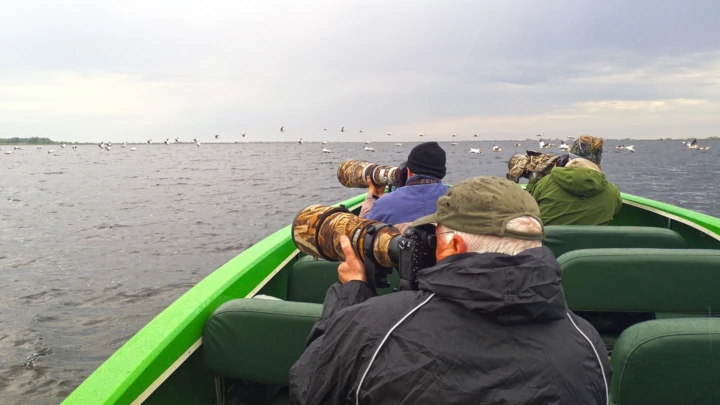
Almost everything happens on the water, so the boat makes the difference: an open boat with low sides lets you shoot at the level of the birds, in every direction, including birds in flight. The best light comes in the first and last hours of the day. Read our tips for photographing from a boat.
Getting here
The gateway to the Danube Delta is Tulcea. The nearest international airports are Bucharest and Constanta. Read how to get to Tulcea from Bucharest; our boats leave from Port Tulcea Aval.
What to bring
- A telephoto lens for birds and wildlife, and a wide lens for landscapes
- Binoculars
- A windproof and waterproof jacket and a rain poncho; the boats are open
- A hat, sunglasses and sunscreen
- Insect repellent
Travel the slow way
The Danube Delta is a fragile place. Choose operators who travel slowly, keep their distance from the birds and never enter nesting areas, and make sure every visitor has an access permit from the Danube Delta Biosphere Reserve Administration. Read about the myths to question before you book.
Discover the Danube Delta with us
See our nature tours, birdwatching tours, photo tours and day trips.
See it with us
Photo tours in open boats designed for photography, at low speed and at the best light, guided by wildlife photographers.
Keep reading
Keep reading
More from the blog
Mammals3 min read
The Free Horses of the Danube Delta: the True Story of the Letea Horses
They look wild and live free among the dunes and oaks of Letea, but their story is different: the true story of the horses...
5 min read
Photographing from a Boat in the Danube Delta: Tips from a Wildlife Photographer
The right boat, the right seat, a dry camera and respect for the birds: practical lessons from many years of wildlife photography on the...

For birders2 min read
Birds of Transylvania: Birding Around Brasov and Sibiu
Old forests, alpine ridges and hay meadows: the birds of Transylvania around Brasov and Sibiu, with a checklist of more than 275 species.