

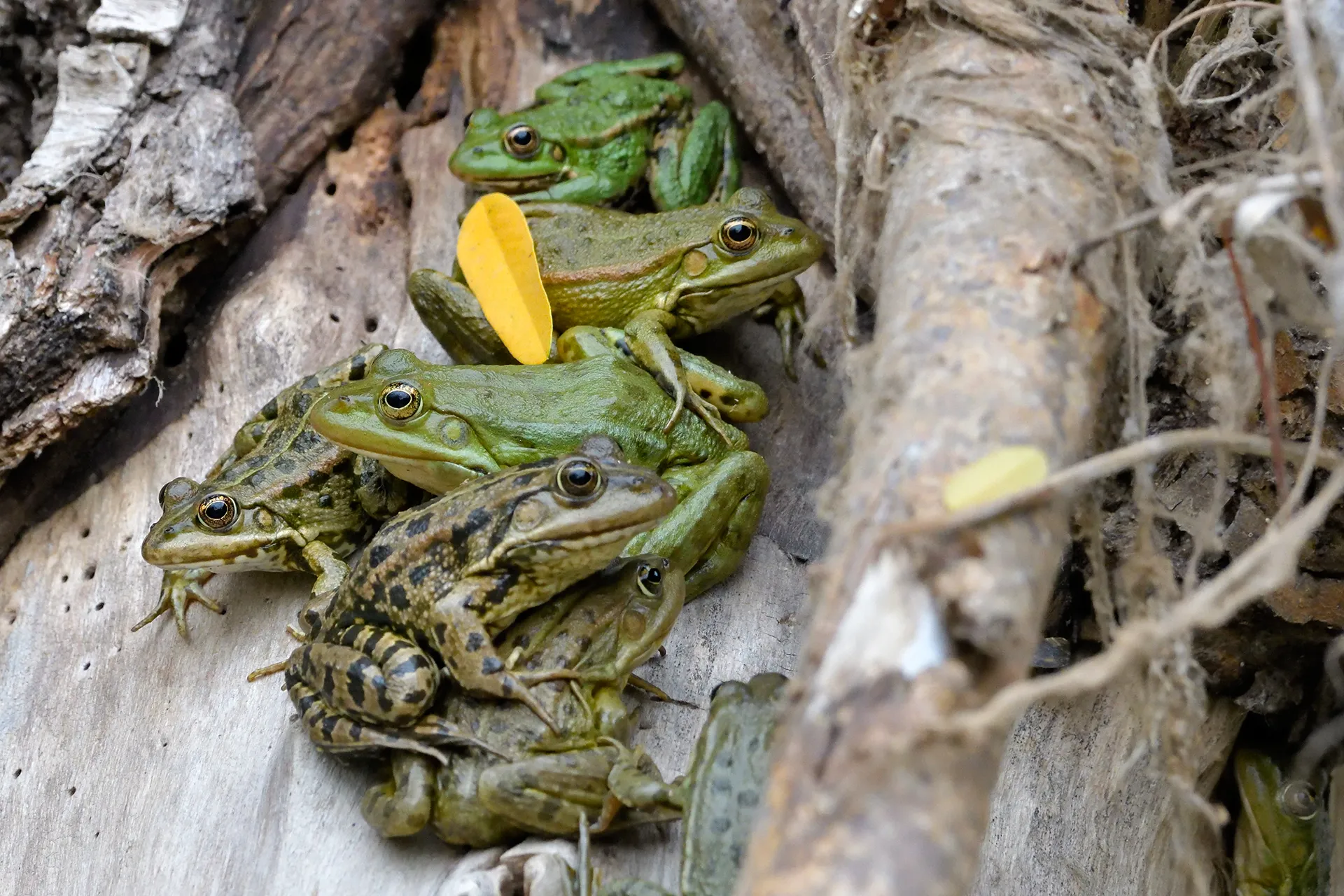
No. 9 on our checklistMarsh Frog (Pelophylax ridibundus)
The largest frog in Europe and the laughing voice of the delta's channels. Discover the marsh frog, how to recognise it, and where to find it in the Danube Delta.
The Marsh Frog (Pelophylax ridibundus) is the largest frog native to Europe and the undisputed voice of the Danube Delta’s channels. Its loud, cackling call, somewhere between laughter and a rapid chuckle, carries far over the water on spring and summer evenings, and almost every “plop” heard from the deck of a boat belongs to one of these green frogs.
For visitors, the marsh frog is the amphibian of the Danube Delta: abundant, conspicuous and active by day, it is seen leaping from the banks of channels and lakes, floating among water lilies or sitting motionless at the water’s edge, waiting for insects.
Quick facts
Quick facts
- Scientific name Pelophylax ridibundus (Pallas, 1771)
- Common name Marsh Frog
- Family Ranidae (water frogs)
- Order Anura (frogs and toads)
- Length usually 9 to 13 cm; the largest females reach about 17 cm
- Diet mainly insects and other invertebrates; occasionally small fish and amphibians
- Habitat permanent still and slow flowing waters: lakes, marshes and channels
- Activity by day and on warm nights
- Breeding May to June, in water warmer than about 18 °C
- Conservation status Least Concern (IUCN); listed in Annex V of the EU Habitats Directive and Annex III of the Bern Convention
When to see it in the Danube Delta and Dobrogea
- JanVery rare
- FebVery rare
- MarRare
- AprModerate
- MayAbundant
- JunAbundant
- JulAbundant
- AugAbundant
- SepAbundant
- OctRare
- NovVery rare
- DecVery rare
- Status here
- Active from March to October; hibernates in the mud at the bottom of channels and ponds in winter.
- IUCN Red List
- Least Concern
- Our checklist
- No. 9 of 30 · see the full checklist
Description and identification
The marsh frog is a large, robust frog. Older books call it Rana ridibunda, the scientific name it carried for most of the twentieth century and one that many visitors still know from the field guides of their childhood. Males usually measure 9 to 12 cm and the larger females can approach 17 cm in total length, which makes this the biggest frog species in Europe. The back is green, grey or brownish, spotted and marbled with dark markings, and many animals show a bright green stripe down the middle of the back. The belly is whitish, and the hind legs are long and powerful, built for the big leaps that take the frog into the water at the first sign of danger.
In the breeding season, males develop paired grey white vocal sacs at the corners of the mouth, which inflate like small balloons when they call. Telling the marsh frog apart from its smaller relatives, the pool frog and the edible frog, requires a good look: the marsh frog is larger, with longer legs and a more pointed snout, and its call is louder and harsher. All three species live together in the Danube Delta, and the edible frog is in fact a natural hybrid between the marsh frog and the pool frog, one of the most curious arrangements in European zoology.
Habitat and diet
Marsh frogs are the most aquatic of our frogs: they live in and beside permanent water all year round, in lakes, marshes, ponds and slow flowing channels with rich vegetation. Unlike the common frog, which visits ponds only to breed, the marsh frog rarely leaves the water, and in the Danube Delta it lines every channel and lake from spring to autumn.
Adults feed mainly on insects, both aquatic and terrestrial: flies, beetles, dragonflies and their larvae, together with spiders, worms and slugs. A large marsh frog is an opportunistic hunter that will also take small fish, newts, smaller frogs and, occasionally, young water birds or small rodents. The tadpoles graze on algae, detritus and soft aquatic plants.
The laughing call
The scientific name says it plainly: ridibundus is Latin for “laughing”. The male’s advertisement call is a rapid series of short, chuckling notes, delivered at intervals and often joined by dozens of other males into a chorus that dominates the soundscape of the Danube Delta’s still waters. The calls are loudest at the peak of the breeding season and on warm evenings, when the frogs answer each other across the channels.
For visitors, this sound is one of the most memorable experiences of the Danube Delta. An evening boat ride in May or June, with the engine cut and the water perfectly still, is often accompanied by the laughing chorus of marsh frogs on both banks.
Breeding
Breeding begins in late spring, when the water warms above roughly 18 °C, usually in May in the Danube Delta. Males gather in the shallows, call from small territories, and compete for females; the female lays her eggs in soft clumps attached to submerged plants near the bank. A single female deposits several thousand eggs over the season, in several clutches.
The eggs hatch quickly, often within about a week, and the tadpoles grow into large, olive green larvae that feed on algae and detritus. Most transform into young frogs during the summer, two to three months after hatching; in cool waters some tadpoles overwinter and complete their development the following spring.
Conservation and threats
The marsh frog is listed as Least Concern by the IUCN, with an enormous range from France across central Europe and the Balkans to central Asia, and it remains common throughout it. In Europe it is listed in Annex V of the EU Habitats Directive and Appendix III of the Bern Convention, which regulate exploitation, as the species is collected for frog legs in some countries.
In the Danube Delta the marsh frog is abundant and faces few threats. Local pressures such as pollution, the draining of marshes and predation by large fish in breeding waters matter elsewhere; here, the sheer extent of suitable habitat keeps the population strong. The species also plays an important role in the Danube Delta’s food web, feeding herons, bitterns, water snakes, pike and many others.
Where and when to see the Marsh Frog in the Danube Delta
Almost anywhere in the Danube Delta’s wetlands: the banks of the channels around Mila 23, the lakes near Sfântu Gheorghe, the channels of the Letea and Caraorman forests, the quiet backwaters of Lake Roșu and Lake Fortuna. Approach the bank slowly and watch the vegetation ahead: the first frog you see will probably be a marsh frog, and the first sound you hear will be the splash of the rest of them leaving the shore.
Marsh frogs are easiest to observe from a small boat on one of our birdwatching tours: our guides watch for the Danube Delta’s other wildlife as well, and a floating frog or a basking water snake is a welcome pause between birds. Drift quietly along the reeds and the frogs are confident animals; a slow approach is rewarded with views of them floating, heads above water, watching you back. In the evening, the laughing chorus needs no finding at all.
See it with us
Slow open boats, small groups and a guide who knows the places and the wildlife. From a few hours on the water to a week in the Danube Delta and Dobrogea.
Keep reading
Keep reading
More from the blog
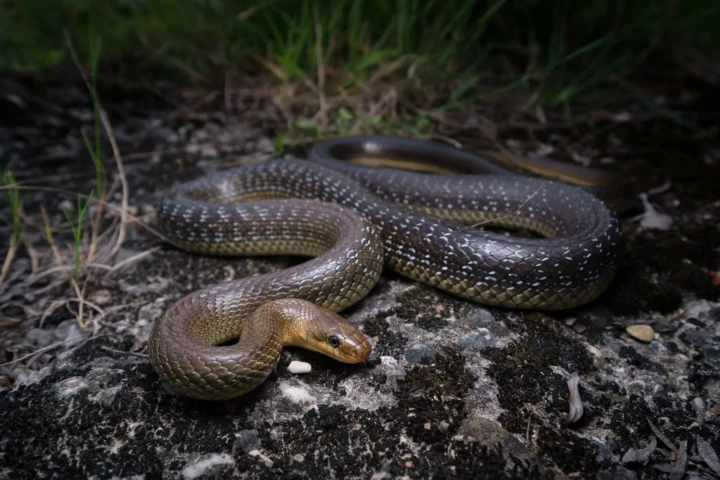
5 min read
Aesculapian Snake (Zamenis longissimus)
The snake of the god of medicine, one of Europe's longest serpents, living in the forests of Dobrogea. Discover the harmless Aesculapian snake and...
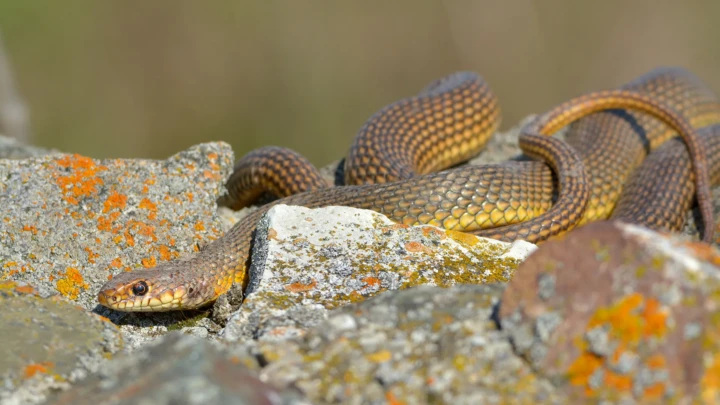
5 min read
Caspian Whipsnake (Dolichophis caspius)
Discover the Caspian Whipsnake of Dobrogea: a large, nonvenomous hunter of sunny slopes, with practical advice for watching it responsibly.
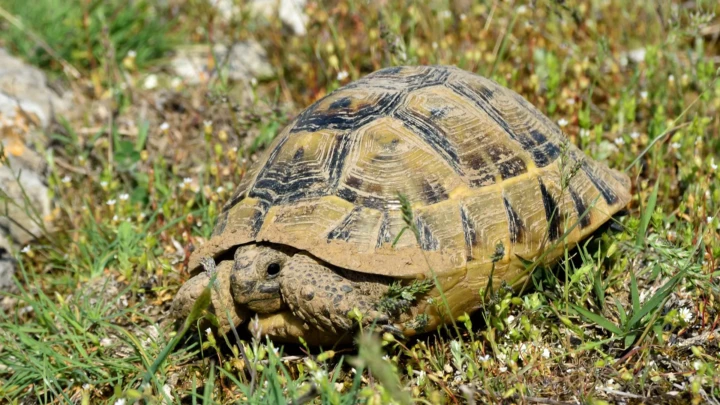
4 min read
Spur-thighed Tortoise (Testudo graeca)
The Spur-thighed Tortoise is the only native land tortoise of eastern Romania, living in the dry grasslands, hills and scrublands of Dobrogea. Discover how...