

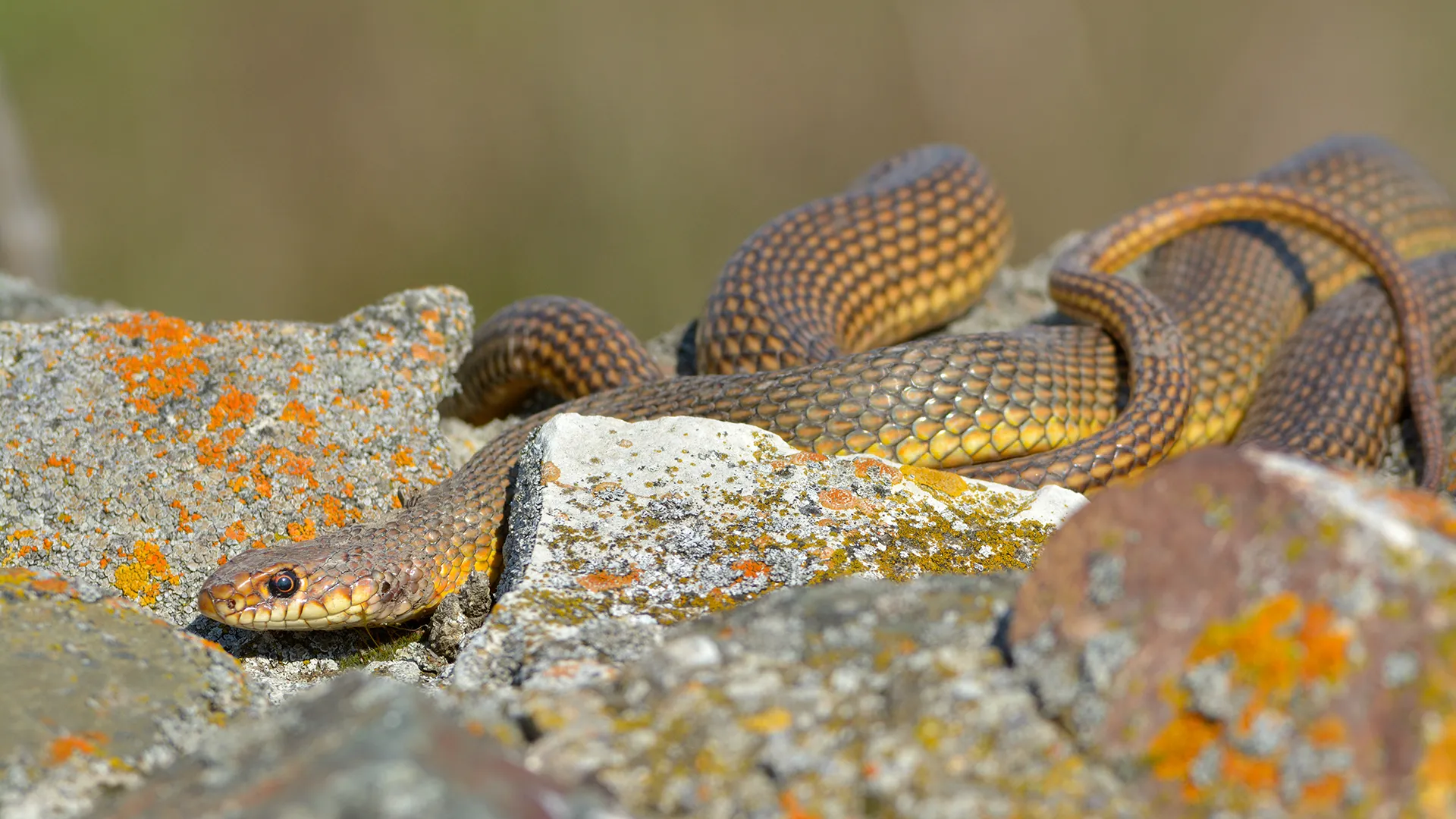
No. 24 on our checklistCaspian Whipsnake (Dolichophis caspius)
Discover the Caspian Whipsnake of Dobrogea: a large, nonvenomous hunter of sunny slopes, with practical advice for watching it responsibly.
The Caspian Whipsnake (Dolichophis caspius) is a large, fast-moving, nonvenomous snake of warm, dry country. In Dobrogea, rocky slopes, scrub and sunny woodland edges provide the combination of cover and open ground that this active hunter uses.
Its reputation as an aggressive snake needs context: a cornered animal may defend itself vigorously, but a snake trying to escape is not pursuing people. Give it space and the encounter usually ends with a rapid disappearance into vegetation.
Quick facts
Quick facts
- Scientific name Dolichophis caspius (Gmelin, 1789)
- Common name Caspian Whipsnake
- Family Colubridae (typical snakes)
- Order Squamata (scaled reptiles)
- Length a large snake, reaching around 2 m
- Diet lizards and small mammals, including mice and rats
- Habitat warm rocky slopes, scrub, woodland edges and other dry habitats
- Activity diurnal
- Breeding eggs laid in early summer; young hatch in late summer
- Conservation status Least Concern globally (IUCN); Vulnerable in Romania’s 2005 Red Book
When to see it in the Danube Delta and Dobrogea
- JanWinter rest
- FebWinter rest
- MarWinter rest
- AprActive
- MayActive
- JunActive
- JulActive
- AugActive
- SepActive
- OctActive
- NovWinter rest
- DecWinter rest
- Status here
- Indicative warmer-month activity; mild spells may extend the season. Not an abundance estimate.
- IUCN Red List
- Least Concern (global); Vulnerable in Romania’s 2005 Red Book
- Our checklist
- No. 24 of 30 · see the full checklist
Description and identification
The adult has a long, slender body and a particularly long, tapering tail. Its back can be gray-brown, brown or yellowish-brown, with the centers of individual scales paler than their edges. The underside is yellowish, while the head is elongated and the eyes have round pupils.
Young Caspian Whipsnakes look different: dark spots mark a brown or gray background. A patterned juvenile should therefore not be dismissed simply because it does not match the relatively plain adult shown in a field guide. Color is useful, but identification needs the whole animal, its proportions and a sufficiently clear view.
Older books commonly call this species Coluber caspius; some literature uses Coluber jugularis caspius. These older combinations help explain why the same regional snake appears under different names in historical accounts. Our article follows the current name used by the site’s checklist and The Reptile Database.
Warm slopes rather than open water
Romania lies at the northwestern edge of the species’ broader distribution. National research records it in the south of the country and identifies Dobrogea as an important part of its Romanian range. That makes it relevant to a journey combining the Danube Delta with surrounding terrestrial habitats, rather than just a boat itinerary.
Typical habitat includes rocky slopes, bushes and warm woodland margins. Romanian studies also document it along loess banks and in modified landscapes, showing that it is not confined to pristine rocky hills. The useful distinction is the structure of the habitat: sunlit places for warming and movement, close to cover where the snake can retreat.
Presence in the wider Danube landscape should not be read as a claim that every reed-fringed channel or wetland island supports it. For a visitor, a walk through suitable Dobrogea habitat is a more appropriate context than searching the open water where Dice Snakes hunt.
An active hunter
The Caspian Whipsnake searches for prey rather than relying entirely on concealment and ambush. Lizards and small mammals form part of its diet, including mice and rats. Its speed is striking, but that speed serves both hunting and escape; it is not evidence of a threat to people.
It can climb rocks and trees, so observation need not be limited to flat ground. Look across a sunny bank and the vegetation immediately beside it, without stepping off paths or disturbing refuges. Frequently, the first sign is movement, followed by only a brief view of the body.
If escape is blocked, the animal may raise its front body, strike and bite. Nonvenomous does not mean that a bite cannot hurt, and there is no reason for a tourist to test the distinction. Keep your distance, never catch the snake for a photograph and leave its route into cover unobstructed.
Breeding and young
Romanian natural-history accounts place mating in late spring, with eggs laid around the end of June or the beginning of July. Clutches of approximately five to twelve eggs are reported. As with other reptiles, timing varies with temperature and location rather than following an identical schedule every year.
The young hatch in late summer; Romanian research identifies August as a hatching period. Their emergence adds small, patterned snakes to the landscape when adults are also active. Juveniles must find food and safe cover independently, and their size makes them easy to overlook on paths and roads.
Conservation: global status and Romanian concern
The Caspian Whipsnake is listed as Least Concern globally, while Romania’s 2005 Red Book assessed it as Vulnerable nationally. These are assessments at different geographic scales, not interchangeable labels. A species with a broad international range can still warrant particular concern near a national range boundary.
It is strictly protected under Appendix II of the Bern Convention and Annex IV of the EU Habitats Directive. Older legal documents may use an earlier scientific name, another reason to recognize the connection between Coluber and Dolichophis.
Road mortality is documented in Romanian field studies, alongside habitat loss and deliberate killing. A 2025 study from the lower Olt valley found numerous road-killed juveniles as well as adults. That research was not conducted in Dobrogea, so it should not be presented as a local population count; it demonstrates the mechanism of a threat relevant to the species in Romania.
When and how to watch it in Dobrogea
The warmer months provide the normal viewing season, with spring and autumn conditions strongly influenced by the weather. An active snake may vanish before a camera is ready, while a basking animal should be photographed from a respectful distance. The calendar above describes the usual activity season, not monthly abundance.
On multi-day photography programs that include both the Danube Delta and Dobrogea, terrestrial habitats add a different wildlife perspective to the wetlands. Where a whipsnake is encountered, let its behavior determine the opportunity: a photograph is welcome, but allowing the animal to leave undisturbed comes first.
See it with us
Slow open boats, small groups and a guide who knows the places and the wildlife. From a few hours on the water to a week in the Danube Delta and Dobrogea.
Keep reading
Keep reading
More from the blog
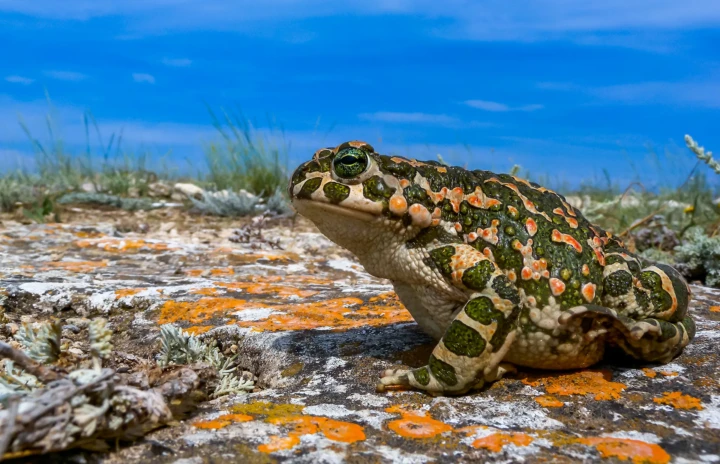
5 min read
European Green Toad (Bufotes viridis)
The green-spotted toad of Dobrogea's dry steppe, singing its trilling chorus in warm spring evenings. Discover the European green toad and where to find...
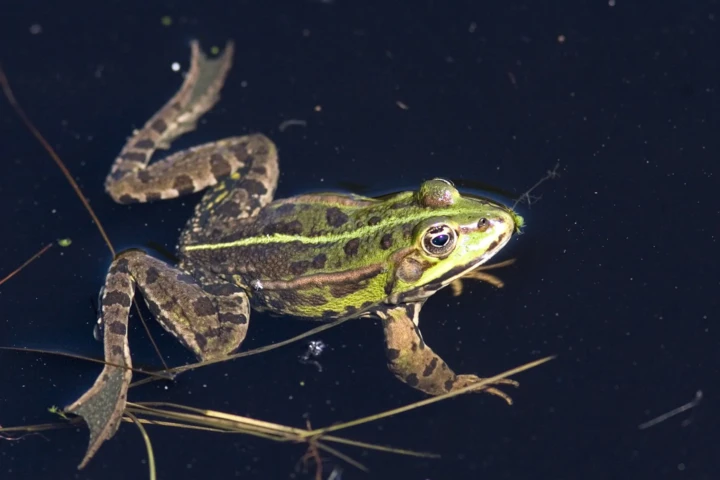
5 min read
Edible Frog (Pelophylax kl. esculentus)
Meet the Edible Frog, a hybrid of the Marsh Frog and the Pool Frog that lives in the lakes of the Danube Delta and...
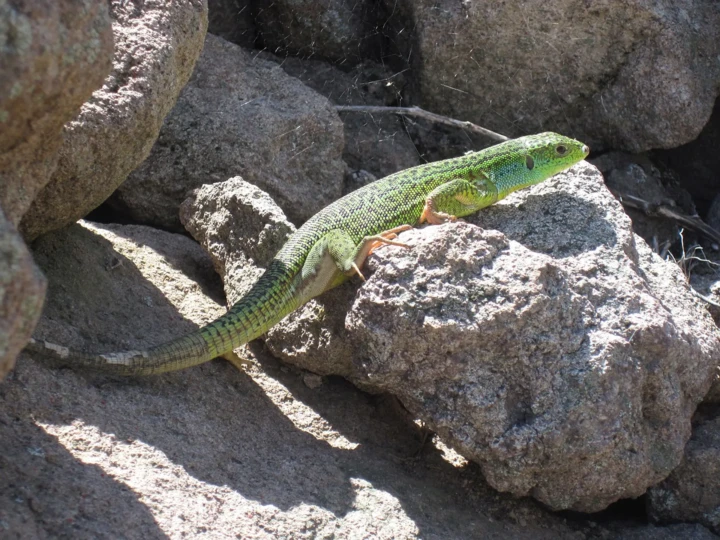
5 min read
Balkan Green Lizard (Lacerta trilineata) in Dobrogea
Meet the Balkan Green Lizard, the largest lizard in Romania, found only in Dobrogea near the Danube Delta: identification, where it lives, behavior, taxonomy...