

No. 27 on our checklistGrass Snake (Natrix natrix)
The harmless snake with the yellow collar, the delta's most often seen serpent and a famous actor that plays dead. Discover the grass snake and where to find it.
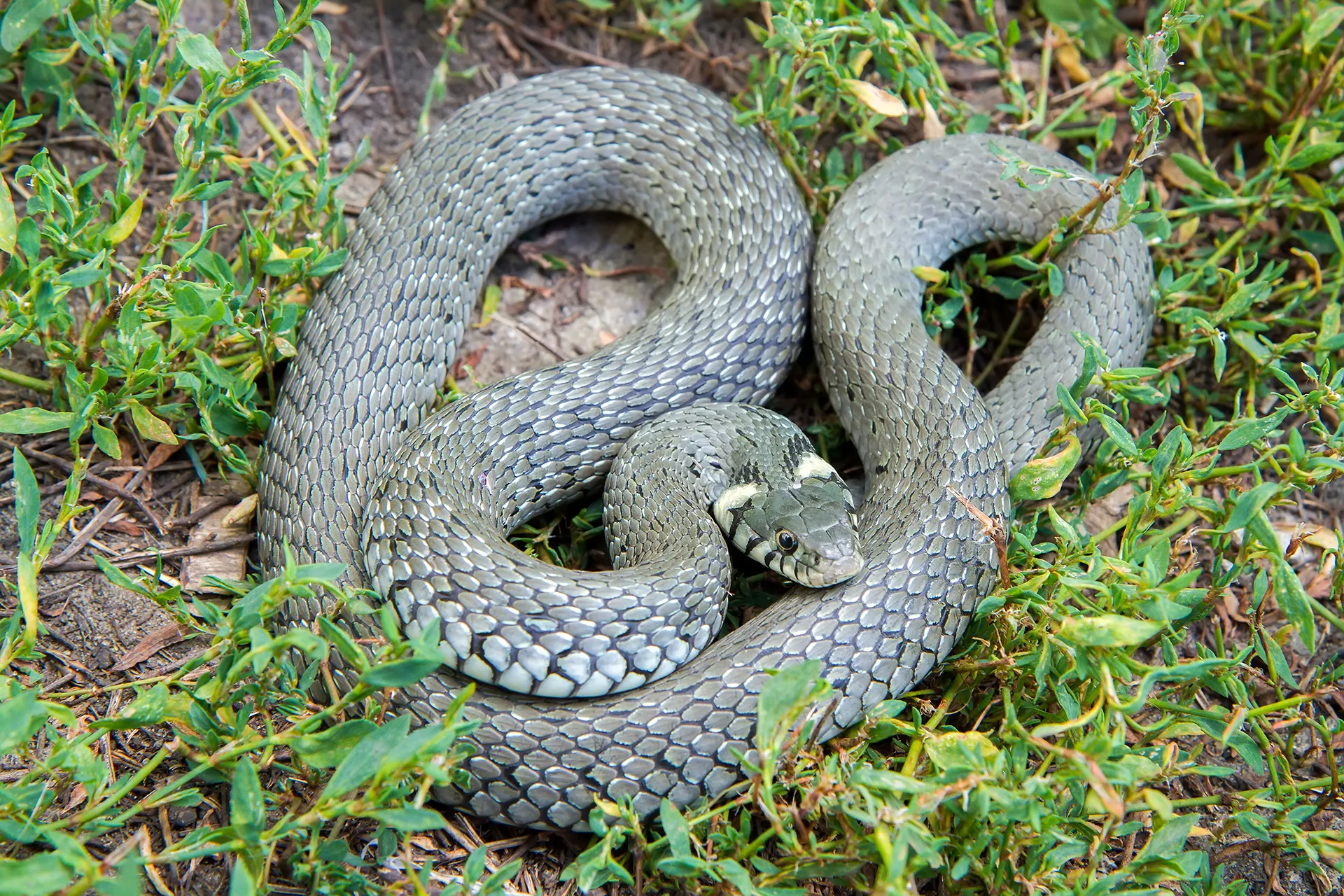
The Grass Snake (Natrix natrix) is the snake visitors to the Danube Delta are most likely to meet, and one of the easiest to recognise: a grey green or brown snake with a pale yellow collar behind the head. It is completely harmless, a hunter of frogs and toads, an excellent swimmer, and a master of one peculiar trick: when caught, it often plays dead.
In Romania it is known as the “house snake”, an old name of respect for a harmless animal that often lived near people, in gardens and ponds, and was traditionally left in peace around farmyards.
Quick facts
Quick facts
- Scientific name Natrix natrix (Linnaeus, 1758)
- Common name Grass Snake, also called Ringed Snake
- Family Natricidae (water snakes)
- Order Squamata (scaled reptiles)
- Length usually 70 to 120 cm; large females up to about 1.5 m
- Diet mainly amphibians: frogs, toads and newts
- Habitat wetlands, meadows near water, forest edges
- Activity mainly diurnal
- Breeding eggs laid in June and July; hatchlings emerge in late summer
- Conservation status Least Concern (IUCN); listed in Annex III of the Bern Convention
When to see it in the Danube Delta and Dobrogea
- JanVery rare
- FebVery rare
- MarRare
- AprModerate
- MayAbundant
- JunAbundant
- JulAbundant
- AugAbundant
- SepModerate
- OctRare
- NovVery rare
- DecVery rare
- Status here
- Active from March to October; hibernates in winter.
- IUCN Red List
- Least Concern
- Our checklist
- No. 27 of 30 · see the full checklist
Description and identification
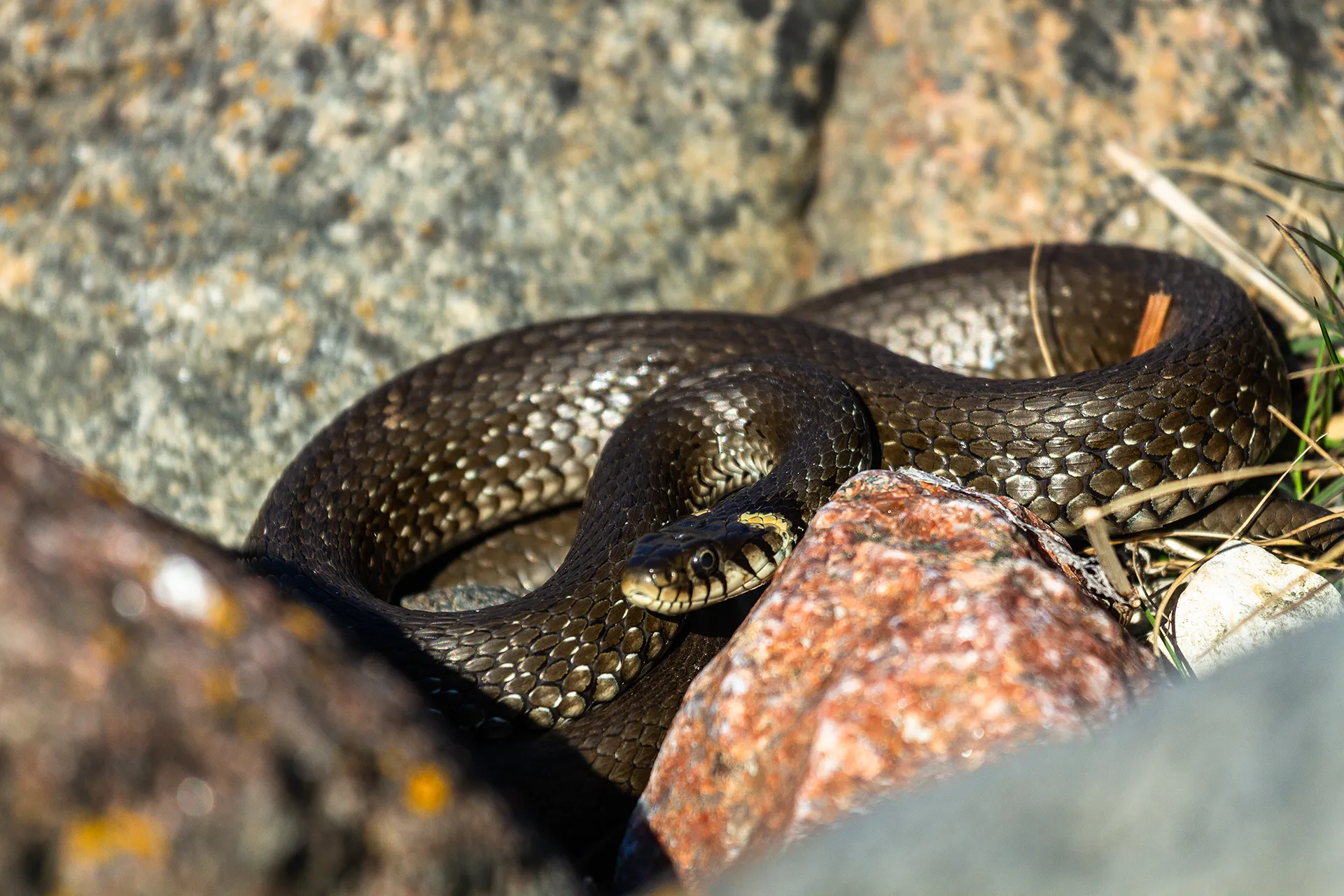
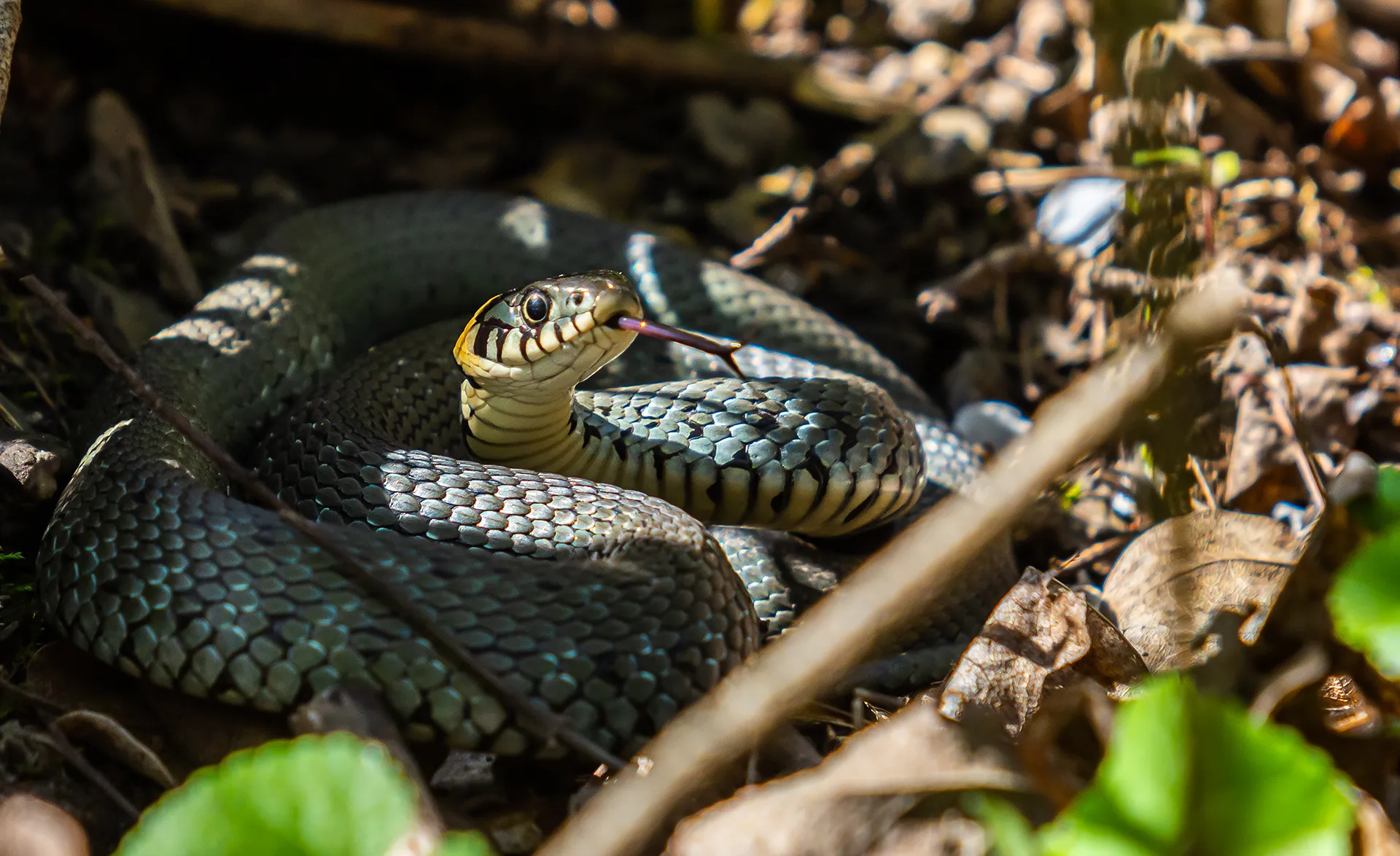
Grass snakes usually measure 70 to 120 cm, with females considerably larger than males and the largest females reaching about one and a half metres. The back is grey green, olive or brownish, with dark spots along the body, and the belly is pale with bold black checks. The species’ signature is the collar: a yellow, cream or orange crescent behind the head, bordered with black, which gives the snake its alternative English name, the ringed snake. The collar can be faint or missing in old individuals and in the occasional fully black, melanistic snake.
Melanistic grass snakes, entirely dark with no visible collar, are a known feature of the Danube Delta: research on the delta’s herpetofauna has found them precisely in the habitats of the sandy levees, in reed vegetation surrounded by lakes and channels. A large black snake swimming in the delta is still almost always a grass snake, not a viper, the grass snake’s round pupils and the shape of its head give it away.
Habitat and diet
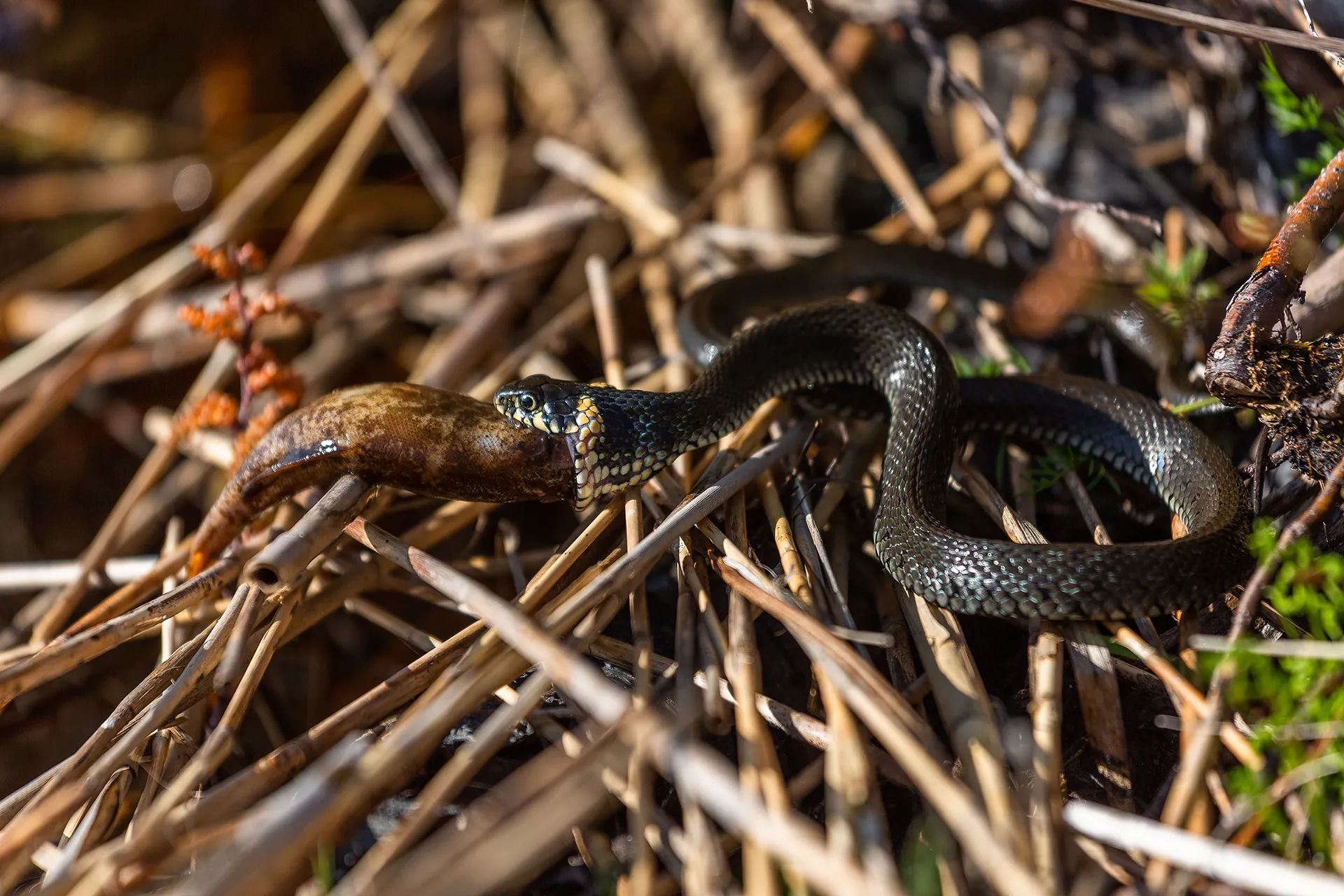
Grass snakes are lowland animals tied to water, not because they need it for breeding, but because their food does. They hunt mainly amphibians: frogs, toads and newts, taken in and around the water, and they also catch fish, tadpoles and, occasionally, small mammals and young birds. Studies of the species’ seasonal menus have found a shifting diet, with fish in spring, newts in summer and frogs and toads towards autumn, as each prey species becomes available.
Their habitat is correspondingly wet: reed beds, marshes, the banks of channels and lakes, wet meadows and forest edges, exactly the landscape of the delta. Grass snakes are active hunters that pursue prey by sight and smell and swallow it alive, without constriction and without any venom.
Playing dead, and other defences
A grass snake caught by a predator has two answers, and neither is a bite. First, it releases a foul smelling, garlic scented fluid from glands near the tail, enough to discourage most mammals. If that fails, it may switch to thanatosis, playing dead: the body goes limp, the mouth opens, the tongue hangs out, and the snake can be handled, turned over and carried without a single movement. The performance can last many minutes and is so convincing that it has entered the folklore of every country where the species lives.
Grass snakes are excellent swimmers and often escape by water, gliding across a channel with the head raised. They are mainly diurnal, especially in spring, and spend much of their time basking to reach hunting temperature.
Reproduction
Males emerge from hibernation first, in March, and spend the early spring basking. Mating takes place in April and May, sometimes in conspicuous “mating balls”, where several males coil around a single female. About two months later, in June and July, the female lays 10 to 40 leathery, white eggs in a warm, humid place where decomposition generates the heat that incubates them: compost and manure heaps, piles of rotting reed and vegetation, rodent burrows. Favoured laying sites are used year after year, sometimes by several females at once, and a big compost heap can hold more than a hundred eggs.
The eggs hatch after about ten weeks, in late summer and early autumn. The hatchlings, barely 15 to 18 cm long, wear the yellow collar from the first day and are fully independent, hunting small frogs and tadpoles on their own.
Conservation and threats
The grass snake is listed as Least Concern by the IUCN across its vast Eurasian range, and it is protected by the Bern Convention (Appendix III) and by national legislation in Romania. The species remains common in the right habitat, but it is quietly dependent on amphibians, and everything that affects frogs affects grass snakes: the drainage of wetlands, water pollution, and the intensification of farmland. Road mortality and killing by people who mistake it for a viper add local pressure.
In the Danube Delta, with the largest extent of amphibian rich wetland in Europe, the grass snake remains abundant, and it is one of the species our guides point out most often from the boat.
Where and when to see the Grass Snake in the Danube Delta
Grass snakes are the delta’s most frequently seen snake: watch the water ahead in narrow channels and the banks of vegetated lakes from April to September, especially on warm mornings when they bask on floating logs, reed piles and the sunny edges of the channels. A snake swimming with its head raised above the water is most often a grass snake, and the classic encounter is a quick view of one crossing a channel in front of the boat.
Our guides look for it on every birdwatching tour in the delta, for the delta’s reptiles and amphibians are very much part of the day, and between birds the channels themselves provide the basking logs and the swimming snakes. If you meet one on land, stay calm and enjoy it: it is harmless, and if it plays dead, you have witnessed one of nature’s best performances.
See it with us
Slow open boats, small groups and a guide who knows the places and the wildlife. From a few hours on the water to a week in the Danube Delta and Dobrogea.
Keep reading
Keep reading
More from the blog
4 min read
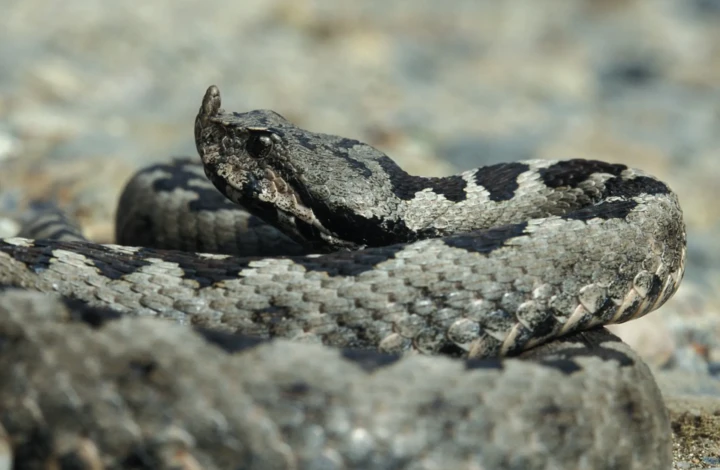
Nose-horned Viper (Vipera ammodytes) in Dobrogea
Meet the Nose-horned Viper, the largest viper and most venomous snake in Romania, on the rocky hills of Dobrogea: identification, where it lives, behavior,...
5 min read
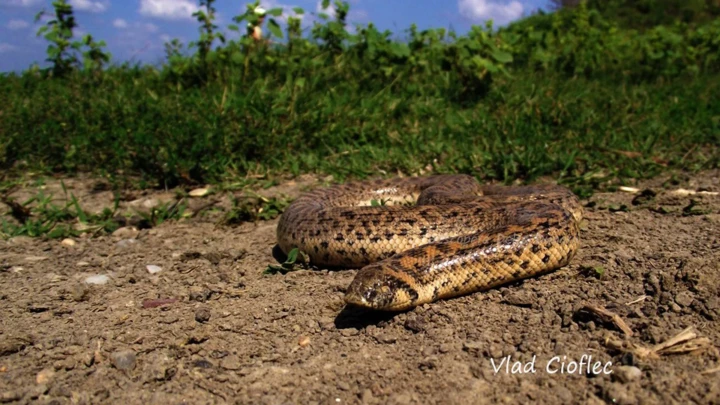
Javelin Sand Boa (Eryx jaculus) in Dobrogea
Meet the Javelin Sand Boa, the only boa in Europe and the rarest snake in Romania, rediscovered in Romania along the Danube and recorded...
5 min read
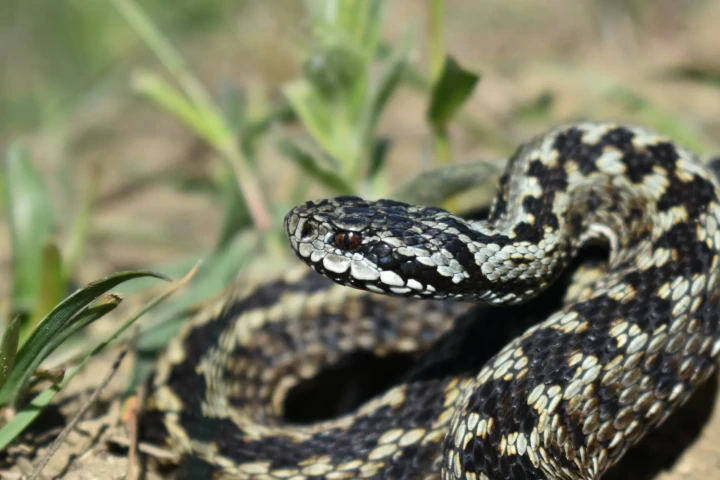
Meadow Viper (Vipera ursinii) in the Danube Delta
Meet the Meadow Viper, a small, threatened viper that survives on a few sandy levees of the Danube Delta: identification, where it lives, names,...