

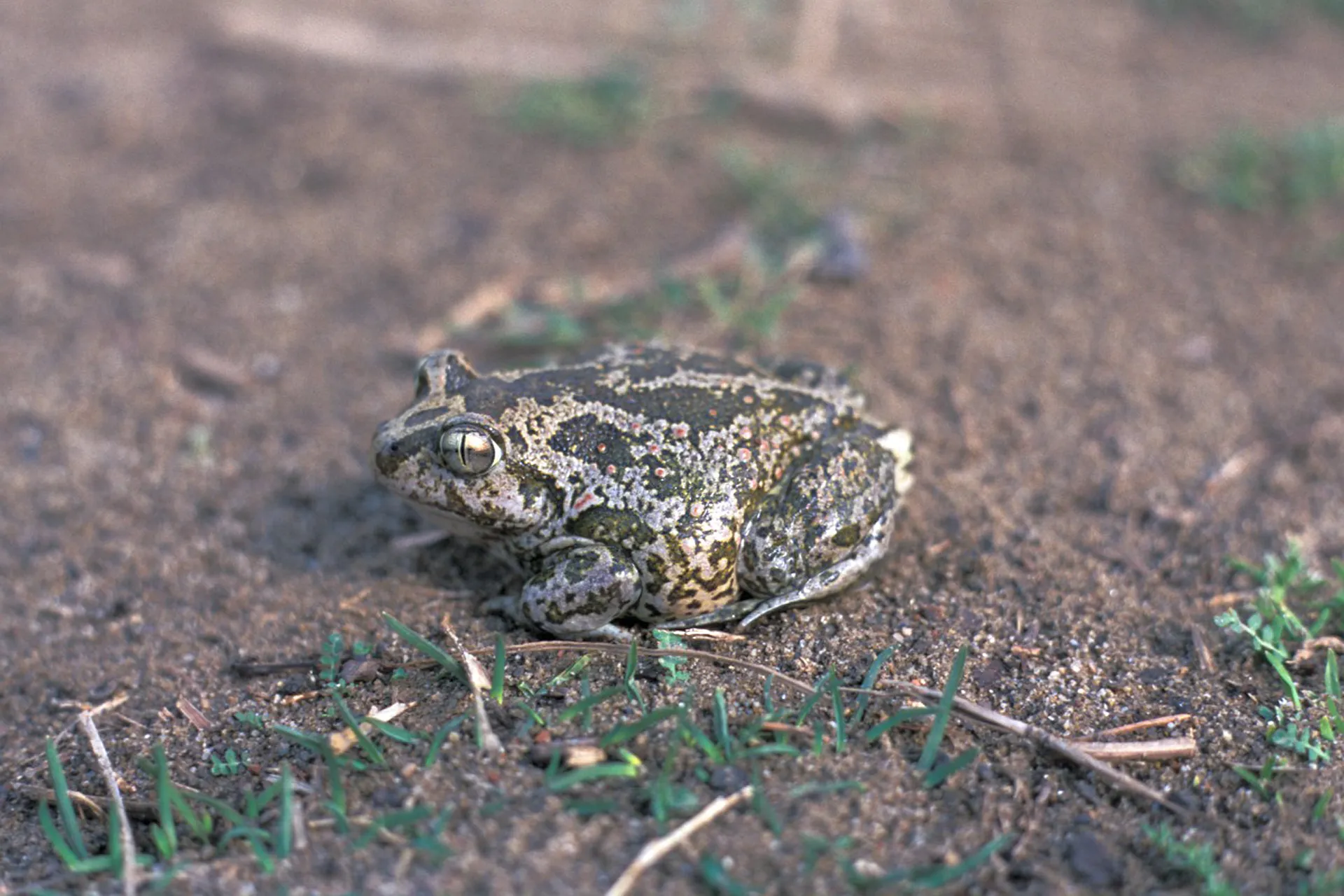
No. 5 on our checklistBalkan Spadefoot (Pelobates balcanicus)
Meet the Balkan Spadefoot, formerly Pelobates syriacus balcanicus: a large burrowing toad of the lagoon sands of the southern Danube Delta and the Dobrogea coast.
The Balkan Spadefoot (Pelobates balcanicus) is the larger of the two spadefoot toads in our region. It lives in loose, sandy ground, emerges at night and reaches Romania near the northern edge of its range, mainly along the lower Danube and the Black Sea coast.
Its records are concentrated in the southern Danube Delta, on the sand ridges of the lagoon complex between Lake Razim and Corbu, and further south along the Dobrogea coast. Here it can live alongside the more widespread Common Spadefoot.
Quick facts
Quick facts
- Scientific name Pelobates balcanicus Karaman, 1928
- Common name Balkan Spadefoot
- Family Pelobatidae (European spadefoot toads)
- Order Anura (frogs and toads)
- Length up to about 9 cm snout to vent; males and females similar in size
- Diet invertebrates found on the ground at night
- Habitat sandy and other loose soils, including cultivated land, near breeding ponds; avoids stony ground
- Activity nocturnal and burrowing; buried in the ground during the day
- Breeding spring, in ponds and other standing water
- Conservation status Least Concern in Europe and EU27, European Red List published in 2025; Habitats Directive Annex IV (as P. syriacus); Endangered in the Romanian Red Book of Vertebrates (2005)
When to see it in the Danube Delta and Dobrogea
- JanWinter rest
- FebWinter rest
- MarBreeding window
- AprBreeding window
- MayBreeding window
- JunYoung emerge
- JulNight activity
- AugNight activity
- SepNight activity
- OctWeather-led
- NovWinter rest
- DecWinter rest
- Status here
- March–May follows the Romanian monitoring guide’s breeding window; timing varies with rain and temperature. No abundance estimate.
- IUCN Red List
- Least Concern in Europe and EU27 (European Red List published 2025)
- Our checklist
- No. 5 of 30 · see the full checklist
A new name for a familiar toad
For most of the 20th century, this toad was known as Pelobates syriacus balcanicus, a European subspecies of the Eastern Spadefoot. A genetic study published in 2019 showed that the Balkan populations had been separated from Pelobates syriacus of Asia Minor and the Middle East for more than six million years, and recognized them as a separate species.
Much of the Romanian literature, monitoring guides and legislation still use Pelobates syriacus. When you search for records from Dobrogea, both names are worth trying. The Balkan Spadefoot is now considered endemic to the Balkan Peninsula in the broad sense, with Romania near its northern limit.
Description and identification
This is a robust spadefoot with a flat head, prominent eyes and a vertical pupil in good light. The back is gray, yellowish or greenish, rarely brown, with large irregular dark or green-brown blotches. Many individuals are speckled with small orange dots, sometimes heavily.
The hind feet carry a large, whitish digging spade. The 2019 taxonomic revision separates it from the Common Spadefoot by its larger body, flatter skull and only partial webbing on the hind feet. Color helps too: a greenish tone is common in the Balkan Spadefoot and rare in its relative.
In the field, size and pattern can overlap, especially in young animals. A clear photograph of the head and back, taken without handling the toad, is the best basis for later identification.
Sand ridges of the southern Danube Delta
A 2009 record list for Dobrogea describes a scattered distribution, mainly along the Black Sea coast and the lower Danube floodplain, with half of the records being old. Its localities include Grindul Lupilor, Grindul Chituc, Grindul Perișor, Grindul Saele, Gura Portiței, Histria, Vadu, Agigea and Hagieni Forest.
The Romanian monitoring guide notes that the species avoids stony soils and lives on cultivated land and in sandy areas, where it can gather near water. Its planned monitoring sites in Dobrogea include the southern part of Grindul Chituc, Grindul Saele, Histria and Vadu, Grindul Perișor and Lake Agigea.
Most of these localities lie in the southern Danube Delta, the lagoon and coastal part of the Danube Delta Biosphere Reserve between Lake Razim and Corbu. Here the species lives on sandy ridges between lagoons, not among the channels and reedbeds of the river delta further north. Agigea and Hagieni Forest, further south, lie in continental Dobrogea.
Two spadefoots at the same site
In the southern Danube Delta, in the lagoon area between Sinoe and Vadu, both spadefoot species have been studied at the same sites. Research published in 2014 compared populations living side by side in the Danube Delta Biosphere Reserve. Balkan Spadefoots were on average about 7.4 years old, compared with about 5 years in Common Spadefoots, although both reached maturity at a similar age. Males were slightly larger than females, the opposite of the pattern found in its relative.
Coastal ponds can be slightly brackish. In experiments described in a 2015 doctoral thesis from Ovidius University of Constanța, Balkan Spadefoot embryos tolerated moderate salinity better than those of Common Spadefoots. The author suggests this may help explain why the species is more abundant than its relative in coastal areas.
Breeding and young toads
Breeding takes place in spring, in ponds and other standing water close to the sandy ground where adults live. The Romanian monitoring guide uses March to May to look for clutches and adults in the water. The tadpoles are large and can reach about 15 cm.
At Grindul Lupilor, a mass movement of newly metamorphosed toads was recorded in June 2013, suggesting that many larvae completed metamorphosis at the same time. Many of these young toads were in poor body condition. Crowding, predation and a drying, warming pond are among the possible explanations considered by the researcher.
After breeding, adults return to life underground. In the same coastal population, adult body condition was lowest in spring and autumn; the thesis discusses this in relation to breeding effort, hibernation and the hot, dry summers of the Black Sea coast.
Conservation and responsible observation
The European Red List published in 2025 assesses the Balkan Spadefoot as Least Concern in Europe and the EU27; in 2009, the same populations were assessed under the name P. syriacus. Nationally, the Romanian Red Book of Vertebrates (2005) lists the taxon as Endangered. It is strictly protected under Annex IV of the Habitats Directive and Romanian legislation, both still using the name P. syriacus.
Because Romania lies at the edge of its range, local populations depend on a limited set of sandy habitats and ponds. Changes to the coastal sands or the loss of breeding ponds would directly affect such localized populations.
Do not dig for buried toads, do not move tadpoles between ponds and keep handling to an absolute minimum. The calendar above shows seasonal activity, not how many toads are present.
A subject for patient photographers
Our multi-day photo tours in the Danube Delta and Dobrogea focus mainly on birds and wetland wildlife, but the region’s sand-dwelling wildlife is part of the same story. A Balkan Spadefoot is rarely seen by day. If you do find one, photograph it where it is, at ground level, and let it return to the sand.
See it with us
Slow open boats, small groups and a guide who knows the places and the wildlife. From a few hours on the water to a week in the Danube Delta and Dobrogea.
Keep reading
Keep reading
More from the blog
5 min read
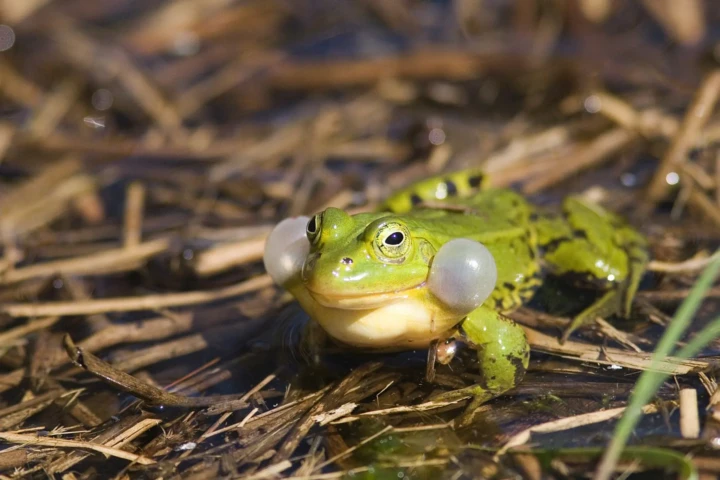
Pool Frog (Pelophylax lessonae)
Meet the Pool Frog, the smallest and scarcest green frog of the Danube Delta: how to recognize it, where it lives and why it...
5 min read
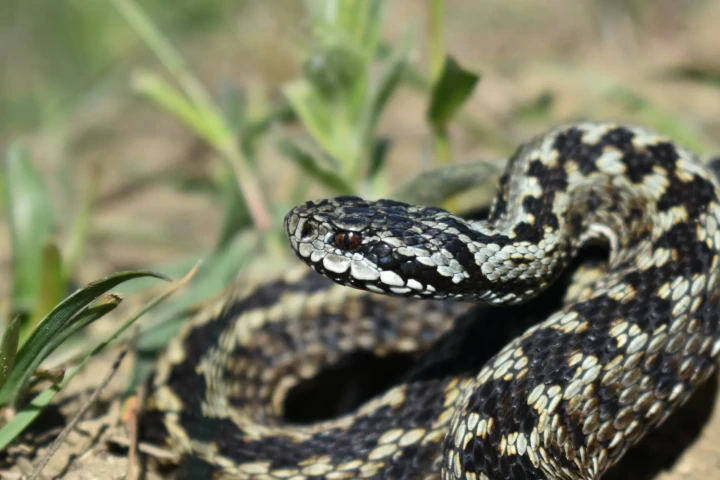
Meadow Viper (Vipera ursinii) in the Danube Delta
Meet the Meadow Viper, a small, threatened viper that survives on a few sandy levees of the Danube Delta: identification, where it lives, names,...
5 min read
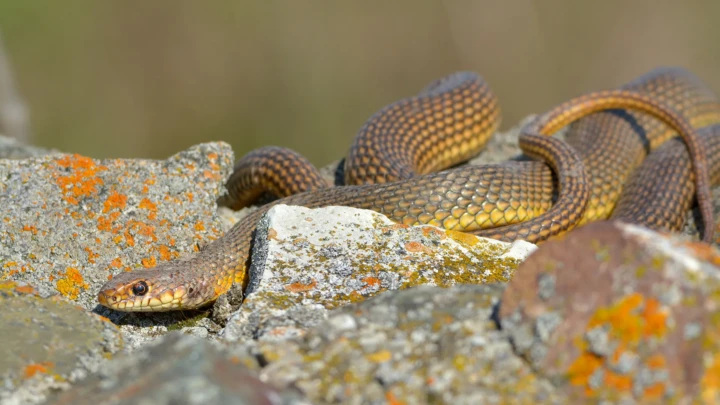
Caspian Whipsnake (Dolichophis caspius)
Discover the Caspian Whipsnake of Dobrogea: a large, nonvenomous hunter of sunny slopes, with practical advice for watching it responsibly.