

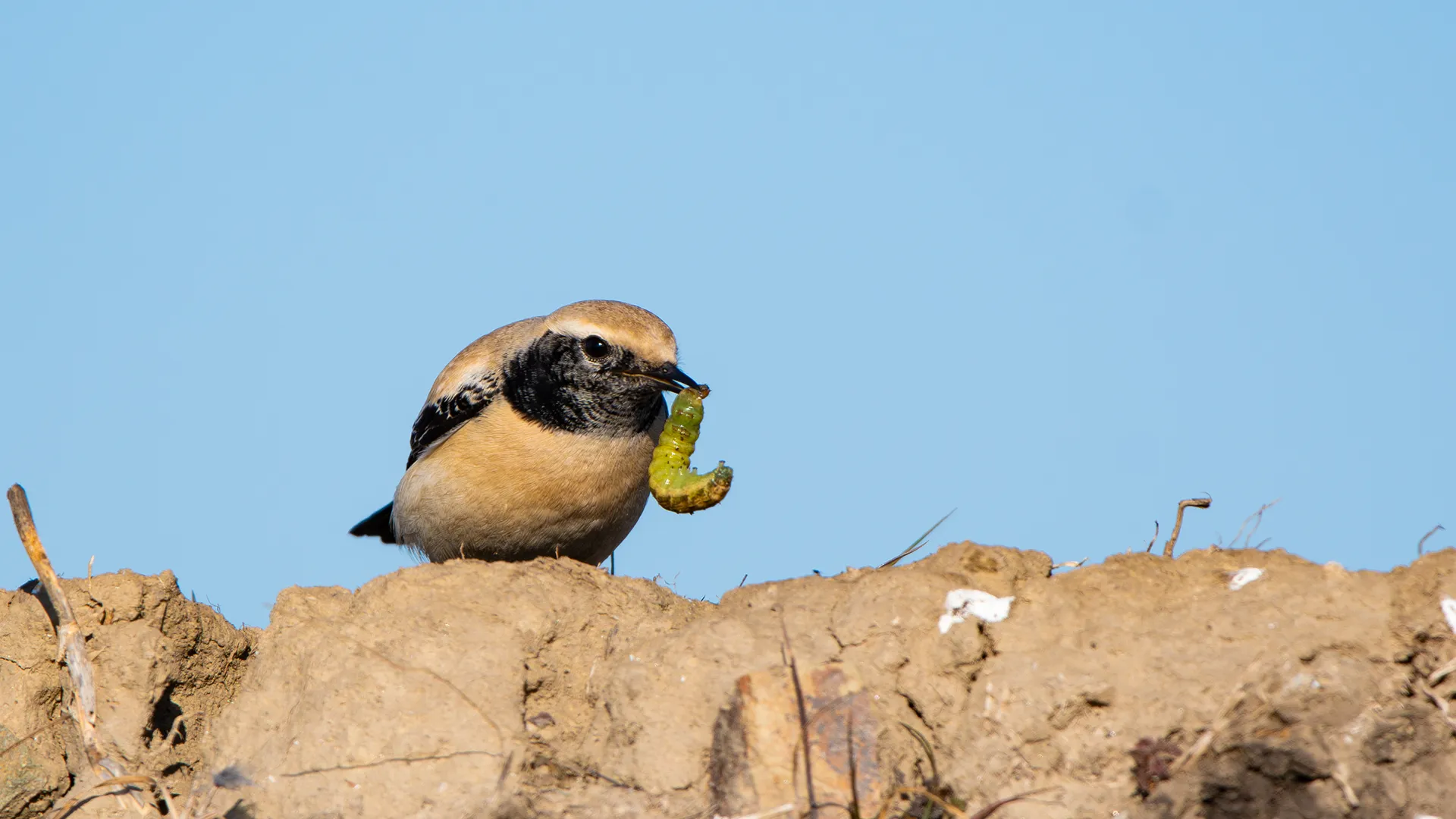
No. 336 on our checklistDesert Wheatear (Oenanthe deserti)
The Desert Wheatear, a rare vagrant from the deserts and steppes of Asia to the dunes of Dobrogea: how to identify it by its black tail and when to look.
The Desert Wheatear is a bird of the Sahara dunes, the Middle East and the steppes of Central Asia. In Dobrogea it appears only rarely, as a vagrant, mostly in autumn on the coast. Finding one among the seaside dunes is a small celebration for any birder.
Quick facts
- Scientific name Oenanthe deserti
- Family Muscicapidae (Old World flycatchers and chats)
- Length 14-15 cm
- Wingspan 24-29 cm
- Weight about 15-34 g
- In Dobrogea rare vagrant, mostly in autumn
When to see it in the Danube Delta and Dobrogea
- JanExtremely rare
- FebExtremely rare
- MarAbsent
- AprAbsent
- MayAbsent
- JunAbsent
- JulAbsent
- AugAbsent
- SepAbsent
- OctExtremely rare
- NovExtremely rare
- DecExtremely rare
- Status here
- Occasional vagrant. Few observations, not every year. Rombird.ro: 32 reports, in 2007, 2017, 2018, 2020 and 2026.
- IUCN Red List
- Least Concern
- Our checklist
- No. 336 of 385 · see the full checklist
Identification
The male is sandy above, with a black face, throat and wings, the black of the throat joining that of the wings. The female is sandy, with darker wings and a pale or greyish throat. In both sexes the best feature is the tail: almost entirely black, with only the rump white, unlike other wheatears, which show a lot of white at the base of the tail. It has the same sandy colours as the Isabelline Wheatear, but is smaller and has a much blacker tail.
Diet and life
It feeds on the ground, on insects, larvae and spiders, caught in short runs or from a low perch, a bush or a stone. It breeds in deserts and semi deserts, with the nest hidden in a hole in the ground, under a bush or among stones. It winters in North Africa, the Arabian Peninsula and northwestern India.
Where and when to see it
In Romania it is a rarity: there have been a few records, mostly in autumn and early winter, on the dunes and beaches of coastal Dobrogea, where vagrants stop after strong easterly winds. If you see a sandy wheatear with an almost all black tail on a wild beach, it is worth photographing and reporting.
Interesting facts
- Autumn wanderers. Young birds on their first migration go astray most often, and some end up thousands of kilometres from their normal range, as far as western Europe.
- The wheatear family. The genus Oenanthe has around 30 species, most of them in Africa and Asia, birds of open, rocky or sandy places.
- An old name. Oenanthe comes from Greek and means “flower of the vine”, perhaps because wheatears returned in spring as the vines came into flower.
Status and threats
The Desert Wheatear has a very large range and is listed as Least Concern (LC) by the IUCN. For Dobrogea, what matters is that the dunes and wild beaches stay untouched, as stopover sites for all migrating birds.
See it with us
Our birding guides are biologists and ornithologists who are on the water every day of the year. Small groups, open boats, the best hours of the day.
Keep reading
Keep reading
More from the blog
5 min read
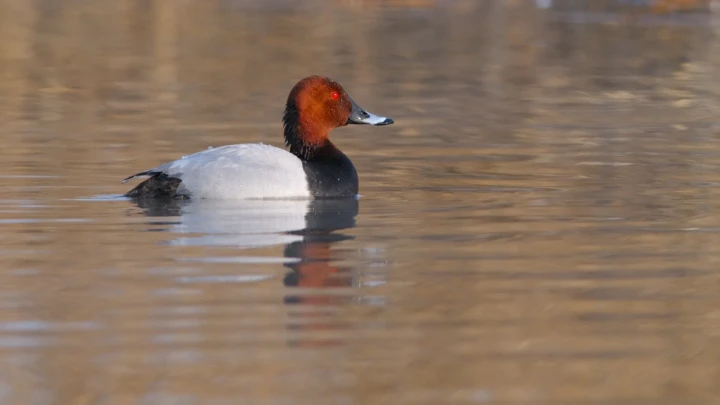
Common Pochard (Aythya ferina)
Meet the Common Pochard, a red-headed diving duck now Vulnerable worldwide: identification, feeding, breeding in the Danube Delta, migration and status.
5 min read
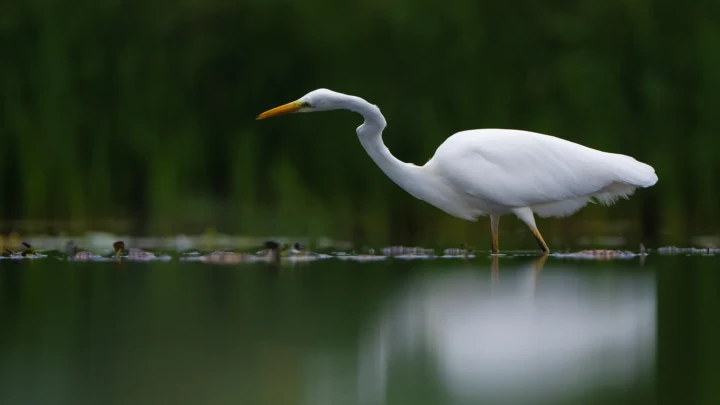
Great Egret (Ardea alba)
Tall, pure white and elegant: the Great Egret nests in the mixed heron colonies of the Danube Delta and can be seen here all...

4 min read
Red-necked Grebe (Podiceps grisegena)
A brick red neck, pale grey cheeks and a dagger bill with a yellow base: a shy breeding grebe of the quiet lakes of...