

No. 3 on our checklistBewick’s Swan (Cygnus columbianus bewickii)
Bewick's Swan, the smallest and rarest of the three swans of the Danube Delta: how to tell it from the Whooper Swan, its Arctic life and when to look.
Bewick’s Swan is the smallest and the rarest of the three swans of the Danube Delta. It comes in winter from the Arctic tundra of Russia, and only a few birds reach us, usually among Whooper Swans. Finding one is a small joy for any birder.
Quick facts
- Scientific name Cygnus columbianus bewickii
- Family Anatidae (ducks, geese and swans)
- Length 120 cm
- Wingspan 190 cm
- Weight 5-7 kg
- Breeds in the Arctic tundra of Russia
- In Romania rare winter visitor, November to March
When to see it in the Danube Delta and Dobrogea
- JanRare
- FebRare
- MarRare
- AprAbsent
- MayAbsent
- JunAbsent
- JulAbsent
- AugAbsent
- SepAbsent
- OctAbsent
- NovRare
- DecRare
- Status here
- Winter visitor.
- IUCN Red List
- Least Concern
- Our checklist
- No. 3 of 385 · see the full checklist
Identification
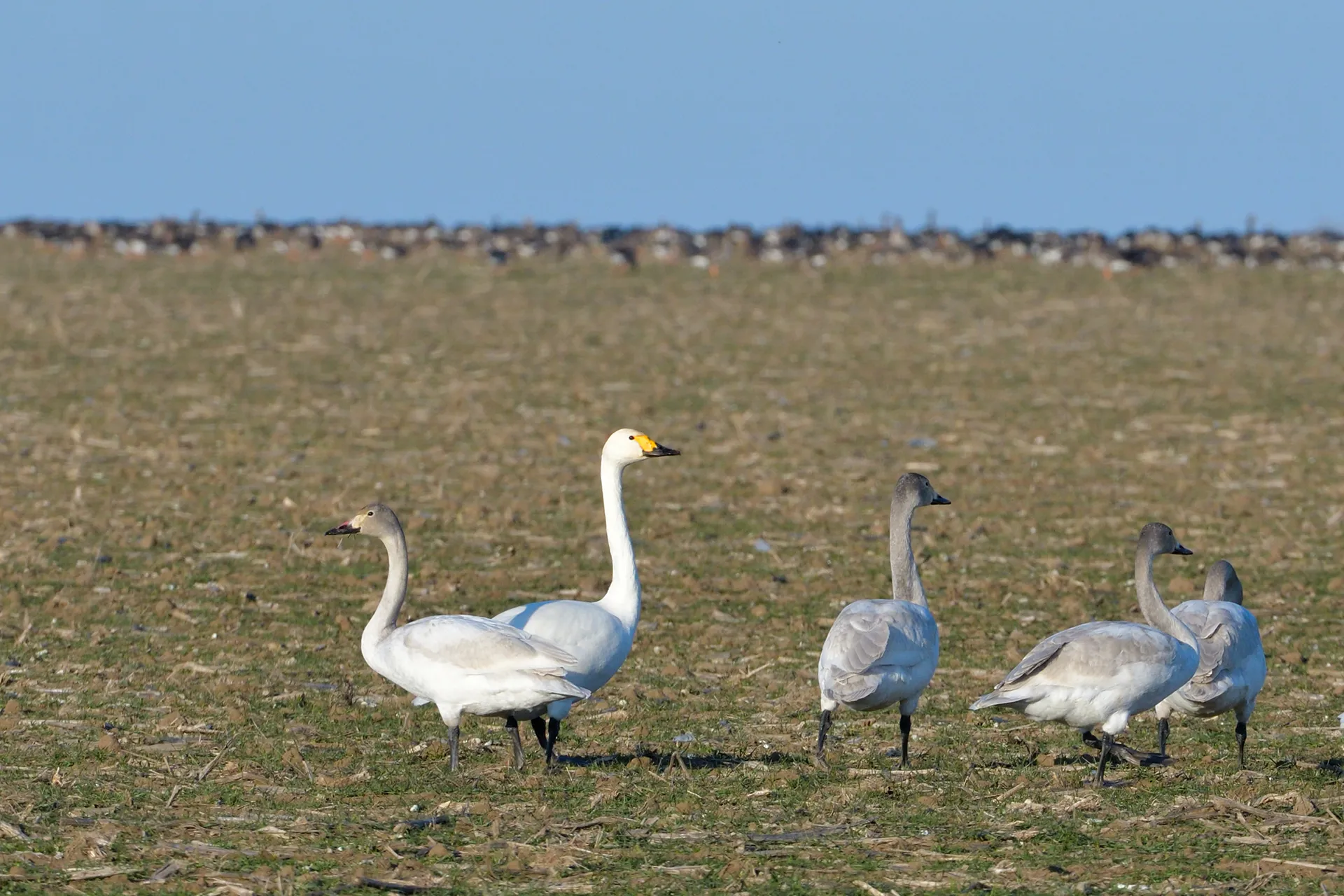
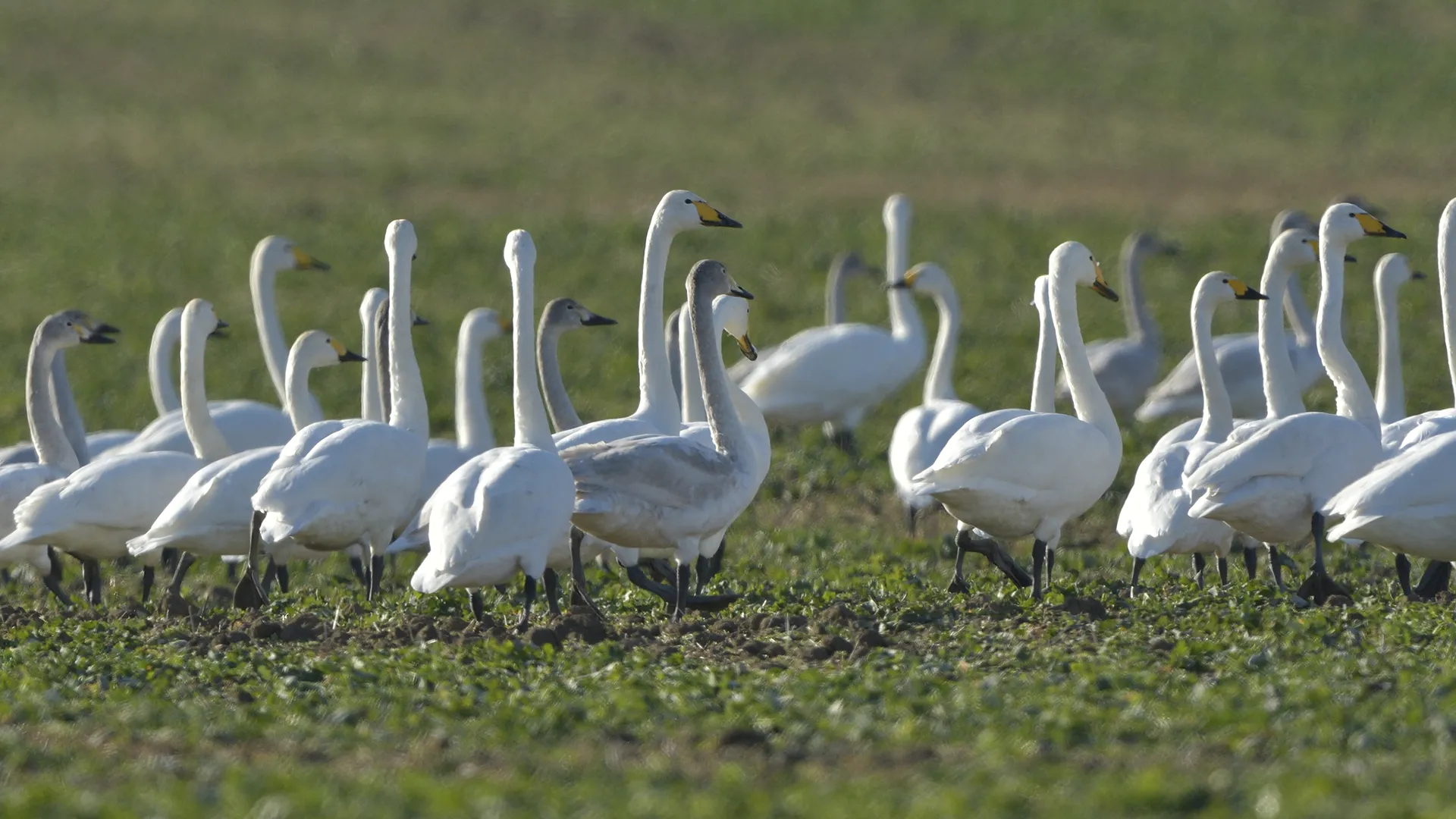
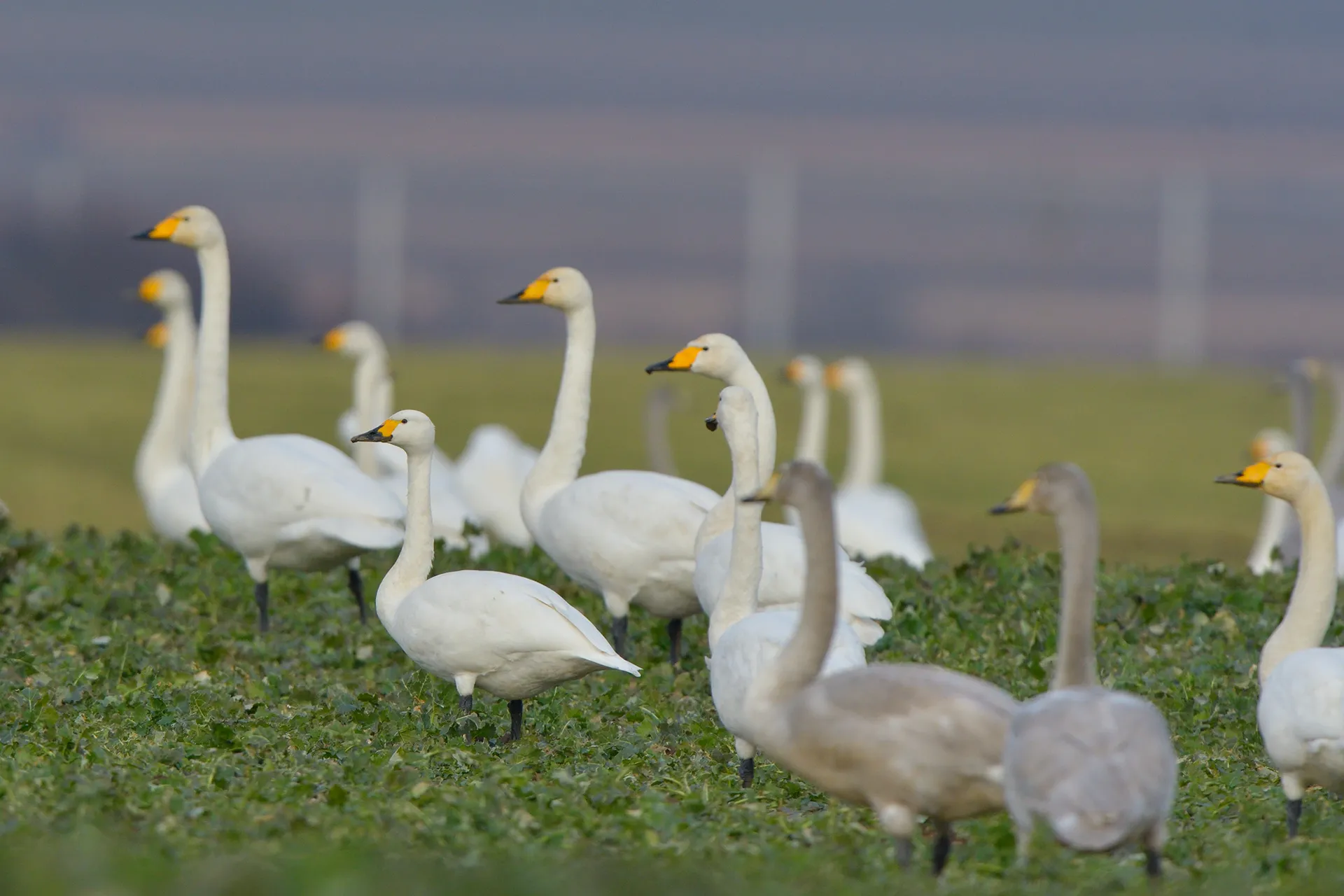
It has the same pattern as the Whooper Swan: all white, with a straight neck and a black and yellow bill. It is clearly smaller, though, with a shorter neck and a rounder head, closer in shape to a goose. The yellow on the bill is a small, rounded patch that does not reach the nostril, and the yellow pattern differs from bird to bird, so researchers can recognise individuals by their bills. Juveniles are grey, with a pinkish bill.
Its life
It breeds in the Arctic tundra of Russia, from the Kola Peninsula to Taimyr, and the short Arctic summer forces it to raise its young quickly. Pairs stay together for life and migrate as families. The western population winters mainly in the Netherlands and Britain, and only a few birds reach southeastern Europe. The call is a soft, goose like note, gentler than the trumpeting of the Whooper Swan.
Where and when to see it
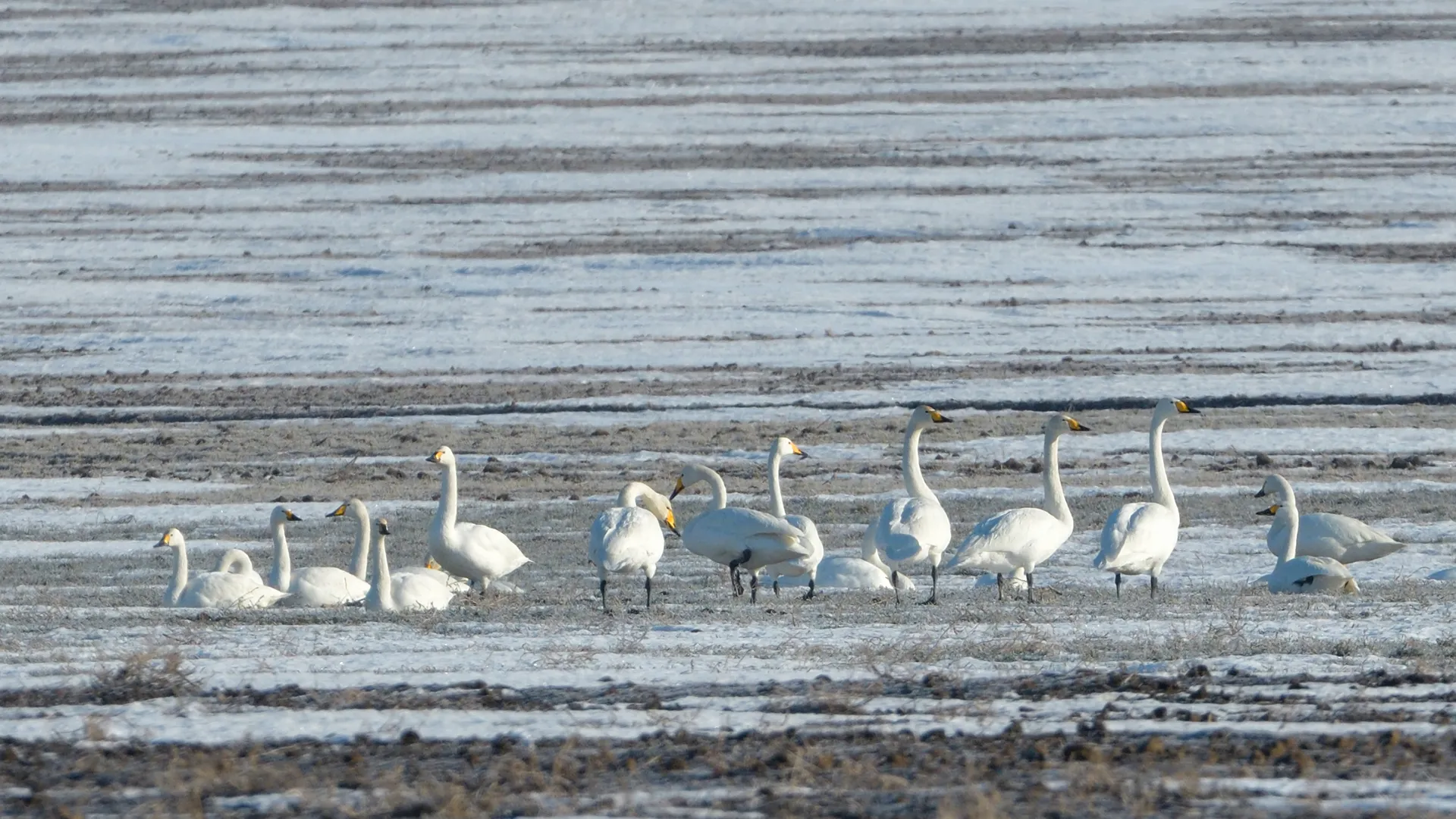
In winter, very rarely, on the large lakes of the Danube Delta and the lagoons of Dobrogea, almost always among Whooper or Mute Swans. Read also about winter in the Danube Delta.
Interesting facts
- Known faces. At Slimbridge, in England, researchers have followed the wintering Bewick’s Swans for more than 50 years and recognise each one by its bill pattern.
- Two names for one species. Bewick’s Swan of Eurasia and the Whistling Swan of North America are the same species, Cygnus columbianus, in two subspecies.
- A journey of thousands of kilometres. From the tundra breeding grounds to western Europe, Bewick’s Swans fly around 3,500 kilometres, stopping on lakes in Estonia and Germany.
Status and threats
Globally the species is listed as Least Concern (LC) by the IUCN, but the population wintering in Europe has declined sharply since the 1990s. Threats include illegal hunting along the migration route, lead shot swallowed from the mud, power lines and the loss of wetlands.
See it with us
Our birding guides are biologists and ornithologists who are on the water every day of the year. Small groups, open boats, the best hours of the day.
Keep reading
Keep reading
More from the blog
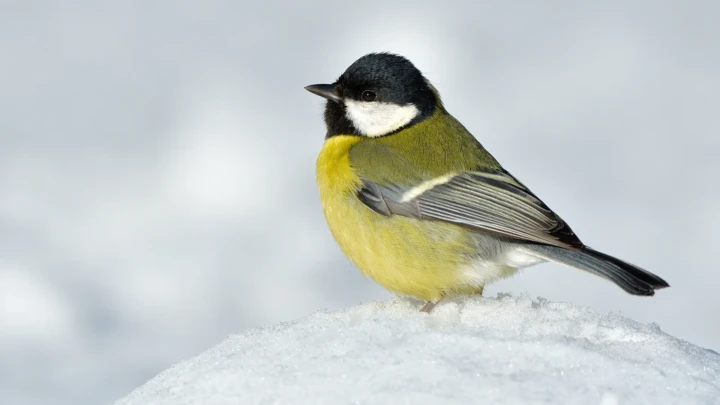
4 min read
Great Tit (Parus major)
Black cap, white cheeks and a yellow breast with a black stripe: the Great Tit, the most common tit of the Danube Delta and...
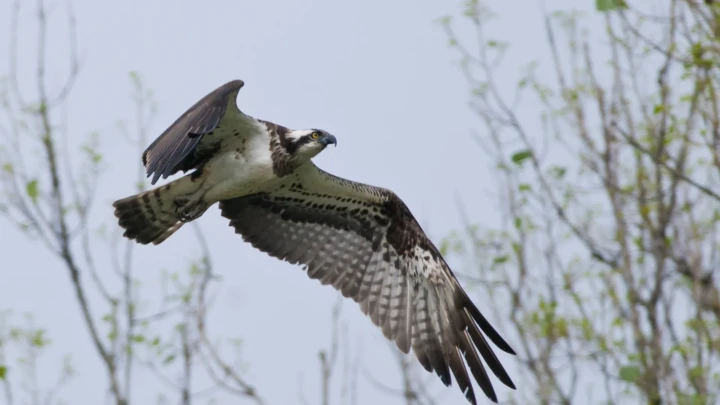
4 min read
Osprey (Pandion haliaetus)
A fish-hunting raptor that dives feet-first into the water: when to see the Osprey on migration in the Danube Delta and Dobrogea, and why...
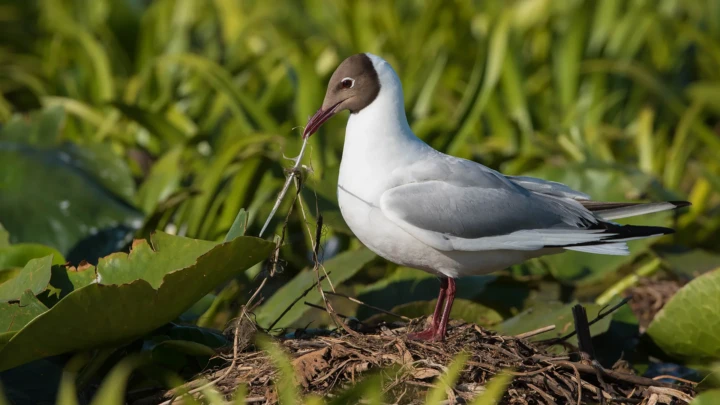
5 min read
Black-headed Gull (Chroicocephalus ridibundus)
Brown hood in summer, white head in winter: the Black-headed Gull in the Danube Delta and Dobrogea, its colonies, behaviour and old name Larus...