

No. 65 on our checklistCommon Moorhen (Gallinula chloropus)
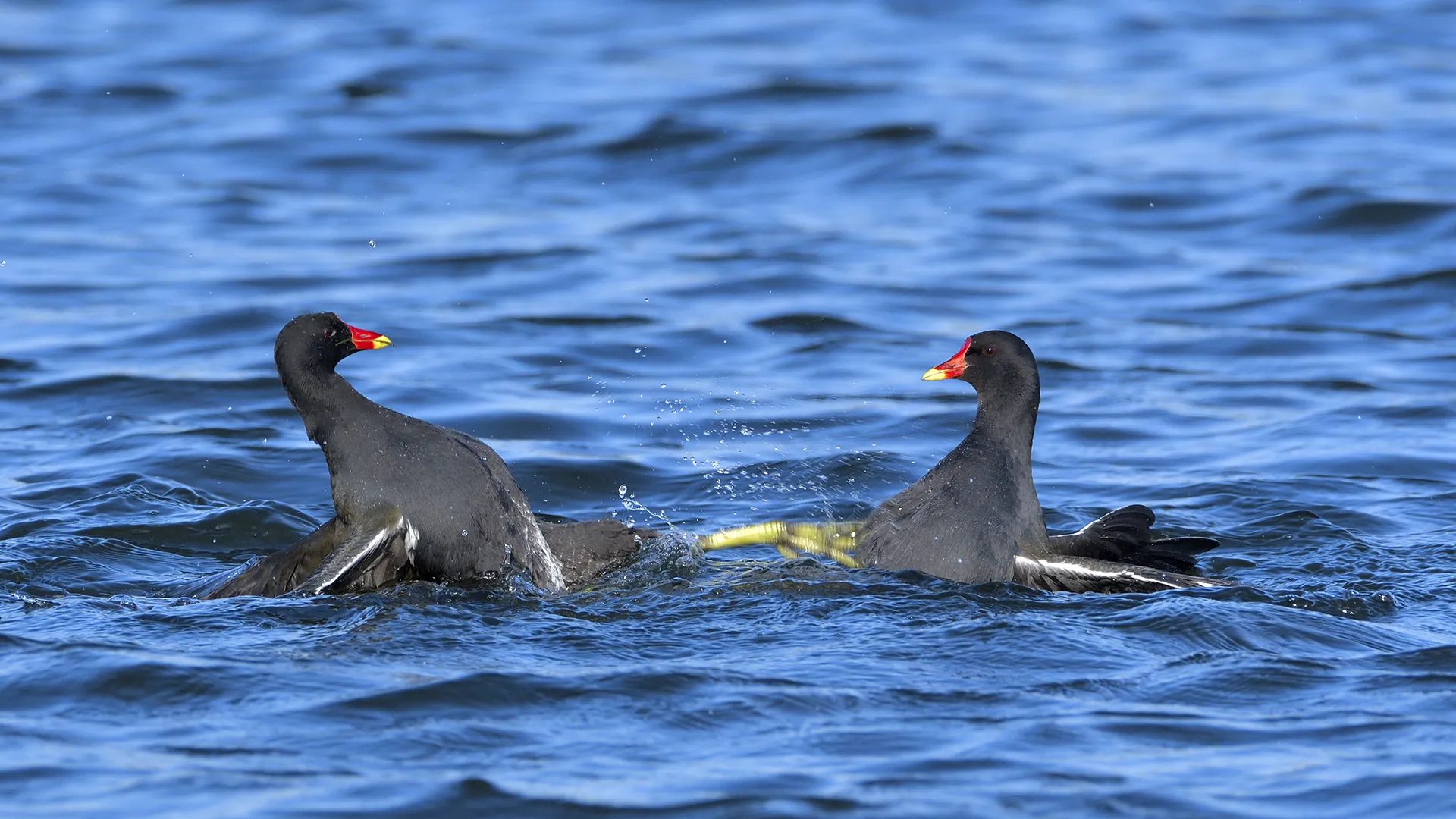
A red bill with a yellow tip and a flick of white under the tail mark the Common Moorhen, a summer breeder in the Danube Delta.
The Common Moorhen (Gallinula chloropus) is a dark wetland bird with a red bill tipped yellow. In the Danube Delta and Dobrogea it is listed as a summer breeder. The checklist records it from April to October, although it can be difficult to see in dense cover.
Linnaeus originally described it as Fulica chloropus in 1758.
Quick facts
Quick facts
- Scientific name Gallinula chloropus (Linnaeus, 1758)
- Common name Common Moorhen
- Family Rallidae
- Order Gruiformes
- Weight about 356 g
- Habitat ponds, slow rivers, ditch margins and other freshwater wetlands
- Breeding usually 5–7 eggs; both adults incubate for 20–22 days
- Conservation status Least Concern globally; Least Concern as a breeding bird in Romania (2022)
When to see it in the Danube Delta and Dobrogea
- JanNo checklist code
- FebNo checklist code
- MarNo checklist code
- AprPresent
- MayPresent
- JunPresent
- JulPresent
- AugPresent
- SepPresent
- OctScarce
- NovNo checklist code
- DecNo checklist code
- Status here
- Summer breeder; recorded April–October, less often in October.
- IUCN Red List
- Least Concern
- Our checklist
- No. 65 of 385 · see the full checklist
How to recognize it
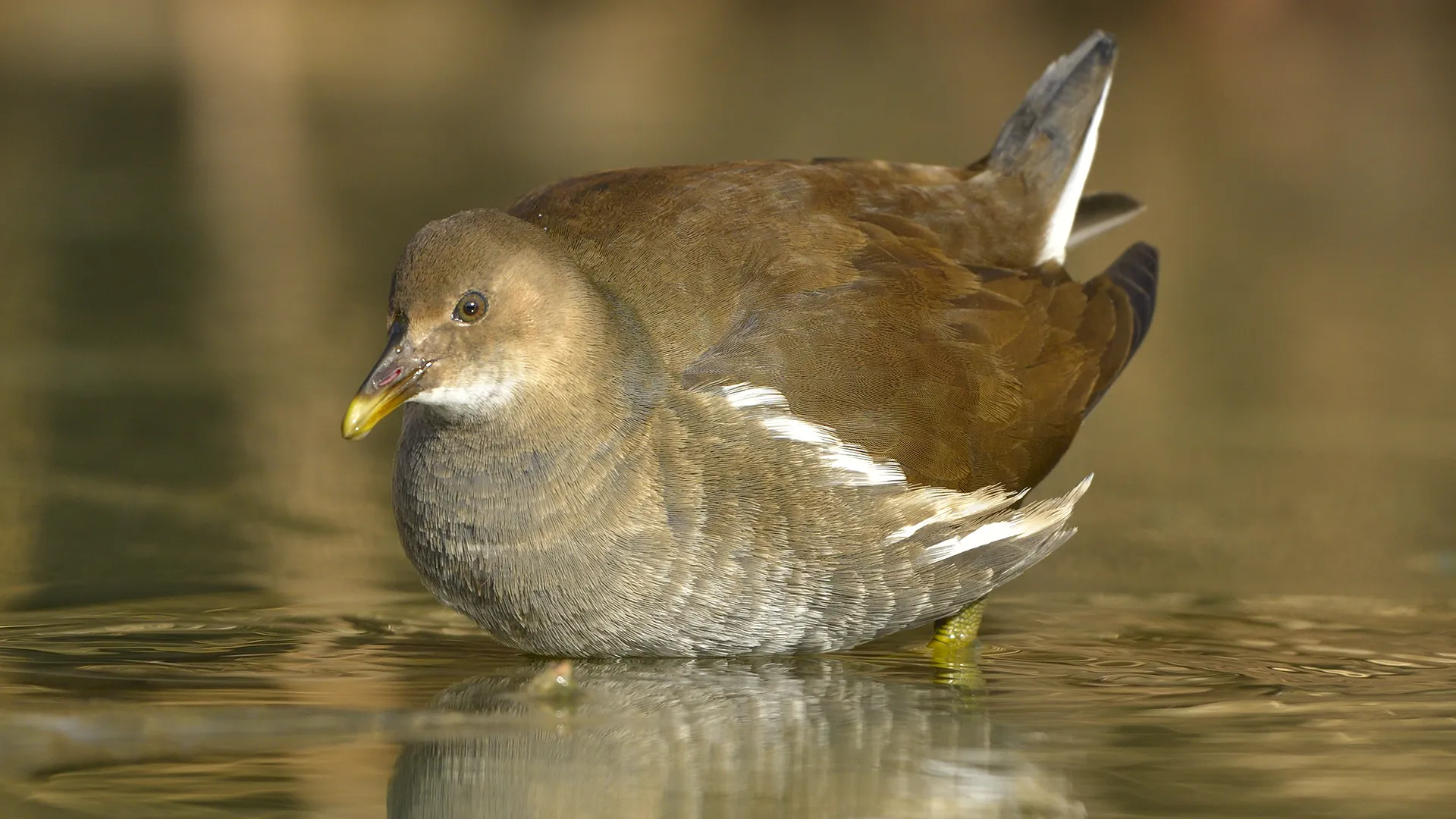
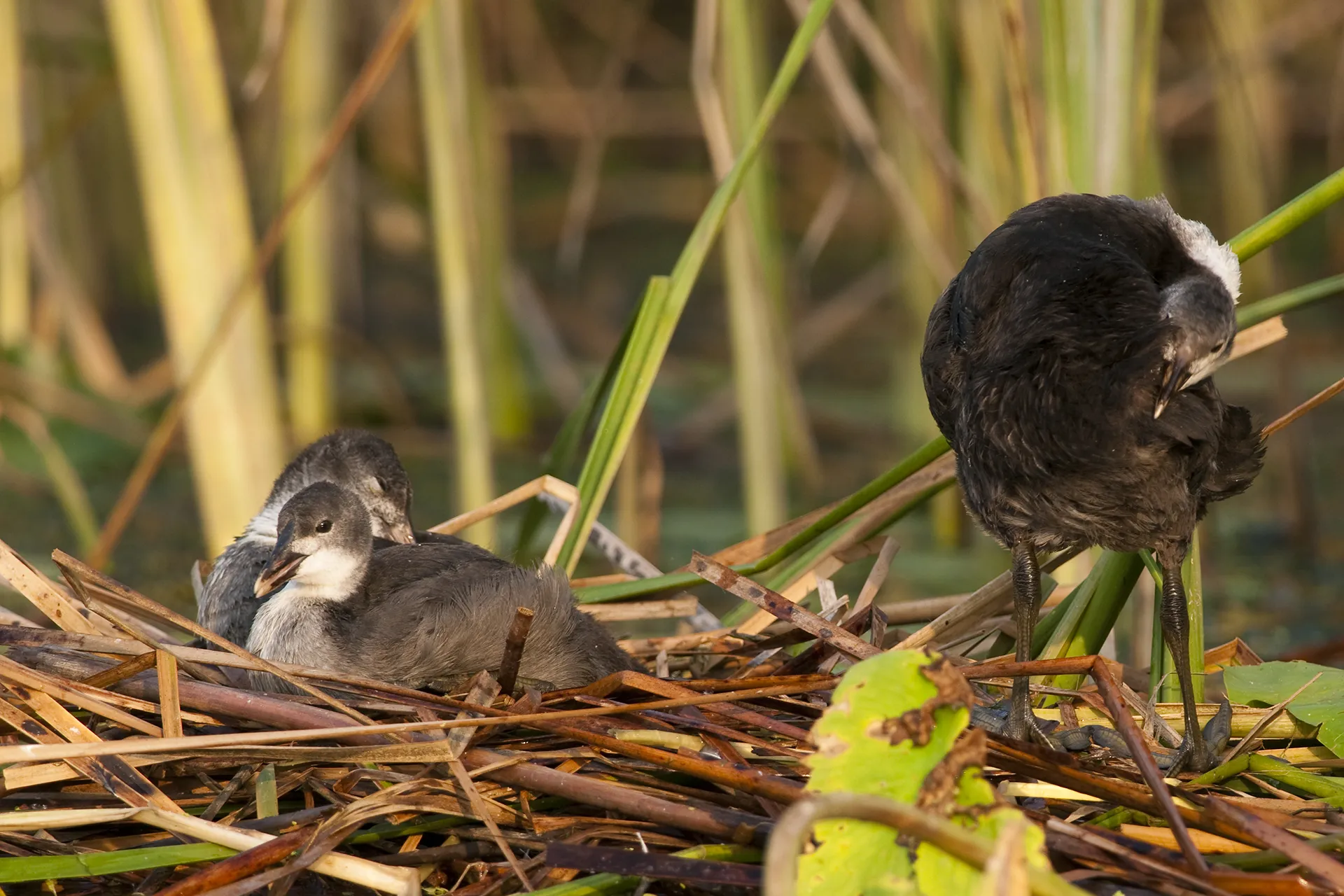
The red-and-yellow bill stands out against the adult’s dark head. On a bird moving away, white feathers under the tail can be more conspicuous than the bill. Watch for the flash of white as the moorhen flicks its tail. A Eurasian Coot, by contrast, has a white bill and forehead shield.
Life along the margins
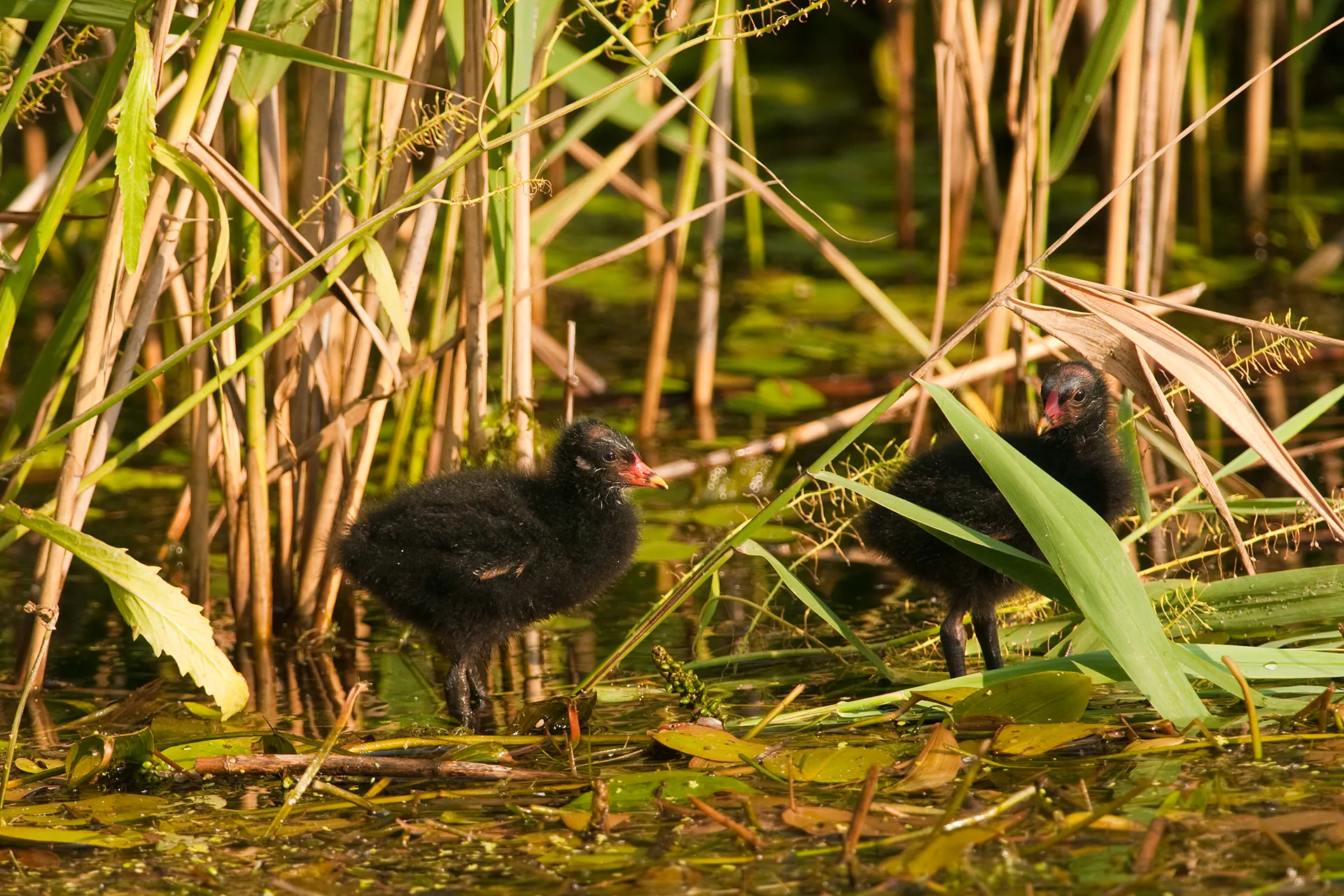
Moorhens swim readily but also forage on grassy banks. Rather than scanning only the middle of a lake, look at the edge of the vegetation. A bird may cross a strip of open water or step onto a bank and then retreat into cover. The October records in the local checklist are less frequent than those from April through September.
Interesting facts
- White under the tail can give it away. The patch is exposed when the bird flicks its tail.
- It forages on land as well as on water. Grassy banks can be worth watching.
- Both parents incubate. Their typical clutch takes 20–22 days to hatch.
- Two broods are typical in the BTO account. That is a species-level description, not a tally from the Danube Delta.
Status and conservation
The Common Moorhen is Least Concern globally and as a breeding bird in Romania’s 2022 Red List. The national assessment reports 36,602–61,719 breeding pairs, with an unknown short-term trend.
See it on our tours
On our multi-day Danube Delta discovery tours, look along quiet banks and the edges of wetland vegetation. Watch for the adult’s red-and-yellow bill or a flick of white as it disappears into cover.
See it with us
Our birding guides are biologists and ornithologists who are on the water every day of the year. Small groups, open boats, the best hours of the day.
Keep reading
Keep reading
More from the blog
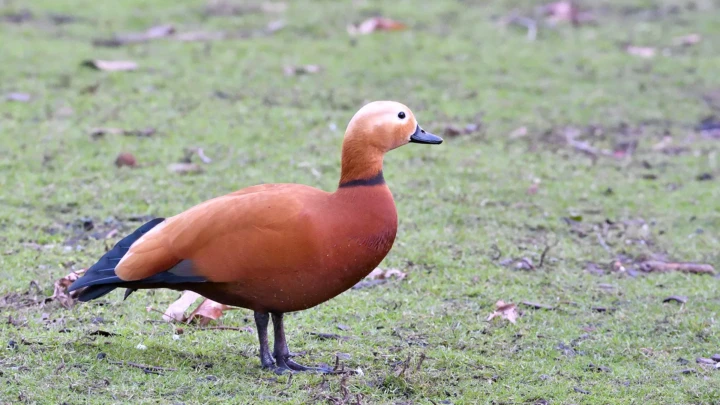
3 min read
Ruddy Shelduck (Tadorna ferruginea)
The Ruddy Shelduck, an orange duck of Asian steppes and salt lakes at the western edge of its range in Dobrogea: identification, nesting and...
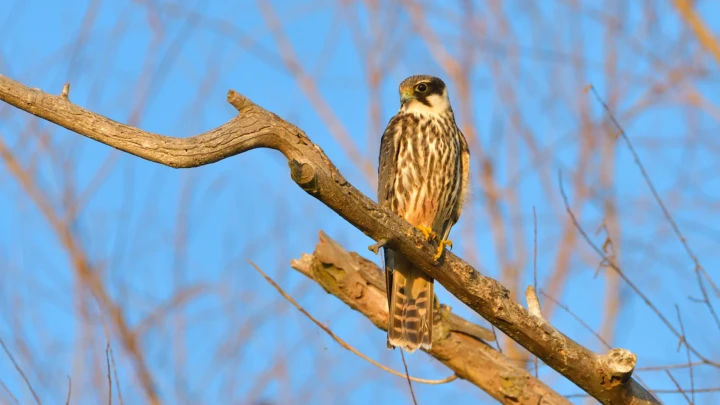
4 min read
Eurasian Hobby (Falco subbuteo)
Fast enough to catch swallows and dragonflies in the air: the Eurasian Hobby, a summer falcon of the Danube Delta and Dobrogea, and its...
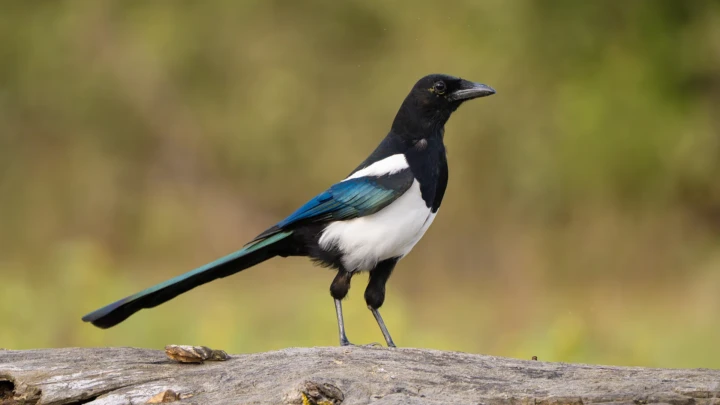
3 min read
Eurasian Magpie (Pica pica)
Black and white with a long, glossy tail and one of the brightest minds among birds: the Eurasian Magpie, a familiar resident of the...