

No. 236 on our checklistEurasian Jay (Garrulus glandarius)
A colourful crow with a blue wing patch that plants oak forests by hiding acorns: the Eurasian Jay in the forests and villages of the Danube Delta and Dobrogea.
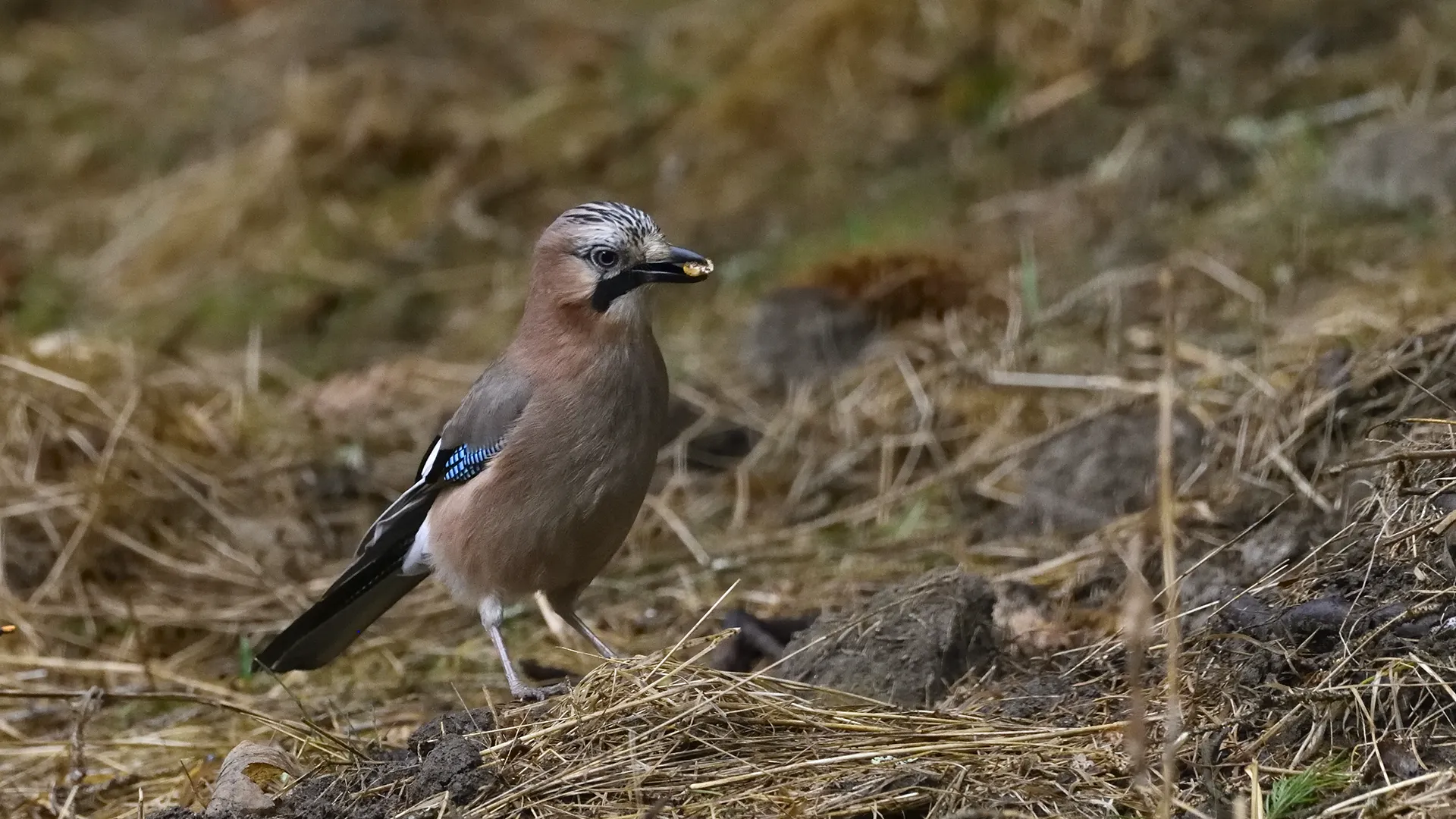
The Eurasian Jay (Garrulus glandarius) is the most colourful member of the crow family in Europe, with pinkish-brown plumage, a black moustache and a bright blue patch on the wing. In the Danube Delta and Dobrogea it lives all year in forests, tree belts, orchards and village gardens.
It is shy and often heard before it is seen: a harsh, screeching alarm call is usually the first sign of a jay in the trees.
Quick facts
Quick facts
- Scientific name Garrulus glandarius (Linnaeus, 1758)
- Common name Eurasian Jay
- Family Corvidae (crows, jays and magpies)
- Order Passeriformes
- Length about 34 cm
- Wingspan about 55 cm
- Weight about 170 g
- Diet omnivorous; acorns are the main food, especially in autumn and winter; also nuts, seeds, fruit, insects, eggs and chicks of small birds
- Habitat oak and mixed forests, woodland edges, tree belts, orchards, parks and gardens
- Breeding one brood a year; usually 4–5 eggs, incubated for about 18 days; young leave the nest at about 20–23 days
- Conservation status Least Concern (global IUCN Red List); Least Concern on the Romanian Red List (2022)
When to see it in the Danube Delta and Dobrogea
- JanLiving on stored acorns
- FebLiving on stored acorns
- MarCourtship
- AprNest building
- MayEggs and chicks
- JunYoung fledge
- JulFamily groups
- AugFamily groups
- SepAcorn harvest begins
- OctCaching acorns
- NovCaching acorns
- DecLiving on stored acorns
- Status here
- Present all year in forests, tree belts, orchards and villages.
- IUCN Red List
- Least Concern
- Our checklist
- No. 236 of 385 · see the full checklist
How to recognize it
The jay is a pigeon-sized crow with a pinkish-brown body, a white rump that shows well in flight, a black tail and a pale, streaked crown that it raises when excited. The black-and-blue barred patch on the wing is unique. The flight looks slow and slightly undulating, on rounded wings.
The loud, harsh “skraaak” alarm call is the most common sound.
The bird that plants oak forests
In autumn, jays collect acorns and hide them one by one, pushing them into the soil, under leaves or moss. One jay can store several thousand acorns in a season: estimates range from 4,500 to 11,000. They can recover them up to ten months later, and the acorns they do not find can germinate.
A study in Poland followed tagged acorns: jays carried them on average 116 m, and up to 456 m, and more than half were hidden within 100 m of the tree. Most were pushed into pine litter or moss no deeper than half a centimetre. In this way jays are among the most important dispersers of oaks in Europe, and in Germany they have been credited with the natural regeneration of 2,000–4,000 oak trees per hectare in pine forests.
Interesting facts
- Planning for tomorrow. In experiments at the University of Cambridge, captive jays cached the food they would want later, not the food they wanted at the time, showing that they can plan for future needs.
- Hiding from thieves. Jays that know they are being watched by another jay change the way they cache, choosing hidden or distant places to reduce the risk of theft.
- Not only in the ground. In 2021, a radio-tracking study in Poland reported for the first time jays storing acorns in tree cavities, sealed with plugs of moss.
- Up to almost 17 years. The oldest ringed jay in Britain lived 16 years and 9 months.
Status and conservation
The Eurasian Jay is listed as Least Concern on the global IUCN Red List, with a population of millions of birds. In Romania it is Least Concern on the Romanian Red List (2022), with 338,014–490,700 breeding pairs and a stable trend.
See it on our tours
On our multi-day birdwatching tours in the Danube Delta and Dobrogea, the old oak forests of Letea and Caraorman in the Danube Delta and the woods of north Dobrogea are good places to look for jays, especially in autumn, when they fly back and forth carrying acorns.
See it with us
Our birding guides are biologists and ornithologists who are on the water every day of the year. Small groups, open boats, the best hours of the day.
Keep reading
Keep reading
More from the blog

4 min read
Little Bittern (Botaurus minutus)
The smallest heron of the Danube Delta, so well hidden in the reeds that most visitors only see it flying low over the channel.
2 min read
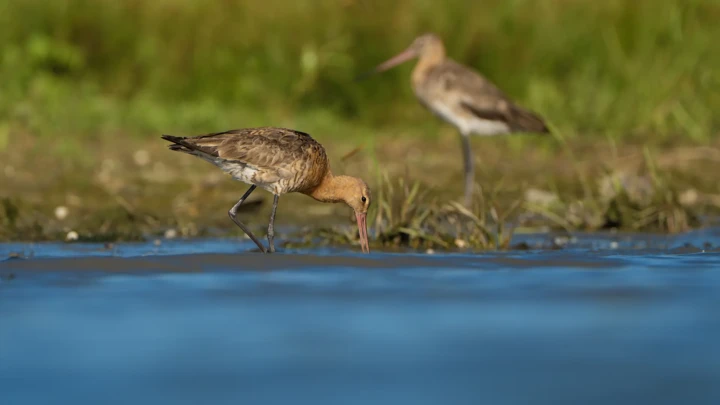
Black-tailed Godwit (Limosa limosa)
A long-billed wader with a bold wing stripe. Black-tailed Godwit occurs on passage and is a very rare breeder in the Danube Delta region.
5 min read
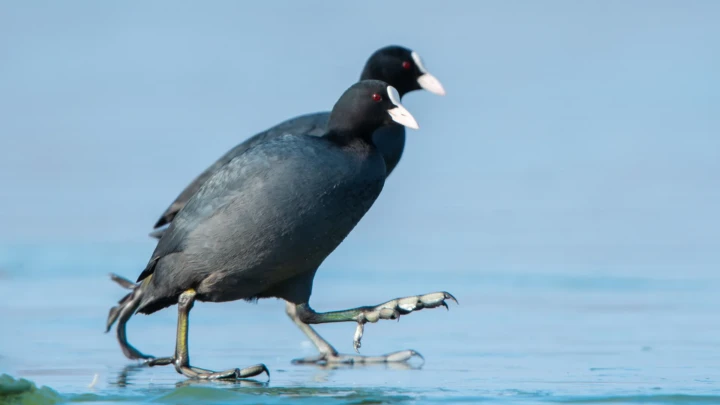
Eurasian Coot (Fulica atra)
Black, white-billed and everywhere on the water: the Eurasian Coot in the Danube Delta, its breeding, winter flocks and Near Threatened status in Romania.