

No. 69 on our checklistEurasian Stone-curlew (Burhinus oedicnemus)
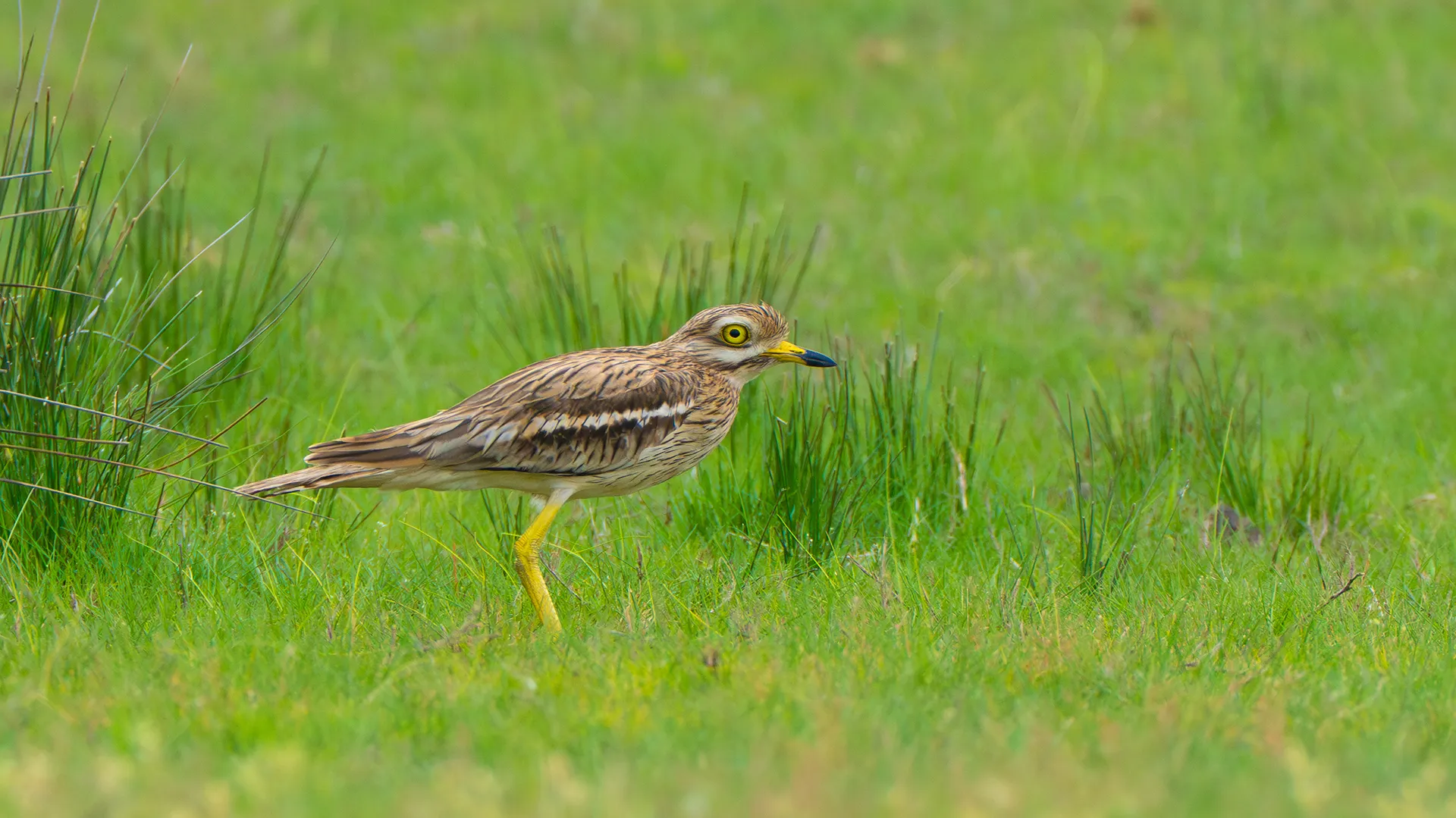
Large yellow eyes and sand-coloured plumage mark the Eurasian Stone-curlew, a rare breeder of open ground in the Danube Delta and Dobrogea.
The Eurasian Stone-curlew (Burhinus oedicnemus) is a long-legged bird of open, sparsely vegetated ground. The local checklist records it from March to October and describes it as a rare breeder in the Danube Delta and Dobrogea.
Linnaeus originally described it as Charadrius oedicnemus in 1758.
Quick facts
Quick facts
- Scientific name Burhinus oedicnemus (Linnaeus, 1758)
- Common name Eurasian Stone-curlew
- Family Burhinidae
- Order Charadriiformes
- Weight about 465 g
- Diet ground-dwelling invertebrates
- Habitat dry open ground with short or sparse vegetation and patches of bare soil
- Breeding usually 2 eggs; both adults incubate for 24–26 days; young typically fledge at 36–42 days
- Conservation status Least Concern globally; Least Concern as a breeding bird in Romania (2022)
When to see it in the Danube Delta and Dobrogea
- JanNo checklist code
- FebNo checklist code
- MarScarce
- AprPresent
- MayPresent
- JunScarce
- JulScarce
- AugPresent
- SepPresent
- OctScarce
- NovNo checklist code
- DecNo checklist code
- Status here
- Rare breeder; recorded March–October, with more regular records in April–May and August–September.
- IUCN Red List
- Least Concern
- Our checklist
- No. 69 of 385 · see the full checklist
How to recognize it
The large yellow eyes are striking when seen well, but the streaked, sand-coloured plumage blends with bare soil. A bird standing still can be easy to overlook. Scan open patches carefully rather than relying on movement to give it away.
An open-country bird most active in low light
Despite the common name, the Stone-curlew belongs to the thick-knee family rather than to the true curlews. It spends much of the day still and is more active at dusk and dawn, when it searches the ground for invertebrates. Its preferred open, sparsely vegetated habitat is quite different from the shallow water where many other waders feed.
Interesting facts
- The large eyes help in low light. The bird often feeds around dusk and dawn.
- Sand-coloured feathers make good camouflage. A resting bird can blend into open ground.
- Both adults incubate. Two eggs is the usual clutch.
- It is a thick-knee. It is not a member of Numenius, the true curlew genus.
Status and conservation
The Eurasian Stone-curlew is Least Concern globally and as a breeding bird in Romania’s 2022 Red List. Romania reports 500–1,000 breeding pairs and an unknown short-term trend. The local checklist labels breeding rare.
See it on our tours
On our multi-day photo tours in the Danube Delta and Dobrogea, scan suitable open ground from a distance if it falls along the route. Avoid approaching resting birds or disturbing potential nesting habitat.
See it with us
Our birding guides are biologists and ornithologists who are on the water every day of the year. Small groups, open boats, the best hours of the day.
Keep reading
Keep reading
More from the blog
5 min read
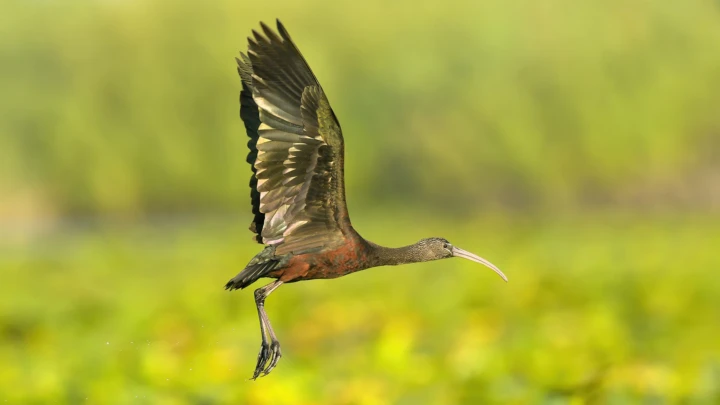
Glossy Ibis (Plegadis falcinellus)
Dark brown in the shade, green and bronze in the sun: the only ibis that breeds widely in Europe, and the Danube Delta is...
3 min read
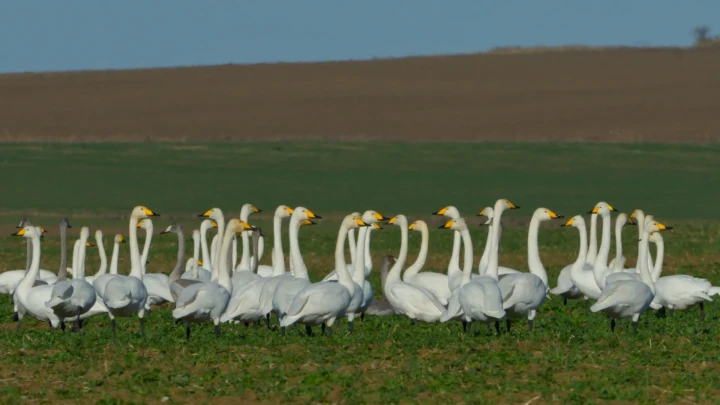
Whooper Swan (Cygnus cygnus)
The Whooper Swan, the trumpeting winter swan of the Danube Delta: how to tell it from Mute and Bewick’s Swans, its call, migration and...
5 min read
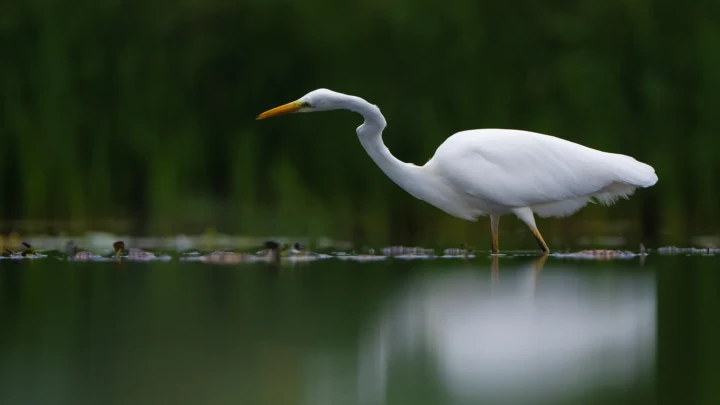
Great Egret (Ardea alba)
Tall, pure white and elegant: the Great Egret nests in the mixed heron colonies of the Danube Delta and can be seen here all...