

No. 206 on our checklistLong-legged Buzzard (Buteo rufinus)
A big, pale buzzard of the steppe that colonised Romania only in the 1990s: the Long-legged Buzzard in Dobrogea and the Danube Delta, its ground squirrel prey and its nests on pylons.
The Long-legged Buzzard (Buteo rufinus) is the large buzzard of the steppes and dry hills of Dobrogea. It was first documented as a breeding bird in Romania in 1996, and today it is one of the characteristic raptors of the region.
It can be seen all year: on poles and pylons along the roads, soaring over steppe slopes or hunting along the edges of the Danube Delta.
Quick facts
Quick facts
- Scientific name Buteo rufinus (Cretzschmar, 1829)
- Common name Long-legged Buzzard
- Family Accipitridae (hawks, eagles and buzzards)
- Order Accipitriformes
- Length about 43–62 cm
- Wingspan about 112–160 cm
- Weight about 590–1,760 g
- Diet mainly rodents; in Romania above all the European Ground Squirrel; also hares, birds, reptiles, large insects and roadkill
- Habitat steppe, dry grassland, rocky hills, farmland with tree belts and power lines
- Breeding nests in trees, on cliffs or on pylons; 2–4 eggs; young leave the nest at about 45 days
- Conservation status Least Concern (global IUCN Red List); Least Concern on the Romanian Red List (2022)
When to see it in the Danube Delta and Dobrogea
- JanResident and wintering birds
- FebTerritorial pairs
- MarDisplay, nest repair
- AprEgg-laying, incubation
- MayChicks hatch
- JunChicks in the nest
- JulYoung fledge
- AugDispersal, passage
- SepAutumn passage
- OctLast migrants
- NovWintering birds
- DecWintering birds
- Status here
- Present all year: breeds in Dobrogea, also passes on migration and winters in the region.
- IUCN Red List
- Least Concern
- Our checklist
- No. 206 of 385 · see the full checklist
How to recognize it
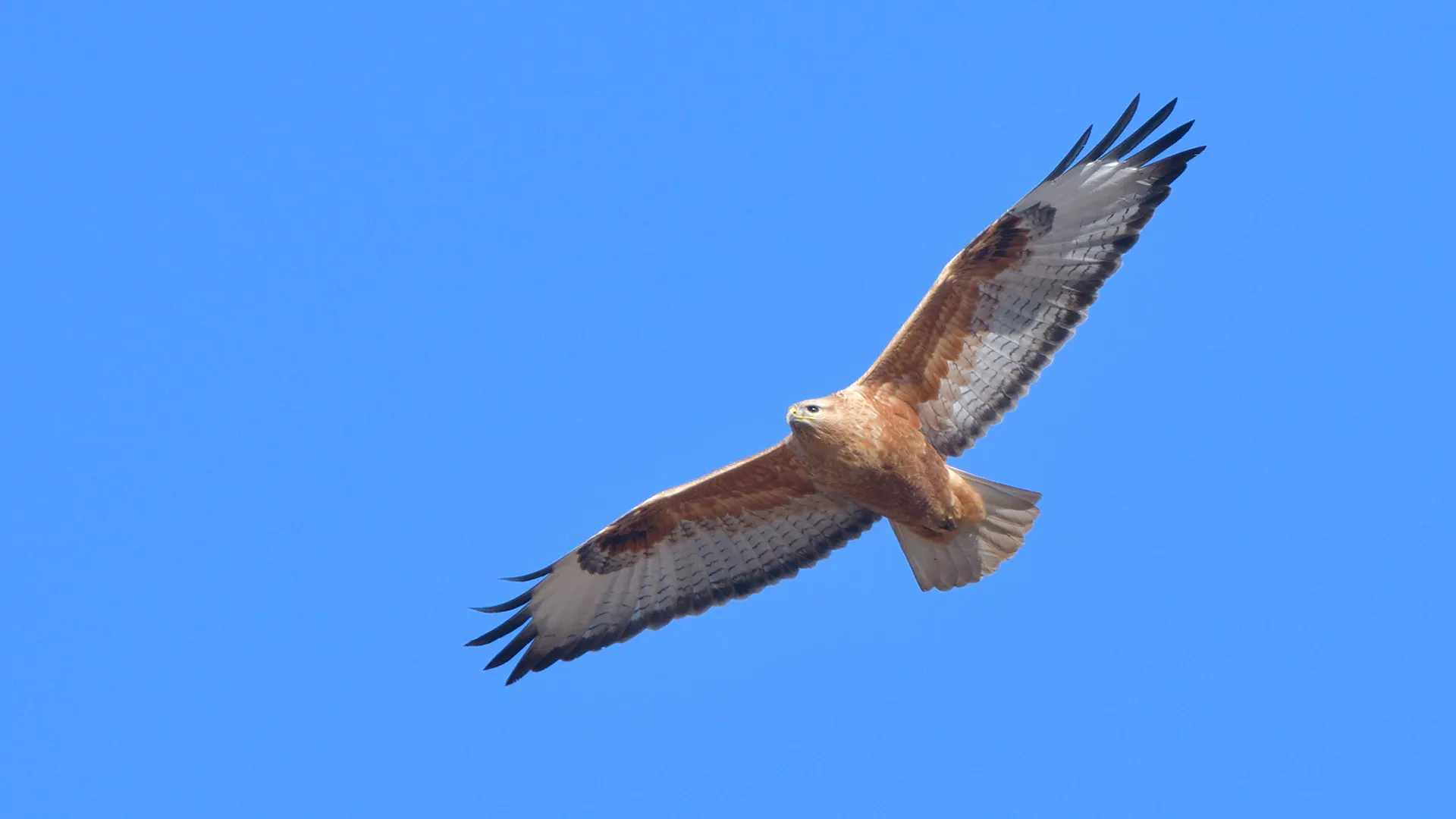
The Long-legged Buzzard is larger and longer-winged than the Common Buzzard, with a pale, almost cream head, a rusty-brown body and an unbarred, pale orange tail. The underwing is pale with a large black patch at the wrist and black wingtips. Very dark birds also occur.
The Steppe Buzzard, the eastern form of the Common Buzzard, can look very similar, especially young birds. Size, the pale head, the unbarred tail and the long-winged silhouette are the best clues.
A newcomer to Romania
A review of all known Romanian records, from 1891 to 2023, shows how quickly the species has spread. The first documented record in Romania came from Transylvania in 1891, but the species established itself in Dobrogea only in the 1990s, with the first known nesting in 1996. Estimates of the Romanian breeding population rose from 5–15 pairs in 1996 and 10–20 pairs in 2002 to 400–900 pairs today. Since then it has also started breeding in Moldova, north of Dobrogea: a survey in 2011–2012 found 19 breeding pairs there. The authors of the review note that more observers also means more records, so the numbers of records alone do not measure the growth of the population.
In Romania, the main prey is the European Ground Squirrel. The birds hunt from a perch or while hovering over steppe and pastures, and they are also often seen feeding on roadkill.
Nests on pylons
Long-legged Buzzards nest in trees in small woods and tree belts, on cliffs, and more and more on high-voltage pylons in cultivated areas. In 2025, researchers revisited 172 known nest sites in Dobrogea: 44 had disappeared, and 60 were active Long-legged Buzzard nests.
Interesting facts
- Plastic in the nest. The same 2025 study found plastic in nearly two-thirds of the active nests in Dobrogea, mostly blue baling twine. Nests close to villages contained more plastic. The authors point to entanglement and contamination as possible risks for the chicks.
- Hunters at grass fires. Long-legged Buzzards have been seen gathering near grass fires to catch animals fleeing the smoke and flames.
- A large share of Europe’s population. More than 85% of the European population breeds in Russia, Turkey, Azerbaijan, Bulgaria and Romania.
- Climate may shape its future. A study of its sensitivity to climate change found that the species is most sensitive to summer rainfall and temperature seasonality, with the most vulnerable areas at the northern edge of its European range.
Status and conservation
The Long-legged Buzzard is listed as Least Concern on the global IUCN Red List. In Romania it is Least Concern on the Romanian Red List (2022), with 400–900 breeding pairs and an increasing trend. A preliminary assessment placed it higher because of the small minimum estimate, but the final category was lowered because the national population is growing and birds may come in from the east. It is listed in Annex I of the EU Birds Directive. Because it depends heavily on the European Ground Squirrel, the condition of steppe grasslands matters for its future; the loss of nest sites and plastic waste in nests are other documented problems.
See it on our tours
On our multi-day birdwatching tours in the Danube Delta and Dobrogea, the steppe hills of Dobrogea are the best places for this raptor, perched on roadside poles or hunting ground squirrels over the pastures.
See it with us
Our birding guides are biologists and ornithologists who are on the water every day of the year. Small groups, open boats, the best hours of the day.
Keep reading
Keep reading
More from the blog
3 min read
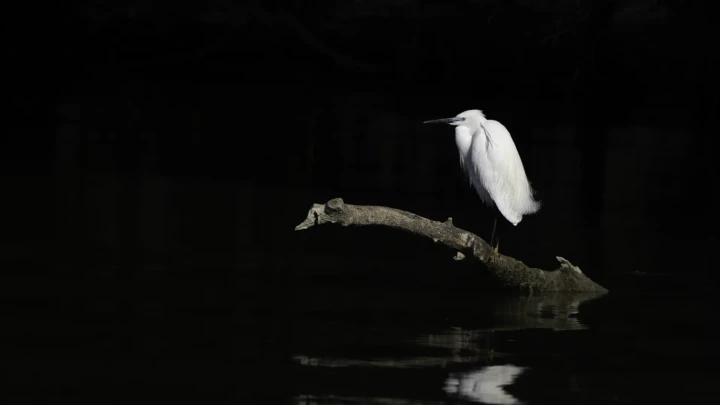
Little Egret (Egretta garzetta)
The Little Egret, the snow white heron with yellow feet: identification, its active hunting, the plume trade that nearly wiped it out and where...
3 min read
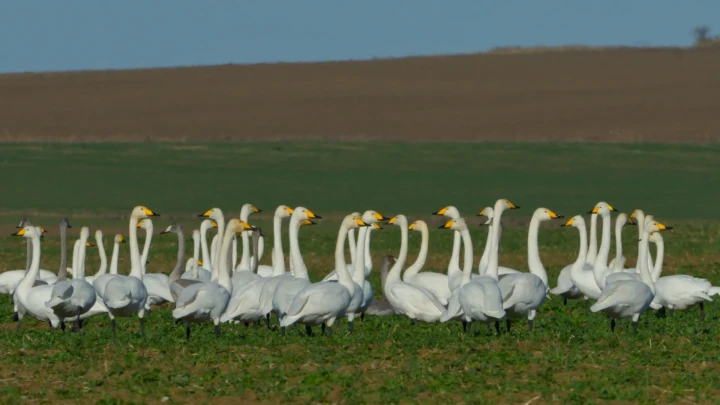
Whooper Swan (Cygnus cygnus)
The Whooper Swan, the trumpeting winter swan of the Danube Delta: how to tell it from Mute and Bewick’s Swans, its call, migration and...
2 min read
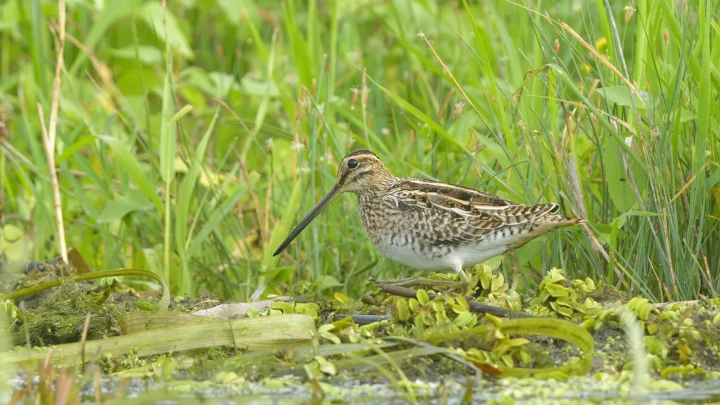
Common Snipe (Gallinago gallinago)
Buff stripes and a long, straight bill help identify this well-camouflaged wader on passage through the Danube Delta.