

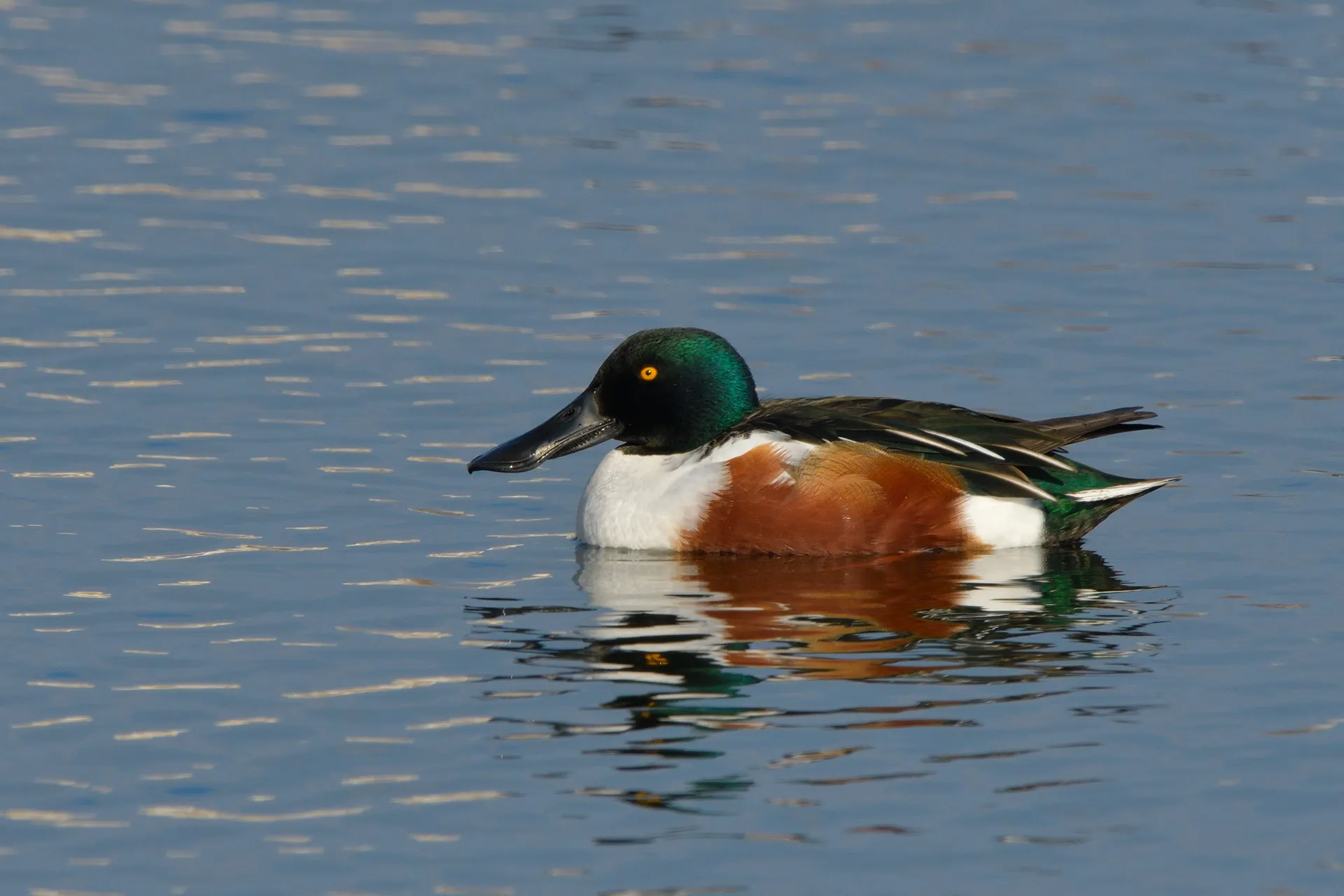
No. 34 on our checklistNorthern Shoveler (Spatula clypeata)
The Northern Shoveler feeds with its broad bill in the water, filtering tiny crustaceans and seeds. It is present year-round in the Danube Delta.
The Northern Shoveler (Spatula clypeata) is a dabbling duck with a broad, spoon-shaped bill that filters small food items from the water. The Danube Delta and Dobrogea checklist records it all year and lists it as breeding locally.
Linnaeus originally described the species as Anas clypeata in 1758.
Quick facts
Quick facts
- Scientific name Spatula clypeata (Linnaeus, 1758)
- Common name Northern Shoveler
- Family Anatidae
- Order Anseriformes
- Weight about 630 g
- Diet zooplankton and other small aquatic invertebrates, as well as seeds
- Habitat shallow lakes, marshes and other wetlands
- Breeding usually 9–11 eggs; female incubates for 22–23 days; young typically fly at 40–45 days
- Conservation status Least Concern globally; Romanian Red List (2022): breeding, passage and wintering populations not evaluated
When to see it in the Danube Delta and Dobrogea
- JanPresent
- FebPresent
- MarPresent
- AprPresent
- MayScarce
- JunScarce
- JulScarce
- AugScarce
- SepScarce
- OctScarce
- NovScarce
- DecPresent
- Status here
- Present all year; breeds locally and is less frequently recorded from May to November.
- IUCN Red List
- Least Concern
- Our checklist
- No. 34 of 385 · see the full checklist
How to recognize it
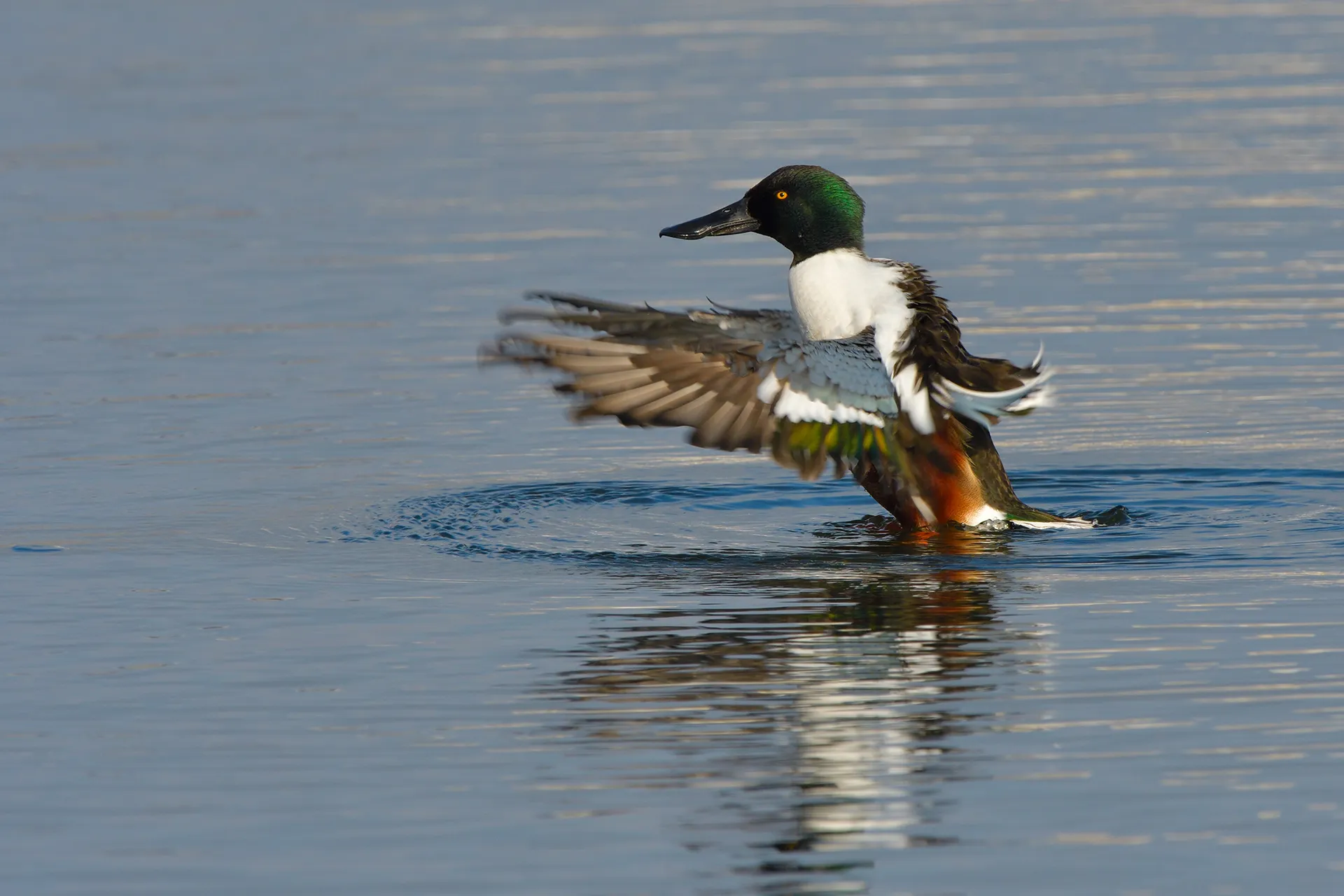
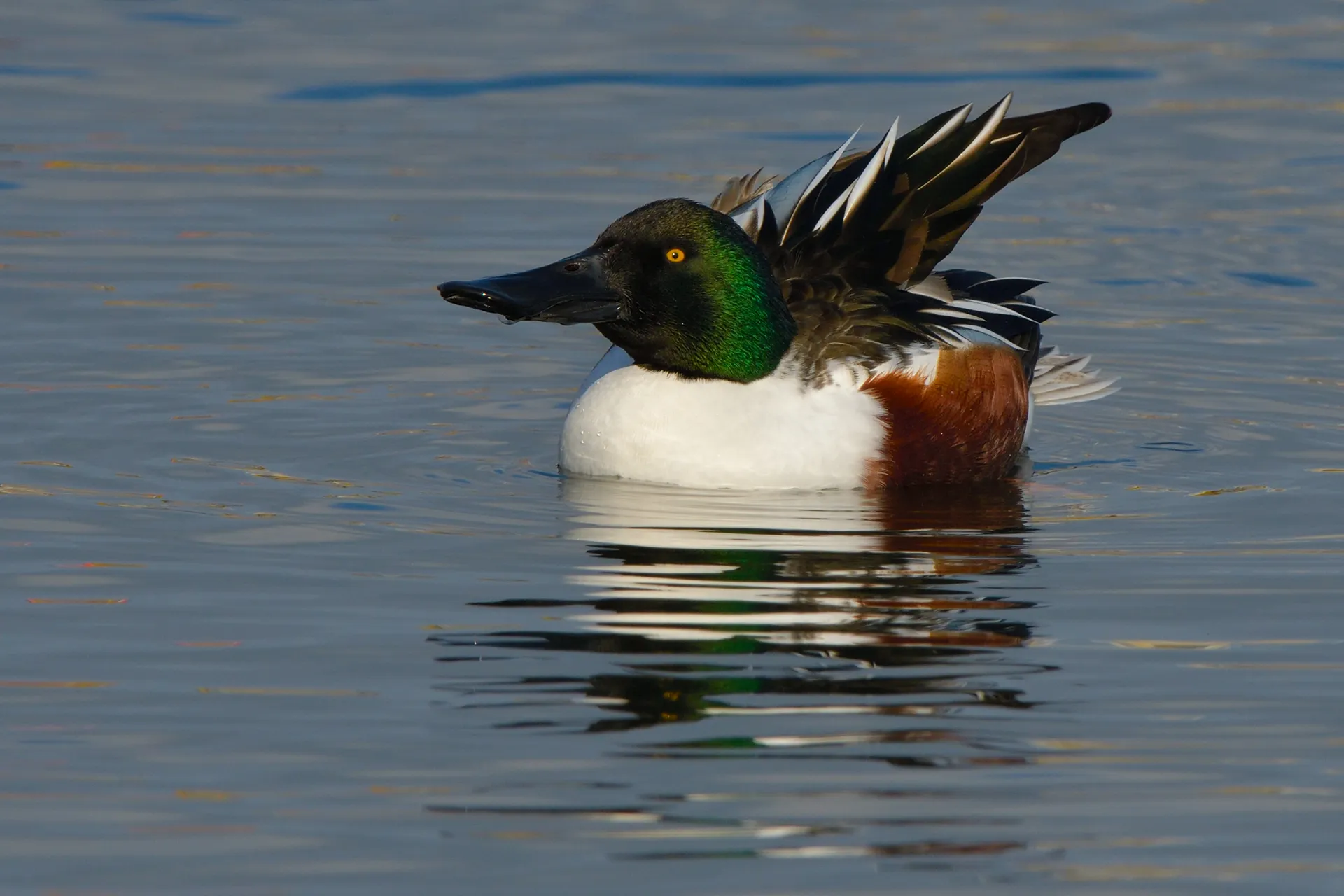
The breeding drake has a green head, a white breast and chestnut flanks. The female is mottled brown, but her wide bill gives her away. The bill broadens towards the tip, making the silhouette look quite different from that of a Mallard.
A bill that works like a sieve
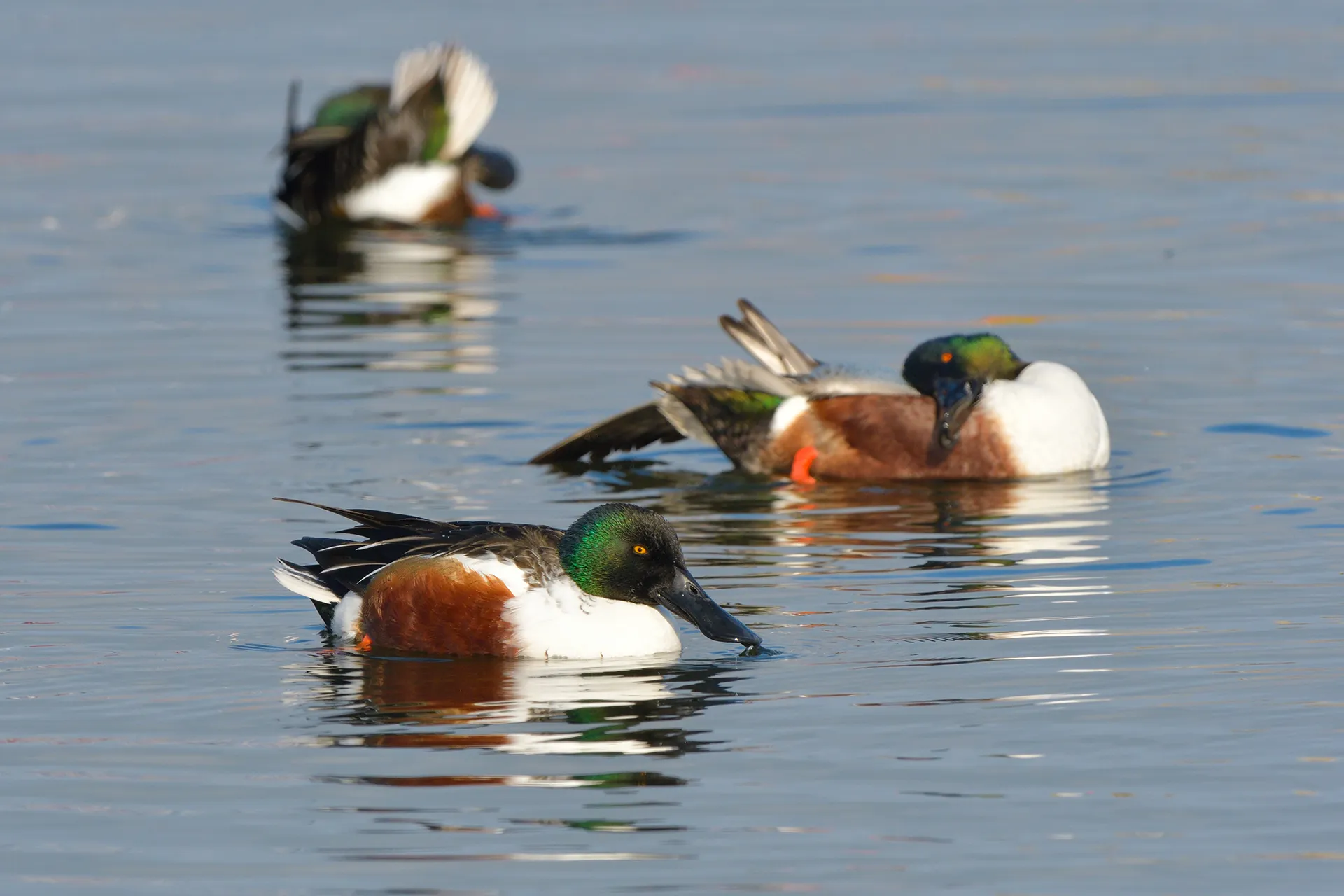
The edges of the bill have comb-like projections called lamellae. A shoveler can swim with its bill in the water, straining out tiny crustaceans and other food. Watch for birds moving steadily through the shallows with their bills down instead of disappearing below the surface like diving ducks.
A year-round presence
The local checklist records Northern Shovelers in every month, but lists them as less frequent from May through November. Shallow feeding areas are worth checking in any season; the national estimates for winter and passage do not describe how many pairs nest locally.
Interesting facts
- The female has a shovel, too. The bill is a better clue than the drake’s bright colours when you are looking at a brown bird.
- It can feed while swimming. Rather than diving, it strains small prey from the water as it moves.
- It can use temporary pools. The species favours some short-lived waters where fish, which can compete for zooplankton, do not survive.
- The female incubates the clutch. Nine to eleven eggs is typical, with an incubation period of just over three weeks.
Status and conservation
The Northern Shoveler is Least Concern globally. Romania’s 2022 Red List reports an estimated 15–150 breeding pairs with an unknown trend, but did not evaluate the breeding, passage or wintering populations nationally.
See it on our tours
On our multi-day birdwatching tours in the Danube Delta and Dobrogea, look for shovelers in shallow water. Even at a distance, a duck swimming with its broad bill down is worth a closer look.
See it with us
Our birding guides are biologists and ornithologists who are on the water every day of the year. Small groups, open boats, the best hours of the day.
Keep reading
Keep reading
More from the blog
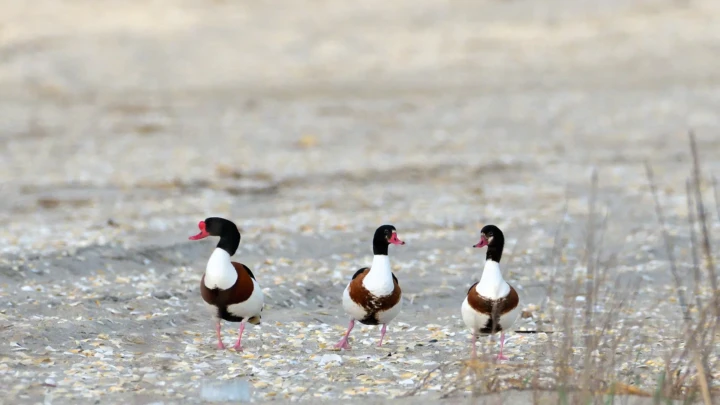
3 min read
Common Shelduck (Tadorna tadorna)
The Common Shelduck, a big black and white duck of the coastal lagoons that nests in fox burrows: identification, diet, crèches and where to...
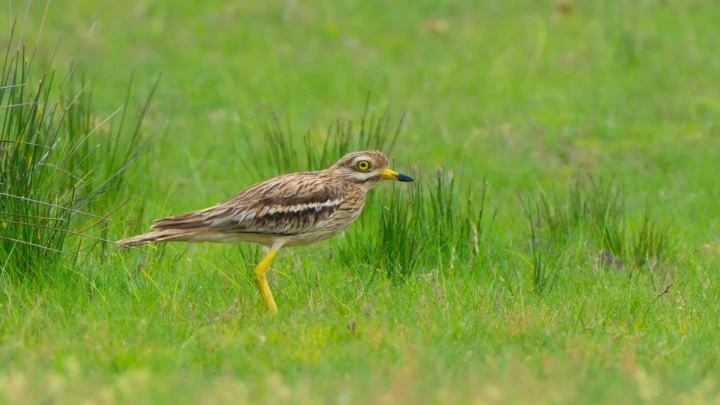
2 min read
Eurasian Stone-curlew (Burhinus oedicnemus)
Large yellow eyes and sand-coloured plumage mark the Eurasian Stone-curlew, a rare breeder of open ground in the Danube Delta and Dobrogea.
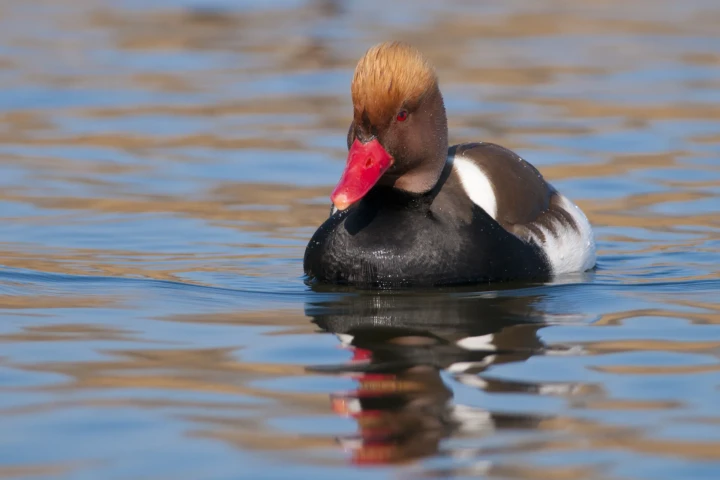
4 min read
Red-crested Pochard (Netta rufina)
An orange-headed duck with a bright red bill, feeding on stoneworts and pondweeds: the Red-crested Pochard, a breeding bird of the Danube Delta whose...