

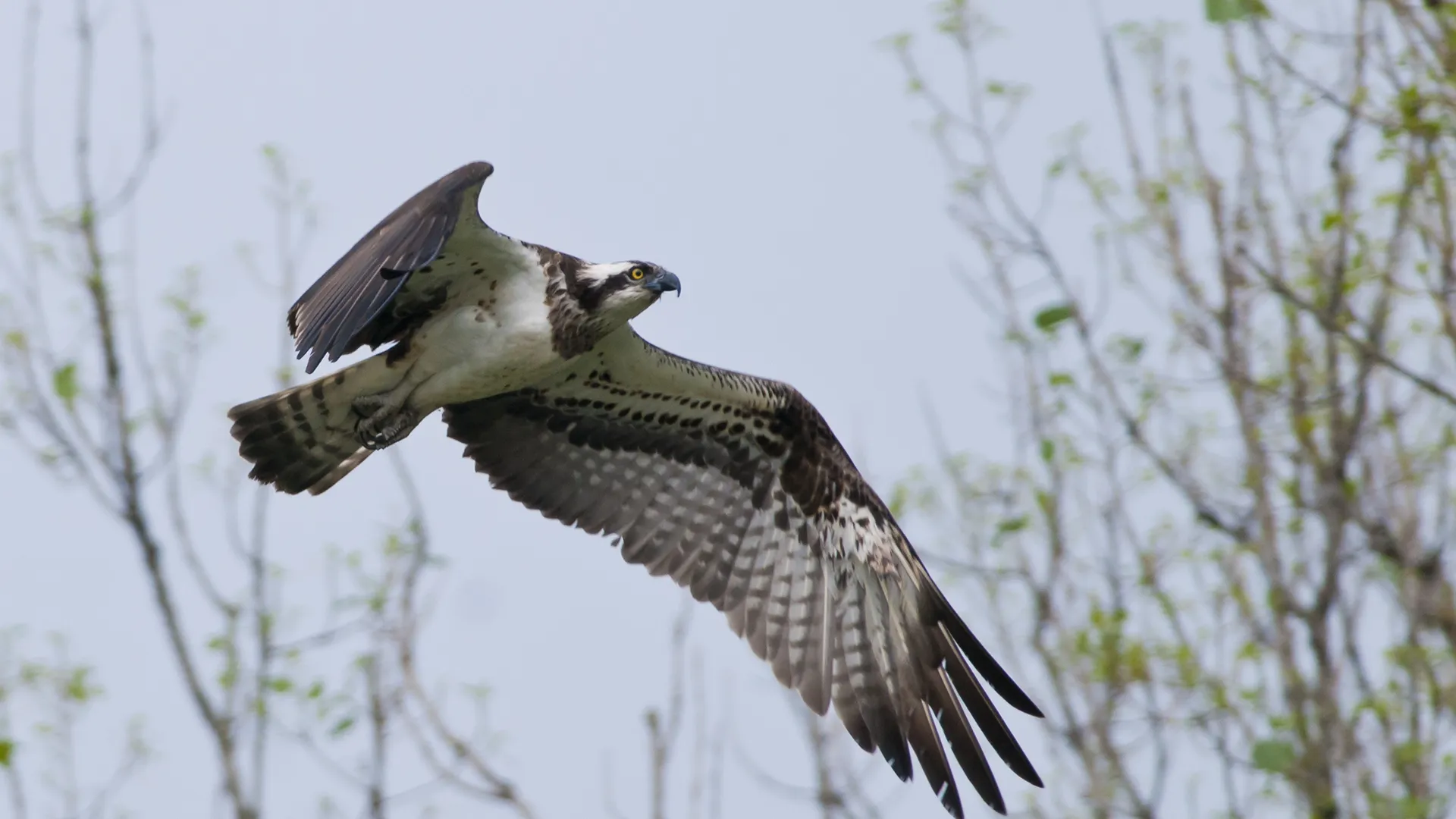
No. 180 on our checklistOsprey (Pandion haliaetus)
A fish-hunting raptor that dives feet-first into the water: when to see the Osprey on migration in the Danube Delta and Dobrogea, and why it no longer breeds in Romania.
The Osprey (Pandion haliaetus) is a large bird of prey that lives almost entirely on fish. In the Danube Delta and Dobrogea it is a passage migrant: it no longer breeds in Romania, but it can be seen hunting over lakes, channels and lagoons in spring and autumn.
The best months are April, August and September, when birds from northern and eastern Europe stop here on their way to and from Africa.
Quick facts
Quick facts
- Scientific name Pandion haliaetus (Linnaeus, 1758)
- Common name Osprey
- Family Pandionidae (Osprey, the only member of its family)
- Order Accipitriformes
- Length about 53–58 cm
- Wingspan about 145–170 cm
- Weight about 1.2–2 kg; females are larger than males
- Diet live fish, usually 150–300 g; other prey only rarely
- Habitat lakes, rivers, channels, lagoons and coasts with clear, fish-rich water
- Breeding does not breed in Romania today; elsewhere usually 2–3 eggs, incubated for about 37 days; young fly at about 7–8 weeks
- Conservation status Least Concern (global IUCN Red List); passage population Not Evaluated on the Romanian Red List (2022)
When to see it in the Danube Delta and Dobrogea
- JanIn Africa
- FebIn Africa
- MarFirst spring migrants
- AprSpring passage
- MayLast spring migrants
- JunOn breeding grounds
- JulFirst autumn migrants
- AugAutumn passage
- SepAutumn passage
- OctLast migrants
- NovIn Africa
- DecIn Africa
- Status here
- Passage migrant in spring and autumn; no longer breeds in Romania.
- IUCN Red List
- Least Concern
- Our checklist
- No. 180 of 385 · see the full checklist
How to recognize it
The Osprey is a large, long-winged raptor, dark brown above and very white below, with a white head crossed by a dark band through the eye. In flight the long, narrow wings are often bent at the wrist, giving it a gull-like silhouette, and the underwing shows a dark patch at the wrist. No other bird of prey in the Danube Delta combines such white underparts with the habit of hovering over open water.
The White-tailed Eagle also hunts fish here, but it is much larger, broad-winged and brown, with a heavy bill and, in adults, a white tail.
A specialist fisher
Ospreys hunt by flying over the water, hovering briefly and then plunging feet-first. They can disappear completely under the surface and come up with a fish in their talons. Several adaptations help: the outer toe can turn backwards, so the bird grips with two toes in front and two behind, the soles carry small spines for holding slippery prey, and the nostrils can be closed under water. After take-off the Osprey turns the fish head-forward, which reduces drag in flight.
Most fish taken weigh 150–300 g and are about 25–35 cm long. Ospreys need open water to hunt, so in the Danube Delta look for them over lakes, wide channels and lagoons.
Migration across Dobrogea
Most European Ospreys leave for Africa between August and October. Western populations winter in West Africa, while some eastern birds travel as far as East and southern Africa. Adults return in March and April, and most one-year-olds stay in Africa for their first summer.
Dobrogea lies on an important corridor for migrating raptors. During five autumns of full-season counts in the Măcin Mountains, an average of 10.8 Ospreys a year were counted, with the median passage date on 13 September. The Romanian Red List estimates that 300–2,000 Ospreys pass through the country on migration.
Interesting facts
- A lost breeding bird of Romania. According to the European recovery plan for the species, the last confirmed breeding of the Osprey in Romania took place in 1961. Today the bird only passes through.
- Built for life under water. A semi-transparent third eyelid protects the eye during the dive, and the Osprey can close its nostrils as it hits the water.
- A long-lived traveller. The oldest ringed Osprey in Britain reached 20 years and 11 months. Breeding usually starts at about three years old.
- Comeback with help. Persecution and egg collecting wiped out the British breeding population in the early 20th century. Ospreys returned to Scotland in the 1950s, and protection, nest guarding and reintroductions have since helped the species recover in several European countries.
Status and conservation
The Osprey is listed as Least Concern on the global IUCN Red List, and the European breeding population, estimated at about 9,400–11,500 pairs, is increasing. In Romania only the passage population is assessed on the Romanian Red List (2022), where it is Not Evaluated because trend data for migrants are lacking. Along the flyway the main threats are illegal shooting, electrocution and collision with power lines, disturbance and contamination; illegal killing in the Mediterranean region alone was estimated at 47–349 Ospreys a year.
See it on our tours
On our multi-day Danube Delta discovery tours in spring and late summer, scan the lakes and the coastal lagoons of the southern Danube Delta: a white-bellied raptor hovering high over the water and then plunging is almost certainly an Osprey.
See it with us
Our birding guides are biologists and ornithologists who are on the water every day of the year. Small groups, open boats, the best hours of the day.
Keep reading
Keep reading
More from the blog
2 min read
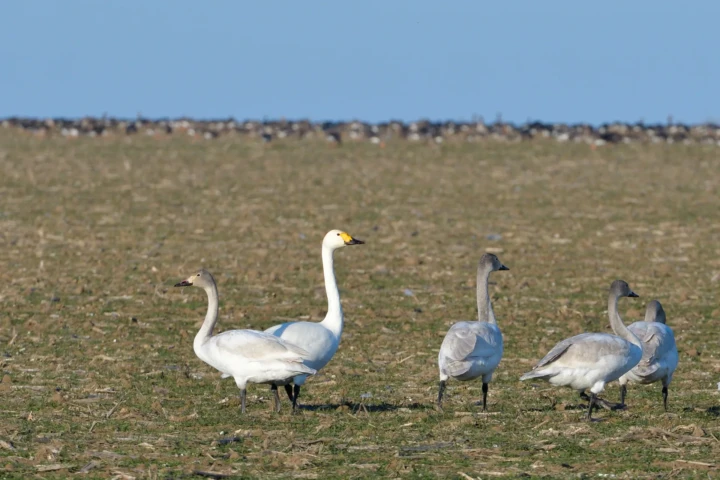
Bewick’s Swan (Cygnus columbianus bewickii)
Bewick's Swan, the smallest and rarest of the three swans of the Danube Delta: how to tell it from the Whooper Swan, its Arctic...
3 min read
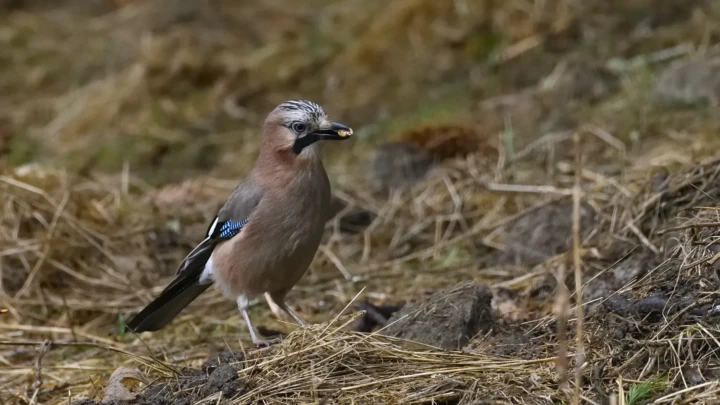
Eurasian Jay (Garrulus glandarius)
A colourful crow with a blue wing patch that plants oak forests by hiding acorns: the Eurasian Jay in the forests and villages of...
3 min read
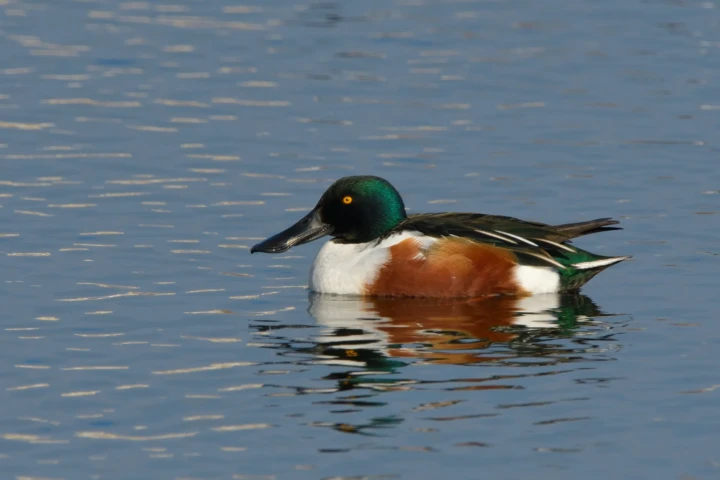
Northern Shoveler (Spatula clypeata)
The Northern Shoveler feeds with its broad bill in the water, filtering tiny crustaceans and seeds. It is present year-round in the Danube Delta.