


No. 25 on our checklistSmew (Mergellus albellus)
A small sawbill duck with a 'cracked ice' pattern of black on white: the Smew, a winter visitor to the Danube Delta from the northern taiga, where it nests in old woodpecker holes.
The Smew (Mergellus albellus), described by Linnaeus in 1758 as Mergus albellus, is the smallest of the sawbill ducks. In the Danube Delta it is a winter visitor in moderate numbers, from October to March, and very rare in summer.
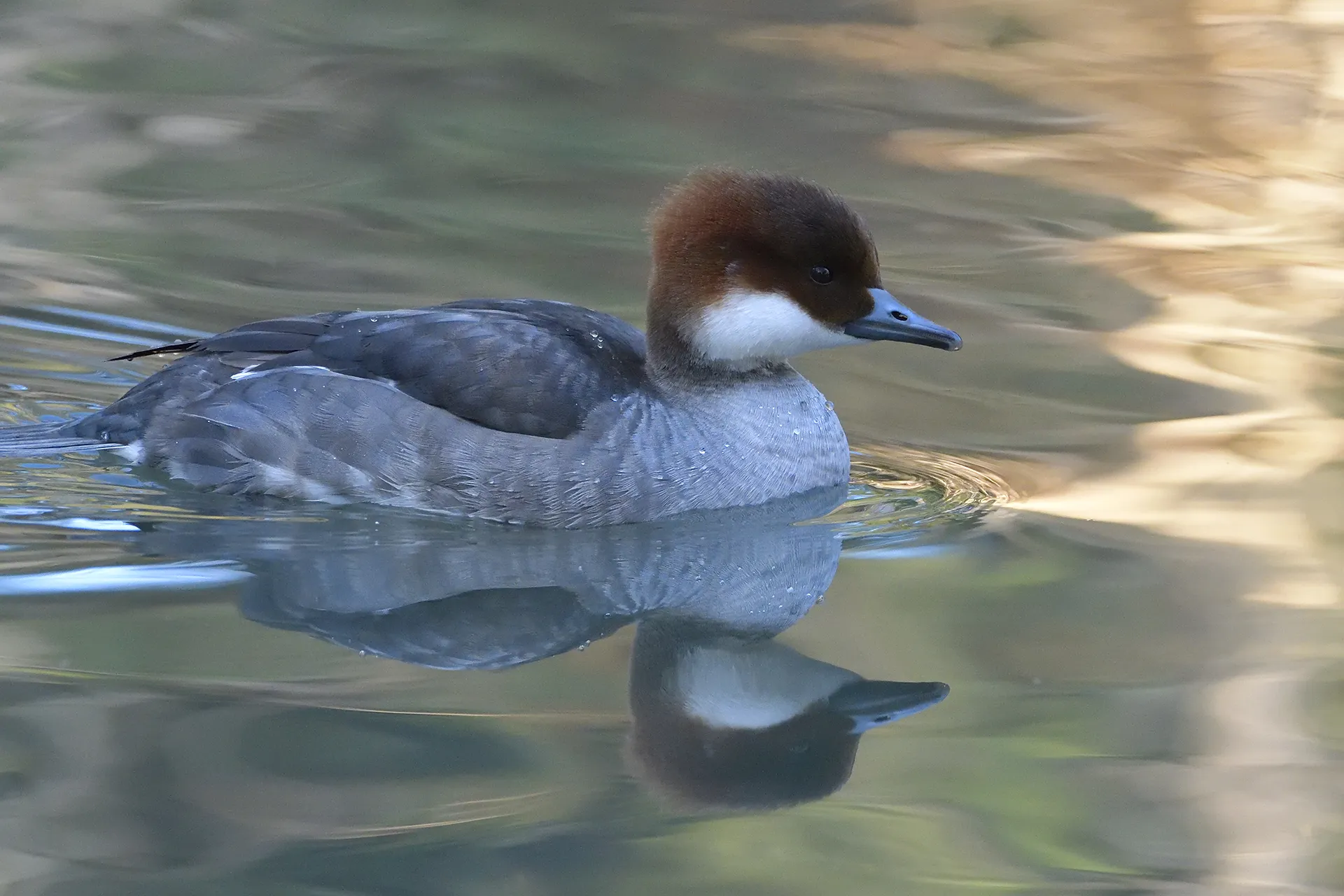
\nThe drake is almost all white, with fine black lines that give it a striking “cracked ice” look; the female is grey, with a rusty-brown cap and white cheeks.


Quick facts
Quick facts
- Scientific name Mergellus albellus (Linnaeus, 1758); originally Mergus albellus
- Common name Smew
- Family Anatidae (ducks, geese and swans)
- Order Anseriformes
- Weight about 640 g
- Diet small fish in winter; aquatic invertebrates in summer; also amphibians
- Habitat breeds on lakes and rivers in the taiga; in winter on lakes, reservoirs, sheltered coasts and lagoons
- Breeding nests in old woodpecker holes, other tree holes and nest boxes; usually 7–9 eggs, incubated by the female for 26–28 days
- Conservation status Least Concern (global IUCN Red List); on the Romanian Red List (2022) the tiny breeding population is Critically Endangered, while the wintering population was not evaluated; Annex I of the EU Birds Directive
When to see it in the Danube Delta and Dobrogea
- JanWintering flocks
- FebWintering flocks
- MarLast flocks
- AprDeparture north
- MayVery rare
- JunVery rare
- JulVery rare
- AugVery rare
- SepVery rare
- OctFirst arrivals
- NovWintering flocks
- DecWintering flocks
- Status here
- Winter visitor in moderate numbers; very rare in summer.
- IUCN Red List
- Least Concern
- Our checklist
- No. 25 of 385 · see the full checklist
How to recognize it
The drake Smew is mostly snow-white, with a black mask around the eye, a black patch on the back of the head and fine black lines on the sides of the breast and body. In flight, black wings with white patches show well. The female and young birds, known in English folk names as “redheads”, are grey with a rusty-brown cap and a clean white throat and cheeks. At a distance a female Smew may be confused with a female Goldeneye. The bill is short, narrow and serrated, typical of the sawbills.
Born in a woodpecker hole
The Smew breeds in the taiga of northern Europe and Asia. It nests in holes in trees, especially in the old nest holes of the Black Woodpecker, a species that shares much of its northern range, but it also uses natural cavities and nest boxes. It is closely related to the mergansers and also to the goldeneyes.
A winter visitor that is shifting north
In Romania, the wintering population is estimated at 411 to 5,571 birds, with an uncertain trend, and 2,000 to 4,000 more pass through on migration. Smew feed by diving energetically and staying under water for some time; in winter they eat mostly small fish. In Britain, numbers have declined since the mid-1990s, while in Sweden they rose from about 400 birds in 1971 to 3,800 in 2004: as winters become milder, more Smew stay closer to their breeding grounds. Cold spells in northern and central Europe can still push birds south and west.
A tiny population in Romania
Romania also holds an isolated breeding population of only 1 to 5 pairs, far from the main range and probably a relict, restricted to a single known location. For this reason the Romanian Red List classifies the breeding population as Critically Endangered, although the species is Least Concern at European and global level.
Interesting facts
- Cracked ice. The black-and-white pattern of the drake is often compared to cracked ice.
- White nun and redhead. Old English folk names call the drake “White Nun” and the female “Redhead”.
- A woodpecker partner. In the north, the Smew depends largely on old nest holes of the Black Woodpecker.
- Moving with the climate. As winters get milder, more Smew winter further north-east, in places such as Sweden.
Status and conservation
The Smew is listed as Least Concern on the global IUCN Red List and on Annex I of the EU Birds Directive. On the Romanian Red List (2022), the breeding population (1–5 pairs, stable) is Critically Endangered, because it is tiny, isolated and limited to one known location. The wintering (411–5,571 birds, uncertain trend) and passage populations were not evaluated.
See it on our tours
On our multi-day Danube Delta discovery tours in late autumn and winter, look for small groups of Smew on open lakes and channels of the Danube Delta; the white drakes stand out even at long range.
See it with us
Our birding guides are biologists and ornithologists who are on the water every day of the year. Small groups, open boats, the best hours of the day.
Keep reading
Keep reading
More from the blog
6 min read
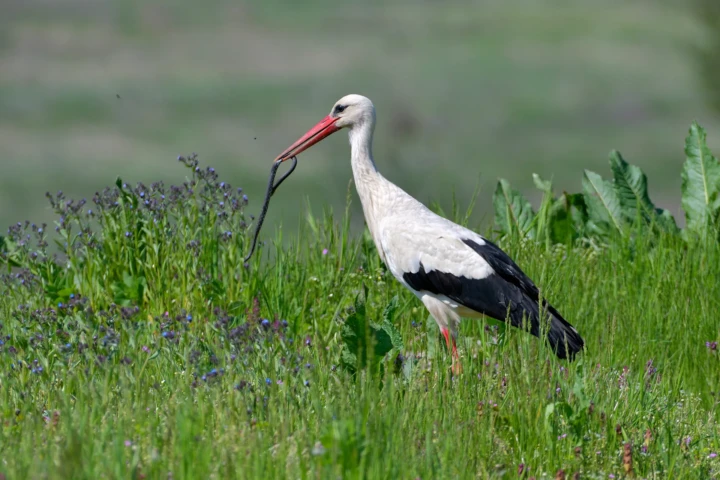
White Stork (Ciconia ciconia)
Nests on village poles, bill-clattering pairs and long journeys to Africa: the White Stork in the Danube Delta and Dobrogea, from March to September.
3 min read
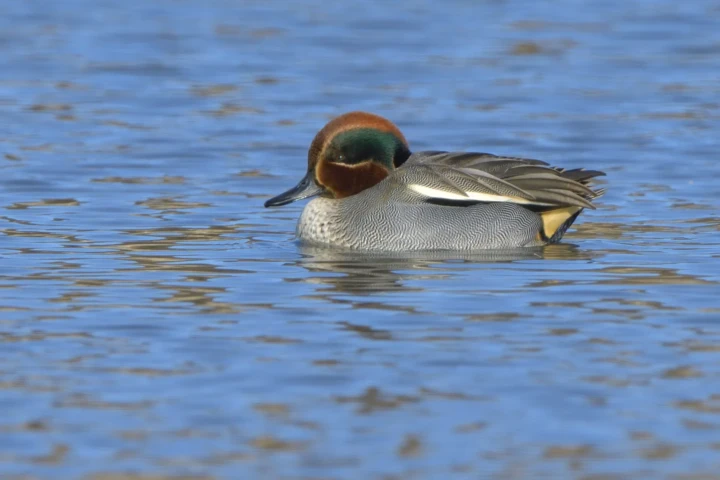
Green-winged Teal (Anas crecca)
A small dabbling duck with a flash of green in the wing. Green-winged Teal, also called Eurasian Teal, occurs locally from September to April.
2 min read
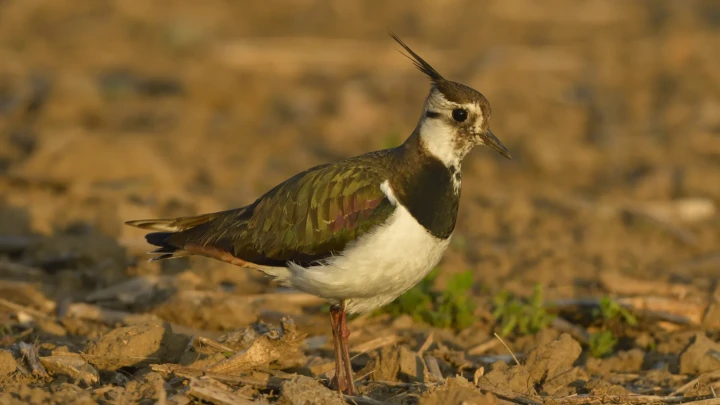
Northern Lapwing (Vanellus vanellus)
A long crest and broad rounded wings identify the Northern Lapwing, present all year in the Danube Delta and Dobrogea.