

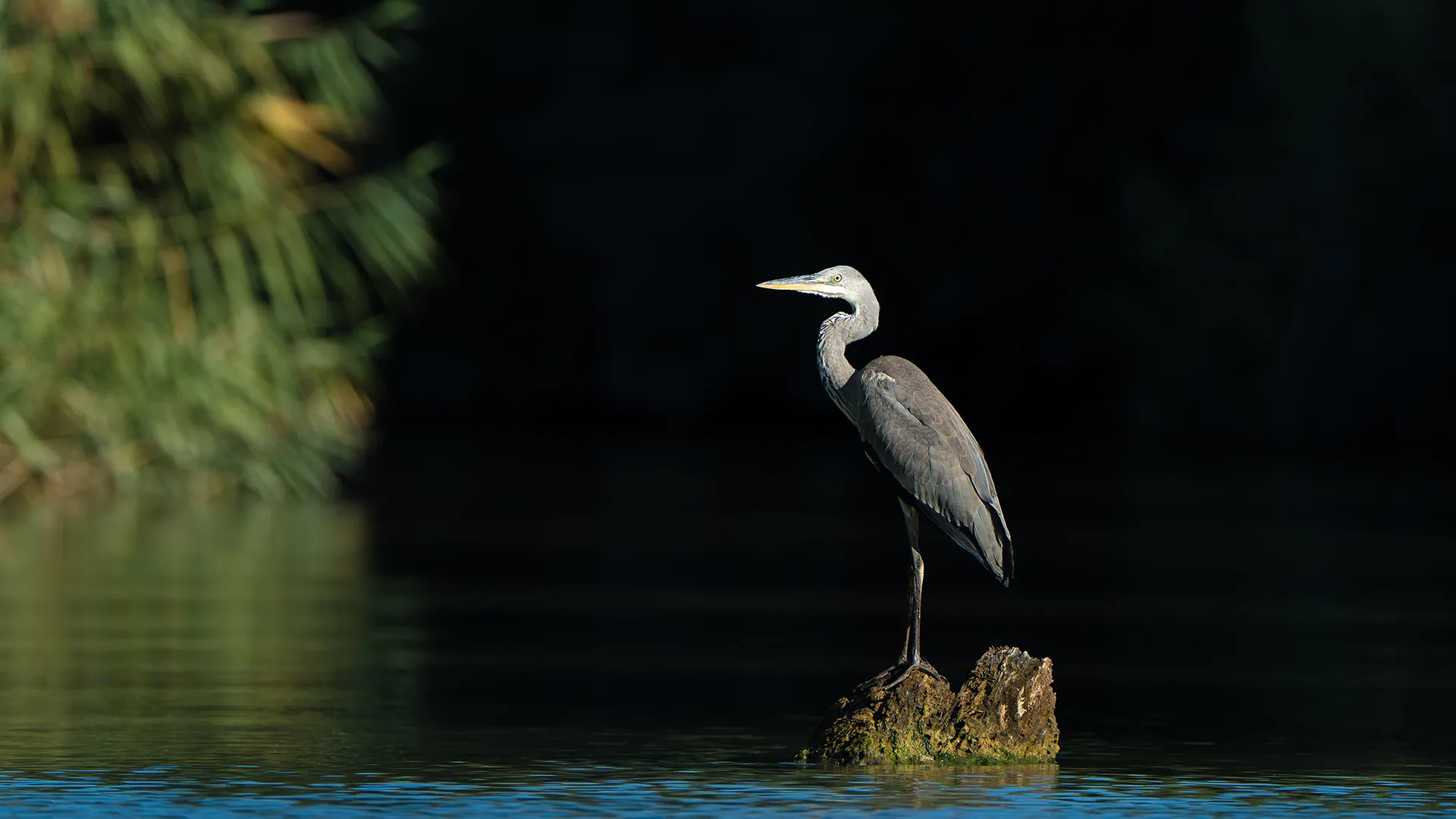
No. 168 on our checklistGrey Heron (Ardea cinerea)
The largest heron in Europe and the most common in the Danube Delta today, a bird the dredged canals and their willows helped to spread.
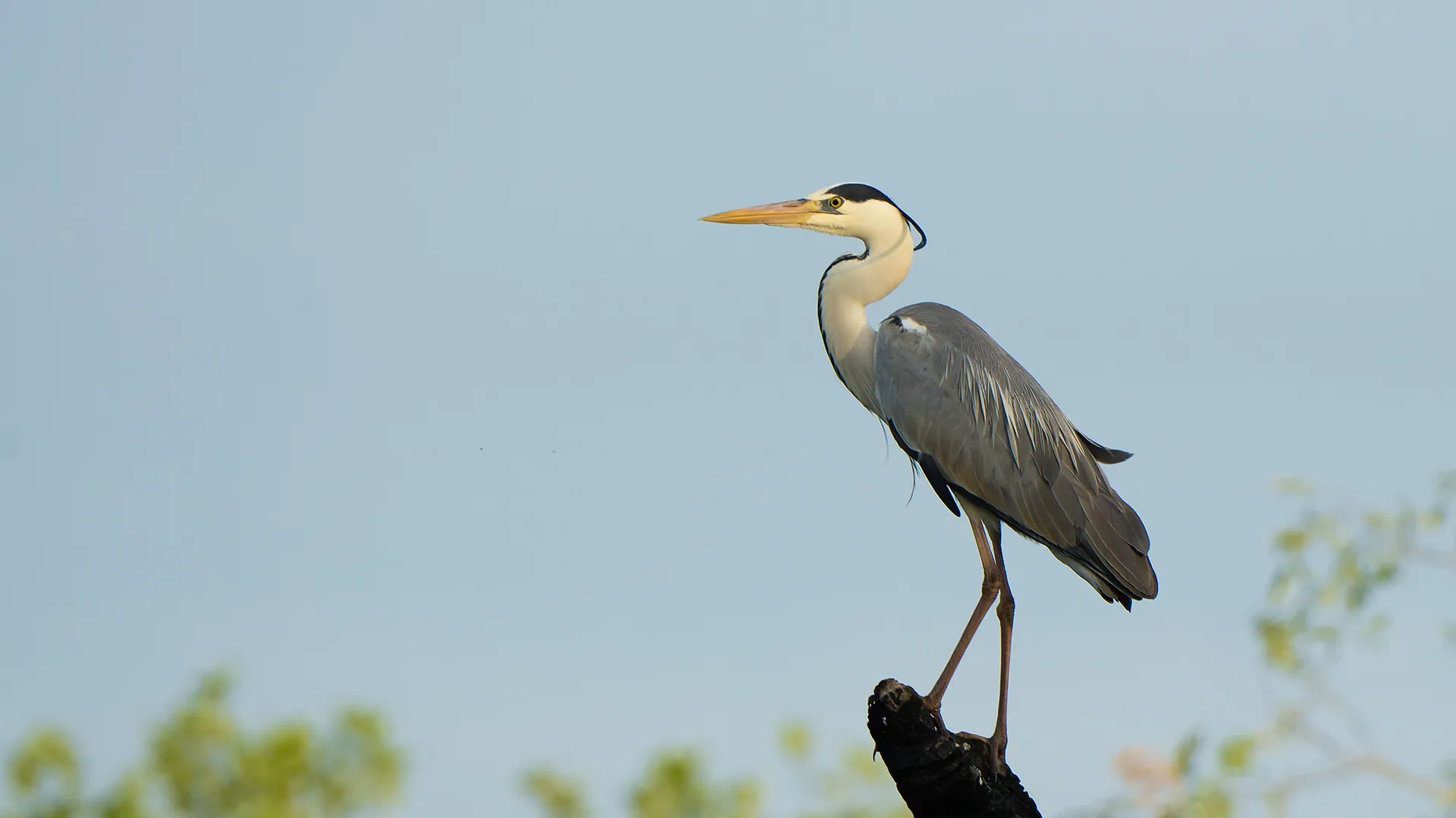
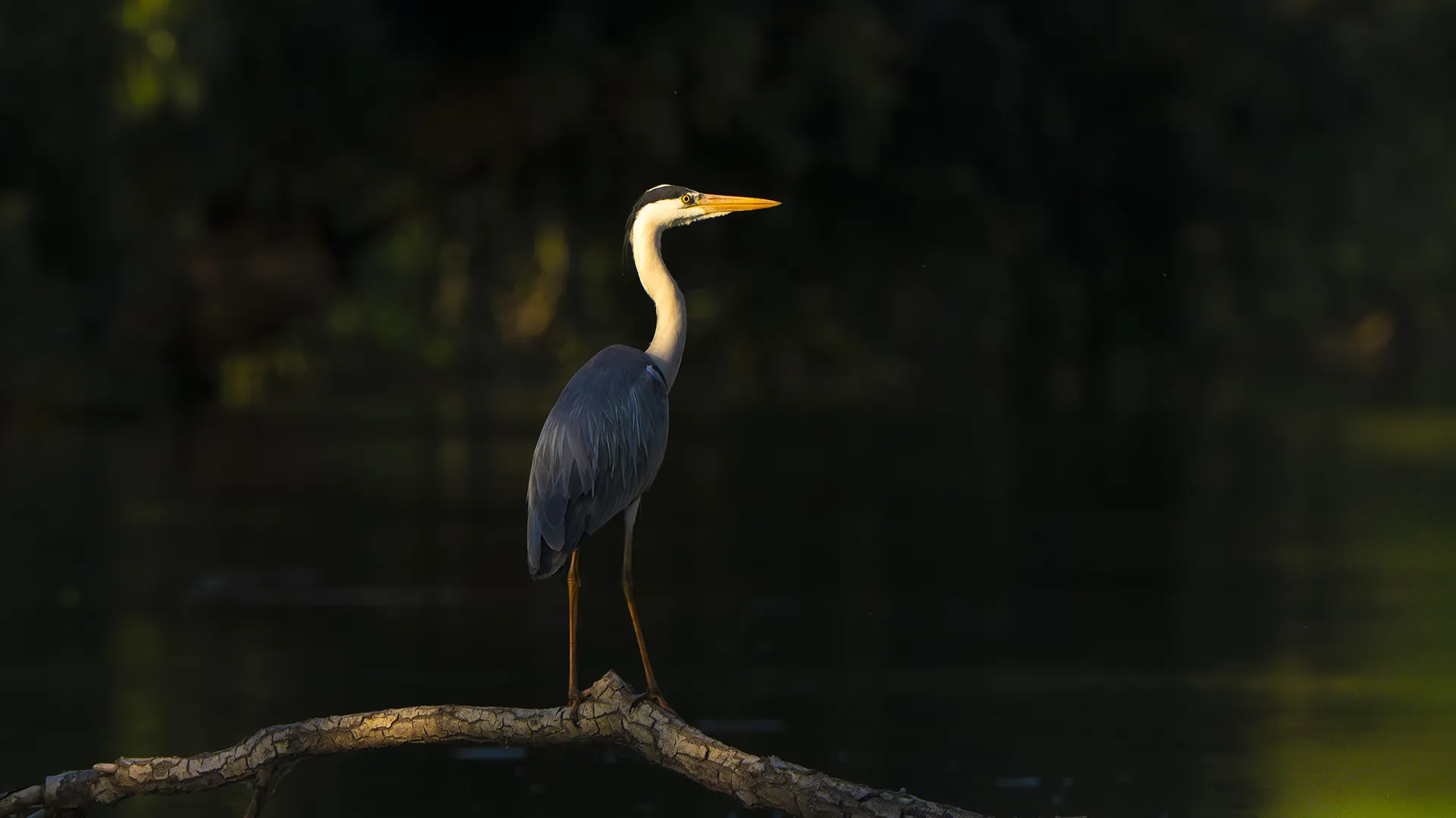
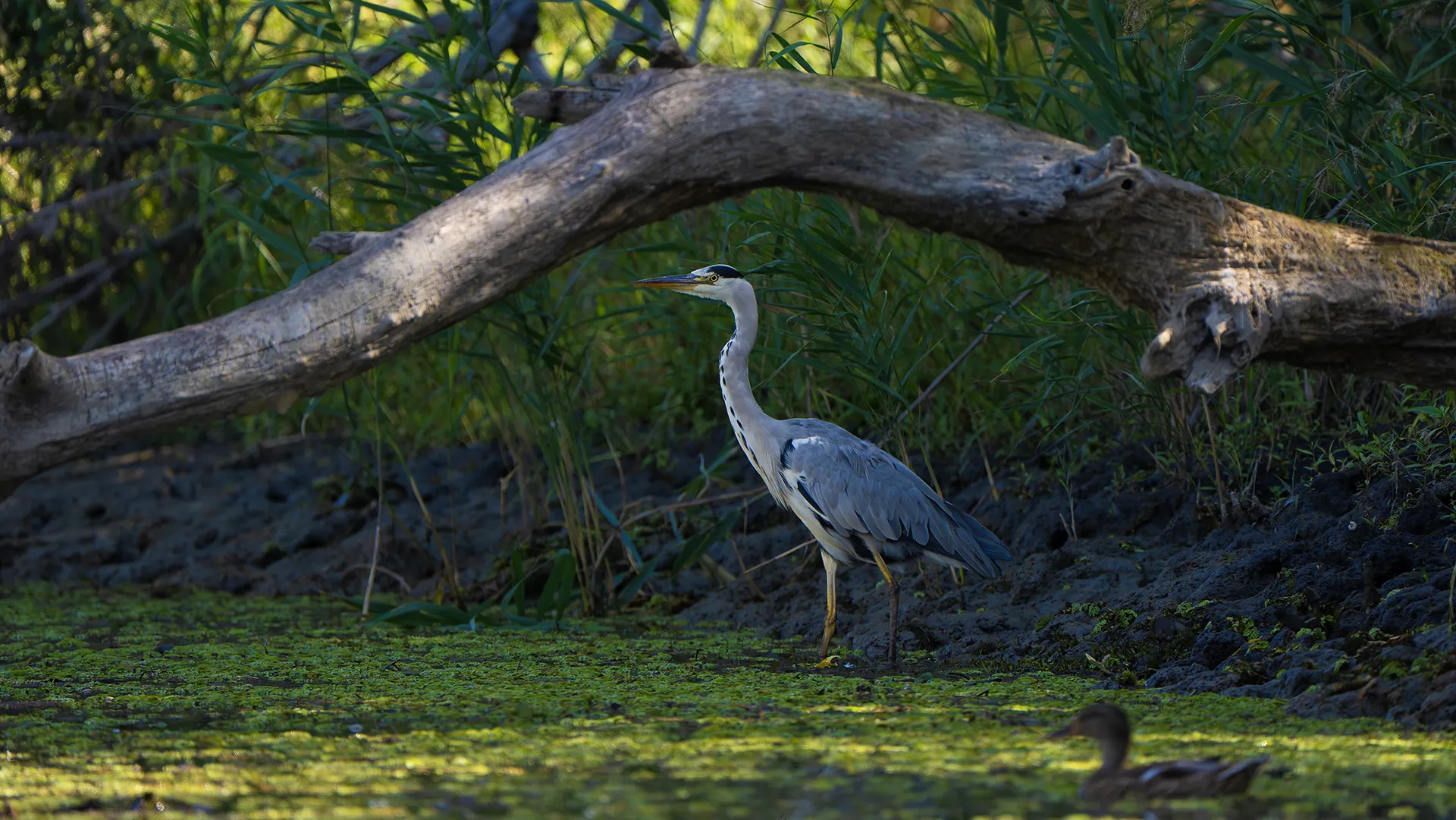
The Grey Heron is the tall grey bird you see on almost every trip in the Danube Delta: standing at the edge of a channel, flying slowly overhead with its neck folded back, or sitting high in a willow. It is the largest heron in Europe and one of the most visible birds of the Danube Delta, present in every month of the year. Its place in the landscape has grown over the last decades, and the reason is written in the trees it nests in.
Quick facts
- Scientific name Ardea cinerea
- Family herons (Ardeidae)
- Length 94 cm
- Wingspan 180 cm
- Weight 1.5 kg
- Clutch usually 3 or 4 eggs
When to see it in the Danube Delta and Dobrogea
- JanModerate
- FebModerate
- MarModerate
- AprModerate
- MayModerate
- JunModerate
- JulModerate
- AugModerate
- SepModerate
- OctModerate
- NovModerate
- DecModerate
- Status here
- All year. Common all year.
- IUCN Red List
- Least Concern
- Our checklist
- No. 168 of 385 · see the full checklist
How to recognise it
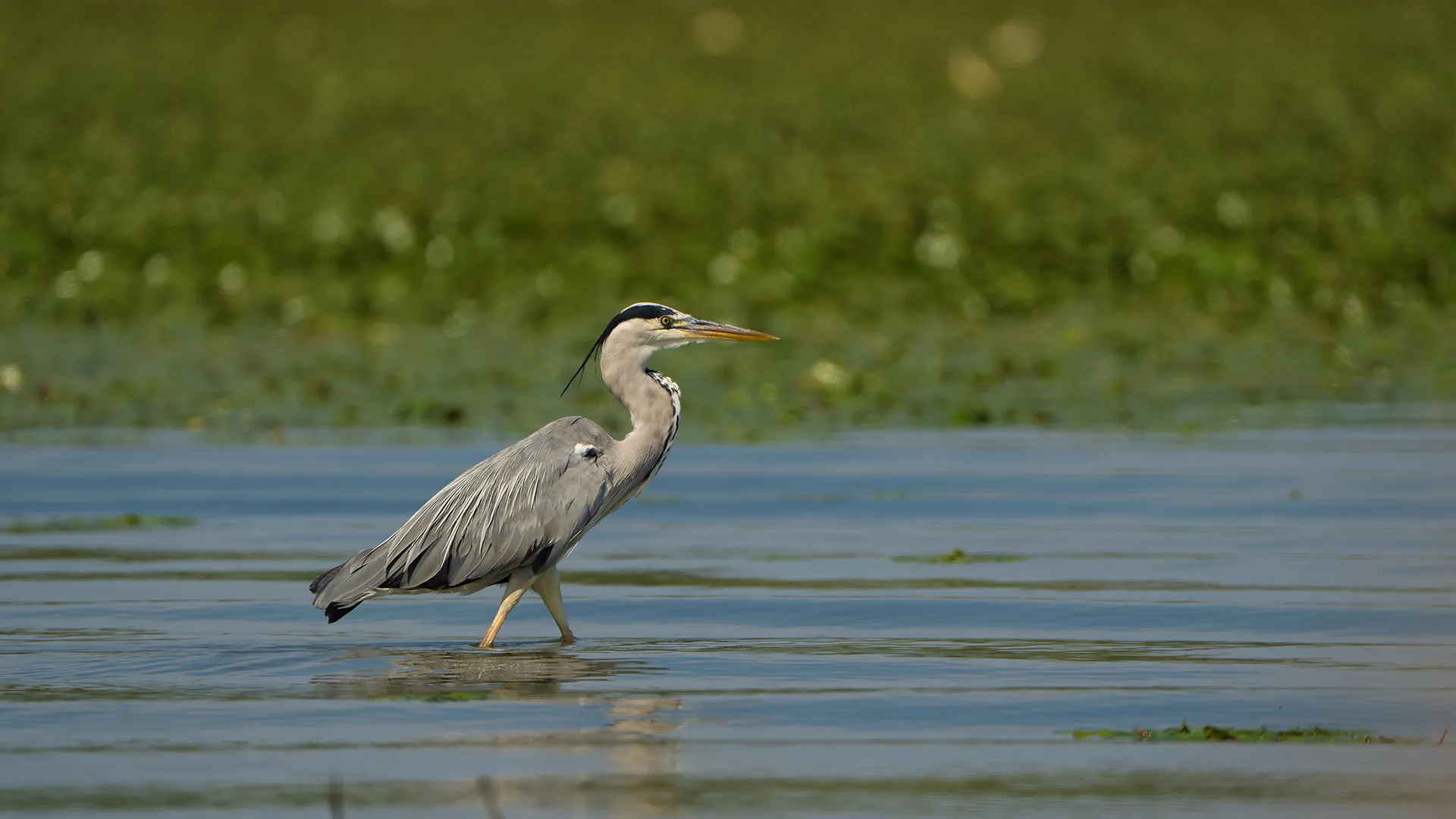
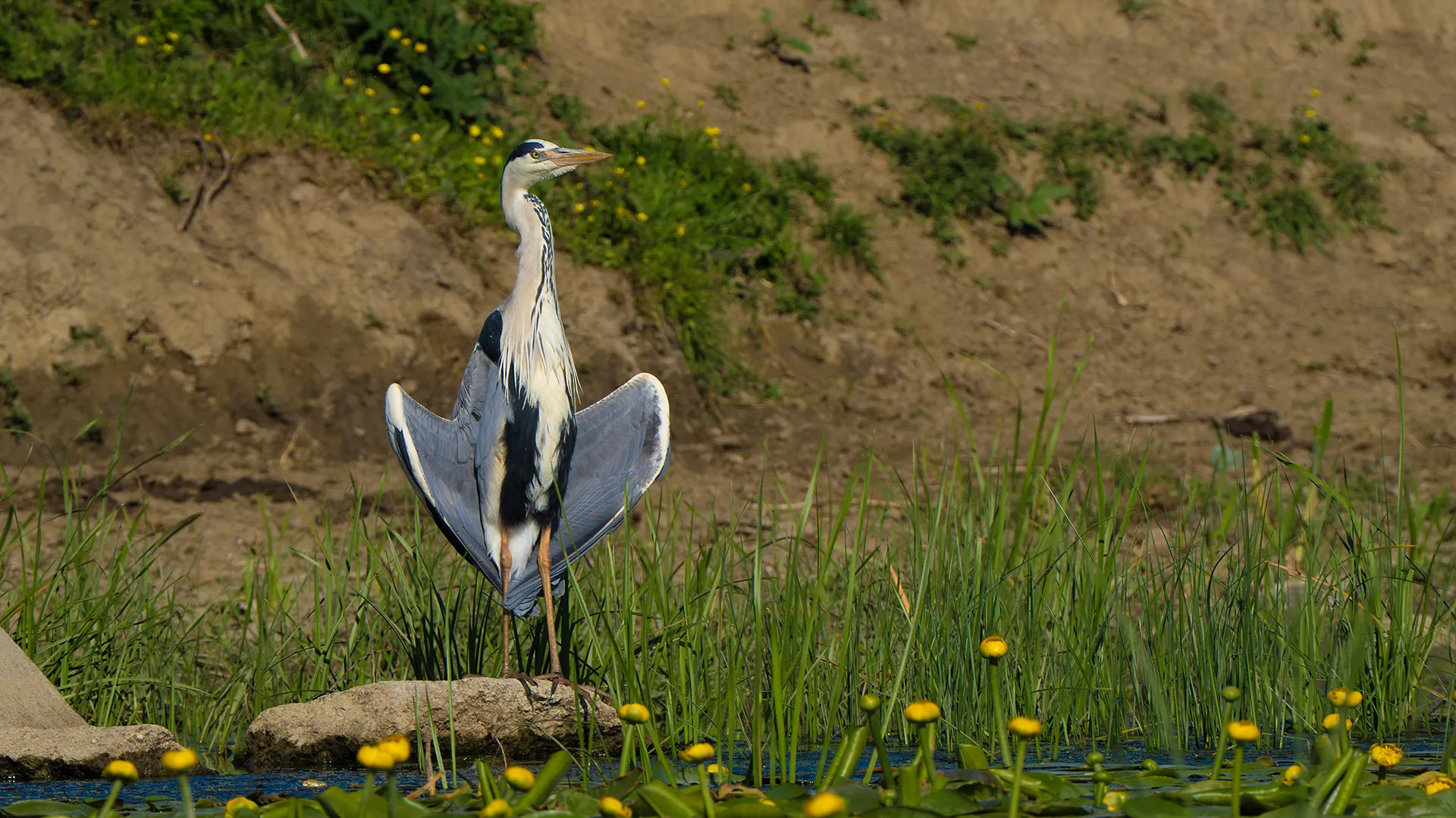
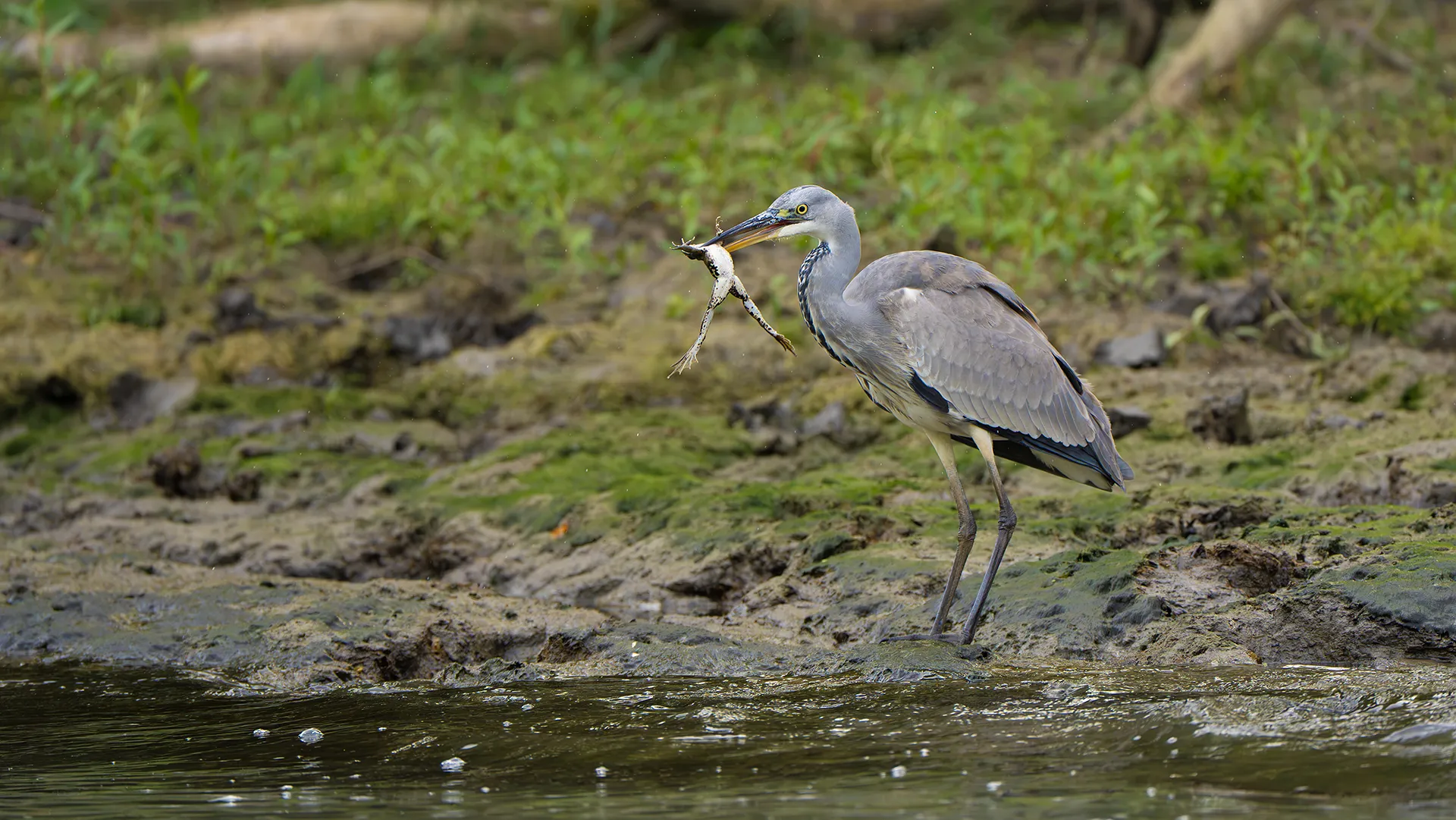
Adults are pale grey above and white below, with a white head and neck, a black stripe from the eye back to a thin black crest, and a line of black streaks down the front of the neck. The bill is long, thick and yellow, turning orange to pinkish in spring. Young birds are duller and greyer, without the black crest. In flight the Grey Heron is huge, with slow, deep wingbeats, the neck pulled back in an S and the legs trailing behind; the dark flight feathers contrast with the paler grey of the rest of the wing.
The Purple Heron is slimmer, darker and smaller, with a rust and black striped neck. The Great Egret is about the same size but all white, with black legs and, in spring, a dark bill.
Life of a patient hunter
The Grey Heron hunts by waiting. It stands motionless in shallow water, or walks very slowly, then stabs with the bill. Fish are its main food, but it also takes frogs, snakes, small mammals and young birds. It feeds alone, and defends its feeding spot from other herons.
It nests in colonies, usually high in trees, often together with cormorants and other herons. It is one of the earliest birds to breed: the first eggs are laid from late February or March, weeks before most other herons have returned from Africa. The female lays usually three or four pale blue green eggs, both parents incubate them for about 26 days, and the young leave the nest at about 50 days old.
Where to see it in the Danube Delta
Grey Herons can be seen in the Danube Delta in every month. In summer they feed along the channels and lakes and nest in the willow woods; in winter they stay, and they are among the most common large birds on a winter trip. Our checklist marks it moderate all year.
You will almost certainly see it on any trip with us, from a private 4 hour birdwatching trip or a small group birdwatching tour in summer, to a winter day trip in the Danube Delta.
Interesting facts
- A heron that the canals made common. In the old Danube Delta, a landscape made mostly of flooded reed, the most common heron was the Purple Heron. When the channels were dredged, the mud was piled along their banks. These new strips of dry land, along hundreds of kilometres of channels, became the ground where willows could grow, and the willows became nesting trees for the Grey Heron, while the Purple Heron lost the flooded reed it needs.
- A changed landscape. The same banks cut off the water from many small lakes and pools behind them. Without the flow of the river, these silted up and filled with vegetation very fast. Since the 1960s, large parts of what was one of the largest reed beds in the world have turned into land covered with trees, and the Grey Heron followed the trees.
- The early bird. Grey Herons start nesting in late winter, two months or more before the Purple Heron returns from Africa. In the Camargue, in France, Grey Herons even began to nest in the reed beds, the traditional home of the Purple Heron, and the Purple Heron suffered for it.
- It stays for winter. Unlike most herons of the Danube Delta, which winter in Africa, Grey Herons are here all year. This is one reason they did not suffer from the great droughts of the Sahel in the 1970s and 1980s, which hit the herons that cross the Sahara.
Status and threats
The Grey Heron is widespread across Europe, Asia and Africa and is listed as Least Concern by the IUCN. Romania holds an estimated 4,500 to 6,000 breeding pairs. It needs quiet nesting woods and shallow water rich in fish.
In the Danube Delta today the greatest threat to nature is speed boats. The Grey Heron feeds along the edges of the channels, exactly where their noise and waves reach first. This is why our boats move slowly in the channels.
See it with us
Our birding guides are biologists and ornithologists who are on the water every day of the year. Small groups, open boats, the best hours of the day.
Keep reading
Keep reading
More from the blog
2 min read
Common Moorhen (Gallinula chloropus)
A red bill with a yellow tip and a flick of white under the tail mark the Common Moorhen, a summer breeder in the...
6 min read
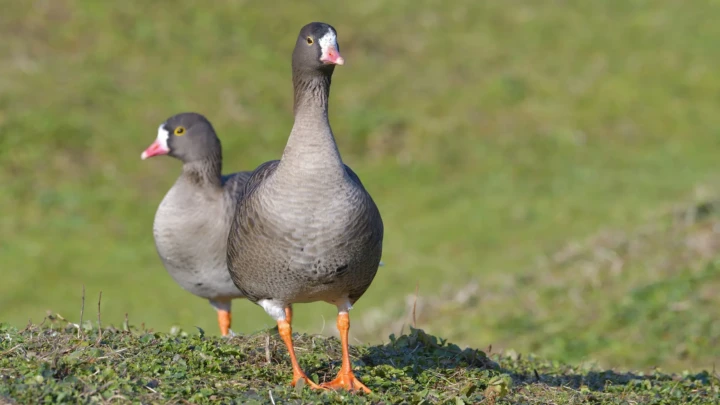
Greater White-fronted Goose (Anser albifrons)
Meet the Greater White-fronted Goose, the most numerous wintering goose in Romania: identification, migration from the Arctic, winter life in Dobrogea, numbers and status.
5 min read
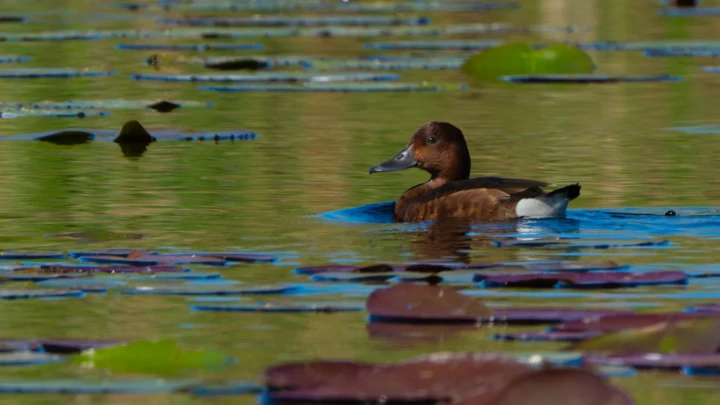
Ferruginous Duck (Aythya nyroca)
Meet the Ferruginous Duck, a white-eyed diving duck for which Romania is a European stronghold: identification, late nesting, moult, migration and conservation.